
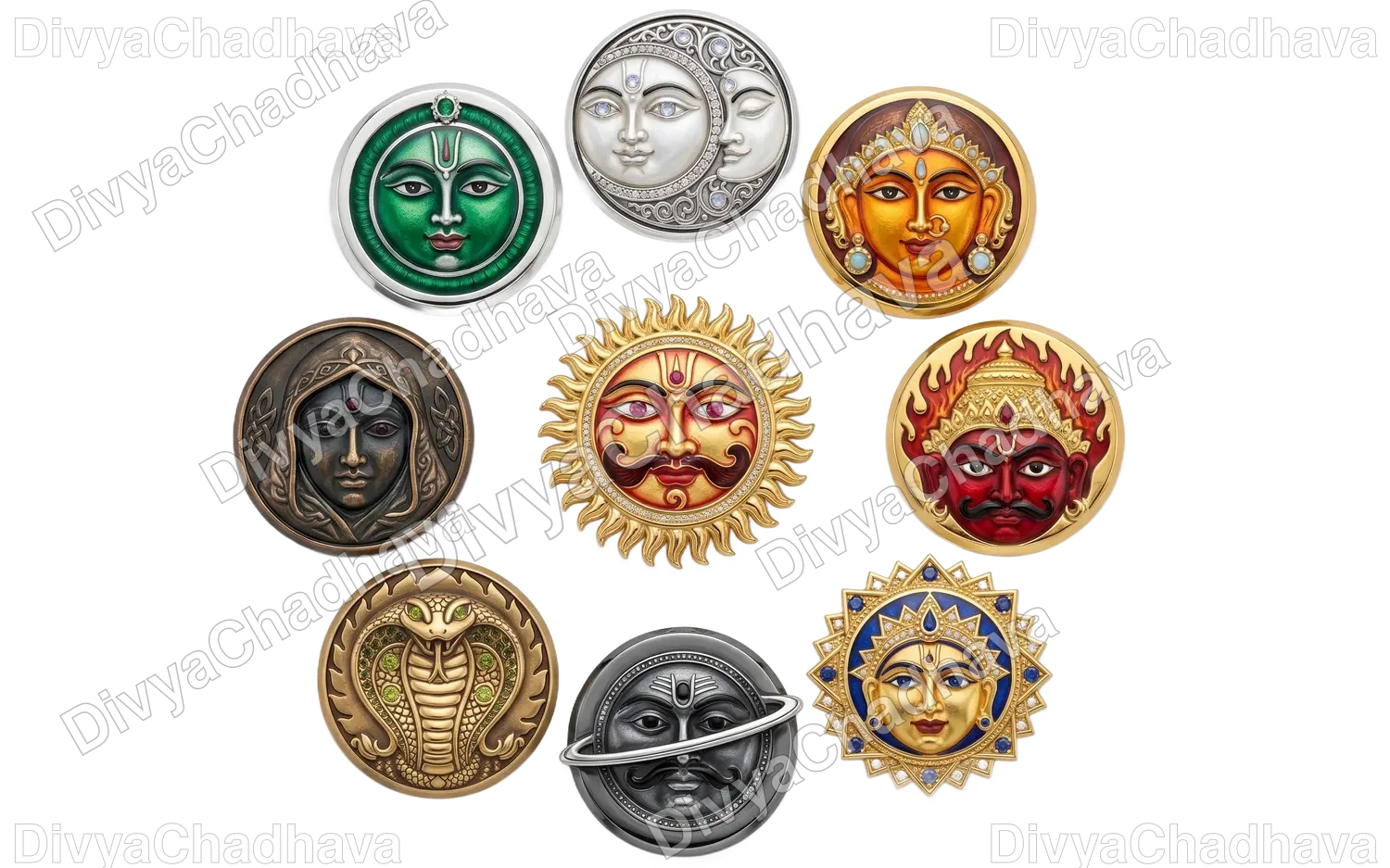
 राहवे नमः
Dharmic Rahu upay — mantra, daan, Durga and Kaal Bhairav worship — to calm the confusion, obsession and sudden upheavals that an afflicted Rahu can bring.
Rahu is one of the two shadow planets (chhaya graha) in Vedic astrology, along with Ketu, formed at the lunar nodes where the Moon's path crosses the Sun's path. Rahu has no physical body of its own; mythologically it represents the severed head of the asura Svarbhanu, who drank a drop of Amrit during the Samudra Manthan. Rahu is associated with illusion (maya), ambition, obsession, foreign lands, technology, sudden gain and equally sudden loss. It is not inherently evil — a well-placed Rahu can bring extraordinary success, especially in unconventional fields — but an afflicted Rahu can create confusion, restlessness, addiction-like tendencies, and a feeling of chasing something that never quite satisfies.
Who Is Affected and Why
An afflicted or malefic Rahu in the birth chart, a difficult Rahu Mahadasha or Antardasha, or Rahu's affliction to the Moon (forming Grahan Dosh) can affect anyone, though its intensity depends on the chart as a whole. Common triggers include Rahu placed with the Moon, Rahu in the 1st, 4th, 7th or 8th house, or Rahu aspected by malefics.
Effects Commonly Seen
People going through a difficult Rahu period often describe a sense of mental fog, indecisiveness, or being pulled toward shortcuts and quick fixes that don't pan out. There can be sudden, unexpected changes in career, relationships or residence; anxiety, sleep disturbance, or an unusual fascination with the unfamiliar and forbidden. On the positive side, Rahu also gifts bold ambition, innovation, success abroad, and the courage to break from convention — its energy, when channeled with discipline, can be transformative.
Dharmic Remedies (Upay)
Mantra Jaap: Chant the Rahu Beej Mantra "Om Bhraam Bhreem Bhraum Sah Rahave Namah" 108 times, ideally on Saturdays, using a hessonite (gomed) mala or a simple rudraksha mala. The mantra "Om Raam Rahave Namah" is also widely used.
Daan (Charitable Giving): On Saturdays, donate mustard oil, black gram (urad), blue or black clothing, coconut, or blankets to the poor. Feeding stray dogs and donating to leprosy or disability welfare organisations is also considered a powerful Rahu upay.
Durga and Kaal Bhairav Worship: Rahu's turbulence is traditionally pacified through devotion to Maa Durga and Kaal Bhairav. Reciting the Durga Chalisa or Durga Saptashati, and visiting a Kaal Bhairav or Bhairav temple on Saturdays, is considered especially effective.
Naga Puja: Because Rahu is linked to serpent energy, worshipping Nag Devta — offering milk at a Shivling on Nag Panchami and other auspicious days — is a traditional remedy, and helps pacify related doshas such as Kaal Sarp Dosh where present.
Fasting and Discipline: Some devotees observe a partial fast on Saturdays. More important than the fast itself is cultivating discipline over impulsive decisions, screens, and substances during a difficult Rahu period.
Charity Toward the Marginalised: Because Rahu governs outsiders and the marginalised, sincere service or donation to those who are socially excluded — the elderly living alone, differently-abled persons, and outcasts — is considered one of the deepest Rahu upay.
Dos and Don'ts
Do stay grounded in daily routine, avoid impulsive major decisions during a heavy Rahu transit, and practice honesty even when shortcuts tempt you. Avoid substance dependence, gambling, deceit, and excessive screen or technology addiction. Avoid non-vegetarian food and alcohol on Saturdays if you are undertaking these remedies seriously.
When to Begin
Saturdays are considered auspicious for Rahu remedies. Many devotees begin during Rahu Kaal transitions or on an Amavasya, but sincere practice can begin on any Saturday.
A Gentle Note
These remedies support clarity, discipline and inner steadiness; they are acts of faith and devotion, not guarantees of specific outcomes, and should never be read as deterministic predictions of doom. If Rahu-related anxiety, addiction tendencies, or major life decisions are troubling you, please also seek guidance from a qualified counsellor or professional alongside your spiritual practice.
Frequently Asked Questions
See below for common questions about Rahu upay.
Quick guide
Before you begin
Mantra
Rahu mantra
Om Bhram Bhreem Bhraum Sah Rahave Namah
Chant 108 times with discipline, especially when praying for relief from hidden obstacles.
Bhav
Benefits devotees pray for
FAQ
Common questions
Is Rahu always harmful in a birth chart?
No. Rahu's effect depends entirely on its placement, aspects and the chart as a whole. A well-placed Rahu can give extraordinary success in unconventional and modern fields; only an afflicted Rahu tends to bring confusion or upheaval.
How is Rahu Dosh different from Kaal Sarp Dosh?
Rahu Dosh refers to Rahu's affliction to a specific house or planet in the chart, while Kaal Sarp Dosh occurs when all seven other planets are hemmed between Rahu and Ketu. Naga puja and Rahu mantra are helpful for both, but a qualified astrologer should confirm which applies to your chart.
Can I do Rahu upay for someone else, like a family member?
Yes, remedies like daan, puja and prayers can certainly be done on behalf of family members experiencing a difficult Rahu period, with sincere intent for their wellbeing.
What is the safest first step if I suspect Rahu Dosh?
Begin with mantra jaap, Saturday daan, and Durga or Kaal Bhairav worship — these are safe for everyone. For chart-specific remedies like gemstones, consult a qualified astrologer first.
Seek Peace from Rahu's Turbulence
Book a dedicated Rahu Shanti puja performed with full vidhi by our pandits for clarity and stability.