
 नवग्रह शांति कवच
The Navgrah Yantra harmonises the energies of all nine planets together, worshipped to ease planetary afflictions, restore balance and invite steady, all-round wellbeing.
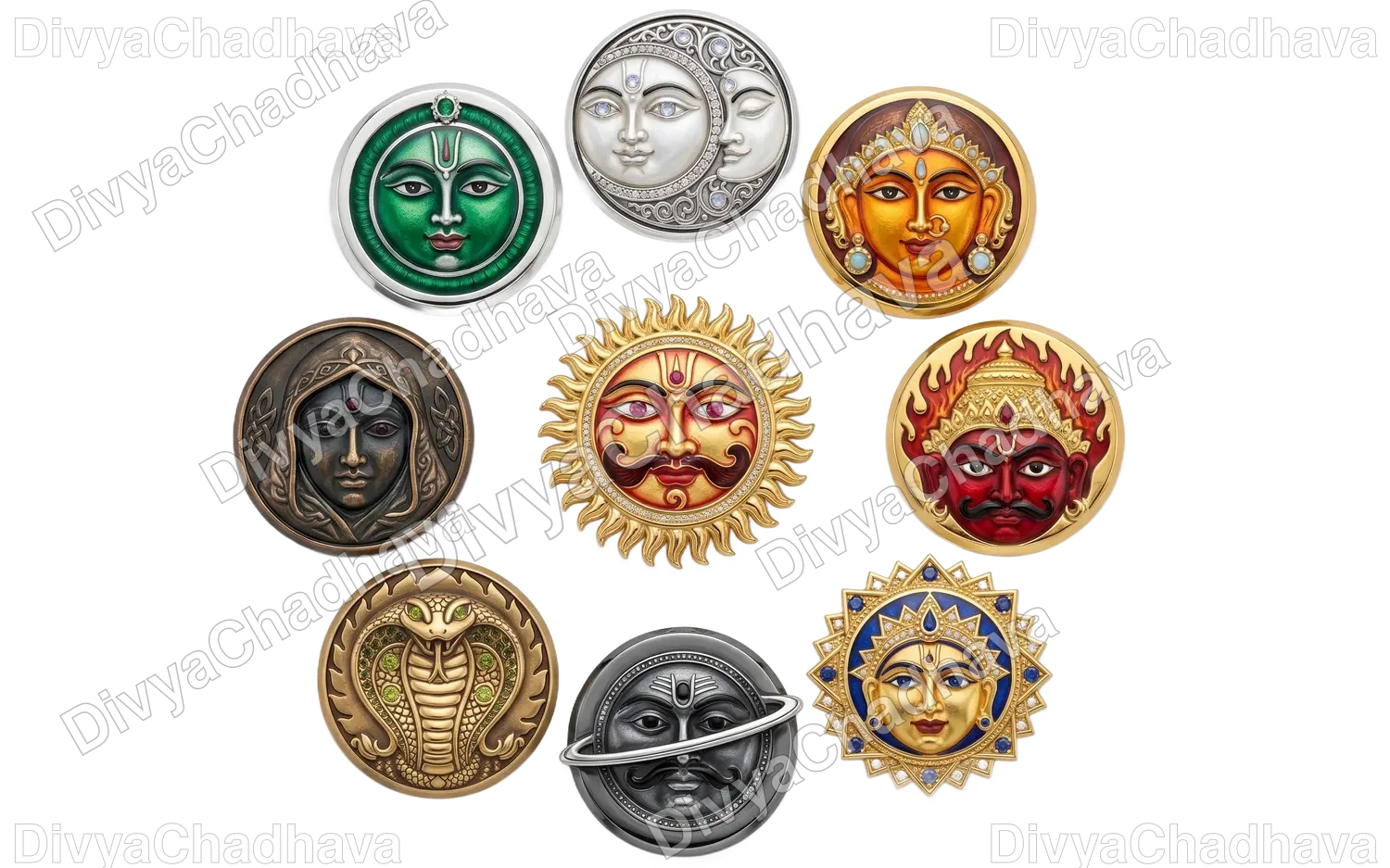
In Vedic astrology, the nine grahas, Surya, Chandra, Mangal, Budh, Guru, Shukra, Shani, Rahu and Ketu, are believed to influence every dimension of human life, from health and wealth to relationships, career and peace of mind. When one or more planets are afflicted in a person's birth chart, or transiting unfavourably, it can manifest as recurring obstacles, ill health, delays or emotional turbulence. The Navgrah Yantra is a sacred, unified geometric instrument that invokes the combined, balancing grace of all nine planetary deities together, rather than addressing just one.
What is the Navgrah Yantra
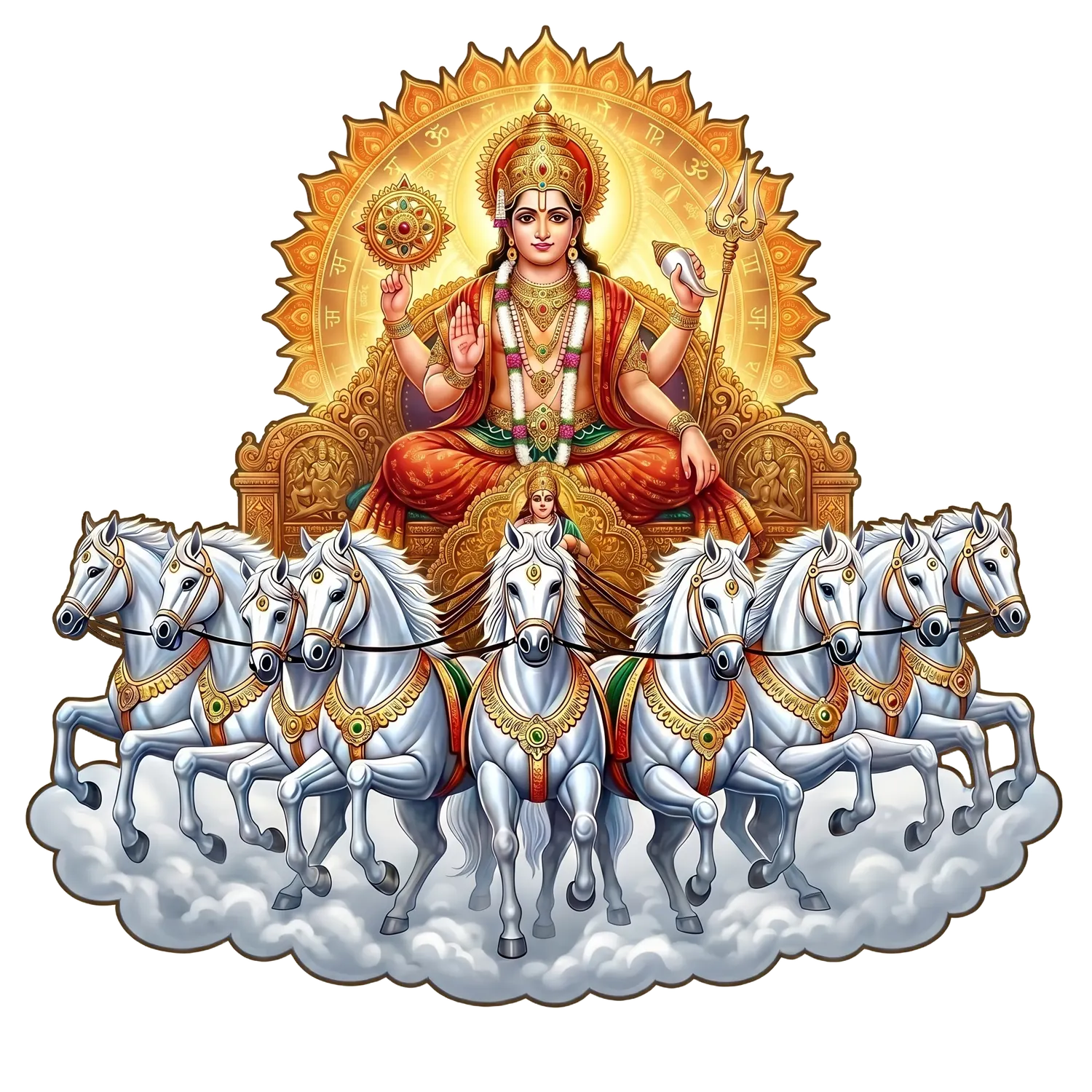
The yantra is typically structured as a grid of nine sections, often within a larger square or circular boundary, with each section corresponding to one graha, arranged in the traditional Vedic order: Surya at the centre, surrounded by Chandra, Mangal, Budh, Guru, Shukra, Shani, Rahu and Ketu in their respective positions. This layout mirrors the classical Navgrah mandala used in temple worship and havan. When consecrated, it is believed to hold the combined vibration of all nine planetary energies in a state of mutual balance rather than conflict.
Why devotees worship the Navgrah Yantra
This yantra is sought during periods of Sade Sati or a difficult Shani or Rahu-Ketu transit, during an unfavourable dasha or antardasha in one's chart, when facing repeated setbacks across different areas of life that suggest more than one planet is involved, or simply as a general, preventive practice to keep all planetary energies in harmony. Many families also install it as part of their regular puja room, alongside their ishta devta, as an ongoing shield against planetary disturbance.
Where and how to install the Navgrah Yantra
The yantra is best placed in the puja room facing east, the direction associated with the Sun, the presiding graha at the centre of the Navgrah mandala. It should rest on a clean wooden platform, ideally raised slightly rather than placed directly on the floor, in a well-lit and airy part of the home. Avoid placing it in the bedroom, bathroom or kitchen, and keep the surrounding space clutter-free.
Navgrah Yantra puja vidhi
Begin worship on a Sunday, since Surya presides at the yantra's centre, or during Navratri or an auspicious muhurta suggested by a pandit based on your chart. Bathe and wear clean clothes, then place the yantra on a red or saffron cloth. Offer a tilak, light a ghee diya and incense, and offer nine different items if possible, such as nine grains (navdhanya), symbolising an offering to all nine grahas together.
Recite the Navgrah beej mantras, addressing each planet in turn, ideally 9, 11 or 27 times each:
Surya: Om Hraam Hreem Hraum Sah Suryaya Namah Chandra: Om Shraam Shreem Shraum Sah Chandraya Namah Mangal: Om Kraam Kreem Kraum Sah Bhaumaya Namah Budh: Om Braam Breem Braum Sah Budhaya Namah Guru: Om Graam Greem Graum Sah Gurave Namah Shukra: Om Draam Dreem Draum Sah Shukraya Namah Shani: Om Praam Preem Praum Sah Shanaischaraya Namah Rahu: Om Bhraam Bhreem Bhraum Sah Rahave Namah Ketu: Om Sraam Sreem Sraum Sah Ketave Namah
Alternatively, for a simpler daily practice, the collective Navgrah mantra can be chanted: Om Namo Navgrahaya Namah, offered with sincere devotion while seated before the yantra. Conclude with a brief aarti and a prayer for the harmonious functioning of all planetary influences in your life, rather than singling out fear of any one graha.
Benefits of worshipping the Navgrah Yantra
Devotees who worship the Navgrah Yantra regularly often experience a gradual easing of recurring or overlapping obstacles, greater emotional and mental stability during difficult astrological periods, improved health, relationships and career prospects as planetary energies come into balance, and a general sense of protection and steadiness through life's ups and downs. It is especially valued during Sade Sati or major dashas since it addresses the whole planetary field rather than one isolated influence.
A gentle note on astrology
Planetary positions describe tendencies and periods of ease or difficulty; they are never a fixed, deterministic sentence, and no astrological configuration should be a source of fear or hopelessness. The Navgrah Yantra, like all dharmic remedies, is meant to soften difficult influences and strengthen supportive ones through faith, mantra and right conduct, working together with your own effort, patience and, when needed, professional medical, legal or financial advice, never replacing it.
Dos and don'ts
Do keep the yantra clean and the surrounding space sattvik, with regular diya and incense offerings, especially on Sundays. Do combine this worship with simple daily dharma, honesty, discipline and charity, since planetary grace flourishes alongside good conduct. Do consult a knowledgeable astrologer or pandit if you wish to understand which grahas are most active in your chart currently, so your prayers can be offered with clarity.
Do not treat any planetary period as a permanent, unchangeable doom; every difficult phase passes with time and right effort. Do not neglect medical, legal or financial guidance in favour of ritual alone when real-world issues arise. Do not perform this worship in fear or anxiety; approach the nine grahas as guides and teachers, not adversaries.
Quick guide
Before you begin
Mantra
Navagraha mantra
Om Navagrahebhyo Namah
Chant with a calm sankalp while praying for balanced graha shanti and guidance.
Bhav
Benefits devotees pray for
FAQ
Common questions
Is the Navgrah Yantra only useful during Sade Sati?
No, while it is especially valued during Sade Sati or a difficult dasha, it can be worshipped anytime as a general, preventive practice to keep all nine planetary energies in balance and harmony throughout life.
Do I need to know my birth chart to worship this yantra?
It helps to understand which grahas are currently active in your chart, and a knowledgeable astrologer or pandit can guide you, but even without detailed chart knowledge, sincere worship of the Navgrah Yantra with devotion is meaningful and beneficial.
Can this yantra replace individual remedies for a specific planet like Shani or Rahu?
It complements rather than replaces specific remedies. If one particular graha is strongly afflicted, a pandit may recommend an additional focused remedy, such as a Shani or Rahu-Ketu shanti puja, alongside the Navgrah Yantra's overall balancing worship.
Should I fear a difficult planetary period shown in my chart?
No. Difficult periods are temporary and describe tendencies, not fixed fate. Approach them with faith, dharmic remedies, patience and right effort, and remember that professional medical, legal or financial guidance should always be sought for real-world concerns.
Bring Planetary Harmony Into Your Life
Let our pandits guide a proper Navgrah puja and yantra sankalp for balance, protection and steady wellbeing.