



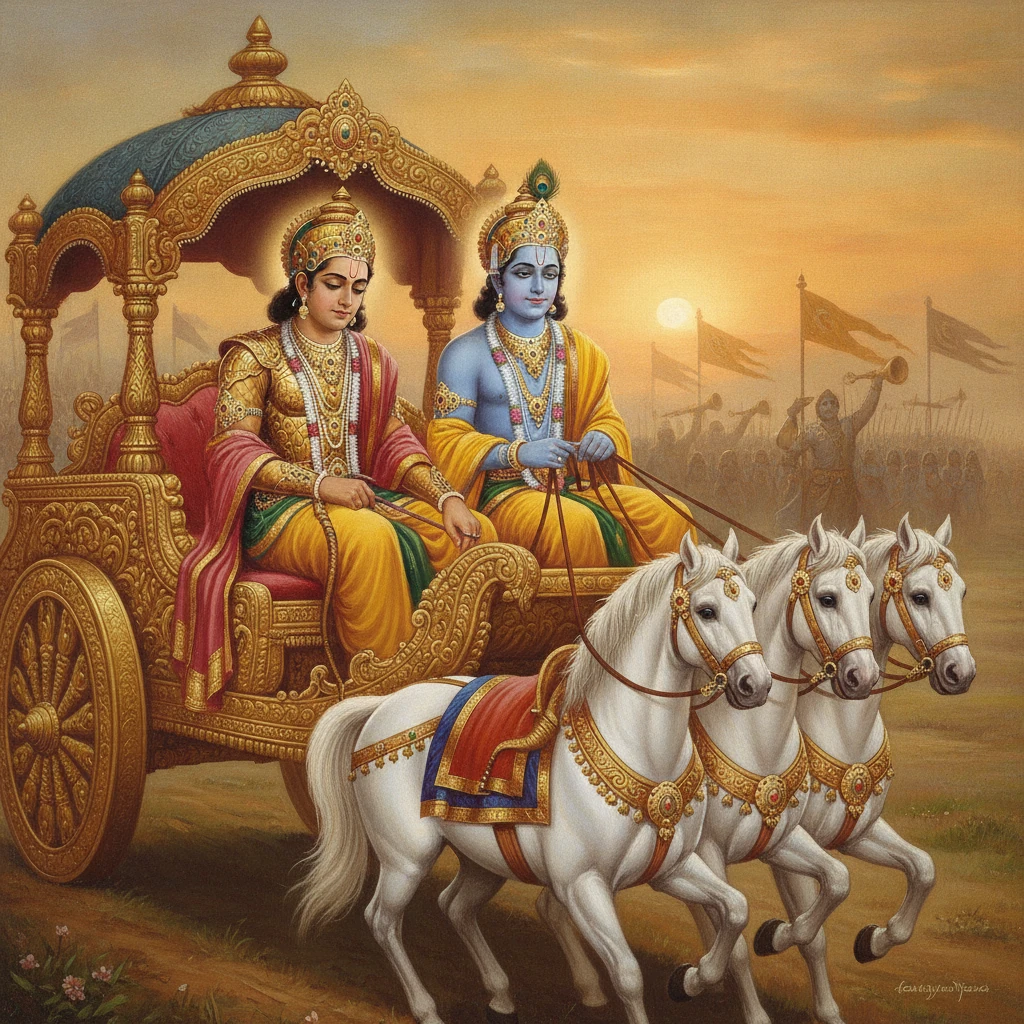
 Mahabharata · Parva 1
About the Adi Parva
The opening book frames the whole epic — Sauti reciting it to the sages of Naimisha — and gives the lineage of the Kurus: the births of Bhishma, Dhritarashtra, Pandu, the Kauravas and the Pandavas, their upbringing and growing rivalry, the house of lac (Lakshagriha), Draupadi’s swayamvara and marriage to the five Pandavas, and the founding of Indraprastha.
How it is read
The Adi Parva is given below in its original Sanskrit (Devanagari), numbered by chapter (adhyaya) and shloka. Read verse by verse; the Mahabharata is traditionally heard as itihasa-shravana, for dharma and discernment.
Original Text
Verses & Meaning
नारायणं नमस्कृत्य नरं चैव नरॊत्तमम देवीं सरस्वतीं चैव ततॊ जयम उदीरयेत
Having bowed to Narayana, to Nara the best of men, and to the goddess Saraswati, one should then proclaim this tale of victory (Jaya).
लॊमहर्षणपुत्र उग्रश्रवाः सूतः पौराणिकॊ नैमिषारण्ये शौनकस्य कुलपतेर दवादशवार्षिके सत्रे
Ugrashrava, the son of Lomaharshana, a Suta well versed in the Puranas, arrived at the twelve-year sacrificial session of Shaunaka, the clan chief, in the Naimisha forest.
समासीनान अभ्यगच्छद बरह्मर्षीन संशितव्रतान विनयावनतॊ भूत्वा कदा चित सूतनन्दनः
One day the Suta's son, bowing humbly, approached the great Brahmarishis seated there who were devoted to strict vows.
तम आश्रमम अनुप्राप्तं नैमिषारण्यवासिनः चित्राः शरॊतुं कथास तत्र परिवव्रुस तपस्विनः
Seeing him arrive at the hermitage, the ascetics of the Naimisha forest gathered around him, eager to hear his wonderful stories.
अभिवाद्य मुनींस तांस तु सर्वान एव कृताञ्जलिः अपृच्छत स तपॊवृद्धिं सद्भिश चैवाभिनन्दितः
Having saluted all the sages with joined palms, he inquired after the progress of their austerities, and was in turn warmly welcomed by them.
अथ तेषूपविष्टेषु सर्वेष्व एव तपस्विषु निर्दिष्टम आसनं भेजे विनयाल लॊमहर्षणिः
When all the ascetics had taken their seats, the son of Lomaharshana humbly took the seat that was pointed out to him.
सुखासीनं ततस तं तु विश्रान्तम उपलक्ष्य च अथापृच्छद ऋषिस तत्र कश चित परस्तावयन कथाः
Seeing him comfortably seated and rested, one of the sages there opened a conversation by questioning him.
कृत आगम्यते सौते कव चायं विहृतस तवया कालः कमलपत्राक्ष शंसैतत पृच्छतॊ मम
"From where have you come, O Suta, and where have you spent this time, lotus-eyed one? Tell me, for I ask."
[सूत] जनमेजयस्य राजर्षेः सर्पसत्रे महात्मनः समीपे पार्थिवेन्द्रस्य सम्यक पारिक्षितस्य च
[Suta:] "I was near King Janamejaya, the great royal sage and son of Parikshit, at his snake-sacrifice."
कृष्णद्वैपायन परॊक्ताः सुपुण्या विविधाः कथाः कथिताश चापि विधिवद या वैशम्पायनेन वै
There the many sacred tales spoken by Krishna Dvaipayana were duly narrated by Vaishampayana.
शरुत्वाहं ता विचित्रार्था महाभारत संश्रिताः बहूनि संपरिक्रम्य तीर्थान्य आयतनानि च
Having heard those wondrous tales of the Mahabharata, I then traveled to many sacred fords and holy places.
समन्तपञ्चकं नाम पुण्यं दविजनिषेवितम गतवान अस्मि तं देशं युद्धं यत्राभवत पुरा पाण्डवानां कुरूणां च सर्वेषां च महीक्षिताम
I went to the sacred land called Samantapanchaka, frequented by the twice-born, where the great war between the Pandavas, the Kurus, and all the kings once took place.
दिदृक्षुर आगतस तस्मात समीपं भवताम इह आयुष्मन्तः सर्व एव बरह्मभूता हि मे मताः
Desiring to see you, I have come here into your presence; I regard you all, long-lived ones, as verily embodiments of Brahman.
अस्मिन यज्ञे महाभागाः सूर्यपावक वर्चसः कृताभिषेकाः शुचयः कृतजप्या हुताग्नयः भवन्त आसते सवस्था बरवीमि किम अहं दविजाः
In this sacrifice you sit at ease, O blessed ones radiant as sun and fire, purified by ablutions, having completed your recitations and fire offerings — what shall I tell you, twice-born ones?
पुराणसंश्रिताः पुण्याः कथा वा धर्मसंश्रिताः इतिवृत्तं नरेन्द्राणाम ऋषीणां च महात्मनाम
Shall I tell sacred tales rooted in the Puranas, or those rooted in dharma — the histories of great kings and noble sages?
[रसयह] दवैपायनेन यत परॊक्तं पुराणं परमर्षिणा सुरैर बरह्मर्षिभिश चैव शरुत्वा यद अभिपूजितम
[The sages:] "That ancient lore spoken by the supreme sage Dvaipayana, which the gods and the Brahmarishis heard and honored —
तस्याख्यान वरिष्ठस्य विचित्रपदपर्वणः सूक्ष्मार्थ नयाययुक्तस्य वेदार्थैर भूषितस्य च
that most excellent narrative, with its wondrous divisions of words and sections, filled with subtle meaning and reasoning, and adorned with the truths of the Vedas —
भारतस्येतिहासस्य पुण्यां गरन्थार्थ संयुताम संस्कारॊपगतां बराह्मीं नानाशास्त्रॊपबृंहिताम
the sacred history of Bharata, complete in composition and meaning, refined in expression, and enriched by various branches of knowledge —
जनमेजयस्य यां राज्ञॊ वैशम्पायन उक्तवान यथावत स ऋषिस तुष्ट्या सत्रे दवैपायनाज्ञया
which the sage Vaishampayana, by the command of Dvaipayana, duly and joyfully related to King Janamejaya at the sacrifice —
वेदैश चतुर्भिः समितां वयासस्याद्भुत कर्मणः संहितां शरॊतुम इच्छामॊ धर्म्यां पापभयापहाम
that compilation of the wondrous-deeded Vyasa, equal to the four Vedas, righteous and dispelling the fear of sin — that we wish to hear."
[सूत] आद्यं पुरुषम ईशानं पुरुहूतं पुरु षटुतम ऋतम एकाक्षरं बरह्म वयक्ताव्यक्तं सनातनम
[Suta:] Having bowed to the primeval Being, the Lord invoked and praised by many, the eternal one-syllabled Brahman, both manifest and unmanifest and everlasting —
असच च सच चैव च यद विश्वं सद असतः परम परावराणां सरष्टारं पुराणं परम अव्ययम
who is both being and non-being, and the universe that lies beyond both — the creator of all, high and low, ancient and supreme and imperishable,
मङ्गल्यं मङ्गलं विष्णुं वरेण्यम अनघं शुचिम नमस्कृत्य हृषीकेशं चराचरगुरुं हरिम
auspicious among the auspicious, Vishnu, the venerable, sinless and pure, Hrishikesha, teacher of all moving and unmoving beings, Hari —
महर्षेः पूजितस्येह सर्वलॊके महात्मनः परवक्ष्यामि मतं कृत्स्नं वयासस्यामित तेजसः
I shall now relate in full the teaching of the great sage Vyasa, of boundless splendor, who is honored throughout this world.
आचख्युः कवयः के चित संप्रत्याचक्षते परे आख्यास्यन्ति तथैवान्ये इतिहासम इमं भुवि
Some poets have already told this history, others tell it now, and yet others will tell it in the future on this earth.
इदं तु तरिषु लॊकेषु महज जञानं परतिष्ठितम विस्तरैश च समासैश च धार्यते यद दविजातिभिः
This great knowledge is established in all three worlds, and the twice-born preserve it in both expanded and condensed form.
अलंकृतं शुभैः शब्दैः समयैर दिव्यमानुषैः छन्दॊ वृत्तैश च विविधैर अन्वितं विदुषां परियम
Adorned with beautiful words and the conventions of gods and men, and joined with various meters and rhythms, it is dear to the learned.
निष्प्रभे ऽसमिन निरालॊके सर्वतस तमसावृते बृहद अण्डम अभूद एकं परजानां बीजम अक्षयम
When this world was without light or illumination, wholly wrapped in darkness, a single great egg arose, the imperishable seed of all creatures.
युगस्यादौ निमित्तं तन महद दिव्यं परचक्षते यस्मिंस तच छरूयते सत्यं जयॊतिर बरह्म सनातनम
They call this the great divine cause at the beginning of the age; in it, it is said, dwelt the eternal truth, the light that is Brahman.
अद्भुतं चाप्य अचिन्त्यं च सर्वत्र समतां गतम अव्यक्तं कारणं सूक्ष्मं यत तत सदसद आत्मकम
Wondrous and inconceivable, present everywhere in equal measure, that subtle unmanifest cause is of the nature of both being and non-being.
यस्मात पितामहॊ जज्ञे परभुर एकः परजापतिः बरह्मा सुरगुरुः सथाणुर मनुः कः परमेष्ठ्य अथ
From it was born the sole lord and Grandsire Prajapati — Brahma, teacher of the gods, Sthanu, Manu, Ka, and Parameshthin.
पराचेतसस तथा दक्षॊ दष्क पुत्राश च सप्त ये ततः परजानां पतयः पराभवन्न एकविंशतिः
Then came Daksha, son of Prachetas, and his seven sons; from them arose the twenty-one lords of creatures.
पुरुषश चाप्रमेयात्मा यं सर्वम ऋषयॊ विदुः विश्वे देवास तथादित्या वसवॊ ऽथाश्विनाव अपि
And the Purusha of immeasurable being, whom all sages know; and the Vishvedevas, the Adityas, the Vasus, and the two Ashvins as well.
यक्षाः साध्याः पिशाचाश च गुह्यकाः पितरस तथा ततः परसूता विद्वांसः शिष्टा बरह्मर्षयॊ ऽमलाः
The Yakshas, Sadhyas, Pishachas, Guhyakas and the Pitris; and from them were born the learned, disciplined, stainless Brahmarishis.
राजर्षयश च बहवः सर्वैः समुदिता गुणैः आपॊ दयौः पृथिवी वायुर अन्तरिक्षं दिशस तथा
And many royal sages, endowed with every virtue; and the waters, the sky, the earth, the wind, the atmosphere, and the directions.
संवत्सरर्तवॊ मासाः पक्षाहॊ रात्रयः करमात यच चान्यद अपि तत सर्वं संभूतं लॊकसाक्षिकम
The year, the seasons, the months, the fortnights, the days and nights in order, and everything else — all this came into being, witnessed by the world.
यद इदं दृश्यते किं चिद भूतं सथावरजङ्गमम पुनः संक्षिप्यते सर्वं जगत पराप्ते युगक्षये
Whatever is seen here, moving or unmoving, this entire world is again gathered back in when the end of the age comes.
यथर्ताव ऋतुलिङ्गानि नानारूपाणि पर्यये दृश्यन्ते तानि तान्य एव तथा भावा युगादिषु
Just as the marks of the seasons reappear in their proper forms as the seasons turn, so too do beings arise again at the beginning of each age.
एवम एतद अनाद्य अन्तं भूतसंहार कारकम अनादि निधनं लॊके चक्रं संपरिवर्तते
Thus this beginningless, endless wheel that causes the dissolution of beings, without birth or death, keeps revolving in the world.
तरयस तरिंशत सहस्राणि तरयस तरिंशच छतानि च तरयस तरिंशच च देवानां सृष्टिः संक्षेप लक्षणा
Thirty-three thousand, thirty-three hundred, and thirty-three — such, in brief, is the account of the creation of the gods.
दिवः पुत्रॊ बृहद भानुश चक्षुर आत्मा विभावसुः सविता च ऋचीकॊ ऽरकॊ भानुर आशा वहॊ रविः
The sons of Div were Brihadbhanu, Chakshu, Atma, Vibhavasu, Savita, Richika, Arka, Bhanu, Ashavaha, and Ravi.
पुत्रा विवस्वतः सर्वे मह्यस तेषां तथावरः देव भराट तनयस तस्य तस्मात सुभ्राड इति समृतः
All these were sons of Vivasvat, of whom Mahya was the youngest; his son was Devabhrat, from whom the one known as Subhrat was born.
सुभ्राजस तु तरयः पुत्राः परजावन्तॊ बहुश्रुताः दश जयॊतिः शतज्यॊतिः सहस्रज्यॊतिर आत्मवान
Subhraj had three prolific and widely learned sons: Dashajyoti, Shatajyoti, and the self-controlled Sahasrajyoti.
दश पुत्रसहस्राणि दश जयॊतेर महात्मनः ततॊ दशगुणाश चान्ये शतज्यॊतेर इहात्मजाः
The great Dashajyoti had ten thousand sons, and Shatajyoti had ten times as many sons.
भूयस ततॊ दशगुणाः सहस्रज्यॊतिषः सुताः तेभ्यॊ ऽयं कुरुवंशश च यदूनां भरतस्य च
Sahasrajyoti's sons were ten times more still; from them descended the lineages of Kuru, of the Yadus, and of Bharata.
ययातीक्ष्वाकु वंशश च राजर्षीणां च सर्वशः संभूता बहवॊ वंशा भूतसर्गाः सविस्तराः
And the lineages of Yayati and Ikshvaku, and of royal sages of every kind — many lineages arose from this abundant creation of beings.
भूतस्थानानि सर्वाणि रहस्यं विविधं च यत वेद यॊगं सविज्ञानं धर्मॊ ऽरथः काम एव च
All the abodes of beings, and the various hidden mysteries; the Vedas together with Yoga and its science; and dharma, artha and kama —
धर्मकामार्थ शास्त्राणि शास्त्राणि विविधानि च लॊकयात्रा विधानं च संभूतं दृष्टवान ऋषिः
the treatises on dharma, kama and artha, and various other sciences, and the rules governing the course of the world — all this the sage beheld.
इतिहासाः सवैयाख्या विविधाः शरुतयॊ ऽपि च इह सर्वम अनुक्रान्तम उक्तं गरन्थस्य लक्षणम
Histories with their own explanations, and various scriptural traditions — all this is included here; such is described as the character of this work.
विस्तीर्यैतन महज जञानम ऋषिः संक्षेपम अब्रवीत इष्टं हि विदुषां लॊके समास वयास धारणम
Having first expanded this great knowledge at length, the sage also spoke it in condensed form, for the learned in the world value holding it both in summary and in detail.
मन्वादि भारतं के चिद आस्तीकादि तथापरे तथॊपरिचराद्य अन्ये विप्राः सम्यग अधीयते
Some Brahmins duly study the Bharata beginning from Manu, others from the Astika episode, and still others beginning from Uparichara.
विविधं संहिता जञानं दीपयन्ति मनीषिणः वयाख्यातुं कुशलाः के चिद गरन्थं धारयितुं परे
Wise men illuminate the manifold knowledge of this compilation in various ways; some are skilled at explaining the text, others at holding it in memory.
तपसा बरह्मचर्येण वयस्य वेदं सनातनम इतिहासम इमं चक्रे पुण्यं सत्यवती सुतः
Through austerity and celibate discipline, having arranged the eternal Veda, the son of Satyavati composed this sacred history.
पराशरात्मजॊ विद्वान बरह्मर्षिः संशितव्रतः मातुर नियॊगाद धर्मात्मा गाङ्गेयस्य च धीमतः
The learned son of Parashara, a Brahmarishi of strict vows, righteous of soul — at the command of his mother and of the wise son of Ganga —
कषेत्रे विचित्रवीर्यस्य कृष्णद्वैपायनः पुरा तरीन अग्नीन इव कौरव्याञ जनयाम आस वीर्यवान
the mighty Krishna Dvaipayana once begot, upon the field of Vichitravirya, sons like three sacred fires among the Kauravas.
उत्पाद्य धृतराष्ट्रं च पाण्डुं विदुरम एव च जगाम तपसे धीमान पुनर एवाश्रमं परति
Having begotten Dhritarashtra, Pandu, and Vidura, the wise sage went again to his hermitage for austerities.
तेषु जातेषु वृद्धेषु गतेषु परमां गतिम अब्रवीद भारतं लॊके मानुषे ऽसमिन महान ऋषिः
When they had been born, had grown up, and had departed to their final end, the great sage declared the Bharata to this world of men.
जनमेजयेन पृष्टः सन बराह्मणैश च सहस्रशः शशास शिष्यम आसीनं वैशम्पायनम अन्तिके
Being asked by Janamejaya and by thousands of Brahmins, he instructed his disciple Vaishampayana, who was seated nearby, to narrate it.
स सदस्यैः सहासीनः शरावयाम आस भारतम कर्मान्तरेषु यज्ञस्य चॊद्यमानः पुनः पुनः
Seated with the assembled priests, Vaishampayana recited the Bharata, being repeatedly urged to do so during the intervals of the sacrificial rites.
विस्तरं कुरुवंशस्य गान्धार्या धर्मशीलताम कषत्तुः परज्ञां धृतिं कुन्त्याः सम्यग दवैपायनॊ ऽबरवीत
Dvaipayana fully told of the extent of the Kuru lineage, the righteousness of Gandhari, the wisdom of the Kshattri, and the fortitude of Kunti.
वासुदेवस्य माहात्म्यं पाण्डवानां च सत्यताम दुर्वृत्तं धार्तराष्ट्राणाम उक्तवान भगवान ऋषिः
The blessed sage told of the greatness of Vasudeva, the truthfulness of the Pandavas, and the wicked conduct of the sons of Dhritarashtra.
चतुर्विंशतिसाहस्रीं चक्रे भारत संहिताम उपाख्यानैर विना तावद भारतं परॊच्यते बुधैः
He composed the Bharata compilation of twenty-four thousand verses; the wise call that alone "Bharata" when it is without its subsidiary episodes.
ततॊ ऽधयर्धशतं भूयः संक्षेपं कृतवान ऋषिः अनुक्रमणिम अध्यायं वृत्तान्तानां सपर्वणाम
Then the sage further made a summary of one hundred fifty verses, an index chapter of the events along with their sections.
इदं दवैपायनः पूर्वं पुत्रम अध्यापयच छुकम ततॊ ऽनयेभ्यॊ ऽनुरूपेभ्यः शिष्येभ्यः परददौ परभुः
Dvaipayana first taught this to his son Shuka; then the master gave it also to his other worthy disciples.
नारदॊ ऽशरावयद देवान असितॊ देवलः पितॄन गन्धर्वयक्षरक्षांसि शरावयाम आस वै शुकः
Narada recited it to the gods, Asita Devala to the ancestors, and Shuka recited it to the Gandharvas, Yakshas and Rakshasas.
दुर्यॊधनॊ मन्युमयॊ महाद्रुमः; सकन्धः कर्णः शकुनिस तस्य शाखाः दुःशासनः पुष्पफले समृद्धे; मूलं राजा धृतराष्ट्रॊ ऽमनीषी
Duryodhana is a great tree of wrath; Karna is its trunk, Shakuni its branches, Duhshasana its abundant flowers and fruit; and the unwise King Dhritarashtra is its root.
युधिष्ठिरॊ धर्ममयॊ महाद्रुमः; सकन्धॊ ऽरजुनॊ भीमसेनॊ ऽसय शाखाः माद्री सुतौ पुष्पफले समृद्धे; मूलं कृष्णॊ बरह्म च बराह्मणाश च
Yudhishthira is a great tree of dharma; Arjuna is its trunk, Bhimasena its branches, Madri's two sons its abundant flowers and fruit; and Krishna, the Veda, and the Brahmins are its root.
पाण्डुर जित्वा बहून देशान युधा विक्रमणेन च अरण्ये मृगया शीलॊ नयवसत सजनस तदा
Pandu, having conquered many lands by war and valor, then dwelt in the forest with his people, devoted to hunting.
मृगव्यवाय निधने कृच्छ्रां पराप स आपदम जन्मप्रभृति पार्थानां तत्राचार विधिक्रमः
Through the killing of a deer engaged in mating, he fell into a grievous calamity; from that point began the account of the birth of the sons of Pritha.
मात्रॊर अभ्युपपत्तिश च धर्मॊपनिषदं परति धर्मस्य वायॊः शक्रस्य देवयॊश च तथाश्विनॊः
And the two mothers resorted to the secret teaching of dharma, invoking Dharma, Vayu, Shakra, and the two Ashvin gods.
तापसैः सह संवृद्धा मातृभ्यां परिरक्षिताः मेध्यारण्येषु पुण्येषु महताम आश्रमेषु च
They grew up among the ascetics, protected by their two mothers, in the pure and sacred forests and great hermitages.
ऋषिभिश च तदानीता धार्तराष्ट्रान परति सवयम शिशवश चाभिरूपाश च जटिला बरह्मचारिणः
Then the sages themselves brought those handsome, matted-locked, celibate children to the sons of Dhritarashtra.
पुत्राश च भरातरश चेमे शिष्याश च सुहृदश च वः पाण्डवा एत इत्य उक्त्वा मुनयॊ ऽनतर्हितास ततः
"These are your sons and brothers, your pupils and friends — these are the Pandavas," said the sages, and then vanished.
तांस तैर निवेदितान दृष्ट्वा पाण्डवान कौरवास तदा शिष्टाश च वर्णाः पौरा ये ते हर्षाच चुक्रुशुर भृशम
Seeing the Pandavas thus presented, the Kauravas, the well-disciplined castes, and the citizens all cried out loudly in joy.
आहुः के चिन न तस्यैते तस्यैत इति चापरे यदा चिरमृतः पाण्डुः कथं तस्येति चापरे
Some said, "These are not his sons"; others said, "They are indeed his"; and still others said, "Since Pandu died long ago, how can they be his?"
सवागतं सर्वथा दिष्ट्या पाण्डॊः पश्याम संततिम उच्यतां सवागतम इति वाचॊ ऽशरूयन्त सर्वशः
"Welcome, indeed! By good fortune we behold Pandu's offspring — let 'welcome' be proclaimed" — such words were heard on every side.
तस्मिन्न उपरते शब्दे दिशः सर्वा विनादयन अन्तर्हितानां भूतानां निस्वनस तुमुलॊ ऽभवत
As that clamor subsided, a tumultuous sound of unseen beings resounded through all directions.
पुष्पवृष्टिं शुभा गन्धाः शङ्खदुन्दुभिनिस्वनाः आसन परवेशे पार्थानां तद अद्भुतम इवाभवत
A shower of flowers, auspicious fragrances, and the sounds of conches and drums accompanied the entry of the sons of Pritha; it seemed a true wonder.
तत परीत्या चैव सर्वेषां पौराणां हर्षसंभवः शब्द आसीन महांस तत्र दिवस्पृक कीर्तिवर्धनः
Out of the joy and delight of all the citizens there arose a mighty sound, touching the sky and magnifying their fame.
ते ऽपय अधीत्याखिलान वेदाञ शास्त्राणि विविधानि च नयवसन पाण्डवास तत्र पूजिता अकुतॊभयाः
Having studied all the Vedas and various scriptures, the Pandavas then dwelt there, honored and free from all fear.
युधिष्ठिरस्य शौचेन परीताः परकृतयॊ ऽभवन धृत्या च भीमसेनस्य विक्रमेणार्जुनस्य च
The enemy kings were won over by Yudhishthira's purity of conduct, by Bhima's steadfastness, and by Arjuna's valor.
गुरुशुश्रूषया कुन्त्या यमयॊर विनयेन च तुतॊष लॊकः सकलस तेषां शौर्यगुणेन च
By service to their elders, by Kunti's guidance, and by the humility of the twins Nakula and Sahadeva, the whole world was pleased with their heroic virtues.
समवाये ततॊ राज्ञां कन्यां भर्तृस्वयंवराम पराप्तवान अर्जुनः कृष्णां कृत्वा कर्म सुदुष्करम
At the assembly of kings, Arjuna won Krishna (Draupadi) as a bride through her own choice, accomplishing a most difficult feat of archery.
ततः परभृति लॊके ऽसमिन पूज्यः सर्वधनुष्मताम आदित्य इव दुष्प्रेक्ष्यः समरेष्व अपि चाभवत
From then on, Arjuna became honored by all wielders of the bow in this world, as dazzling and unbearable to behold in battle as the sun.
स सर्वान पार्थिवाञ जित्वा सर्वांश च महतॊ गणान आजहारार्जुनॊ राज्ञे राजसूयं महाक्रतुम
Having conquered all kings and many great hosts, Arjuna brought about the great Rajasuya sacrifice for King Yudhishthira.
अन्नवान दक्षिणावांश च सर्वैः समुदितॊ गुणैः युधिष्ठिरेण संप्राप्तॊ राजसूयॊ महाक्रतुः
Yudhishthira accomplished the great Rajasuya sacrifice, rich in food and sacrificial gifts, complete with every virtue.
सुनयाद वासुदेवस्य भीमार्जुनबलेन च घातयित्वा जरासंधं चैद्यं च बलगर्वितम
This was achieved through Krishna Vasudeva's wise counsel and the strength of Bhima and Arjuna, after they slew the arrogant Jarasandha and Shishupala of Chedi.
दुर्यॊधनम उपागच्छन्न अर्हणानि ततस ततः मणिकाञ्चनरत्नानि गॊहस्त्यश्वधनानि च
Duryodhana went there and received gifts from every side—jewels, gold, gems, cattle, elephants, horses, and wealth.
समृद्धां तां तथा दृष्ट्वा पाण्डवानां तदा शरियम ईर्ष्या समुत्थः सुमहांस तस्य मन्युर अजायत
Seeing the Pandavas' prosperity so richly flourishing, a great anger born of envy arose in him.
विमानप्रतिमां चापि मयेन सुकृतां सभाम पाण्डवानाम उपहृतां स दृष्ट्वा पर्यतप्यत
Seeing the Pandavas' magnificent assembly hall, skillfully built by Maya to resemble a celestial palace, he was consumed with anguish.
यत्रावहसितश चासीत परस्कन्दन्न इव संभ्रमात परत्यक्षं वासुदेवस्य भीमेनानभिजातवत
There he was laughed at when he stumbled in confusion, mistaking illusion for reality, right before Krishna and Bhima, as though he were of low birth.
स भॊगान विविधान भुञ्जन रत्नानि विविधानि च कथितॊ धृतराष्ट्रस्य विवर्णॊ हरिणः कृशः
Though he enjoyed manifold pleasures and various jewels, when this was told to Dhritarashtra, his son had turned pale and thin with envy.
अन्वजानाद अतॊ दयूतं धृतराष्ट्रः सुतप्रियः तच छरुत्वा वासुदेवस्य कॊपः समभवन महान
Dhritarashtra, doting on his son, therefore permitted the game of dice; hearing of this, Krishna Vasudeva's anger grew great.
नातिप्रीति मनाश चासीद विवादांश चान्वमॊदत दयूतादीन अनयान घॊरान परवृद्धांश चाप्य उपैक्षत
Dhritarashtra was not truly pleased at heart, yet he tolerated the disputes and looked on as the terrible, ever-growing evils born of dicing unfolded.
निरस्य विदुरं दरॊणं भीष्मं शारद्वतं कृपम विग्रहे तुमुले तस्मिन्न अहन कषत्रं परस्परम
Setting aside Vidura, Drona, Bhishma, and Kripa the son of Sharadvat, in that tumultuous conflict the Kshatriyas destroyed one another.
जयत्सु पाण्डुपुत्रेषु शरुत्वा सुमहद अप्रियम दुर्यॊधन मतं जञात्वा कर्णस्य शकुनेस तथा धृतराष्ट्रश चिरं धयात्वा संजयं वाक्यम अब्रवीत
When Dhritarashtra heard the great misfortune, that the sons of Pandu were winning, and learned of the intentions of Duryodhana, Karna, and Shakuni, he pondered long and then spoke these words to Sanjaya.
शृणु संजय मे सर्वं न मे ऽसूयितुम अर्हसि शरुतवान असि मेधावी बुद्धिमान पराज्ञसंमतः
Dhritarashtra said: Listen, Sanjaya, to all I say; you should not resent me for it. You are learned, intelligent, and wise, esteemed by the discerning.
न विग्रहे मम मतिर न च परीये कुरु कषये न मे विशेषः पुत्रेषु सवेषु पाण्डुसुतेषु च
My mind was never inclined toward conflict, nor did I take delight in the destruction of the Kurus; I make no distinction between my own sons and the sons of Pandu.
वृद्धं माम अभ्यसूयन्ति पुत्रा मन्युपरायणाः अहं तव अचक्षुः कार्पण्यात पुत्र परीत्या सहामि तत मुह्यन्तं चानुमुह्यामि दुर्यॊधनम अचेतनम
My sons, given over to anger, resent me though I am old; out of weakness born of a father's affection, I tolerated it, and yielded again and again to the foolish Duryodhana in his delusion.
राजसूये शरियं दृष्ट्वा पाण्डवस्य महौजसः तच चावहसनं पराप्य सभारॊहण दर्शने
Seeing the great prosperity of the mighty Pandava at the Rajasuya, and after the mockery that occurred when he mistook the hall's floor for water,
Quick guide
Before you begin
Bhav
Benefits devotees pray for
FAQ
Common questions
What is the Adi Parva of the Mahabharata about?
The opening book frames the whole epic — Sauti reciting it to the sages of Naimisha — and gives the lineage of the Kurus: the births of Bhishma, Dhritarashtra, Pandu, the Kauravas and the Pandavas, their upbringing and growing rivalry, the house of lac (Lakshagriha), Draupadi’s swayamvara and marriage to the five Pandavas, and the founding of Indraprastha.
What is the Mahabharata?
The Mahabharata is the great Sanskrit itihasa (epic) composed by Maharishi Vyasa, telling of the Kuru dynasty and the war between the Pandavas and the Kauravas at Kurukshetra. In its eighteen parvas (books) it contains the Bhagavad Gita, the Vishnu Sahasranama and a vast treasury of dharma, and is revered as the fifth Veda.
Offer a path or seva in your name
Have a Gita paath or seva performed in your naam-gotra for peace and clarity. Book a seva, or read on in Sanatan Sahitya.