


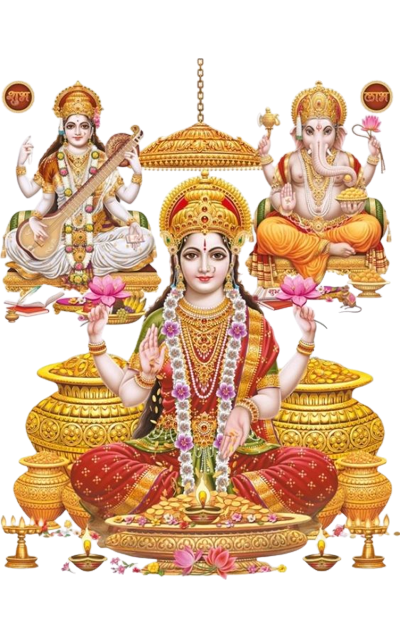
 धन-धान्य एवं सुख-समृद्धि की देवी
The complete Lakshmi Chalisa in Devanagari with meaning, vidhi and benefits for those seeking Ma Lakshmi's grace over wealth, prosperity and inner contentment.
Goddess Lakshmi, the divine consort of Bhagwan Vishnu, is worshipped across India as the giver of dhan (wealth), dhanya (grain), aishwarya (prosperity) and saubhagya (good fortune). The Lakshmi Chalisa, composed by the devotee-poet Ramdas, is a forty-verse hymn that traces her many forms and appeals to her compassionate nature, asking her to remove poverty, sorrow and want from the life of every sincere devotee.
Complete Lakshmi Chalisa (Devanagari)
मातु लक्ष्मी करि कृपा करो हृदय में वास। मनो कामना सिद्ध कर पुरवहु मेरी आस॥
सिंधु सुता विष्णुप्रिये नत शिर बारंबार। ऋद्धि सिद्धि मंगलप्रदे नत शिर बारंबार॥
सिन्धु सुता मैं सुमिरौं तोही। ज्ञान बुद्धि विद्या दो मोहि॥ तुम समान नहिं कोई उपकारी। सब विधि पुरबहु आस हमारी॥
जै जै जगत जननि जगदम्बा। सबके तुमही हो स्वलम्बा॥ तुम ही हो घट घट के वासी। विनती यही हमारी खासी॥
जग जननी जय सिन्धु कुमारी। दीनन की तुम हो हितकारी॥ विनवौं नित्य तुमहिं महारानी। कृपा करौ जग जननि भवानी॥
केहि विधि स्तुति करौं तिहारी। सुधि लीजै अपराध बिसारी॥ कृपा दृष्टि चितवो मम ओरी। जगत जननि विनती सुन मोरी॥
ज्ञान बुद्धि जय सुख की दाता। संकट हरो हमारी माता॥ क्षीर सिंधु जब विष्णु मथायो। चौदह रत्न सिंधु में पायो॥
चौदह रत्न में तुम सुखरासी। सेवा कियो प्रभुहिं बनि दासी॥ जब जब जन्म जहां प्रभु लीन्हा। रूप बदल तहं सेवा कीन्हा॥
स्वयं विष्णु जब नर तनु धारा। लीन्हेउ अवधपुरी अवतारा॥ तब तुम प्रकट जनकपुर माहीं। सेवा कियो हृदय पुलकाहीं॥
अपनायो तोहि अन्तर्यामी। विश्व विदित त्रिभुवन की स्वामी॥ तुम सब प्रबल शक्ति नहिं आनी। कहँ तक महिमा कहौं बखानी॥
मन क्रम वचन करै सेवकाई। मन-इच्छित वांछित फल पाई॥ तजि छल कपट और चतुराई। पूजहिं विविध भाँति मन लाई॥
और हाल मैं कहौं बुझाई। जो यह पाठ करे मन लाई॥ ताको कोई कष्ट न होई। मन इच्छित फल पावै फल सोई॥
त्राहि-त्राहि जय दुःख निवारिणी। त्रिविध ताप भव बंधन हारिणि॥ जो यह चालीसा पढ़े और पढ़ावे। इसे ध्यान लगाकर सुने सुनावै॥
ताको कोई न रोग सतावै। पुत्र आदि धन सम्पत्ति पावै॥ पुत्र हीन और सम्पत्ति हीना। अन्धा बधिर कोढ़ी अति दीना॥
विप्र बोलाय कै पाठ करावै। शंका दिल में कभी न लावै॥ पाठ करावै दिन चालीसा। ता पर कृपा करैं गौरीसा॥
सुख सम्पत्ति बहुत सी पावै। कमी नहीं काहू की आवै॥ बारह मास करै जो पूजा। तेहि सम धन्य और नहिं दूजा॥
प्रतिदिन पाठ करै मन माहीं। उन सम कोई जग में नाहिं॥ बहु विधि क्या मैं करौं बड़ाई। लेय परीक्षा ध्यान लगाई॥
करि विश्वास करैं व्रत नेमा। होय सिद्ध उपजै उर प्रेमा॥ जय जय जय लक्ष्मी महारानी। सब में व्यापित जो गुण खानी॥
तुम्हरो तेज प्रबल जग माहीं। तुम सम कोउ दयाल कहूँ नाहीं॥ मोहि अनाथ की सुधि अब लीजै। संकट काटि भक्ति मोहि दीजे॥
भूल चूक करी क्षमा हमारी। दर्शन दीजै दशा निहारी॥ बिन दरशन व्याकुल अधिकारी। तुमहिं अक्षत दुःख सहते भारी॥
नहिं मोहिं ज्ञान बुद्धि है तन में। सब जानत हो अपने मन में॥ रूप चतुर्भुज करके धारण। कष्ट मोर अब करहु निवारण॥
कहि प्रकार मैं करौं बड़ाई। ज्ञान बुद्धि मोहिं नहिं अधिकाई॥ रामदास अब कहै पुकारी। करो दूर तुम विपति हमारी॥
त्राहि त्राहि दुःख हारिणी हरो बेगि सब त्रास। जयति जयति जय लक्ष्मी करो शत्रुन का नाश॥ रामदास धरि ध्यान नित विनय करत कर जोर। मातु लक्ष्मी दास पर करहु दया की कोर॥
Meaning
Opening Doha: The devotee bows to Mother Lakshmi, praying that she graciously make his heart her dwelling place and fulfil his heartfelt wishes.
Verses 1-4: Lakshmi is saluted as the daughter of the ocean (Sindhu Suta) and the beloved of Vishnu, the giver of Riddhi-Siddhi and auspiciousness. The devotee asks her for knowledge, wisdom and learning, declaring that no other benefactor equals her. She is praised as the Mother of the universe who dwells in every heart, and the devotee prays for her constant compassion.
Verses 5-9: The devotee wonders how he can adequately praise her and asks her to overlook his shortcomings and turn her merciful gaze towards him. The chalisa recalls the churning of the ocean of milk (Samudra Manthan) by the devas and asuras, from which fourteen precious treasures — including Lakshmi herself — emerged. Wherever Vishnu took avatar, she too appeared in a matching form to serve him; when he was born as Sri Ram in Ayodhya, she appeared as Sita in Janakpur, and served him with a joyful heart. She is the indweller (Antaryami) of all, the sovereign of the three worlds, whose glory cannot be fully described.
Verses 10-17: Whoever serves her sincerely in thought, word and deed obtains the fruit of their heart's desire. Those who worship without deceit or cunning attain what they seek. The reciter of this chalisa with full attention is freed from suffering; a Brahmin invited to recite it removes all doubt from the heart, and Lord Shiva himself is pleased. Regular worship for twelve months brings unmatched prosperity, and daily recitation with devotion has no equal in this world.
Significance and Benefits
The Lakshmi Chalisa is chanted by devotees who wish to invite abundance, stability and grace into their homes and businesses. Traditional belief holds that sincere recitation:
Removes financial obstacles and clears long-standing debts when combined with honest effort and right livelihood.
Brings harmony and Riddhi-Siddhi (prosperity and accomplishment) into the household, especially when chanted on Fridays.
Increases confidence, contentment and freedom from the anxiety that comes with scarcity.
Is believed to protect the reciter from unexpected loss and to strengthen discipline, gratitude and generosity — qualities that Lakshmi is said to favour.
How and When to Chant (Vidhi)
Best day: Friday is considered especially dear to Ma Lakshmi; the chalisa is also chanted daily during Sharad Purnima, Diwali and throughout the month of Kartik.
Best time: Early morning after bathing, or in the evening at dusk (sandhya kaal), which is considered Lakshmi's most favoured hour.
Preparation: Light a ghee diya before a picture or idol of Ma Lakshmi, offer a fresh flower, akshat (unbroken rice) and a little kumkum, and sit facing east or north.
Method: Recite the chalisa with a calm, attentive mind, ideally 1, 5 or 11 times. Some devotees use a lotus-seed or crystal mala to count repetitions over 11 or 21 days for a specific wish (sankalp).
Conclude with a short prayer of gratitude and, if possible, offer something to those in need — charity is considered dear to Lakshmi.
Dos and Don'ts
Do keep the space of worship clean and lit; Lakshmi is said to avoid clutter and darkness.
Do chant with sincerity rather than haste; a few focused verses are better than a rushed reading.
Do combine the practice with honest work and financial discipline — the chalisa is a support to effort, not a replacement for it.
Avoid chanting in a state of anger or after consuming intoxicants.
Avoid making the practice purely transactional; approach it as an expression of gratitude and humility, not demand.
Mahatmya (Glory of the Chalisa)
Devotional tradition holds that this chalisa was composed by Ramdas out of deep personal devotion, and that regular reciters over time notice a subtle but steady shift — less anxiety about money, better decision-making, and unexpected help arriving at the right moment. Elders often advise pairing the chalisa with the Lakshmi Ashtottara or a simple diya-lighting ritual on Fridays for consistent, long-term benefit rather than a one-time result.
Frequently Asked Questions
Who composed the Lakshmi Chalisa? Traditional sources attribute the Lakshmi Chalisa to the devotee-poet Ramdas, whose name appears in the closing verses of the hymn itself.
Can the Lakshmi Chalisa be recited by anyone, regardless of gender or age? Yes. There is no restriction of gender, age or background for reciting the Lakshmi Chalisa — sincerity and respect are what matter most.
Is it necessary to chant it exactly 40 times or on a mala? No fixed count is mandatory. Many devotees recite it once or a few times daily; using a mala for 11 or 21 days is a personal devotional practice, not a strict rule.
Does chanting the Lakshmi Chalisa guarantee wealth? Sanatan tradition views the chalisa as a means of seeking divine grace, discipline and gratitude alongside one's own honest effort — not as a substitute for hard work or financial planning.
Quick guide
Before you begin
Mantra
Lakshmi mantra
Om Shreem Mahalakshmyai Namah
Chant on Friday or during Lakshmi puja for prosperity, grace, and sattvic abundance.
Bhav
Benefits devotees pray for
FAQ
Common questions
Who composed the Lakshmi Chalisa?
Traditional sources attribute it to the devotee-poet Ramdas, named in its closing verses.
Is there a fixed count for reciting it?
No fixed count is mandatory; daily recitation once, or a mala-based practice for 11 or 21 days, are both common.
Which day is best for chanting?
Friday is considered most dear to Ma Lakshmi, along with Sharad Purnima and Diwali.
Does it guarantee wealth?
It is a means of seeking grace and cultivating discipline and gratitude, not a substitute for honest effort and financial planning.
Seek Ma Lakshmi's Blessings Through a Sacred Puja
Let our pandits perform an authentic Lakshmi Puja on your behalf, with sankalp in your name and gotra, for lasting prosperity and peace at home.