


 हारे का सहारा
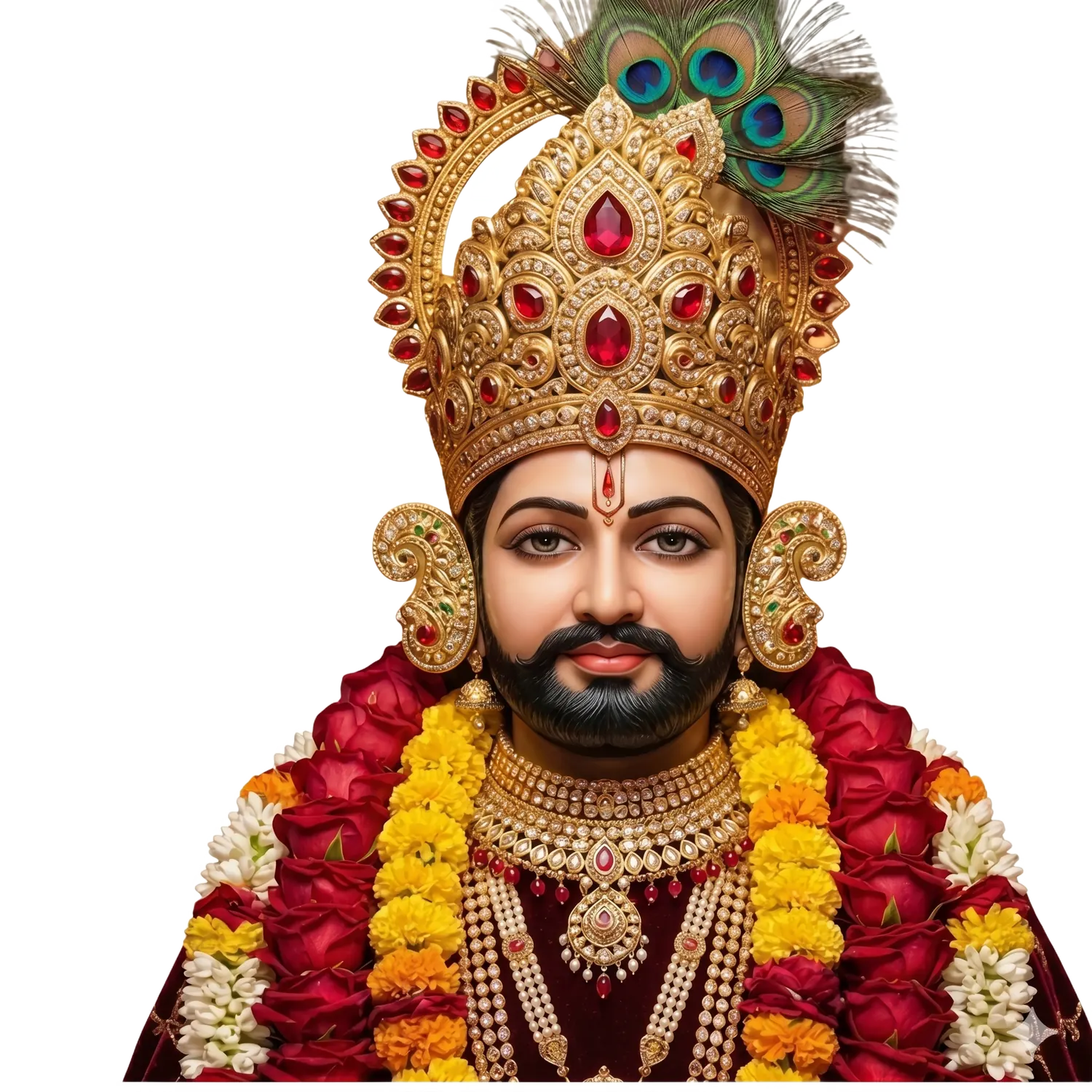
The complete Khatu Shyam Chalisa with Devanagari lyrics and meaning — a devotional hymn to Barbarik, the Sheesh ke Daani, worshipped as Khatu Shyam Baba for swift blessings and protection.
Khatu Shyam Baba is the popular name of Barbarik, grandson of the mighty Pandava Bhima and his son Ghatotkacha. In the Mahabharata, Barbarik was granted three infallible arrows by Lord Shiva, so powerful that he alone could end any war in a single moment. To test his devotee's resolve before the great war of Kurukshetra, Lord Krishna, disguised as a Brahmin, asked Barbarik for his head in charity (sheesh daan). Barbarik unhesitatingly cut off his own head and offered it to Krishna, who was so moved by this supreme sacrifice that he granted Barbarik a boon: in Kaliyuga, he would be worshipped under the name Shyam, and would be known as "Hare ka Sahara" — the support of the hopeless and the defeated. His head is enshrined at Khatu town in Sikar district, Rajasthan, one of India's most visited pilgrimage sites, especially during the Falgun mela.
Complete Khatu Shyam Chalisa (Devanagari)
दोहा
श्री गुरु चरण सरोज रज, निज मन मुकुर सुधार। वर्णौं श्याम बाबा यश, जो दायक फल चार।।
बुद्धिहीन तनु जानिके, सुमिरौं श्याम कृपाल। बल बुद्धि विद्या देहु मोहि, हरहु कलेश विशाल।।
चौपाई
जय जय श्री खाटू के राजा। पूरण करो हमारे काजा।। बाबा श्याम हरो दुःख भारी। जय हो श्याम कृपा अवतारी।।
बाबा तेरो नाम भरोसा। कष्ट मिटे तेरे दर पर आसा।। भीम पुत्र घटोत्कच नंदन। बर्बरीक कहलाए वंदन।।
तीन बाण शिव वर से पाए। जिनसे तीनों लोक कंपाए।। जब महाभारत रण ठाना। कृष्ण जी ने भेद पहचाना।।
बर्बरीक कह्यो रण देखन आयो। जिस पर विजय, उसी संग जाऊं।। कृष्ण जी ने ब्राह्मण रूप बनाया। शीश दान का वचन कराया।।
बिना संकोच शीश कटायो। कृष्ण चरणों में अर्पण पायो।। प्रसन्न भए तब श्याम मुरारी। वर दीन्हों तुम भक्त हितकारी।।
कलियुग में पूजे जाओगे। श्याम नाम से जाने जाओगे।। हारे का सहारा नाम कहाओगे। भक्तन के मन भाओगे।।
खाटू नगरी में शीश समाया। मोरवी नदी तट सुख पाया।। अरावली पर्वत की छाया। शीश प्रकट भक्तन सुख छाया।।
फाल्गुन मास लगे मेला। भक्त करें हर्षित खेला।। दूर दूर से आवें भक्ता। शीश झुकावें हो शुभ रक्षा।।
निष्काम भाव से जो आवे। मन वांछित फल शीघ्र पावे।। जिनका कोई नहीं सहारा। श्याम बाबा तिनको उबारा।।
द्रोपदी की लाज बचाई। महाभारत में कीर्ति पाई।। भक्तवत्सल तुम दीनदयाला। सेवक जान करो प्रतिपाला।।
निशदिन ध्यान धरे जो कोई। ता पर कृपा श्याम की होई।। रोगी निरोगी होई जाई। दुःखी सुखी मन वांछित पाई।।
निर्धन को धन-धान्य प्रदाता। संकटमोचन तुम ही त्राता।। भक्तन के तुम काज संवारो। हारे को सहारा तुम्हारो।।
लख्खी मेला भरे बसंता। दूर करो जन के सब चिंता।। कोटि कोटि भक्त शीश नवावें। मनवांछित वरदान ते पावें।।
तुम्हरी महिमा अगम अपारा। वर्णन करि सकहीं न पारा।। जो यह पाठ करे मन लाई। ता पर कृपा श्याम की छाई।।
सुख सम्पत्ति सुत सबहीं पावे। दुःख दरिद्र निकट नहिं आवे।। अष्ट सिद्धि नव निधि के दाता। श्याम बाबा जग विख्याता।।
अंत समय रघुबर पुर जाई। जहां जन्म हरिभक्त कहाई।। जय श्री श्याम सुनहु अरजाई। करहु कृपा अपनो जन जाई।।
दोहा
श्याम चालीसा पाठ जो, करहिं ध्यान लगाय। खाटू नाथ कृपा करैं, हारे का सहारा पाय।।
Meaning
Opening dohas: The devotee prays for wisdom and clarity to describe Khatu Shyam Baba's glory, acknowledging his own limitations and seeking the deity's grace.
Verses on identity: The Chalisa establishes Barbarik as the grandson of Bhima and son of Ghatotkacha, who received three infallible arrows from Lord Shiva capable of ending any war instantly.
The sheesh daan (head donation) episode: Before the Mahabharata war, Barbarik declared he would fight on the side of whichever army was losing — a boon so decisive it would have ended the war unfairly quickly. Krishna, disguised as a Brahmin, tested his devotion by asking for his head in charity. Barbarik unhesitatingly cut off his own head and offered it without hesitation, prompting Krishna to grant him the boon of being worshipped in Kaliyuga as Shyam, "the support of the hopeless" (Hare ka Sahara).
Verses on Khatu and the mela: The hymn describes how Barbarik's head is enshrined at Khatu, near the Aravalli hills and the Moravi river, drawing lakhs of devotees especially during the famous Falgun mela (Lakkhi Mela), where devotees bow their heads seeking his swift grace.
Grace verses: Whoever approaches Khatu Shyam Baba with a selfless heart quickly receives their heart's wishes fulfilled; the sick become healthy, the sorrowful find joy, and the poor receive prosperity — for he is Sankatmochan, the remover of obstacles, and the refuge of those who have no other support.
Closing verses: Regular recitation with a devoted mind brings happiness, prosperity, children's welfare, and freedom from poverty and sorrow, with the promise of Khatu Shyam Baba's protective grace.
Why Chant the Khatu Shyam Chalisa
Brings swift relief in situations that feel hopeless or where all other efforts have failed — hence the name "Hare ka Sahara."
Removes obstacles in career, business, health, and relationships.
Instils courage and selfless devotion, following Barbarik's example of supreme sacrifice.
Fulfils sincere, righteous wishes when approached with a pure and humble heart.
How and When to Chant
Best day: Ekadashi and Tuesday are especially auspicious for Khatu Shyam Baba worship, as is the entire month of Falgun (leading up to the Khatu mela).
Best time: Early morning after bathing, or during the evening aarti hour, before an image of Khatu Shyam Baba.
Method: Sit facing the image with a calm mind, light a ghee diya, offer a garland of flowers, and chant with the belief that he never turns away a sincere devotee, however hopeless the situation.
Offerings: Panjiri (a sweet made of flour, ghee and sugar), betel leaves (paan), and flowers are traditionally offered; devotees also observe simple fasts on Ekadashi in his honour.
Dos and Don'ts
Do approach with humility and a selfless heart, as Barbarik himself exemplified ultimate selflessness.
Do maintain honesty and simplicity in daily conduct.
Avoid seeking his blessing for unrighteous or selfish causes, as he is known to bless only sincere, dharmic wishes.
Avoid non-vegetarian food and alcohol on days of worship, especially during the Falgun mela period.
Mahatmya (Glory)
The story of Barbarik's sheesh daan is one of the most moving episodes connected to the Mahabharata — a devotee who gave his very head without a moment's hesitation, purely out of devotion and duty. Krishna's boon that Barbarik be worshipped as Shyam in Kaliyuga has made Khatu Shyam Baba one of the most beloved deities in North India today, with millions visiting Khatu, Rajasthan, each year, believing that he answers even the most desperate prayers when other doors seem closed.
Frequently Asked Questions
Q: Who is Khatu Shyam Baba? A: He is Barbarik, grandson of Bhima, who sacrificed his head to Lord Krishna before the Mahabharata war and was blessed to be worshipped in Kaliyuga as Shyam, the support of the hopeless.
Q: When is the best time to visit Khatu or chant this Chalisa? A: The Falgun mela (usually in February-March) is the most significant time, though Ekadashi and Tuesdays are auspicious for regular worship throughout the year.
Q: Why is Khatu Shyam Baba called "Hare ka Sahara"? A: Because he is believed to bless and support devotees especially in situations that feel lost or hopeless, when all other efforts have failed.
Q: Can anyone chant the Khatu Shyam Chalisa, regardless of tradition? A: Yes, Khatu Shyam Baba is worshipped widely across communities and traditions in North India; sincere devotion is all that is required.
Quick guide
Before you begin
Mantra
Khatu Shyam mantra
Om Shri Shyam Devaya Namah
Chant with love and surrender, especially before Shyam Baba katha, aarti, or bhog.
Bhav
Benefits devotees pray for
FAQ
Common questions
Who is Khatu Shyam Baba?
He is Barbarik, grandson of Bhima, who sacrificed his head to Krishna before the Mahabharata war and was blessed to be worshipped in Kaliyuga as Shyam.
When is the best time to visit Khatu or chant this Chalisa?
The Falgun mela is most significant, though Ekadashi and Tuesdays are auspicious year-round.
Why is he called 'Hare ka Sahara'?
Because he is believed to support devotees in the most hopeless situations, when all other efforts have failed.
Can anyone chant this Chalisa?
Yes, Khatu Shyam Baba is worshipped widely across communities; sincere devotion is all that is required.
Seeking Khatu Shyam Baba's swift grace?
Book an authentic Khatu Shyam Puja performed with proper vidhi to seek Baba's blessings in difficult times.