



 ॐ ह्रीं बटुकाय आपदुद्धारणाय कुरु कुरु बटुकाय ह्रीं
Kaal Bhairav, the fierce protective form of Bhagwan Shiv, is invoked through powerful mantras and the Kaal Bhairav Ashtakam for protection from fear, enemies and untimely misfortune.
Who Is Kaal Bhairav
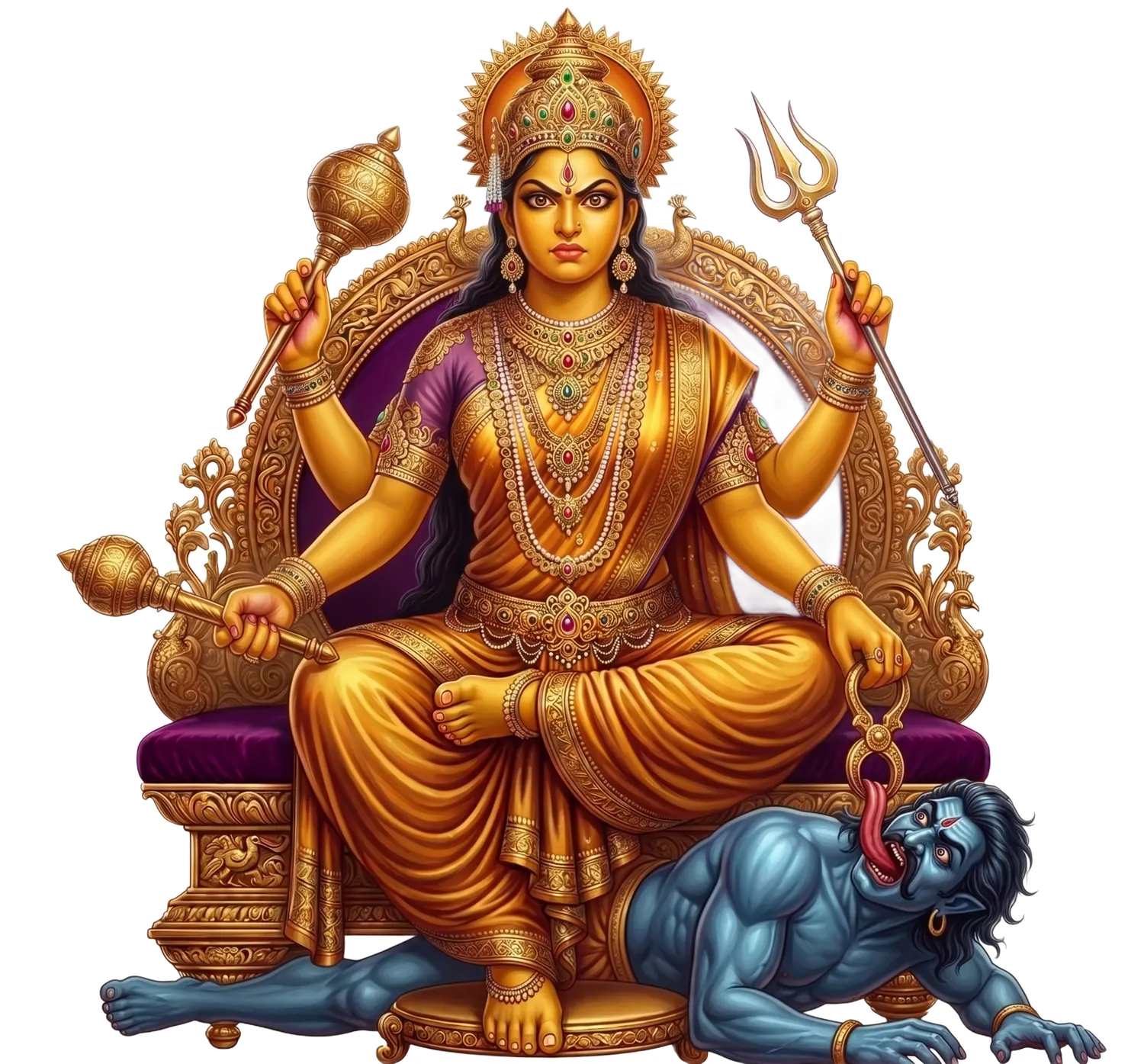
Kaal Bhairav is the fierce, protective form of Bhagwan Shiv, worshipped as the guardian of time (kaal) and the dispeller of fear, negativity and untimely death. He is the kotwal, the chief guardian, of every Shiv temple and of every city where Shiv is worshipped, and legend holds that no devotee's prayers are truly complete without first seeking Kaal Bhairav's permission at His threshold. He rides a dog (Shwan), holds a trishul, damaru, noose and skull-bowl, and is depicted in two principal forms: the gentle Batuk Bhairav for household worship, and the fierce Kaal Bhairav for the destruction of ego, fear and evil.
Kaal Bhairav mantras are chanted by devotees seeking protection from enemies, black magic, court cases, sudden dangers, and the fear of death itself. He is especially worshipped on Kaal Bhairav Ashtami (Margashirsha Krishna Ashtami) and every Sunday.
Kaal Bhairav Beej Mantra
ॐ ह्रीं बटुकाय आपदुद्धारणाय कुरु कुरु बटुकाय ह्रीं
Meaning: Om, I salute the seed sound of Bhairav; O Batuk (child form of Bhairav), remover of all calamities, act swiftly, act now, O Batuk, salutations to You.
Kaal Bhairav Moola Mantra
ॐ भयहरणं च भैरवं सर्वरोगहरं शिवम्। सर्वसंकटनाशनं वन्दे भैरवमीश्वरम्॥
Meaning: I bow to Bhairav, who removes fear, who is a form of Shiv that cures all ailments, and who destroys all obstacles and troubles. I salute Ishwar Bhairav.
Kaal Bhairav Ashtakam (Selected Verses)
देवराजसेव्यमानपावनाङ्घ्रिपङ्कजं व्यालयज्ञसूत्रमिन्दुशेखरं कृपाकरम्। नारदादियोगिवृन्दवन्दितं दिगम्बरं काशिकापुराधिनाथकालभैरवं भजे॥१॥
भानुकोटिभास्वरं भवाब्धितारकं परं नीलकण्ठमीप्सितार्थदायकं त्रिलोचनम्। कालकालमम्बुजाक्षमक्षशूलमक्षरं काशिकापुराधिनाथकालभैरवं भजे॥२॥
शूलटङ्कपाशदण्डपाणिमादिकारणं श्यामकायमादिदेवमक्षरं निरामयम्। भीमविक्रमं प्रभुं विचित्रताण्डवप्रियं काशिकापुराधिनाथकालभैरवं भजे॥३॥
धर्मसेतुपालकं त्वधर्ममार्गनाशकं कर्मपाशमोचकं सुशर्मदायकं विभुम्। स्वर्णवर्णशेषपाशशोभिताङ्गमण्डलं काशिकापुराधिनाथकालभैरवं भजे॥४॥
रत्नपादुकाप्रभाभिरामपादयुग्मकं नित्यमद्वितीयमिष्टदैवतं निरञ्जनम्। मृत्युदर्पनाशनं करालदंष्ट्रमोक्षणं काशिकापुराधिनाथकालभैरवं भजे॥५॥
अट्टहासभिन्नपद्मजाण्डकोशसन्ततिं दृष्टिपातनष्टपापजालमुग्रशासनम्। अष्टसिद्धिदायकं कपालमालिकाधरं काशिकापुराधिनाथकालभैरवं भजे॥६॥
भूतसंघनायकं विशालकीर्तिदायकं काशिवासलोकपुण्यपापशोधकं विभुम्। नीतिमार्गकोविदं पुरातनं जगत्पतिं काशिकापुराधिनाथकालभैरवं भजे॥७॥
कालभैरवाष्टकं पठन्ति ये मनोहरं ज्ञानमुक्तिसाधनं विचित्रपुण्यवर्धनम्। शोकमोहदैन्यलोभकोपतापनाशनं प्राप्नुवन्ति भैरवाङ्घ्रिसन्निधिं नरा ध्रुवम्॥८॥
Meaning of the Ashtakam
The Kaal Bhairav Ashtakam, traditionally composed by Adi Shankaracharya, glorifies Bhairav as the guardian deity of Kashi (Varanasi), whose lotus feet are worshipped even by Indra, the king of devas. He is described as radiant like a crore suns, the one who helps devotees cross the ocean of worldly existence, blue-throated, three-eyed, and the destroyer of even death itself (Kaal-Kaal). He carries the trishul, axe, noose and staff, is dark-complexioned, formless yet manifest, and is the primal cause of creation. He upholds dharma and dissolves the bondage of karma, granting true well-being to His devotees. His feet are adorned with jewelled sandals, He is unique and unequalled, He destroys the pride of death, and He liberates from the fear of the terrifying jaws of time. His mere glance destroys the accumulated sins of countless lifetimes, and He grants the eight siddhis to sincere devotees. He is the lord of the spirit hosts (Bhoot Gana), the giver of vast fame, the purifier of the merits and sins of all who dwell in Kashi, and the ancient, eternal Lord of the universe. The final verse declares that whoever recites this beautiful ashtakam attains knowledge, liberation, and an increase of virtue, and is freed from grief, delusion, poverty, greed, anger and affliction, surely attaining nearness to Bhairav's feet.
Why Devotees Chant the Kaal Bhairav Mantra
Kaal Bhairav is invoked especially in moments of fear, danger, legal trouble, enmity, or when a person feels surrounded by negative energy. Because He governs time and destroys ego and evil, His mantra is considered a powerful shield against untimely misfortune, black magic, and the malefic effects of certain planetary periods, especially those connected with Shani (Saturn), Rahu and Ketu. Devotees also chant to Kaal Bhairav for justice in disputes and for protection while travelling or living away from home.
How and When to Chant
Best day: Sunday, and especially Kaal Bhairav Ashtami (Margashirsha Krishna Paksha Ashtami), which falls a few days before Diwali each year.
Best time: Late evening or midnight is traditionally considered powerful for Bhairav worship, though sincere devotees may also chant at any time of steady practice, especially in the morning.
Preparation: Face south or the direction of the nearest Bhairav or Shiv temple if possible. Offer mustard oil diya, black til (sesame), urad dal or a simple offering to a dog, since the dog is Bhairav's vahan and feeding a dog is considered equivalent to pleasing Bhairav.
Method: Begin with the beej mantra 108 times using a rudraksha mala, then recite the moola mantra or the ashtakam. Consistency over weeks, rather than one long single session, is considered more fruitful.
Benefits of Chanting
Protection from fear, danger and untimely misfortune, relief from the negative effects of black magic or evil eye, help in resolving disputes, litigation and enmity when combined with right conduct, courage and mental strength in the face of adversity, and the removal of obstacles in career, health and family life.
Dos and Don'ts
Maintain purity of thought and speech before and during chanting. Avoid non-vegetarian food and alcohol on the day of worship if observing a vrat. Never use Bhairav mantras for causing harm to others; Bhairav worship in Sanatan Dharma is protective, not vengeful. Feeding stray dogs, especially black dogs, on Sundays is considered a simple and powerful way to please Kaal Bhairav.
Frequently Asked Questions
Quick guide
Before you begin
Mantra
Kaal Bhairav mantra
Om Kaal Bhairavaya Namah
Chant with a clean sankalp, especially on the advised remedy day and time.
Bhav
Benefits devotees pray for
FAQ
Common questions
Who should chant the Kaal Bhairav Mantra?
Anyone seeking protection from fear, enmity, legal trouble or negative energy can chant it, with sincere devotion and respect for its protective, non-vengeful purpose.
Why is feeding dogs connected to Kaal Bhairav worship?
The dog is Kaal Bhairav's vahan (vehicle), so feeding stray dogs, especially on Sundays, is considered a simple and powerful way to please Him.
What is Kaal Bhairav Ashtami?
It falls on Margashirsha Krishna Paksha Ashtami, a few days before Diwali, and is the most important day for worshipping Kaal Bhairav.
Can the Kaal Bhairav mantra be used to harm someone?
No. Bhairav worship in Sanatan Dharma is strictly protective. These mantras should never be used with intent to harm others.
Invoke Kaal Bhairav's Protection
Book a puja dedicated to Kaal Bhairav and let our pandits perform the sankalp and vidhi for protection and peace on your behalf.