

 वक्रतुण्ड महाकाय सूर्यकोटि समप्रभ
Read the complete katha of Lord Ganesha's divine birth from Mata Parvati, how he received his elephant head, and the full puja vidhi for Ganesh Chaturthi.
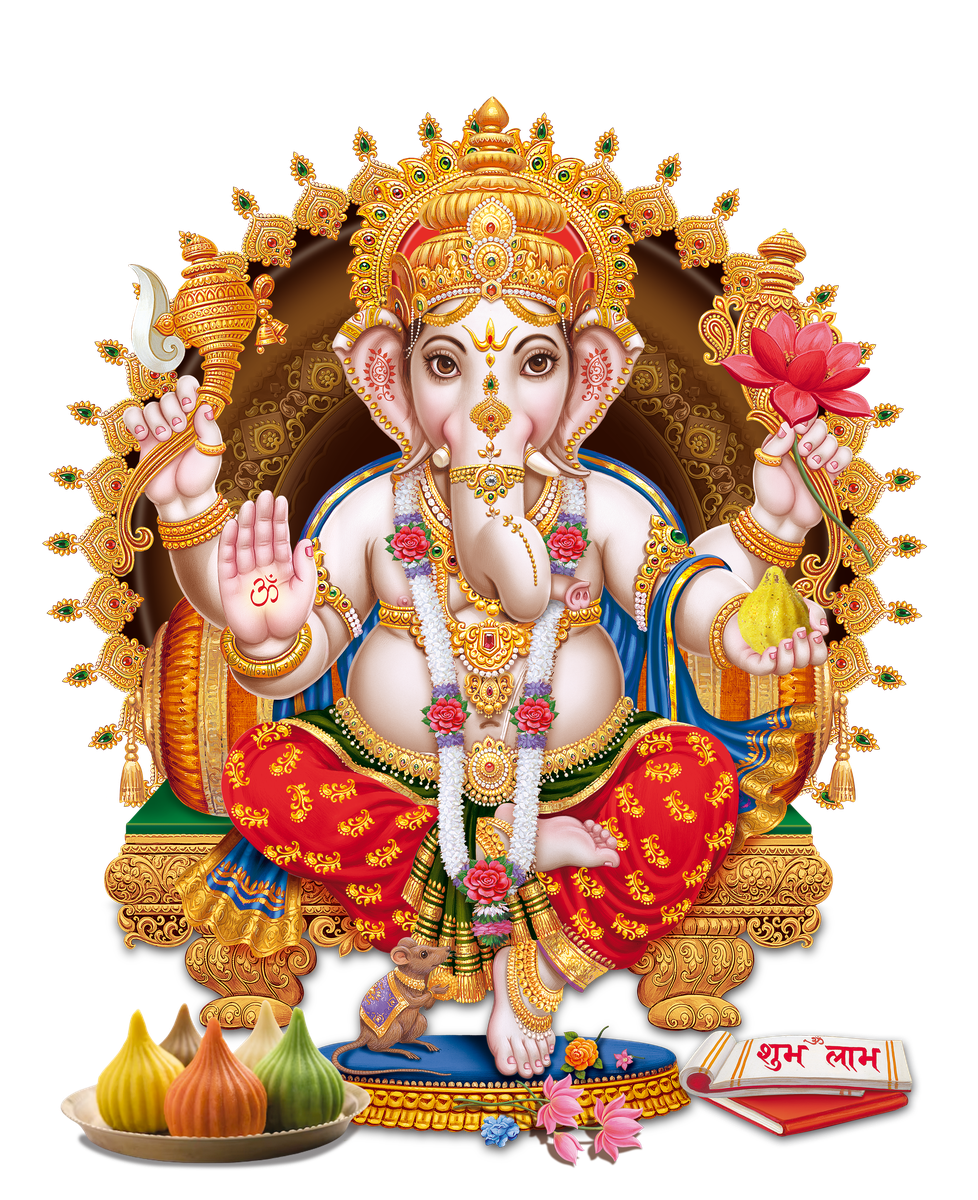
Ganesh Chaturthi celebrates the birth of Lord Ganesha, the beloved elephant-headed deity, remover of obstacles and lord of wisdom and new beginnings. Observed on the Chaturthi of Shukla Paksha in the month of Bhadrapada, this ten-day festival culminates in Ganesh Visarjan, when clay idols of Ganesha are immersed in water bodies with great devotion.
The Katha of Ganesh Chaturthi
Once, Mata Parvati wished to bathe in privacy and, finding no one to guard the entrance of her chamber, she created a young boy from the turmeric paste (ubtan) she had applied to her body, breathing life into him. She instructed him lovingly to stand guard at the door and allow no one to enter while she bathed.
The boy took his duty with utmost seriousness. Soon after, Lord Shiva himself returned home and attempted to enter his own chamber, but the boy, not knowing who Shiva was, firmly blocked his path, declaring that no one may enter while his mother bathed. Shiva, unaccustomed to being refused entry to his own house, tried to reason and then grew angry, but the boy remained resolute in his duty, refusing to move even an inch.
A fierce battle ensued between Shiva's ganas and the boy, and one by one, the boy defeated them all with his strength, for he was born of Shakti herself. Enraged, Lord Shiva finally arrived and, in the heat of the confrontation, severed the boy's head with his trishul.
When Mata Parvati emerged and saw her beloved son lying lifeless, her grief and fury shook the three worlds. Overwhelmed with sorrow and rage, she threatened to destroy all of creation unless her son was restored to life. The Devas pleaded for mercy, and Lord Shiva, realizing the boy was indeed his own son born of Parvati's divine energy, agreed to revive him.
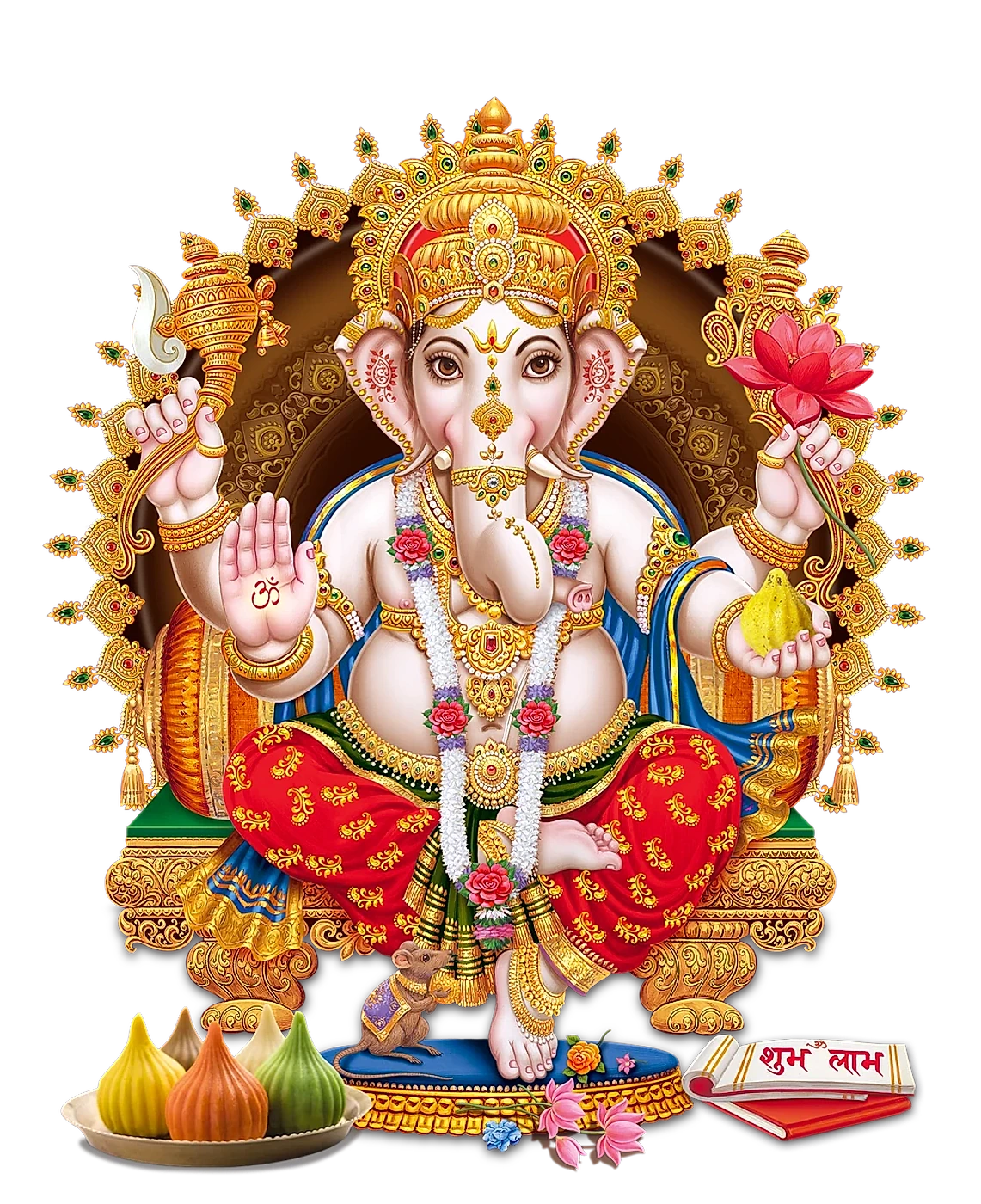
He sent his ganas out with instructions to bring back the head of the very first creature they found sleeping with its head facing north. The first creature they encountered was an elephant, and they brought back its head. Lord Shiva then attached the elephant's head to the boy's body and breathed life back into him, and thus was born Ganesha, with the head of an elephant and the body of a boy.
To make amends and honour him, Lord Shiva declared that Ganesha would be worshipped before any other deity in all rituals and ceremonies, that no auspicious work would begin without first invoking him, and that he would be the leader (Ganapati) of Shiva's ganas, the remover of all obstacles, Vighnaharta, and the bestower of wisdom and success.
Another well-loved katha tells us why the moon must not be viewed on Ganesh Chaturthi night. Once, after enjoying a grand feast, Ganesha was riding his mouse home when the moon, Chandra Dev, seeing his large belly and unusual form, could not help but laugh mockingly at him. Angered by this insult, Ganesha cursed the moon that whoever looks upon him would incur unwarranted blame and false accusations. Realizing his folly, Chandra Dev begged forgiveness, and Ganesha softened the curse, decreeing that the effect would apply only on Ganesh Chaturthi day, and that anyone who inadvertently sees the moon on this day should listen to or recite the story of Syamantaka Mani to be freed from the curse.
Ganesh Chaturthi Puja Vidhi
Samagri needed: a clay idol of Ganesha (preferably eco-friendly), red cloth, durva grass, red flowers especially hibiscus, modak or laddoo, roli, chawal, janeu (sacred thread), coconut, fruits, incense, and a diya.
Step by step vidhi:
Install the Ganesha idol on a clean, decorated platform, ideally facing east or the family's puja direction, and take a sankalp for the ten-day worship.
Bathe the idol, if appropriate for the material, or clean it gently with a soft cloth, then adorn it with a red cloth or new attire.
Apply roli and chawal to the forehead of the idol, and offer a janeu if performing a more elaborate ritual.
Offer 21 blades of durva grass, considered Ganesha's most beloved offering, tied in pairs, along with red flowers and hibiscus.
Offer modak or laddoo as bhog, ideally 21 pieces, along with fruits and sweets.
Light incense and a diya, and perform the aarti with the whole family, chanting Jai Ganesh Deva.
Recite the Ganesh Chalisa or chant Om Gan Ganpataye Namah as many times as possible.
Each day of the festival, offer fresh flowers, durva and bhog, and on the final day, perform a farewell puja before taking the idol for Visarjan with the chant Ganpati Bappa Morya, Purchya Varshi Laukariya, expressing hope for his return the following year.
Significance and Benefits
Ganesh Chaturthi teaches devotion, duty and the strength of a mother's love, while Ganesha himself embodies wisdom, humility despite an unusual form, and the power to overcome any obstacle through faith and sincere effort. Worshipping him at the start of any new venture, home, marriage or festival is believed to ensure a smooth and successful outcome.
This vrat and its rituals are matters of tradition and devotion, meant to inspire faith, gratitude and wisdom in daily life.
Quick guide
Before you begin
Mantra
Ganesh mantra
Om Gam Ganapataye Namah
Chant before beginning the puja, aarti, study, business, or any new work.
Bhav
Benefits devotees pray for
FAQ
Common questions
How did Lord Ganesha get his elephant head?
After Lord Shiva unknowingly severed the head of Parvati's guardian son, he revived him by attaching the head of an elephant, the first sleeping creature his ganas found, and breathed life back into him.
Why should the moon not be seen on Ganesh Chaturthi?
Ganesha cursed Chandra Dev for mocking him, decreeing that anyone who views the moon on this day would face false blame; reciting the Syamantaka Mani story removes this effect if it happens inadvertently.
Why is Durva grass so important in Ganesha puja?
Durva grass is considered Lord Ganesha's most beloved offering and is traditionally offered in pairs, twenty-one blades in total, believed to please him deeply and remove obstacles.
Why is Ganesha worshipped first in all rituals?
Lord Shiva himself declared that Ganesha must be invoked before any other deity in all auspicious work, honouring his devotion and establishing him as Vighnaharta, the remover of obstacles.
Welcome Bappa This Ganesh Chaturthi
Book a complete Ganesh Puja performed by expert pandits to remove obstacles and invite wisdom, success and auspiciousness into your home.