
 नमो नमो दुर्गे सुख करनी
The complete Durga Chalisa in Devanagari with meaning, benefits and the correct method of chanting, especially during Navratri.
Complete Durga Chalisa (Devanagari)
Doha
Namo namo Durge sukh karani. Namo namo Ambe dukh harani.
Nirakar hai jyoti tumhari. Tihun lok phaili ujiyari.
Shashi lalat mukh mahavishala. Netra lal bhrikuti vikrala.
Roop matu ko adhik suhave. Darash karat jan ati sukh pave.
Tum sansar shakti lay keena. Palan hetu anna dhan deena.
Annapurna hui jag pala. Tum hi aadi sundari bala.
Pralaykaal sab nashan hari. Tum Gauri Shiv Shankar pyari.
Shiv yogi tumhare gun gaven. Brahma Vishnu tumhein nit dhyaven.
Roop Saraswati ko tum dhara. De subuddhi rishi munin ubara.
Dhara roop Narsinh ko Amba. Pargat bhai phadkar khamba.
Raksha kari Prahlad bachayo. Hiranyakashyup ko swarg pathayo.
Lakshmi roop dharo jag mahin. Shri Narayan ang samahin.
Kshirsindhu mein karat vilasa. Dayasindhu dijai man aasa.
Hinglaj mein tumhi Bhavani. Mahima amit na jaat bakhani.
Matangi Dhumavati mata. Bhuvaneshwari Bagla sukhdata.
Shri Bhairav Tara jag tarini. Chhinnabhal bhav dukh nivarini.
Kehari vahan soh Bhavani. Langur veer chalat agvani.
Kar mein khappar khadag biraje. Jako dekh kaal dar bhaje.
Sohai astra aur trishula. Jaate uthat shatru hiy shula.
Nagarkot mein tumhi virajat. Tihun lok mein danka bajat.
Shumbh Nishumbh danav tum mare. Raktabeej shankhan sanhare.
Mahishasur nrip ati abhimani. Jehi agh bhaar mahi akulani.
Roop karal Kalika dhara. Sen sahit tum tehi sanhara.
Pari gadh santan par jab jab. Bhai sahai matu tum tab tab.
Amarpuri aru Basav loka. Tab mahima sab rahein ashoka.
Jwala mein hai jyoti tumhari. Tumhein sada pujein nar naari.
Prem bhakti se jo yash gaven. Dukh daridra nikat nahi aave.
Dhyave tumhein jo nar man lai. Janam maran tako chhuti jai.
Jogi sur muni kahat pukari. Yog na hoy bin shakti tumhari.
Shankar aacharaj tap keeno. Kamari durgam agh nasha.
Ramchandra aru Krishna Murari. Tumhi gai sab vipada tari.
Ravan sen sanhar mahi mahin. Jin tum bin kou saka nahin.
Kamalasan aru Mahakali. Din din badhat tej tatkali.
Tumhin Santoshi mata Bhavani. Patal ki devi kahlani.
Tumhin Brahmani Rudrani mata. Tumhin Indrani aru jag trata.
Jin nar dhyan tumhara laya. Sarva siddhi sab jag paya.
Jo yah path kare man lai. Tako mile na kahun dukhdai.
Riddhi siddhi ghar aavat soi. Jo yah path kare kar koi.
Tum bin siddhi na hot Bhavani. Tum bin milat na mukti nirvani.
Pooja se pooja gaven. Bharat mein maan badhat suhaye.
Jai jai jai Durge Bhavani. Sarva shakti mahima gunkhani.
Naam ki sugandh surabhit hai sara. Jo sumirat hot beda para.
Lije lok kalyan ko Ambe. Kije haran tamo kali kambe.
Devidas sharan nij jani. Kije kripa haran bhav prani.
Doha
Devi Durga din dayala, karti hain kalyan. Jo yah padhein Durga Chalisa, hoy siddhi nidan.
Meaning
The opening doha salutes Durga as the bestower of happiness and Amba as the remover of sorrow. Her light is described as formless, illuminating all three worlds. Her face, adorned with the crescent moon, is vast and glowing; her eyes are red, and her fierce, arched brows strike fear into evil, yet her form is so beautiful that mere sight of her fills devotees with deep joy.
It is Durga's shakti that creates and sustains the universe; she gives food and wealth for the nourishment of all beings, appearing as Annapurna to nourish the world, being the primordial beautiful maiden herself. At the time of dissolution, she is the one who withdraws all creation; she is Gauri, the beloved of Shiva Shankar. Shiva and yogis sing her praises; Brahma and Vishnu meditate upon her constantly.
She took the form of Saraswati to grant wisdom, saving sages and seers with true knowledge. As Narsinh (Narasimha) she burst forth from the pillar to protect Prahlad and send the demon Hiranyakashyap to his end. She appears as Lakshmi in the world, dwelling by the side of Lord Narayan, and reclines upon the ocean of milk; the devotee prays to this ocean of compassion to fulfil his heartfelt wishes.
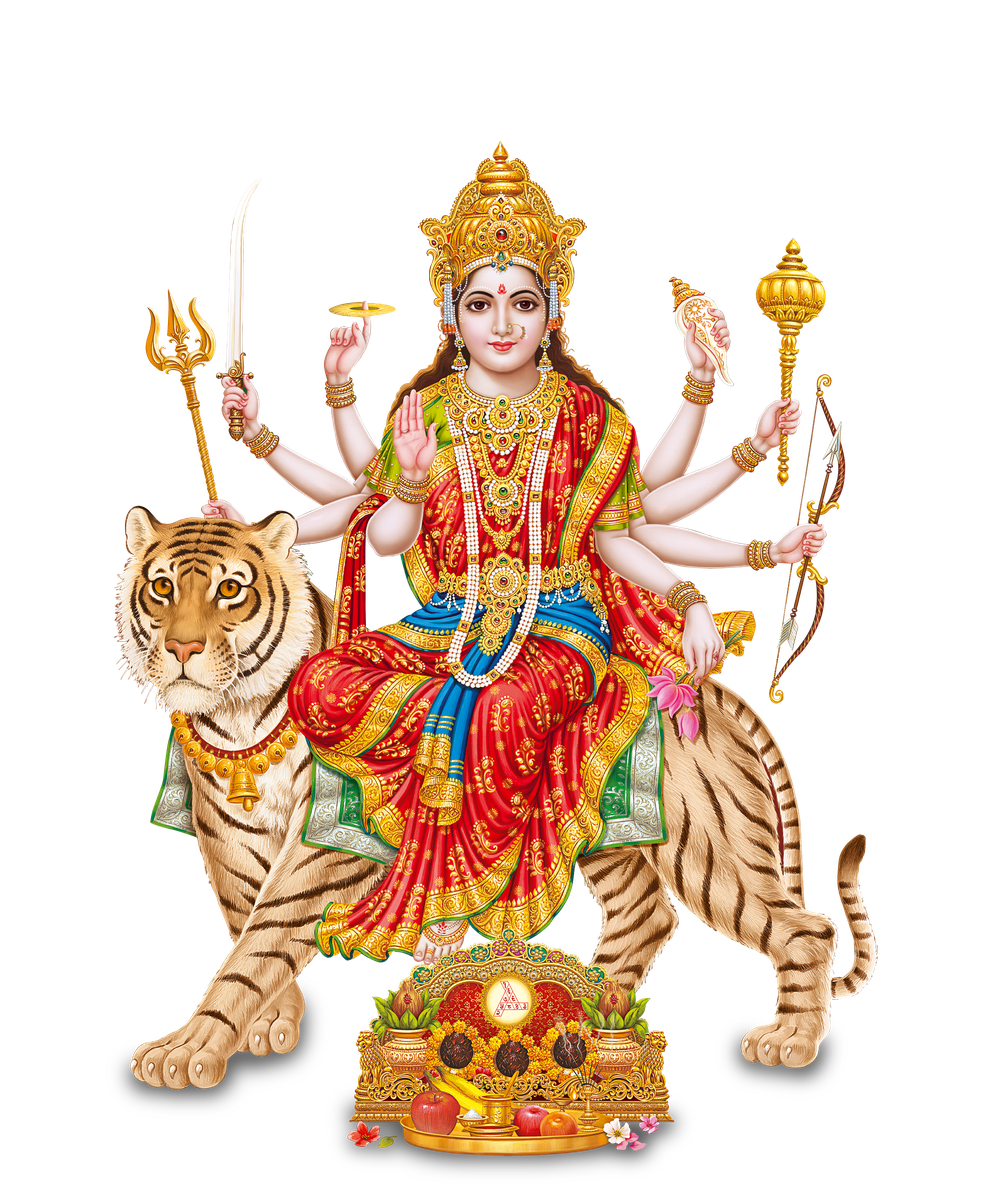
At Hinglaj she is Bhavani, whose boundless glory cannot be fully described. She is Matangi and Dhumavati, Bhuvaneshwari and Bagla who grants happiness; she is Bhairavi and Tara who ferries the world across, and Chhinnamasta who removes worldly sorrows. Riding her lion, with the brave Langur (Hanuman) leading the way, she holds a skull-bowl and sword in her hands, a sight before which even Death flees in fear. Armed with weapons and the trishul, her mere rising causes pain to pierce the hearts of enemies. She resides at Nagarkot, and her glory resounds like a drumbeat across all three worlds.
Benefits of Reciting Durga Chalisa
Removes fear, negativity and evil influences from life. Brings courage, protection and inner strength to devotees. Helps fulfil sincere wishes and removes poverty and sorrow. Grants peace of mind and spiritual growth through Devi's grace.
How and When to Chant
Bathe and sit facing an image or idol of Maa Durga, ideally in the morning or during the sandhya (evening twilight) hours. Light a diya and offer a red flower or chunari if available. Tuesdays, Fridays and the nine days of Navratri are considered especially powerful for this path, though daily recitation is auspicious at any time. Recite the doha, all the chaupais, and the closing doha with a calm and devoted mind. During Navratri, many devotees recite it daily throughout all nine days alongside fasting and Devi puja.
Dos and Don'ts
Keep the puja space and your own body clean before reciting. Maintain a pure, sattvic diet, especially during Navratri. Avoid interrupting the recitation once begun. Both men and women may recite the Durga Chalisa with equal devotion and faith.
Mahatmya (Glory)
The Durga Chalisa captures the many forms of the Divine Mother, from Annapurna and Saraswati to Kali, Santoshi Mata and the ten Mahavidyas, celebrating her role as protector of the universe and destroyer of evil across every yuga. It remains one of the most widely recited hymns among Shakti devotees, especially during Navratri.
Frequently Asked Questions
Question: When is the best time to recite the Durga Chalisa? Answer: Morning or evening is ideal, and it is especially powerful during Navratri and on Tuesdays and Fridays.
Question: Can the Durga Chalisa be recited during menstruation? Answer: Many households follow traditional practices of rest during this time; devotees may recite it mentally with devotion, following their family customs.
Question: How does the Durga Chalisa help devotees? Answer: It removes fear and negativity, brings courage and protection, and helps fulfil sincere wishes through Devi's grace.
Question: Is it necessary to recite it only during Navratri? Answer: No, it can be recited daily throughout the year; Navratri is simply considered an especially auspicious time.
Quick guide
Before you begin
Mantra
Devi mantra
Om Dum Durgaye Namah
Chant 11, 21, or 108 times according to your time and capacity.
Bhav
Benefits devotees pray for
FAQ
Common questions
When is the best time to recite the Durga Chalisa?
Morning or evening is ideal, and it is especially powerful during Navratri and on Tuesdays and Fridays.
Can the Durga Chalisa be recited during menstruation?
Many households follow traditional practices of rest during this time; devotees may recite it mentally with devotion, following family customs.
How does the Durga Chalisa help devotees?
It removes fear and negativity, brings courage and protection, and helps fulfil sincere wishes through Devi's grace.
Is it necessary to recite it only during Navratri?
No, it can be recited daily throughout the year; Navratri is simply considered an especially auspicious time.
Seek Maa Durga's blessings through a puja
Book an authentic Durga puja or Navratri sankalp performed by verified pandits, with a video of your ritual.