


 Om Namo Narayanaya
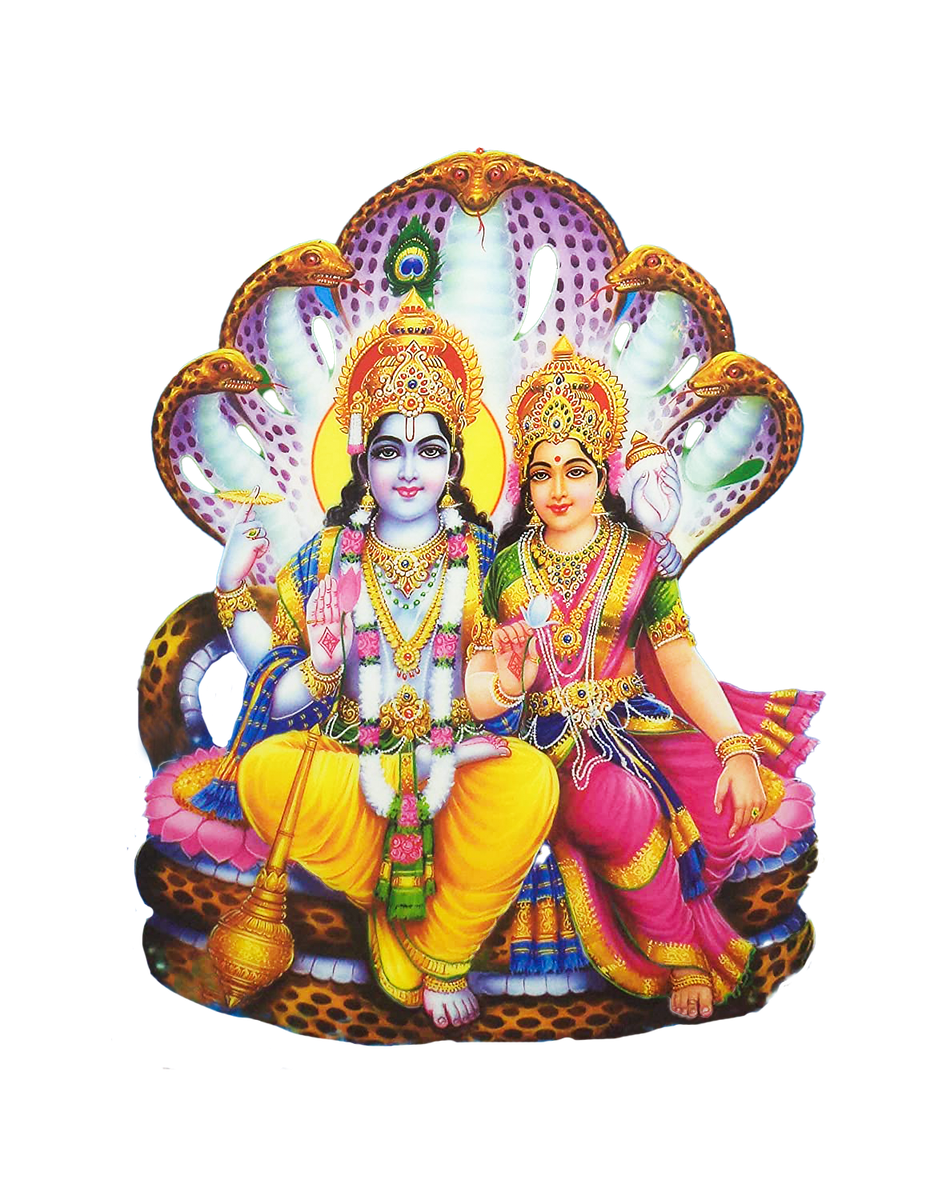
Lord Vishnu is the Preserver of the Hindu trinity, who sustains creation and descends as avatars whenever dharma needs restoring.
In the Hindu understanding of the universe, three great divine functions sustain existence: creation, preservation and dissolution. Brahma creates, Shiva dissolves, and standing between them, holding the universe together with infinite patience and compassion, is Lord Vishnu — the Preserver. He is Jagat Palak, the sustainer of all worlds, the one who ensures that dharma, the moral and cosmic order, never collapses entirely, no matter how dark the age becomes.
Vishnu is described in the scriptures as reclining on Shesha Naga, the thousand-hooded cosmic serpent, floating upon the Kshir Sagar, the ocean of milk. From his navel grows a lotus, and upon that lotus is seated Brahma, the creator — showing that even creation itself arises from and rests upon Vishnu's sustaining power. Beside him, gently pressing his feet, sits Goddess Lakshmi, the goddess of wealth, fortune and grace, his eternal consort. This image of Sheshshayya Vishnu — calm, golden-hued, four-armed, adorned with the Kaustubha jewel — is one of the most beloved and peaceful images in all of Hindu iconography.
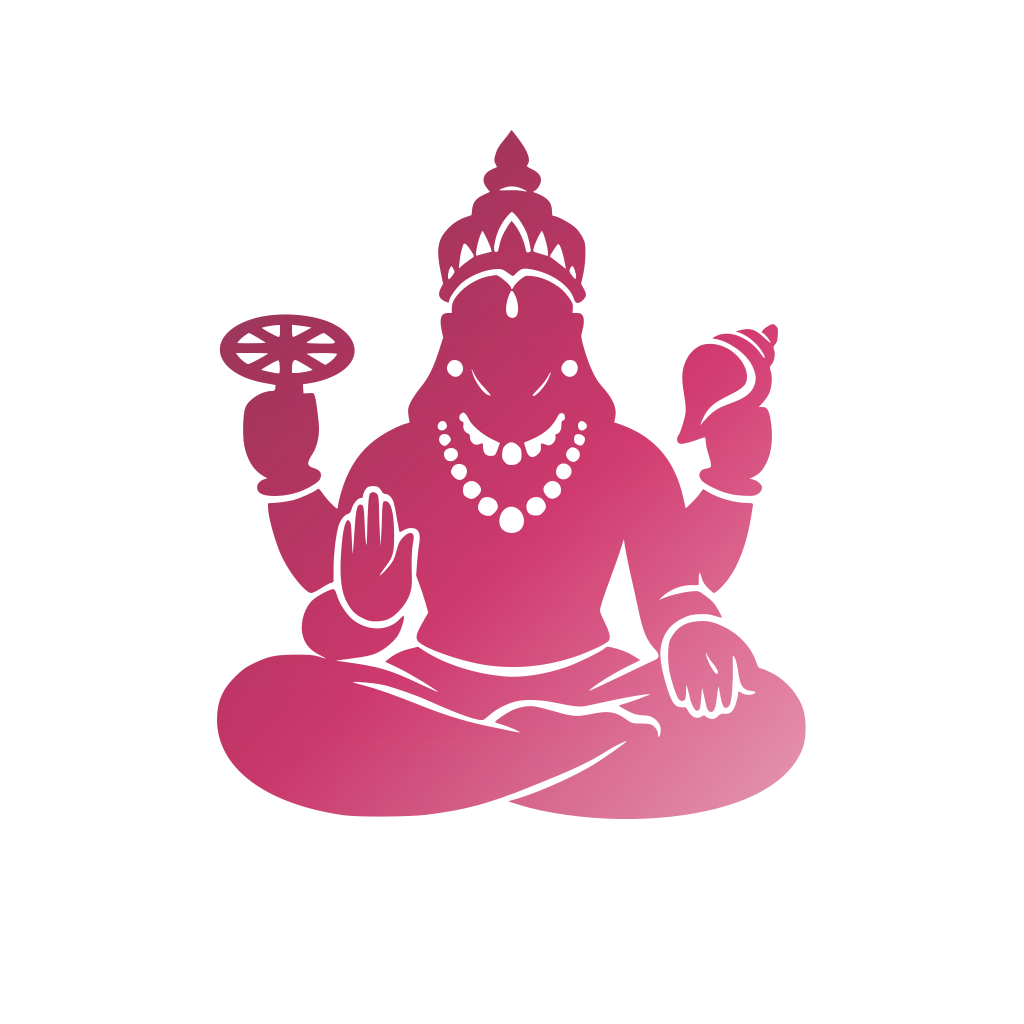
He is typically depicted with four arms, each holding a symbol of profound meaning. The Shankha, a conch shell, represents the primordial sound of creation, Om, and the call to righteousness. The Chakra, the discus named Sudarshan, represents the wheel of time and cosmic justice, always ready to cut down evil. The Gada, a mace, represents the power of knowledge and physical strength used in the service of dharma. And the Padma, a lotus, represents purity, spiritual liberation, and the unfolding of creation. Together these four objects say that Vishnu governs sound, time, strength and beauty — all in balance.
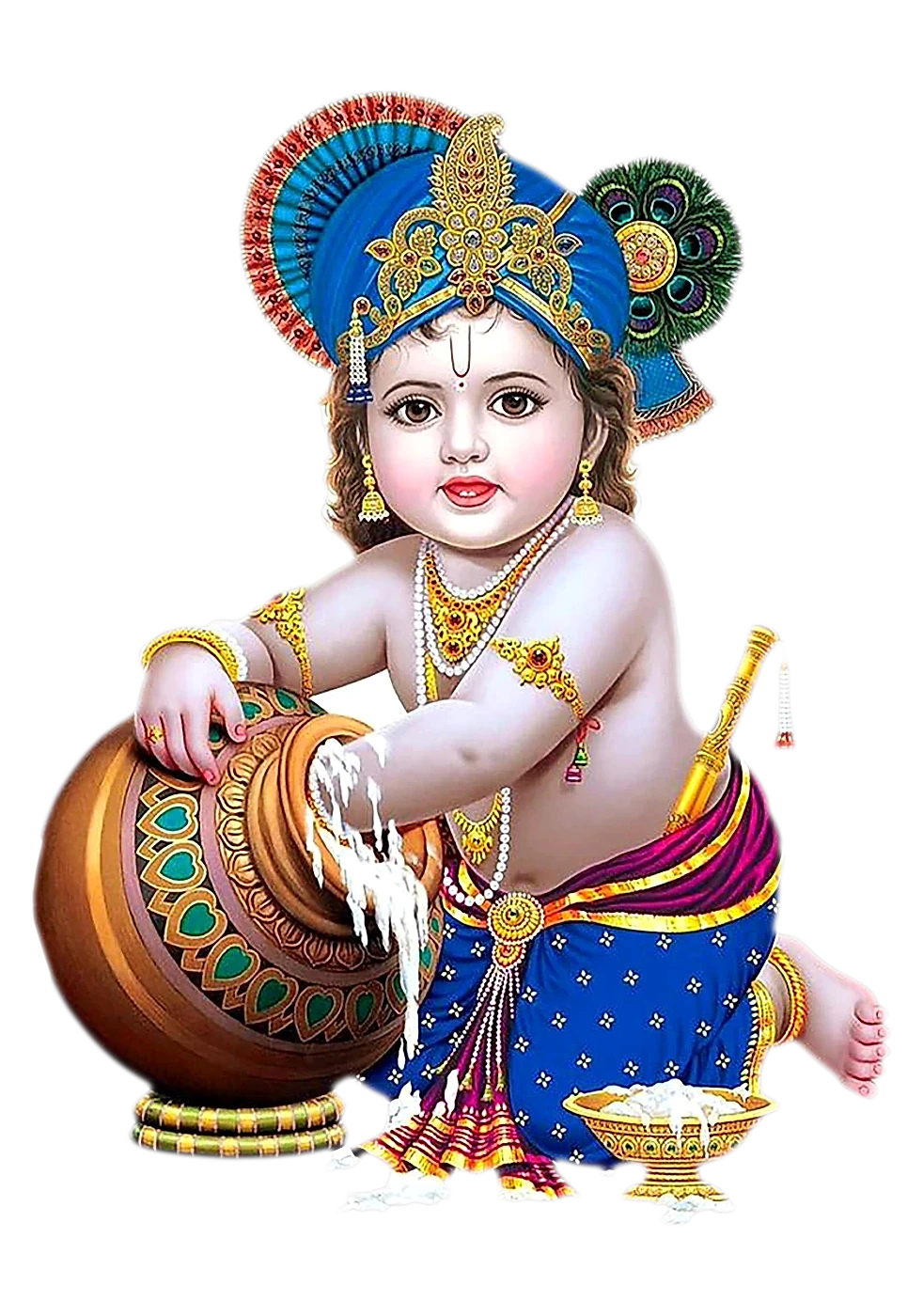
The most famous aspect of Vishnu's mythology is the doctrine of the avatar, the divine descent. Whenever adharma, unrighteousness, grows so powerful that it threatens to overwhelm the world, Vishnu takes a physical form and descends to restore balance. This promise is given directly by Krishna, one of his own avatars, in the Bhagavad Gita: "Whenever there is a decline in righteousness and an increase in unrighteousness, I manifest myself. To protect the good, to destroy the wicked, and to reestablish dharma, I come into being age after age." This single verse is perhaps the most important theological statement in the entire Vaishnava tradition, and it explains why Vishnu is worshipped not as a distant, static god but as a living, active, ever-returning protector.
The most widely recognised list of these descents is the Dashavatar, the ten principal avatars. Matsya, the fish, saved Manu and the seed of all life from a great deluge. Kurma, the tortoise, supported Mount Mandara on his back during the churning of the ocean. Varaha, the boar, lifted the earth goddess Bhudevi from the cosmic waters on his tusks. Narasimha, the half-man half-lion, tore apart the demon Hiranyakashipu to save his devotee Prahlad, proving that devotion is always protected. Vamana, the dwarf, humbled the proud king Bali by measuring the three worlds in three steps. Parashurama, the axe-wielding sage, curbed the arrogance of a corrupt warrior class. Rama, the ideal king of Ayodhya, showed humanity what a righteous, dutiful, truthful life looks like. Krishna, the divine statesman and teacher, gave the world the Bhagavad Gita and guided the Pandavas to victory over injustice. Buddha is honoured by many Vaishnava traditions as an avatar who taught compassion and non-violence. And Kalki, the avatar yet to come, is prophesied to appear at the end of this current age, the Kali Yuga, riding a white horse with a blazing sword, to end unrighteousness and begin a new golden age.
Vishnu's abode is called Vaikuntha, the realm free from anxiety, a place of eternal light where liberated souls dwell in his presence. His vehicle, or vahana, is Garuda, the mighty eagle-man who carries him swiftly wherever dharma calls. His weapon, the Sudarshan Chakra, is said to spin at his fingertip, always ready, representing the idea that divine justice, though sometimes slow, is never absent.
Vishnu is worshipped across India in countless forms and temples. Tirupati Balaji, or Venkateswara, in Andhra Pradesh is one of the richest and most visited pilgrimage sites in the world. Badrinath in Uttarakhand, one of the Char Dham, enshrines Vishnu in deep meditation in the Himalayas. Guruvayur in Kerala worships him as Guruvayurappan, close to the Krishna form. Jagannath Puri in Odisha honours him in his mystical wooden form alongside Balabhadra and Subhadra. Srirangam in Tamil Nadu, one of the largest functioning temple complexes on earth, is dedicated to Ranganatha, Vishnu reclining on Shesha. Each of these temples carries centuries of devotion, architecture and unbroken ritual tradition.
Devotees of Vishnu, known as Vaishnavas, follow practices that emphasise surrender, devotion and remembrance of his name. The chanting of the Vishnu Sahasranama, the thousand names of Vishnu, is considered one of the most powerful devotional practices, believed to bring peace, protection and merit. Ekadashi, the eleventh day of each lunar fortnight, is observed as a sacred fasting day dedicated especially to Vishnu, when devotees abstain from grains and spend the day in prayer and remembrance. Tulsi, the holy basil plant, is considered extremely dear to Vishnu, and its leaves are offered in nearly every ritual associated with him.
Theologically, Vishnu represents the principle of preservation and hope. Where Shiva's path often emphasises renunciation and transcendence, and Devi's path emphasises shakti and transformative power, Vishnu's path, Vaishnavism, emphasises loving surrender, bhakti, and the assurance that the universe is fundamentally protected by a benevolent, ever-watchful preserver. This is why his devotees often describe their relationship with him not merely as worship of a distant deity but as a personal, loving bond — a friend, a protector, a refuge, always just a sincere prayer away.
To remember Vishnu is to remember that no matter how difficult an age becomes, balance is never permanently lost. He is patient, he is watchful, and according to his own promise in the Gita, he returns, again and again, whenever the world truly needs him.
Quick guide
Before you begin
Mantra
Vishnu mantra
Om Namo Bhagavate Vasudevaya
Chant before katha or aarti while praying for protection, dharma, and peace.
Bhav
Benefits devotees pray for
FAQ
Common questions
Who is Lord Vishnu in Hinduism?
Lord Vishnu is the Preserver among the Hindu trinity of Brahma, Vishnu and Shiva. He sustains creation, maintains cosmic order and dharma, and descends as avatars whenever unrighteousness threatens the world.
How many avatars did Vishnu take?
The most widely followed list is the Dashavatar, ten avatars: Matsya, Kurma, Varaha, Narasimha, Vamana, Parashurama, Rama, Krishna, Buddha and Kalki, the avatar yet to come.
Who is Vishnu's consort?
Goddess Lakshmi, the goddess of wealth and fortune, is Vishnu's eternal consort. She is shown seated at his feet in his Sheshshayya form on the Kshir Sagar.
Which day is best for worshipping Vishnu?
Ekadashi, the eleventh lunar day of each fortnight, and Thursdays are considered especially auspicious for Vishnu worship, along with chanting the Vishnu Sahasranama.
Seek Lord Vishnu's Blessings
Book a puja dedicated to Lord Vishnu for protection, peace and prosperity in your life.