
 ॐ नमः शिवाय
Lord Shiva, one of the principal deities of Sanatan Dharma, is the destroyer and transformer within the Trimurti, the supreme ascetic, and the compassionate Adiyogi worshipped across India.
Lord Shiva is among the most widely worshipped and profoundly philosophical deities in Sanatan Dharma. Known as Mahadev, the great god, and Adiyogi, the first yogi, Shiva occupies a unique position: he is simultaneously the fierce destroyer, the compassionate ascetic, the loving family man, and the formless Absolute beyond all attributes. To understand Shiva is to understand a paradox held in perfect balance.
Shiva in the Trimurti
In the classical framework of the Trimurti, the three primary cosmic functions are assigned to three deities: Brahma creates the universe, Vishnu preserves and sustains it, and Shiva dissolves it, so that creation can begin anew. This destruction is never seen as purely negative in Hindu thought; it is a necessary transformation, clearing away what is old and worn out so that new creation can arise. Shiva is therefore called the Auspicious One (the literal meaning of Shiva) because even his destruction ultimately serves the greater good of cosmic renewal.
The Iconography of Shiva
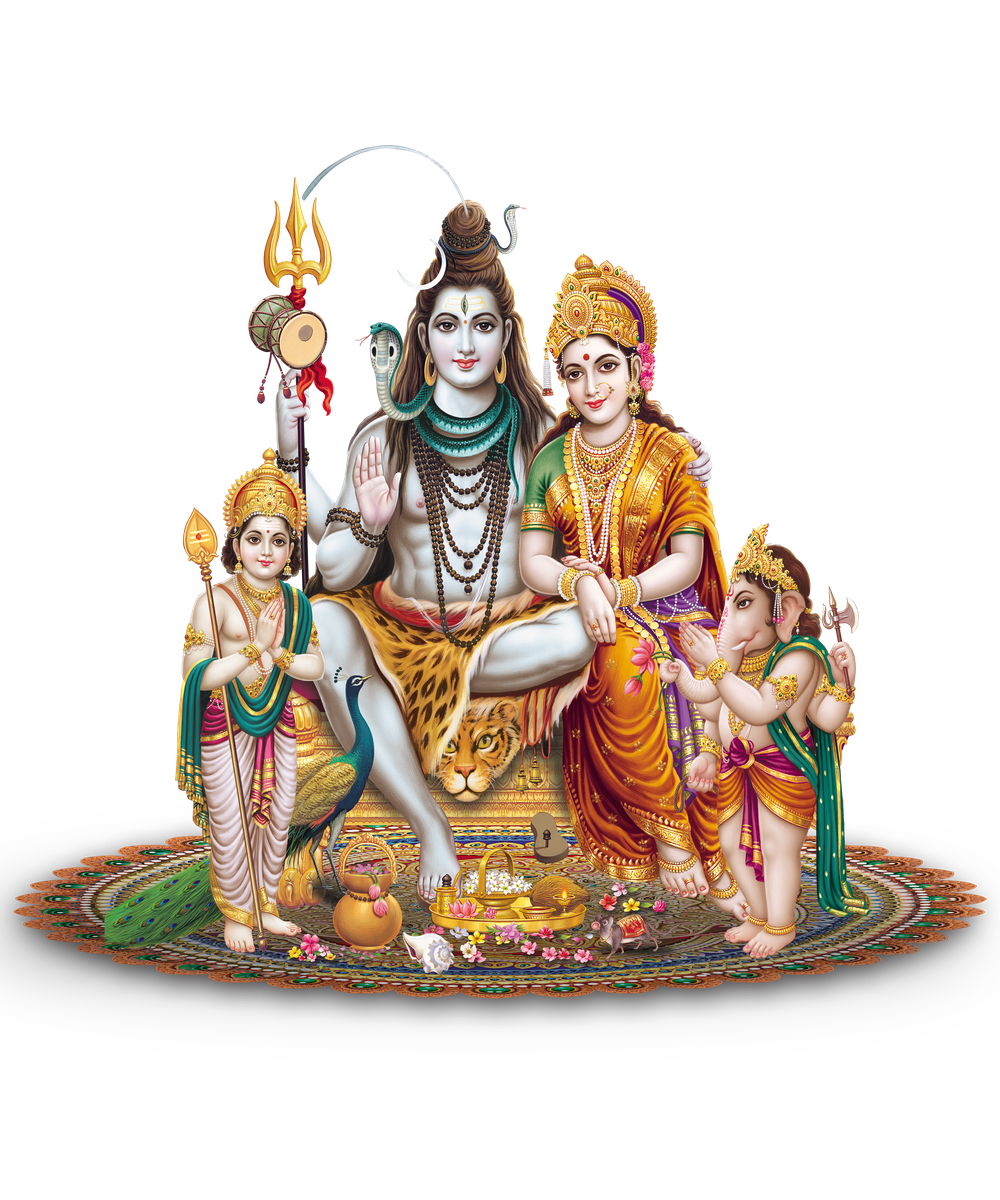
Shiva is depicted in a form rich with symbolism. He has a third eye on his forehead, representing higher wisdom and the power to burn away ignorance and illusion, as seen in the story of him opening it to reduce Kamadeva, the god of desire, to ash. A crescent moon rests in his matted hair (jata), symbolising the control of time and the mind. The river Ganga flows from his locks, representing how he gently absorbs and tempers the descent of the sacred river to earth. A serpent, usually Vasuki, is coiled around his neck, representing his mastery over fear and death. His throat is blue, earning him the name Neelkanth, because he swallowed the deadly Halahala poison that emerged during the Samudra Manthan (churning of the ocean) to save the universe, holding it in his throat rather than letting it spread or swallowing it fully. He holds a trishul (trident), representing the three gunas (qualities of nature) under his control, and a damaru (small drum), whose beat is said to have given rise to the sounds of creation and Sanskrit grammar itself. He is often shown wearing tiger or elephant skin and covered in ash (vibhuti), representing renunciation and the transient nature of the material world, and is seated on Mount Kailash or in deep meditation, or riding his vahana, Nandi the bull, who represents strength, dharma, and devotion.
Major Forms of Shiva
Shiva manifests in many forms across scripture and worship. As Nataraja, the Lord of Dance, he performs the Tandava, the cosmic dance of creation, preservation, and destruction, within a ring of fire, symbolising the eternal rhythm of the universe. As Ardhanarishwara, he appears as half-man, half-woman, merged with his consort Parvati, representing the inseparable unity of masculine and feminine energies in creation. As the Lingam, an aniconic, formless pillar of light, Shiva is worshipped across countless temples, representing the infinite, formless nature of the divine beyond any single shape. As Dakshinamurthy, he is depicted as the supreme teacher (guru) seated facing south, imparting silent wisdom to sages. As Bholenath, the innocent, easily pleased lord, he is beloved for being quick to bless sincere devotees, regardless of their wealth or status, with even simple offerings of water, bel leaves, and a pure heart.
Shiva's Family
Shiva's family is central to Hindu devotional life. His consort is Goddess Parvati (also worshipped as Durga, Kali, and in many other forms), the reincarnation of his first wife Sati. Their union represents the balance of Shiva and Shakti, consciousness and energy, without which neither can express fully in creation. Their sons are Lord Ganesha, the remover of obstacles and god of wisdom and new beginnings, and Lord Kartikeya (Skanda or Murugan), the commander of the celestial armies and god of courage and victory. Nandi, the bull, is Shiva's loyal vahana and gatekeeper, and is worshipped alongside him at nearly every Shiva temple.
Where Shiva Resides
Shiva's abode is traditionally described as Mount Kailash in the Himalayas, a place of eternal snow, silence, and meditation, considered the axis of the spiritual world and one of the most sacred pilgrimage sites, though physically extremely difficult to reach. He is also worshipped in the form of the twelve Jyotirlingas, self-manifested lingams of light situated across India, including Somnath in Gujarat, Mallikarjuna in Andhra Pradesh, Mahakaleshwar in Ujjain, Omkareshwar in Madhya Pradesh, Kedarnath in Uttarakhand, Bhimashankar in Maharashtra, Kashi Vishwanath in Varanasi, Trimbakeshwar in Nashik, Vaidyanath in Jharkhand, Nageshwar in Gujarat, Rameshwaram in Tamil Nadu, and Grishneshwar in Maharashtra. Pilgrimage to these twelve sites is considered one of the most sacred journeys a Shiva devotee can undertake in a lifetime.
Sacred Days and Festivals
Monday (Somvar) is traditionally dedicated to Shiva worship, and many devotees observe a weekly fast on this day. The most significant festival is Maha Shivratri, the great night of Shiva, observed with fasting, night-long vigils, and worship with the Rudra Abhishek, believed to be the night Shiva performed his cosmic dance and also the night of his marriage to Parvati. Shravan month (typically July-August) is especially sacred to Shiva, with the entire month observed with devotion, fasting on Mondays (Shravan Somvar), and pilgrimages such as the Kanwar Yatra, where devotees carry holy Ganga water to offer at Shiva temples.
How to Worship Shiva
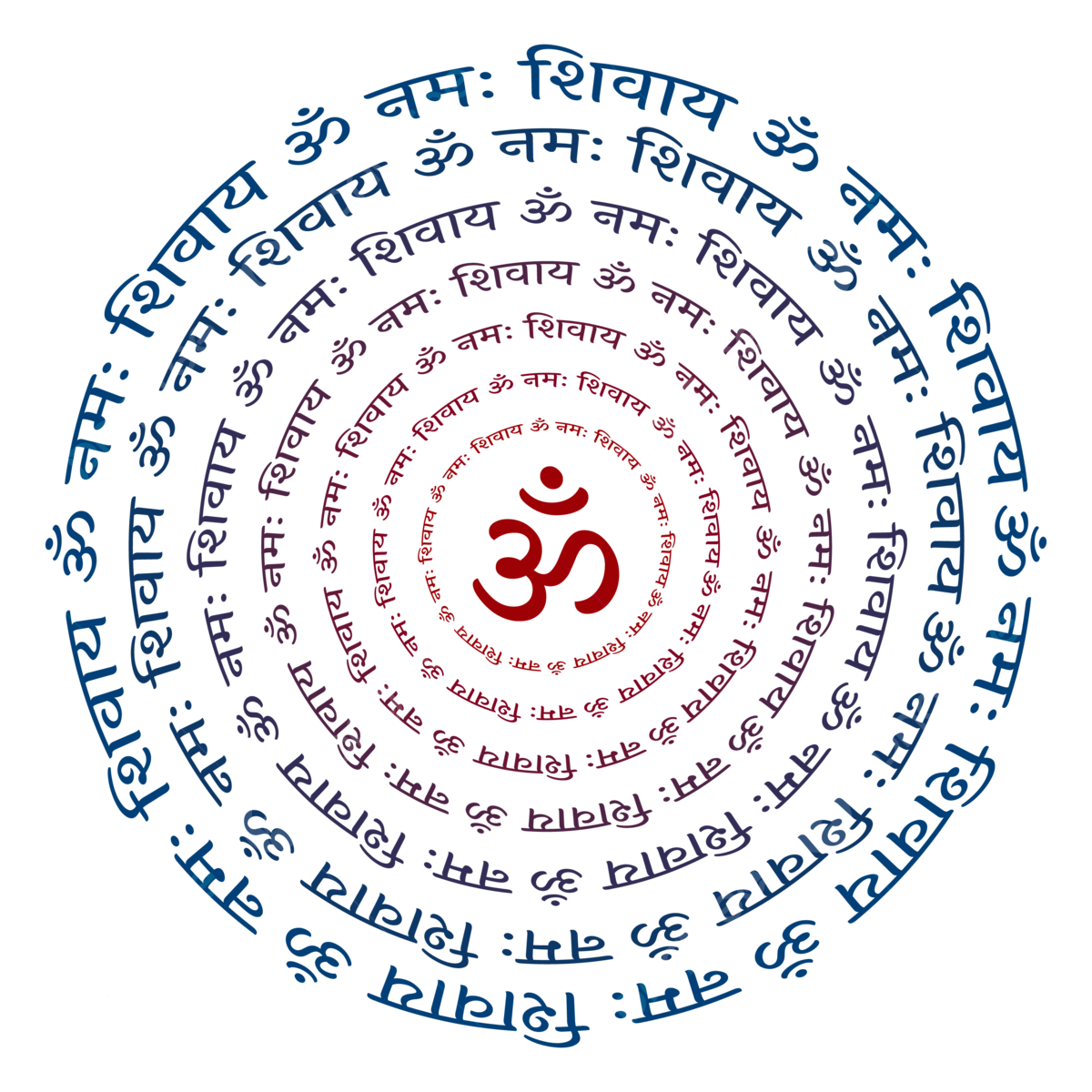
Shiva is famously easy to please (Ashutosh, one who is quickly pleased). His worship is centred on the Abhishek, the ritual bathing of the Shiva Lingam with water, milk, honey, curd, and other sacred substances, accompanied by the offering of bel-patra (bilva leaves), which are especially dear to him, along with dhatura flowers, ash, and water. The most chanted mantras are Om Namah Shivaya, the five-syllable mantra considered his most powerful and universal invocation, and the Maha Mrityunjaya Mantra, recited for health, protection, and overcoming fear of death. Devotees are taught that Shiva does not require elaborate rituals or wealth; sincere devotion, even with the simplest offering, is said to move him deeply.
The Philosophy Behind Shiva
Beyond mythology, Shiva represents deep philosophical truths in Sanatan Dharma. He is the Adiyogi, the first teacher of yoga and meditation, who is said to have transmitted this knowledge to the Saptarishis (seven sages) at the banks of lake Kanti Sarovar. He embodies the balance between fierce transformation and deep compassion, between the ascetic who renounces everything and the householder who deeply loves his family, showing devotees that spiritual life and worldly life are not opposites but can be integrated. His third eye, ash-covered body, and calm amidst poison and destruction all point to the same lesson: true peace comes not from avoiding difficulty, but from transforming it from within.
Conclusion
Lord Shiva remains, across millennia, one of the most deeply loved and philosophically rich deities of Sanatan Dharma, a god who destroys only to renew, who appears fearsome yet is swiftly moved by sincere devotion, and whose silent, meditative presence on Kailash continues to inspire seekers, yogis, and ordinary devotees alike toward inner transformation and peace.
Quick guide
Before you begin
Mantra
Shiva mantra
Om Namah Shivaya
Chant with a quiet mind, especially on Monday, Pradosh, or during Shiva puja.
Bhav
Benefits devotees pray for
FAQ
Common questions
Why is Lord Shiva called Neelkanth?
Shiva is called Neelkanth (the blue-throated one) because during the Samudra Manthan, he drank the deadly Halahala poison to save the universe and held it in his throat, which turned blue, rather than letting it spread or swallowing it completely.
What are the twelve Jyotirlingas?
The twelve Jyotirlingas are self-manifested forms of light where Shiva is worshipped: Somnath, Mallikarjuna, Mahakaleshwar, Omkareshwar, Kedarnath, Bhimashankar, Kashi Vishwanath, Trimbakeshwar, Vaidyanath, Nageshwar, Rameshwaram, and Grishneshwar.
What is the significance of Shiva's third eye?
Shiva's third eye represents higher wisdom and spiritual insight beyond ordinary sight, and its power to burn away ignorance and illusion, as illustrated in the story of him reducing Kamadeva to ash.
What is the easiest way to worship Lord Shiva?
Shiva is considered easy to please. Offering water, bel-patra (bilva leaves), and chanting Om Namah Shivaya with sincere devotion, especially on Mondays or during Shravan, is regarded as deeply pleasing to him, more than elaborate rituals.
Offer Your Devotion to Mahadev
Book a complete Shiva puja with Rudra Abhishek performed by experienced pandits, and receive blessings for peace and protection.