

 वक्रतुण्ड महाकाय सूर्यकोटि समप्रभ
Lord Ganesh is the elephant-headed son of Shiva and Parvati, worshipped first before any endeavor as the remover of obstacles and the lord of wisdom and new beginnings.
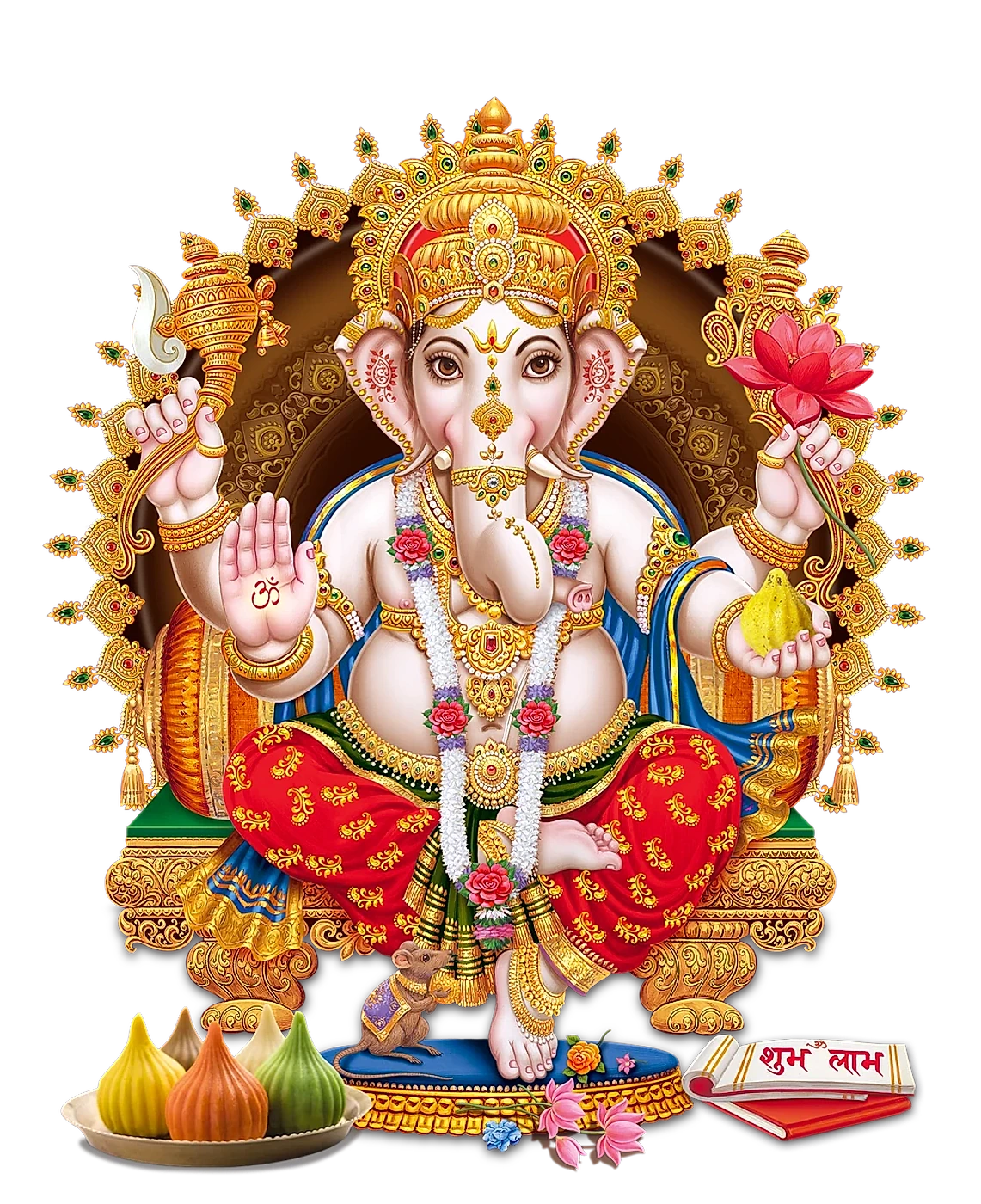
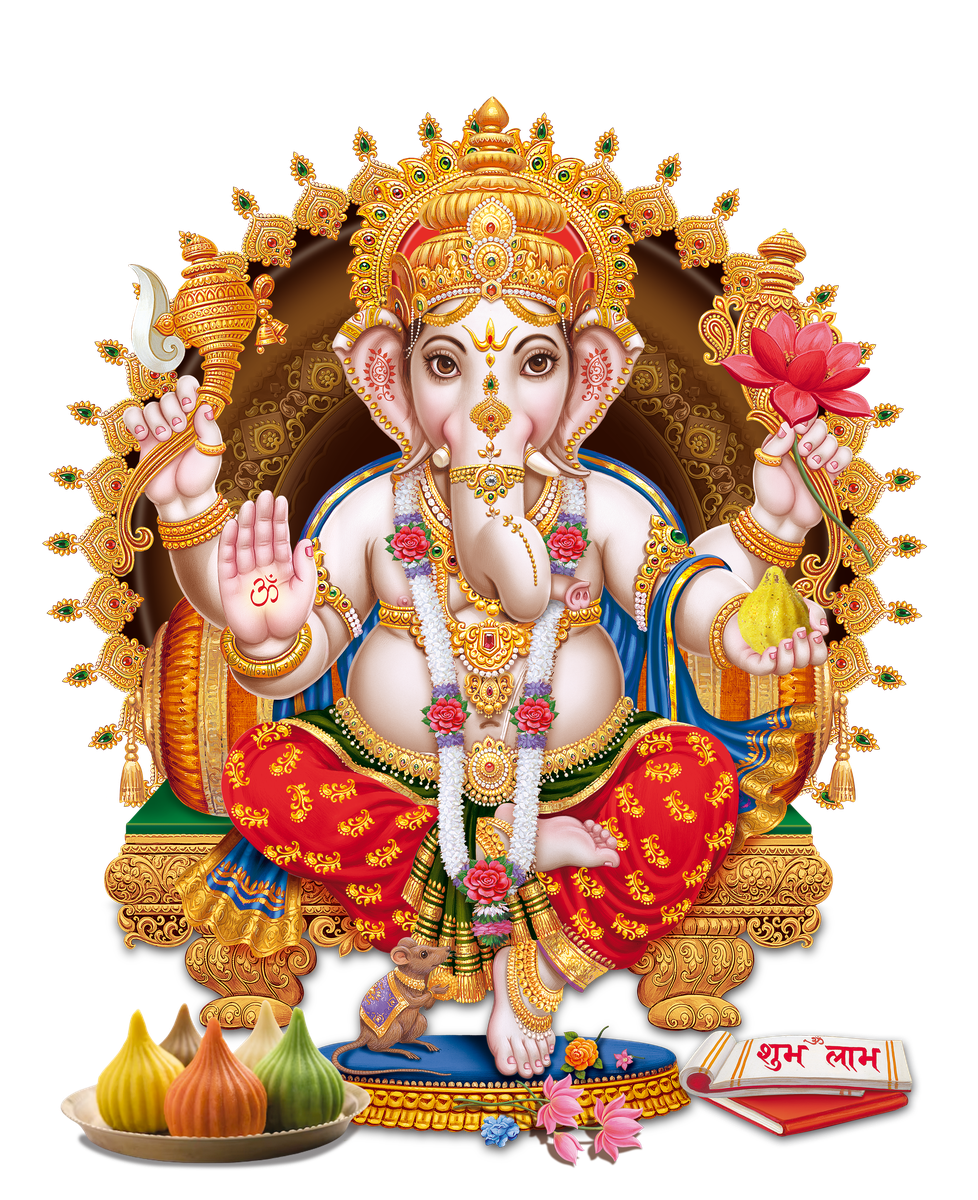
Lord Ganesh, also known as Ganapati, Vinayaka, or Gajanana, is one of the most beloved and widely worshipped deities in Sanatan Dharma. He is the son of Lord Shiva and Goddess Parvati, easily recognized by his elephant head, large belly, and single tusk. Ganesh holds the unique honor of being worshipped first before beginning any ritual, journey, business, or important life event, which is why he is called Vighnaharta, the remover of obstacles, and Pratham Pujya, the one worshipped first.
His form itself is full of symbolic teaching. His large elephant head represents wisdom and the capacity for deep thought. His big ears symbolize the importance of listening more than speaking. His small eyes represent focus and concentration. His large belly signifies the ability to digest all of life's good and bad experiences with equanimity. The mouse he rides, despite its small size, represents desire, and Ganesh's mastery over it shows that even the smallest and most restless of desires must be controlled by wisdom.
The Birth Story of Lord Ganesh
The most popular legend of Ganesh's birth comes from the Shiva Purana. Once, Goddess Parvati wished to bathe in privacy and created a boy from the turmeric paste and sandalwood she used on her body, breathing life into him and instructing him to guard the door while she bathed, allowing no one to enter. When Lord Shiva returned home and tried to enter, the boy, not recognizing him as anyone of authority, refused him entry. Enraged that a stranger would block him from his own home, Shiva, in a moment of fury, severed the boy's head.
When Parvati emerged and discovered what had happened, she was inconsolable and revealed that the boy was her own creation, her son. Grief-stricken and determined to make amends, Shiva sent his attendants to find the head of the first living creature they encountered facing north. They found an elephant, and its head was attached to the boy's body, and Shiva breathed life back into him, declaring that he would henceforth be worshipped before all other gods, as Ganapati, the lord of the ganas (Shiva's attendants).
Another well-known story tells of a competition between Ganesh and his brother Kartikeya to see who could circle the universe first. While Kartikeya set off on his peacock to physically travel the cosmos, Ganesh simply walked around his parents, Shiva and Parvati, declaring that they, being the source and embodiment of the entire universe, were equivalent to circling the universe itself. Pleased with his wisdom, his parents declared him the winner, reinforcing his position as the god of intelligence and wise thinking over brute effort.
Significance of Lord Ganesh
Ganesh represents the union of wisdom, prudence, and auspicious new beginnings. Before starting any venture - a wedding, a new home, a business, an exam, or even writing a scripture - devotees seek his blessings first, believing that he clears the path of obstacles, both visible and invisible, and ensures a smooth and successful outcome. He is also revered as the patron of arts, letters, and learning, and it is said that he served as the scribe for sage Vyasa, writing down the entire Mahabharata as it was dictated to him, breaking his own tusk to use as a pen when his original pen broke, so as not to interrupt the flow of the epic.
As the son who reunites the household - resolving the conflict between his parents Shiva and Parvati through his birth story, and being deeply devoted to both - Ganesh also represents family harmony, loyalty, and devotion. His worship teaches patience (through his form as a gentle, patient elephant), humility, and the wisdom to think before acting.
Famous Ganesh Temples
Siddhivinayak Temple in Mumbai is among the most visited Ganesh shrines in India, drawing devotees from all walks of life. The Ashtavinayak circuit in Maharashtra comprises eight sacred and ancient Ganesh temples, each believed to be self-manifested (swayambhu). Ganpatipule in Konkan, Ucchi Pillayar Temple in Tamil Nadu, and Khajrana Ganesh Temple in Indore are also deeply revered. Ganesh Chaturthi, celebrated grandly across India and especially in Maharashtra, sees millions of devotees bringing home clay idols of Ganesh for ten days of worship before immersing them in water, symbolizing the cycle of creation and dissolution.
How Devotees Worship Ganesh
Ganesh is worshipped daily before any other deity, and Wednesdays along with the Chaturthi tithi (the fourth day after new or full moon) each month are especially dedicated to him. Ganesh Chaturthi, usually falling in Bhadrapada month (August-September), is his grandest festival. Devotees chant the Ganesh Chalisa, Sankashti Chaturthi vrat mantras, and the powerful mantra 'Om Gan Ganpataye Namah' for wisdom, success, and the removal of obstacles. Modak, his favorite sweet, is offered along with durva grass and red flowers. Before any new venture, journey, or important decision, invoking Ganesh's name is considered essential for an auspicious and obstacle-free beginning.
Quick guide
Before you begin
Mantra
Ganesh mantra
Om Gam Ganapataye Namah
Chant before beginning the puja, aarti, study, business, or any new work.
Bhav
Benefits devotees pray for
FAQ
Common questions
Who is Lord Ganesh in simple words?
Lord Ganesh is the elephant-headed son of Shiva and Parvati, worshipped as the remover of obstacles and the god of wisdom. He is invoked first before any auspicious task, journey, or new beginning.
Why does Ganesh have an elephant head?
According to the Shiva Purana, after Shiva unknowingly beheaded the boy created by Parvati, he restored him to life with the head of the first creature found, an elephant, and declared he would be worshipped before all other gods.
Why is Ganesh worshipped first before other gods?
Lord Shiva granted Ganesh the boon that he would be worshipped first (Pratham Pujya) in any ritual or new venture, ensuring that obstacles are cleared before proceeding further.
What is the significance of Ganesh Chaturthi?
Ganesh Chaturthi celebrates the birth of Lord Ganesh and is marked by bringing home clay idols, worshipping them for ten days, and then immersing them in water, symbolizing the cycle of creation and dissolution.
Seek Lord Ganesh's Blessings
Book a traditional Ganesh Puja performed by expert pandits to remove obstacles and bring success to your new beginnings.