

 ॐ श्री महालक्ष्म्यै नमः
Goddess Lakshmi is the divine consort of Lord Vishnu and the eternal source of wealth, prosperity, beauty, and good fortune worshipped across every Hindu household.
Goddess Lakshmi is the Hindu deity of wealth, fortune, beauty, purity, and abundance, both material and spiritual. As the eternal consort of Lord Vishnu, the preserver of the universe, she is worshipped in nearly every Hindu household, believed to bring prosperity, health, and happiness wherever she is honored with devotion and cleanliness. She is not merely a giver of money but a symbol of all forms of prosperity, including good harvests, courage, fertility, offspring, and even liberation.
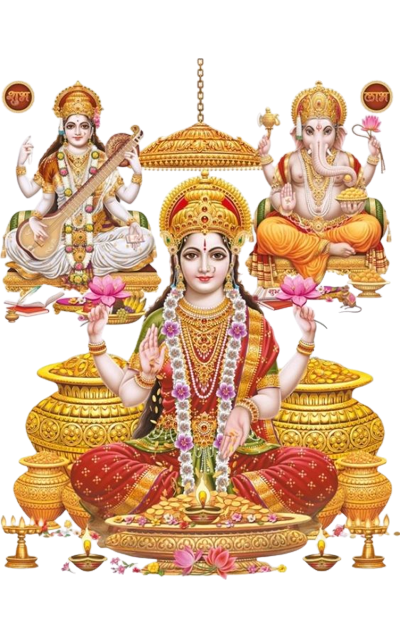
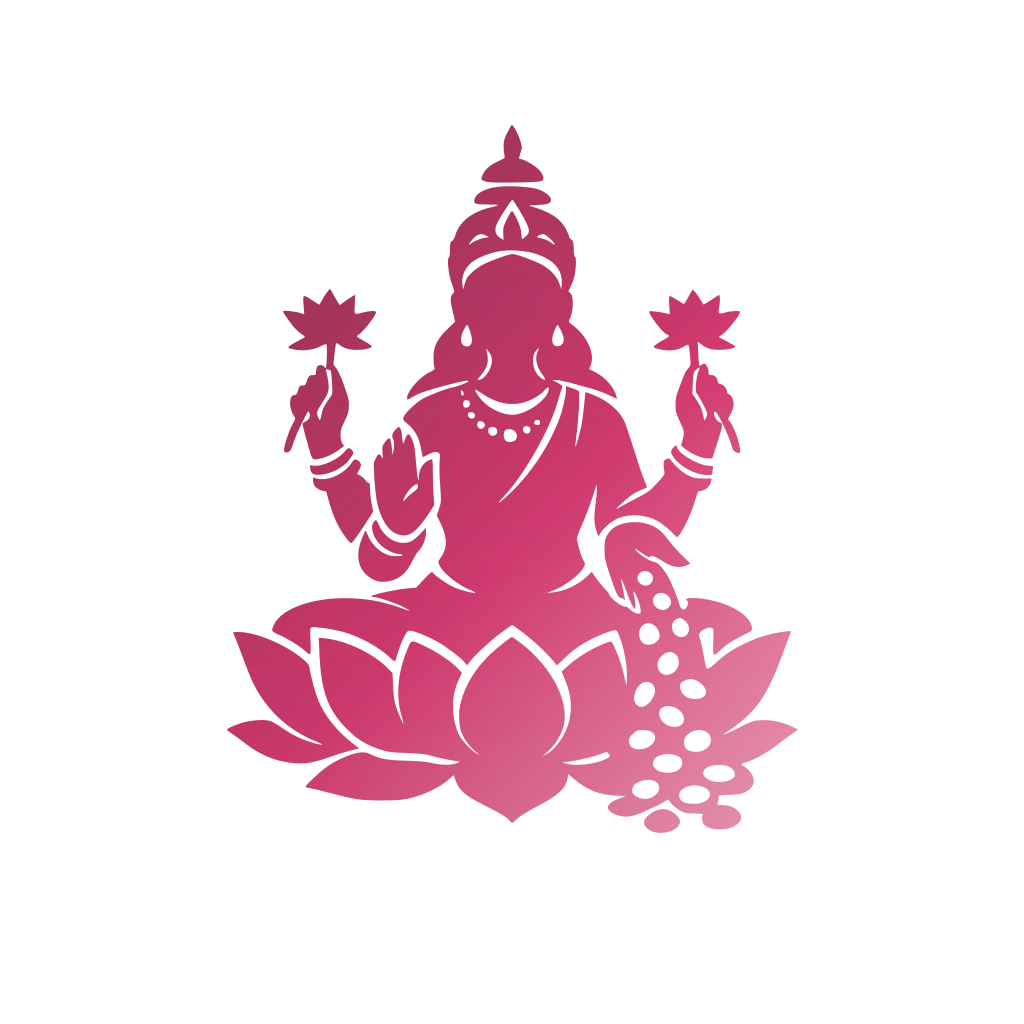
Lakshmi is typically depicted as a radiant, golden-complexioned woman seated or standing on a fully bloomed lotus, holding two lotuses in her upper hands, with her lower right hand in the varada mudra, granting boons, and gold coins flowing from her lower left palm. Two elephants often flank her, showering her with water, representing royal power and unceasing effort, since even great fortune must be paired with continuous right action to remain.
Origin of Goddess Lakshmi: Samudra Manthan
The most celebrated account of Lakshmi's appearance is found in the story of Samudra Manthan, the churning of the cosmic ocean. When the Devas and Asuras churned the ocean of milk using Mount Mandara as the churning rod and the serpent Vasuki as the rope, in search of Amrit, the nectar of immortality, many divine treasures emerged one by one. Among the last and most radiant to emerge was Goddess Lakshmi herself, rising from the ocean seated on a lotus, adorned in resplendent garments and jewels.
All the gods desired her, but she chose Lord Vishnu as her eternal consort, garlanding him before the assembly of gods and demons. Since then, wherever Vishnu incarnates on earth, Lakshmi accompanies him as his divine consort - as Sita with Rama, and as Rukmini and Radha with Krishna. This eternal bond between Vishnu and Lakshmi represents the inseparable union of preservation and prosperity; wherever righteousness (Vishnu) is upheld, abundance (Lakshmi) naturally follows.
The Eight Forms: Ashta Lakshmi
Lakshmi manifests in eight distinct forms known as Ashta Lakshmi, each governing a different aspect of prosperity and well-being.
Adi Lakshmi, the original primal form, representing the source of all incarnations of the Goddess. Dhana Lakshmi, the bestower of wealth and money. Dhanya Lakshmi, the giver of agricultural abundance and food grains. Gaja Lakshmi, who grants livestock, royal power, and strength, often shown flanked by elephants. Santana Lakshmi, the giver of progeny and continuity of family. Veera Lakshmi, who grants courage and valor to overcome challenges. Vijaya Lakshmi, the bestower of victory and success in all endeavors. Vidya Lakshmi, the giver of knowledge, education, and the arts. Together these eight forms show that true Lakshmi is far more than money - she is the fullness of a well-lived, abundant, victorious life.
Significance of Goddess Lakshmi
Lakshmi represents the truth that prosperity is sacred and must be earned and maintained through purity, hard work, cleanliness, and righteous conduct. It is a common belief that Lakshmi does not stay where there is dirt, disorder, laziness, or dishonesty, which is why devotees clean and decorate their homes thoroughly before inviting her, especially during Diwali. She teaches that wealth is not to be hoarded selfishly but shared, used for dharma, and treated with gratitude and humility, for she is known to be fickle (chanchala) and moves away from those who become arrogant or greedy.
Lakshmi is also worshipped in her form as Mahalakshmi, one of the Tridevi along with Saraswati and Parvati, representing not just material wealth but also spiritual richness, inner peace, and the fullness of a life well lived. In this sense, seeking Lakshmi's blessings is as much about cultivating good character as it is about seeking material comfort.
Famous Lakshmi Temples
Mahalakshmi Temple in Mumbai and Kolhapur's Mahalakshmi Temple are among the most visited shrines dedicated to the Goddess. Padmanabhaswamy Temple in Thiruvananthapuram, though primarily a Vishnu temple, honors Lakshmi as his eternal companion. The Ashtalakshmi Temple in Chennai is uniquely dedicated to all eight forms of Lakshmi under one roof. Varahi Lakshmi Narasimha Swamy Temple in Andhra Pradesh and the Lakshmi Narayan Temple (Birla Mandir) in Delhi are also significant centers of worship. During Diwali, virtually every home in India becomes a temporary shrine to Lakshmi, welcomed with diyas, rangoli, and open doors.
How Devotees Worship Lakshmi
The most significant day of Lakshmi worship is Diwali, particularly Lakshmi Puja on Amavasya night, when homes are cleaned, decorated with rangoli and diyas, and doors are kept open to welcome the Goddess in. Fridays are also considered auspicious for her worship. Devotees chant the Lakshmi Chalisa, the Sri Suktam, and mantras like 'Om Shreem Mahalakshmiyei Namah' for wealth and prosperity. Kojagiri Purnima, Varalakshmi Vratam, and Akshaya Tritiya are other important occasions dedicated to her. Devotees offer lotus flowers, kamal gatta (lotus seeds), sweets, and keep their homes and workplaces clean and well-lit, as cleanliness and light are believed to be most dear to Mother Lakshmi.
Quick guide
Before you begin
Mantra
Lakshmi mantra
Om Shreem Mahalakshmyai Namah
Chant on Friday or during Lakshmi puja for prosperity, grace, and sattvic abundance.
Bhav
Benefits devotees pray for
FAQ
Common questions
Who is Goddess Lakshmi in simple words?
Goddess Lakshmi is the Hindu deity of wealth, fortune, and prosperity, and the eternal consort of Lord Vishnu. She emerged from the churning of the cosmic ocean (Samudra Manthan) and is worshipped for material and spiritual abundance.
Why is Lakshmi shown seated on a lotus?
The lotus represents purity and spiritual growth even while remaining rooted in the material world, teaching that true prosperity should be pursued with a clean, detached, and virtuous mind.
Why is Lakshmi worshipped mainly on Diwali?
Diwali night, especially Amavasya, is considered the most auspicious time for Lakshmi to enter homes that are clean, well-lit, and welcoming, which is why devotees light diyas and perform Lakshmi Puja that night.
What is the relationship between Lakshmi and Vishnu?
Lakshmi is the eternal divine consort of Vishnu, representing that prosperity (Lakshmi) always accompanies and depends on righteousness and preservation of dharma (Vishnu).
Invite Maa Lakshmi's Blessings
Book a traditional Lakshmi Puja performed by expert pandits for wealth, prosperity, and lasting abundance in your home.