



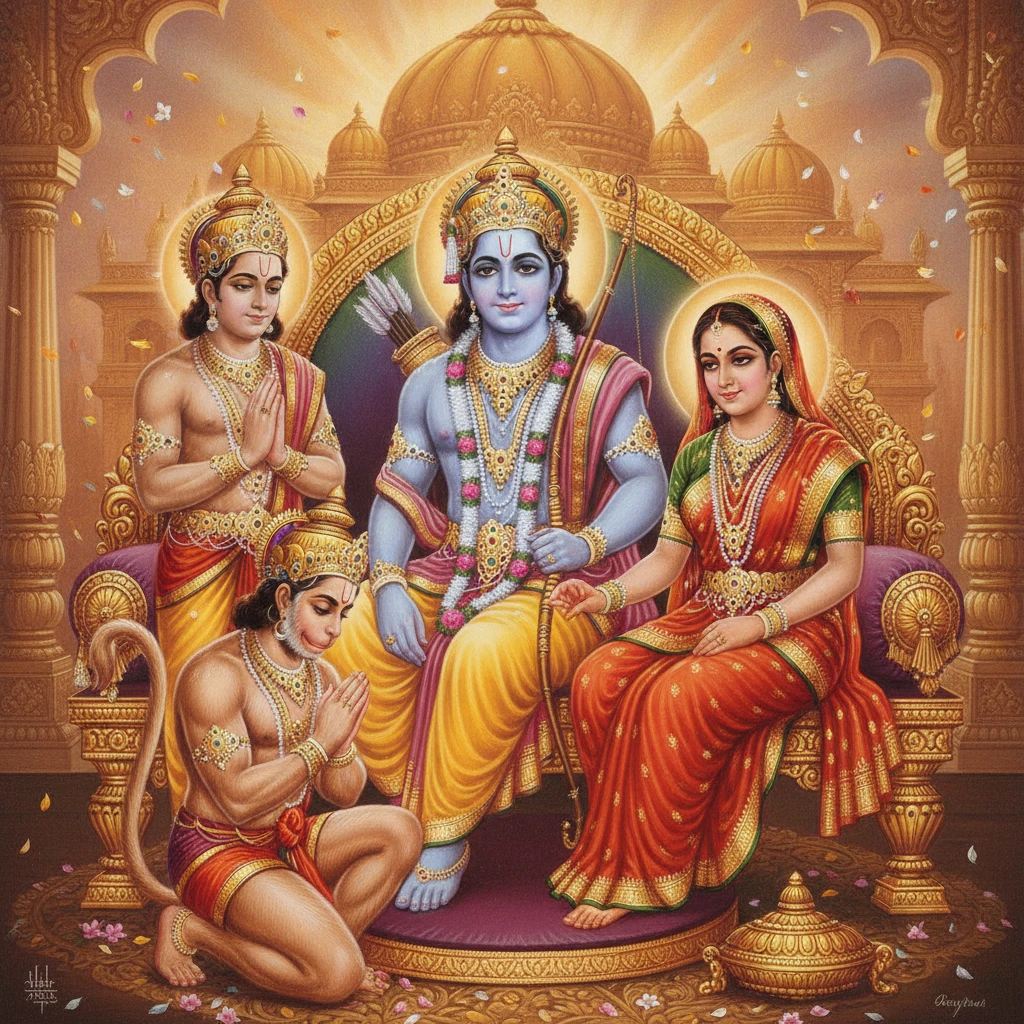
 Valmiki Ramayana · Kanda 5
About the Sundara Kanda
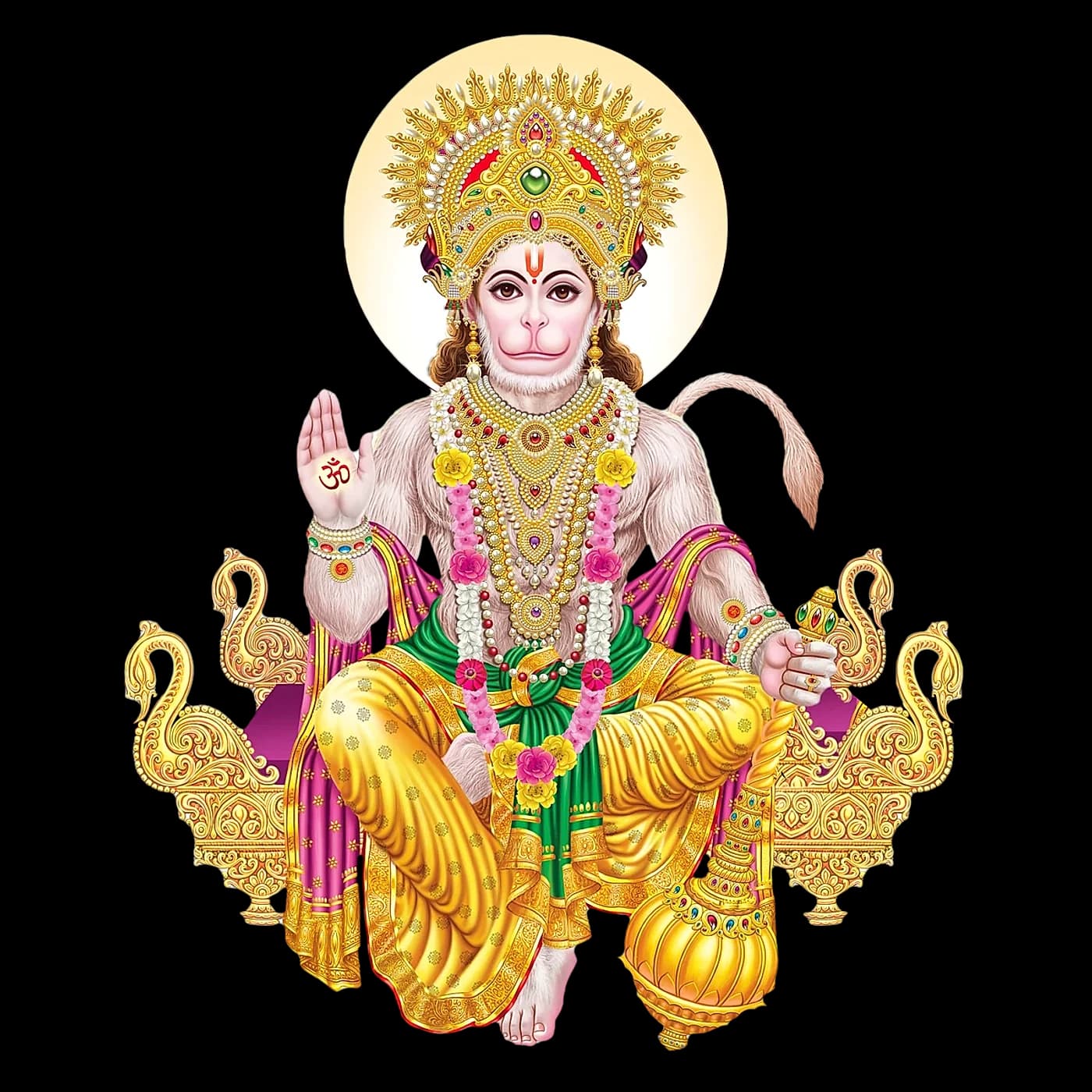
The heart of the epic and its most auspicious book, centred on Hanuman. He leaps across the ocean to Lanka, searches the city, finds Sita in the Ashoka grove and gives her Ram’s ring, allows himself to be captured, burns Lanka with his blazing tail, and returns with Sita’s message. Sundara Kanda is recited for courage, hope and the removal of obstacles.
How it is read
The Sundara Kanda is given below in its original Sanskrit (Devanagari), numbered by sarga and shloka. Read verse by verse; the Sundara Kanda in particular is recited as a paath for courage and protection.
Original Text
Verses & Meaning
ततो रावणनीतायाः सीतायाः शत्रुकर्शनः ।इयेष पदमन्वेष्टुं चारणाचरिते पथि ॥५-१-१॥
Then that tormentor of foes, Hanuman, resolved to find the whereabouts of Sita, who had been carried off by Ravana, along a path traversed by celestial wanderers (charanas).
दुष्करं निष्प्रतिद्वन्द्वं चिकीर्षन् कर्म वानरः ।समुदग्रशिरोग्रीवो गवांपतिरिवाबभौ ॥५-१-२॥
That monkey, intent on performing an unrivalled and arduous task, held his head and neck raised high and shone like the lord of a herd of cattle.
अथ वैडूर्यवर्णेषु शाद्वलेषु महाबलः ।धीरः सलिलकल्पेषु विच्चार यथासुखम् ॥५-१-३॥
Then the mighty and steady Hanuman wandered at ease over the mountain's meadows, which shone like beryl and appeared lush like water.
द्विजान् वित्रासयन् धीमानुरसा पादपान् हरन् ।मृगांश्च सुबाहुन्निघ्नन् प्रवृद्ध इव केसरी॥५-१-४॥
That wise monkey roamed like a lion in its prime, frightening the birds, breaking trees with his chest, and killing many deer.
नीललोहितमाञ्जिष्ठपत्रवर्णैः सितासितैः ।स्वभावविहितैश्चित्रैर्धातुभिः समलंकृतम् ॥५-१-५॥
That mountain was adorned with naturally occurring, wondrous mineral veins of blue, red, madder-red, white and black hues, resembling colored leaves.
कामरूपिभिराविष्टमभीक्ष्णं सपरिच्छिदैः ।यक्षकिन्नरगन्धर्वैर्देवक्ल्पैश्च पन्नगैः ॥५-१-६॥
It was ever filled with shape-changing Yakshas, Kinnaras and Gandharvas, along with their companions, and with serpents equal to gods.
स तस्य गिरिवर्यस्य तले नागवरायुते ।तिष्ठन् कपिवरस्तत्र ह्रदे नाग इवाबभौ ॥५-१-७॥
That best of monkeys, standing at the foot of that excellent mountain thronged with fine serpents, shone like an elephant standing in a lake.
स सूर्याय महेन्द्राय पवनाय स्वयंभुवे ।भूतेभ्यश्चाञ्जलिं कृत्वा चकार गमने मतिम् ॥५-१-८॥
He offered salutation with folded hands to the Sun, to Indra, to Vayu, to Brahma, and to all beings, and then resolved to set out.
अञ्जलिं प्राङ्मुखः कृत्वा पवनायात्मयोओनयो ।ततो हि ववृधे गन्तुं दक्षिणो दक्षिणां दिश्म् ॥५-१-९॥
Facing east, he folded his hands in reverence to Vayu, his own father by origin, and then composed himself and expanded his body to go towards the south.
प्लवङ्गप्रवरैर्दृष्टः प्लवने कृतनिश्चयः ।ववृधे रामवृद्ध्यर्थम् समुद्र इव पर्वसु ॥५-१-१०॥
Watched by the finest of monkeys, resolved upon flying, he grew in size for Rama's success, as the ocean swells at the full and new moon.
निष्प्रमाणशरीरः सन् लिलङ्घयिषुरर्णवम् ।बाहुभ्यां पीडयामास चरणाभ्यां च पर्वतम् ॥५-१-११॥
Taking on a body of measureless size, and intent on leaping across the ocean, he pressed down the mountain with his arms and feet.
स चचालाचलश्चापि मुहूर्तं कपिपीडितः ।तरूणां पुष्पिताग्राणां सर्वं पुष्पमशातयत् ॥५-१-१२॥
That immovable mountain trembled for a moment under the monkey's pressure, and all the blossoms fell from the flowering treetops.
तेन पादपमुक्तेन पुष्पौघेन सुगन्धिना ।सर्वतः संवृतः शैलो बभौ पुष्पमयो यथा ॥५-१-१३॥
Covered all around by that fragrant mass of flowers shaken loose from the trees, the mountain appeared as though it were made entirely of blossoms.
तेन चोत्तमवीर्येण पीड्यमानः स पर्वतः ।सलिलं संप्रसुस्राव मदं मत्त इव द्विपः ॥५-१-१४॥
Pressed by that being of supreme valor, the mountain oozed forth water, like a rutting elephant exuding must.
पीड्यमानस्तु बलिना महेन्द्रस्तेन पर्वतः ।रीतीर्निर्वर्तयामास काञ्चनाञ्जनराजतीः ॥५-१-१५॥
Pressed by that powerful one, Mount Mahendra caused streams of gold, of collyrium-black ore, and of silver to flow forth.
मुमोच च शिलाः शैलो विशालाः समनःशिलाः ।मध्यमेनार्चिषा जुष्टो धूमराजीरिवानलः ॥५-१-१६॥
The mountain hurled out huge rocks streaked with red arsenic, blazing like fire wreathed in the smoke of its middle flame.
गिरिणा पीड्यमानेन पीड्यमानानि सर्वशः ।गुहाविष्टानि भूतानि विनेदुर्विकृतैः स्वरैः ॥५-१-१७॥
As the mountain was crushed on every side, the creatures dwelling in its caves cried out everywhere in terrified, distorted voices.
स महासत्त्वसंनादः शैलपीडानिमित्तजः ।पृथिवीं पूरयामास दिशश्चोपवनानि च ॥५-१-१८॥
That mighty uproar arising from the crushing of the mountain filled the earth, the four directions, and the surrounding groves.
शिरोभिः पृथुभिः सर्पा व्यक्तस्वस्तिकलक्षणैः ।वमन्तः पावकं घोरं ददंशुर्दशनैः शिलाः ॥५-१-१९॥
Serpents with broad hoods marked with clear swastika signs, spewing terrible fire, bit at the rocks with their fangs.
तास्तदा सविषैर्दष्टाः कुपितैस्तैर्महाशिलाः।जज्ज्वलुः पावकोद्दीप्ता बिभिदुश्च सहस्रधा ॥५-१-२०॥
Bitten by those enraged, venomous serpents, the great rocks blazed up kindled with fire and split into a thousand pieces.
यानि चौषधजालानि तस्मिन् जातानि पर्वते ।विषघ्नान्यपि नागानां न शेकुः शमितुं विषम्॥५-१-२१॥
Even the herbs growing on that mountain, though they were poison-antidotes, were unable to counteract the venom of the enraged serpents.
भिद्यतेऽयं गिरिर्भूतैरिति मत्त्वा तपस्विनः ।त्रस्ता विद्याधरास्तस्मादुत्पेतुः स्त्रीगणैः सह॥५-१-२२॥
Thinking the mountain was being torn apart by supernatural beings, the frightened ascetics fled up into the sky along with the Vidyadhara women.
पानभूमिगतं हित्वा हैममासवभाजनम् ।पात्रणि च महार्हाणि करकांश्च हिरण्मयान् ॥५-१-२३॥
They abandoned the golden wine-vessels left at their drinking place, along with precious cups and golden jars.
लेह्यानुच्चावचान् भक्ष्यान् मांसानि विविधानि च ।आर्षभाणि च चर्माणि खड्गांश्च कनकत्सरून् ॥५-१-२४॥
They left behind various delicacies to lick and eat, meats of many kinds, ox-hides, and swords with golden hilts.
कृतक्ण्ठगुणाः क्षीबा र्क्तमाल्यानुलेपनाः ।र्क्तक्षाः पुष्कराक्षाश्च गगनं प्रतिपेदिरे ॥५-१-२५॥
Wearing garlands round their necks, intoxicated, smeared with red flowers and red sandal-paste, red-eyed and lotus-eyed, they rose up into the sky.
हारनूपुरकेयूरपारिहार्यधराः स्त्रियः ।विस्मिताः सस्मितास्तस्थुराकाशे रमणैः सह ॥५-१-२६॥
The astonished yet smiling women, adorned with necklaces, anklets, armlets and bracelets, stood in the sky together with their lovers.
दर्शयन्तो महाविद्यां विद्याधरमहर्षयः ।सहितास्तस्थुराकाशे वीक्षाञ्चक्रुश्च पर्वतम्॥५-१-२७॥
The great Vidyadhara sages, displaying their mighty magical powers, stood together in the sky and gazed down at the mountain.
शुश्रुवुश्चतदा शब्दमृषीणां भावितात्मनाम्।चारणानां च सिद्धानां स्थितानांविमलेऽम्बरे॥५-१-२८॥
Then, in the clear sky, they heard the words of the pure-souled sages, and of the Charanas and Siddhas who stood there.
एष पर्वतसंकाशो हनूमान् मारुतात्मजः ।तितीर्षति महावेगः समुद्रं मकरालयम् ॥५-१-२९॥
"This mountain-like being, Hanuman, son of the Wind-god, of tremendous speed, is intent on crossing the ocean, abode of sea-monsters."
रामार्थं वानरार्थं च चिकीर्षन् कर्मदुष्करम् ।समुद्रस्य परं पारं दुष्प्रापं प्राप्तुमिच्छति॥५-१-३०॥
"For Rama's sake and for the monkeys' sake, intent on an arduous task, he wishes to reach the far, hard-to-attain shore of the ocean."
इति विद्याधराः श्रुत्वा वचस्तेषां महात्मनाम् ।तमप्रमेयं ददृशुः पर्वते वानरर्षभम् ॥५-१-३१॥
Hearing these words of those great souls, the Vidyadharas beheld that incomparable bull among monkeys standing upon the mountain.
दुधुवे च स रोमाणि चकम्पे चाचलोपमः ।ननाद सुमहानादं सुमहानिव तोयदः ॥५-१-३२॥
He shook his fur, trembled like a mountain himself, and roared a mighty roar like a great rain-cloud.
आनुपूर्व्येण वृत्तं च लाङ्गूलं लोमभिश्चितम् ।उत्पतिष्यन् विचिक्षेप पक्षिराज इवोरगम् ॥५-१-३३॥
About to spring up, he whipped about his rounded, fur-covered tail, like Garuda seizing hold of a serpent.
तस्य लाङ्गूलमाविद्धमात्तवेगस्य पृष्ठतः ।ददृशे गरुडेनेव ह्रियमाणो महोरगः ॥५-१-३४॥
As he gathered speed, his tail, whirling upward behind him, appeared like a great serpent being carried off by Garuda.
बाहू संस्तंभयामास महापरिघसंनिभौ ।ससाद च कपिः क्ट्यां चरणौ संचुकोच च ॥५-१-३५॥
He steadied his arms, which resembled great iron bars, contracted his loins, and drew in his feet.
संहृत्य च भुजौ श्रीमांस्तथैव च शिरोधराम् ।तेजः स्त्त्वं तथा वीर्यमाविवेश स वीर्यवान् ॥५-१-३६॥
That glorious, mighty one drew in his arms and neck likewise, and gathered his energy, strength and valor entirely within himself.
मार्गमालोकयन्दूरादूर्ध्वं प्रणिहितेक्षणः ।रुरोध हृदये प्राणानाकाशमवलोकयन् ॥५-१-३७॥
Looking far upward along his path with fixed eyes, he held his breath within his heart while gazing at the sky.
पद्भ्यां दृढमवस्थानं कृत्वा स कपिकुञ्जरः ।निकुञ्च्य कर्णौ हनुमानुत्पतिष्यन् महाबलः ।वानरान् वानरश्रेष्ठ इदं वचनमब्रवीत् ॥५-१-३८॥
Firmly planting his feet, folding back his ears, that mighty elephant among monkeys, about to leap, spoke these words to the monkeys.
यथा राघवनिर्मुक्तः शरः श्वसनविक्रमः ।गच्चेत्तद्वद्गमिष्यामि लङ्कां रावणपालिताम् ॥५-१-३९॥
"As an arrow released by Rama, swift as the wind, would fly, so shall I go to Lanka, ruled by Ravana."
न हि द्रक्ष्यामि यदि तां लङ्कायां जनकात्मजाम् ।अनेनैव हि वेगेन गमिष्यामि सुरालयम् ॥५-१-४०॥
"If I do not see the daughter of Janaka in Lanka, then with this very speed I shall go on to the abode of the gods."
यदि वा त्रिदिवे सीतां न द्रक्ष्याम्यकृतश्रमः ।बद्ध्वा राक्षसराजानमानयिष्यामि रावणम् ॥५-१-४१॥
"Or if, even after that effort, I do not see Sita in heaven, I shall bind the king of the Rakshasas and bring Ravana back."
सर्वथा कृतकार्योऽहमेष्यामि सह सीतया ।आनयिष्यामि वा लङ्कां समुत्पाट्य सरावणाम् ॥५-१-४२॥
"In every way, having accomplished my task, I shall return together with Sita, or else I shall uproot Lanka itself, along with Ravana, and bring it here."
एवमुक्त्वा तु हनुमान्वानरान्वानरोत्तमः ॥५-१-४३॥
Having spoken thus to the monkeys, Hanuman, the best of monkeys, then prepared to depart.
उत्पपाताथ वेगेन वेगवानविचारयन् ।सुपर्णमिव चात्मानं मेने स कपिकुञ्जरः ॥५-१-४४॥
That swift one then sprang up with great speed without further deliberation, and that elephant among monkeys regarded himself as if he were Garuda.
समुत्पतति तस्मिंस्तु वेगात्ते नगरोहिणः ।संहृत्य विटपान् सर्वान् समुत्पेतुः समन्ततः ॥५-१-४५॥
As he sprang up with that force, the trees on that mountain, with all their branches gathered, rose up along with him on every side.
स मत्तकोयष्टिभकान् पादपान् पुष्पशालिनः ।उद्वहन्नूरुवेगेन जगाम विमलेऽम्बरे ॥५-१-४६॥
Bearing along, by the force of his thighs, those flower-laden trees full of intoxicated cuckoos, he moved through the clear sky.
ऊरुवेगोत्थिता वृक्षा मुहूर्तं कपिमन्वयुः ।प्रस्थितं दीर्घमध्वानं स्वबन्धमिव बान्धवाः ॥५-१-४७॥
The trees uprooted by the force of his thighs followed the monkey for a moment on his long journey, like kinsmen following a departing relative.
तमूरुवेगोन्मथिताःसालाश्चन्ये नगोत्तमाः।अनुजग्मुर्हनूमन्तं सैन्या इव महीपतिम् ॥५-१-४८॥
Sal trees and other great trees, torn up by the force of his thighs, followed Hanuman like an army following its king.
सुपुष्पिताग्रैर्बहुभिः पादपैरन्वितः कपिः ।हनुमान् पर्वताकारो बभूवाद्भुतदर्शनः ॥५-१-४९॥
Accompanied by many trees with blossoming tops, the monkey Hanuman, mountain-like in form, presented a wondrous sight.
सारवन्तोऽथ ये वृक्षा न्यमज्जन् लवणाम्भसि ।भयादिव महेन्द्रस्य पर्वता वरुणालये ॥५-१-५०॥
The heavier trees then sank down into the salt sea, as if the mountains, out of fear of great Indra, sought refuge in Varuna's ocean abode.
स नानाकुसुमैः कीर्णः कपिः साङ्कुरकोरकैः ।शुशुभे मेघसंकाशः खद्योतैरिव पर्वतः ॥५-१-५१॥
Covered with various flowers, buds and shoots, the cloud-like monkey shone like a mountain sparkling with fireflies.
विमुक्तास्तस्य वेगेन मुक्त्वा पुष्पाणि ते द्रुमाः ।अवशीर्यन्त सलिले निवृत्ताः सुहृदो यथा ॥५-१-५२॥
Loosened by his speed, those trees shed their flowers, which scattered down upon the water, like friends turning back after seeing someone off.
लघुत्वेनोपपन्नं तद्विचित्रं सागरेऽपतत् ।द्रुमाणां विविधं पुष्पं कपिवायुसमीरितम् ॥५-१-५३॥
Being light in weight, the many-colored flowers of those trees, blown by the wind of the monkey's speed, fell wondrously upon the ocean.
ताराचितमिवाकाशं प्रबभौ च महार्णवः ।पुष्पौघेनानुबद्धेन नानावर्णेन वानरः ।बभौ मेघ इवाकाशे विद्युद्गणविभूषितः ॥५-१-५४॥
The great ocean shone as though studded with stars, covered by that continuous flow of many-colored flowers; the monkey shone in the sky like a cloud adorned with flashes of lightning.
तस्य वेगसमाधूतैः पुष्पैस्तोयमदृश्यत ॥५-१-५५॥
By the flowers shaken loose through his speed, the water appeared as though sprinkled with stars.
ताराभिरभिरामाभिरुदिताभिरिवाम्बरम् ।तस्याम्बरगतौ बाहू ददृशाते प्रसारितौ ॥५-१-५६॥
The sky seemed as though studded with lovely rising stars; his two arms could be seen outstretched across the sky.
पर्वताग्राद्विनिष्क्रान्तौ पञ्चास्याविव पन्नगौ ।पिबन्निव बभौ चापि सोओर्मिमालं महार्णवम् ॥५-१-५७॥
Extended from the top of the mountain, his two arms looked like two five-headed serpents; he appeared as if drinking up the great ocean with its garland of waves.
पिपासुरिव चाकाशं ददृशे स महाकपिः ।तस्य विद्युत्प्रभाकारे वायुमार्गानुसारिणः ॥५-१-५८॥
That great monkey appeared as if thirsting for the very sky; as he sped along the path of the wind, his form gleamed like lightning.
नयने विप्रकाशेते पर्वतस्थाविवानलौ ।पिङ्गे पिङ्गाक्षमुख्यस्य बृहती परिमण्डले ॥५-१-५९॥
His two large, round, tawny eyes blazed like fires seated upon a mountain — that foremost of monkeys had tawny eyes as his defining mark.
चक्षुषी संप्रकाशेते चन्द्रसूर्याविवोदितौ ।मुखं नासिकया तस्य ताम्रया ताम्रमाबभौ ॥५-१-६०॥
His two eyes shone like the risen sun and moon; his coppery-nosed face gleamed with a coppery hue.
सन्ध्यया समभिस्पृष्टं यथा तत्सूर्यमण्डलम् ।लाङ्गूलं च समाविद्धं प्लवमानस्य शोभते ॥५-१-६१॥
His whirling, curled tail shone beautifully as he flew, like the sun's orb touched by the glow of twilight.
अम्बरे वायुपुत्रस्य शक्रध्वज इवोच्छ्रितः ।लाङ्गूलचक्रेण महान् शुक्लदंष्ट्रोऽनिलात्मजः ॥५-१-६२॥
In the sky, the son of the Wind-god, great and white-fanged, appeared with the circle of his raised tail resembling Indra's banner.
व्यरोचत महाप्राज्ञः परिवेषीव भास्करः ।स्फिग्देशेनाभिताम्रेण रराज स महाकपिः ॥५-१-६३॥
That greatly wise one shone like the sun encircled by a halo; that mighty monkey was resplendent with his coppery-red hindquarters.
महता दारितेनेव गिरिर्गैरिकधातुना ।तस्य वानरसिंहस्य प्लवमानस्य सागरम् ॥५-१-६४॥
His coppery-red loins gleamed as though a mountain had split open, revealing its store of red ochre ore, as that lion among monkeys sped over the ocean.
कक्षान्तरगतो वायुर्जीमूत इव गर्जति ।खे यथा निपतन्त्युल्का ह्युत्तरान्ताद्विनिःसृता ॥५-१-६५॥
The wind rushing between his arms roared like a thundercloud, just as meteors are seen falling from the northern sky with their trailing glow.
दृश्यते सानुबन्धा च तथा स कपिकुञ्जरः ।पतत्पतङ्गसंकाशो व्यायतः शुशुभे कपिः ॥५-१-६६॥
So too was seen that great monkey, with his trailing form; stretched out in flight, he shone like a falling meteor.
प्रवृद्ध इव मातङ्गः कक्ष्यया बध्यमानया ।उपरिष्टाच्छरीरेण छायया चावगाढया ।सागरे मारुताविष्टा नौरिवासीत्तदा कपिः ॥५-१-६७॥
Like a mighty elephant in must held by a rope, with his shadow reaching deep into the sea below, the wind-driven monkey was like a ship upon the ocean.
यं यं देशं समुद्रस्य जगाम स महाकपिः ।स स तस्योरुवेगेन सोन्माद इव लक्ष्यते ॥५-१-६८॥
Wherever over the ocean that great monkey passed, that stretch of sea, churned by the force of his speed, seemed as if maddened.
सागरस्योओर्मिजालानामुरसा शैलवर्ष्मणाम् ।अभिघ्नंस्तु महावेगः पुप्लुवे स महाकपिः ॥५-१-६९॥
Striking with his chest against the mountainous masses of the ocean's waves, that great monkey of tremendous speed flew on.
कपिवातश्च बलवान् मेघवातश्च निःसृतः ।सागरं भीमनिर्घोषं कम्पयामासतुर्भृशम् ॥५-१-७०॥
The powerful wind raised by the monkey and the wind released from the clouds together violently shook the terrifyingly roaring ocean.
विकर्षन्नूर्मिजालानि बृहन्ति लवणाम्भसि ।पुप्लुवे कपिशार्दूलो विकिरन्निव रोदसी ॥५-१-७१॥
Dragging along huge networks of waves in the salt sea, that tiger among monkeys flew on, as if scattering sky and earth apart.
मेरुमन्दरसंकाशानुद्धतान् स महार्णवे ।अत्यक्रामन्महावेगस्तरङ्गान् गणयन्निव ॥५-१-७२॥
With great speed he crossed over the towering waves of the great ocean, resembling Meru and Mandara mountains, as if counting them one by one.
तस्य वेगसमुद्धूतं जलं सजलदं तदा ।अम्बर्स्थं विबभ्राज शारदाभ्रमिवाततम् ॥५-१-७३॥
The water, churned up by the force of his speed along with the clouds, shone spread across the sky like an autumn cloud-bank.
तिमिनक्रझषाः कूर्मा दृश्यन्ते विवृतास्तदा ।वस्त्रापकर्षणेनेव शरीराणि शरीरिणाम् ॥५-१-७४॥
Whales, crocodiles, fish and tortoises were then seen exposed, as though the bodies of living creatures had been stripped bare of their garments.
प्लवमानं समीक्ष्यथ भुजङ्गाः सागरालयाः ।व्योम्नि तं कपिशार्दूलं सुपर्ण इति मेनिरे ॥५-१-७५॥
Seeing that tiger among monkeys flying in the sky, the ocean-dwelling serpents mistook him for Garuda himself.
दशयोजनविस्तीर्णा त्रिंशद्योजनमायता ।छाया वानरसिंहस्य जले चारुतराभवत् ॥५-१-७६॥
The shadow of that lion among monkeys, ten yojanas wide and thirty yojanas long, appeared exceedingly beautiful upon the water.
श्वेताभ्रघनराजीव वायुपुत्रानुगामिनी ।तस्य सा शुशुभे छाया वितता लवणाम्भसि ॥५-१-७७॥
That shadow of the son of the Wind-god, spreading over the salt sea and following him, shone like a mass of white clouds.
शुशुभे स महातेजा महाकायो महाकपिः ।वायुमार्गे निरालम्बे पक्षवानिव पर्वतः ॥५-१-७८॥
That monkey of great splendor and great body shone like a winged mountain moving through the boundless path of the wind.
येनासौ याति बलवान् वेगेन कपिकुञ्जरः ।तेन मार्गेण सहसा द्रोणीकृत इवार्णवः ॥५-१-७९॥
Along the path by which that powerful elephant among monkeys sped with such force, the ocean itself seemed instantly hollowed into a channel.
आपाते पक्षिसंघानां पक्षिराज इव व्रजन् ।हनुमान् मेघजालानि प्रकर्षन् मारुतो यथा ॥५-१-८०॥
Advancing amid flocks of birds like the king of birds himself, Hanuman drove along masses of clouds just as the wind does.
पाण्डुरारुणवर्णानि नीलमाञ्जिष्ठकानि च ।कपिनाकृष्यमाणानि महाभ्राणि चकाशिरे ॥५-१-८१॥
Great clouds of pale-white, red, blue and dark madder hues shone brilliantly as they were dragged along by the monkey's speed.
प्रविशन्नभ्रजालानिनिष्पतंश्च पुनः पुनः ।प्रच्चन्नश्च प्रकाशश्च चन्द्रमा इव लक्ष्यते ॥५-१-८२॥
Entering and emerging from the banks of clouds again and again, he appeared now hidden, now visible, like the moon passing behind clouds.
प्लवमानं तु तं दृष्ट्वा प्लवङ्गं त्वरितं तदा ।ववर्षुः पुष्पवर्षणि देवगन्धर्वदानवाः ॥५-१-८३॥
Seeing that swift monkey leaping through the sky, the gods, gandharvas and danavas showered flowers upon him.
तताप न हि तं सूर्यः प्लवन्तं वानरोत्तमम् ।सिषेवे च तदा वायू रामकार्याद्थसिद्धये ॥५-१-८४॥
The sun did not scorch that best of monkeys as he leapt, and the wind served him then for the success of Rama's task.
ऋषयस्तुष्टुवुश्चैव प्लवमानं विहायसा ।जगुश्च देवगन्धर्वाः प्रशंसन्तो महौजसम् ॥५-१-८५॥
The sages praised him as he flew through the sky, and the gods and gandharvas sang, extolling that mighty one.
नागाश्च तुष्टुवुर्यक्षा रक्षांसि विबुधाः खगाः ॥५-१-८६॥
Nagas, yakshas, rakshasas, gods and birds all praised him as well.
प्रेक्ष्य सर्वे कपिवरं सहसा विगतक्लमम् ।तस्मिन् प्लवगशार्दूले प्लवमाने हनूमति ॥५-१-८७॥
All beings, seeing that best of monkeys, were suddenly freed of weariness as that tiger among monkeys, Hanuman, leapt onward.
इक्ष्वाकुकुलमानार्थी चिन्तयामास सागरः ।साहाय्यं वानरेन्द्रस्य यदि नाहं हनूमतः ॥५-१-८८॥
The ocean, desiring to honour the Ikshvaku dynasty, reflected that if he did not assist this lord of monkeys, Hanuman,
करिष्यामि भविष्यामि सर्ववाच्यो विवक्षताम् ।अहमिक्ष्वाकुनाथेन सगरेण विवर्धतः ॥५-१-८९॥
he would deserve blame from all who might speak of it; for he himself had been enlarged by Sagara, lord of the Ikshvakus.
इक्ष्वाकुसचिचश्चायं नावसीदितुमर्हति ।तथा मया विधातव्यं विश्रमेत यथा कपिः ॥५-१-९०॥
He is a minister, as it were, of the Ikshvakus, and should not let this monkey suffer; I must so act that this monkey may rest.
शेषं च मयि विश्रान्तः सुखेनातिपतिष्यति ।इति कृत्वा मतिं साध्वीं समुद्रश्चन्नमम्भसि ॥५-१-९१॥
Having rested upon me, he will easily cover the remaining distance — with this good resolve, the ocean, together with its waters,
हिरण्यनाभं मैनाकमुवाच गिरिसत्तमम् ।त्वमिहासुरसंघानां पाताLअतलवासिनां ॥५-१-९२॥
spoke to the golden-peaked Mainaka, the best of mountains.
देवराज्ञा गिरिश्रेष्ठ परिघः संनिवेशितः ।त्वमेषां जातवीर्याणां पुनरेवोत्पतिष्यताम् ॥५-१-९३॥
You were set here by the king of gods, O best of mountains, as a barrier against the hordes of asuras dwelling in the netherworld,
पाताLअस्याप्रमेयस्य द्वारमावृत्य तिष्ठसि ।तिर्यगूर्ध्वमधश्चैव शक्तिस्ते शैल वर्धितुम् ॥५-१-९४॥
so that they, being mountains born with power, could not rise up again; you stand guarding the gateway of that immeasurable netherworld.
तस्मात्संचोदयामि त्वामुत्तिष्ठ गिरिसत्तम ।न एष कपिशार्दूलस्त्वमुपर्येति वीर्यवान् ॥५-१-९५॥
You have the power to grow in all directions, sideways, upward and downward, O mountain — therefore I urge you: rise up, O best of mountains.
हनूमान्रामकार्यार्थं भीमकर्मा खमाप्लुतः ।अस्य साह्यं मया कार्यमिक्ष्वाकुकुलवर्तिनः ॥५-१-९६॥
This mighty, formidable tiger among monkeys, Hanuman, is flying above you for Rama's sake; I must render him help, for he serves the Ikshvaku lineage.
मम हीक्ष्वाकवः पूज्याः परं पूज्यतमास्तव ।कुरु साचिव्यमस्माकं न नः कार्यमतिक्रमेत् ॥५-१-९७॥
The Ikshvakus are honoured by me, and even more honoured by you; render us this service — let our task not be hindered.
कर्तव्यमकृतं कार्यं सतां मन्युमुदीरयेत् ।सलिलादूर्ध्वमुत्तिष्ठ तिष्ठत्वेष कपिस्त्वयि ॥५-१-९८॥
A duty left undone provokes the anger of the virtuous; rise up above the water — let this monkey rest upon you.
अस्माकमतिथिश्चैव पूज्यश्च प्लवतां वरः ।चामीकरमहानाभ देवगन्धर्व सेवित ॥५-१-९९॥
He, best of flying ones, shall be our honoured guest, O golden-peaked one served by gods and gandharvas.
हनुमांस्त्वयि विश्रान्तस्ततः शेषं गमिष्यति ।काकुत्थ्सस्यानृशंस्यं च मैथिल्याश्च विवासनम् ॥५-१-१००॥
Having rested upon you, Hanuman will then continue the remaining journey, for the sake of Rama's compassion and Sita's release from captivity.
Quick guide
Before you begin
Bhav
Benefits devotees pray for
FAQ
Common questions
What is the Sundara Kanda of the Valmiki Ramayana about?
The heart of the epic and its most auspicious book, centred on Hanuman. He leaps across the ocean to Lanka, searches the city, finds Sita in the Ashoka grove and gives her Ram’s ring, allows himself to be captured, burns Lanka with his blazing tail, and returns with Sita’s message. Sundara Kanda is recited for courage, hope and the removal of obstacles.
What is the Valmiki Ramayana?
The Valmiki Ramayana is the original Sanskrit epic of Shri Ram, composed by Maharishi Valmiki and revered as the Adi Kavya, the first poem. It has seven kandas (books): Bala, Ayodhya, Aranya, Kishkindha, Sundara, Yuddha and Uttara, and is the source of the many later Ramayanas including Tulsidas’s Ramcharitmanas.
Offer a Ram path or seva in your name
Have a Ramayana or Sunderkand path performed in your naam-gotra for protection and peace. Book a seva, or read on in Sanatan Sahitya.