



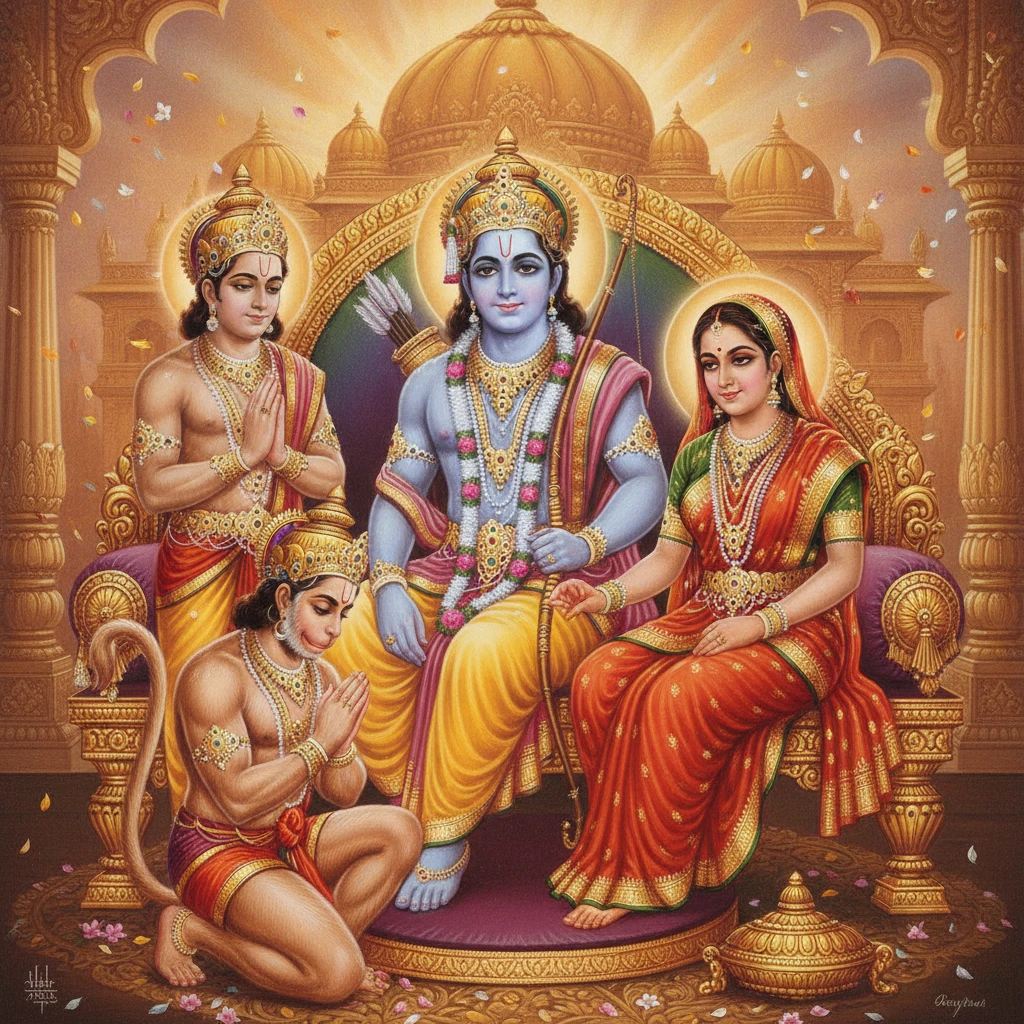
 Valmiki Ramayana · Kanda 4
About the Kishkindha Kanda
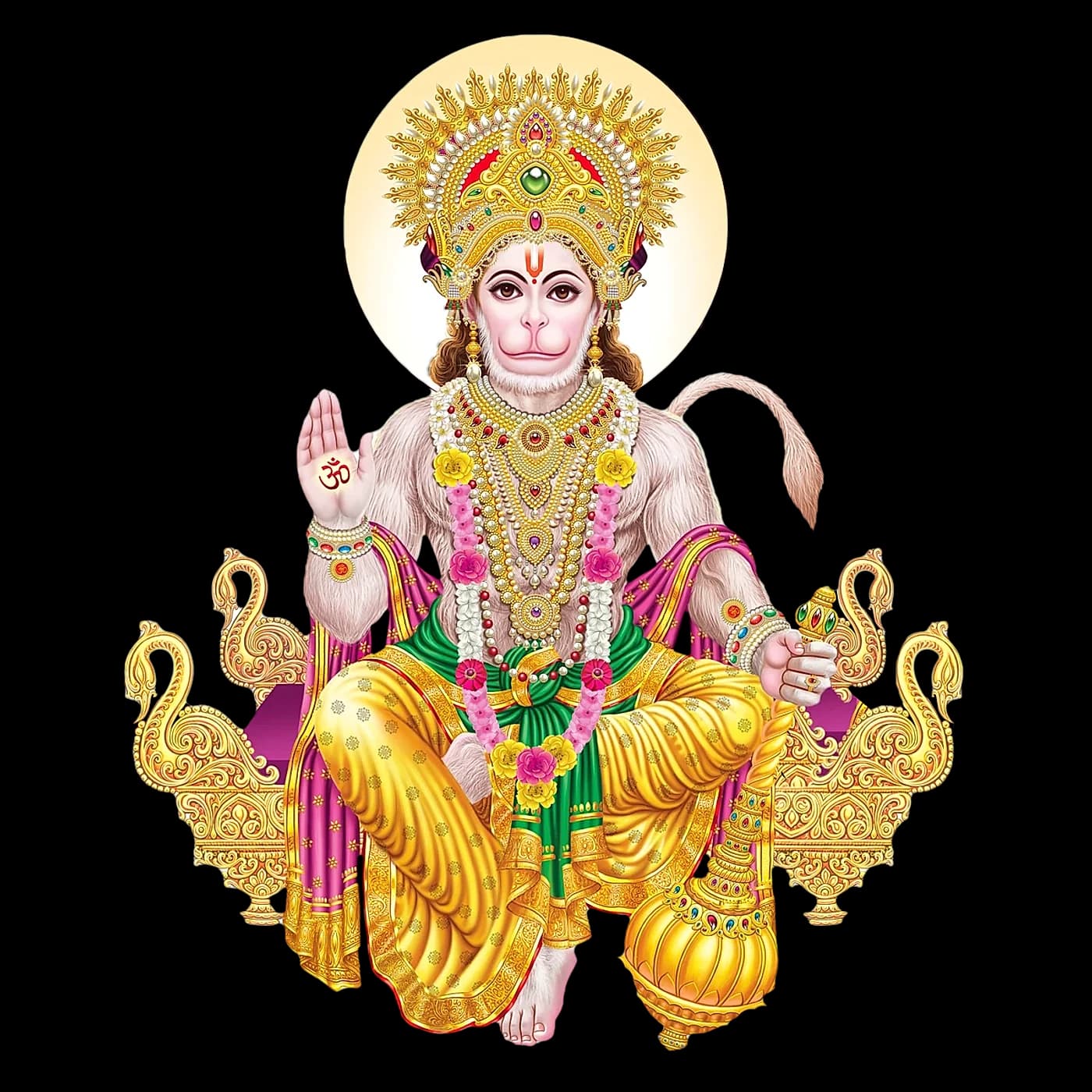
Ram befriends the vanara prince Sugriva and Hanuman, slays Bali to restore Sugriva’s kingdom of Kishkindha, and the vanaras set out in every direction to search for Sita. Hanuman leads the party sent south, where they learn that Sita is held in Lanka across the ocean.
How it is read
The Kishkindha Kanda is given below in its original Sanskrit (Devanagari), numbered by sarga and shloka. Read verse by verse; the Sundara Kanda in particular is recited as a paath for courage and protection.
Original Text
Verses & Meaning
स ताम् पुष्करिणीम् गत्वा पद्म उत्पल झषाकुलाम् ।रामः सौमित्रि सहितो विललाप अकुलेन्द्रियः ॥४-१-१॥
Rama, together with Lakshmana, reached that lotus-pond teeming with lotuses, water-lilies and fish, and lamented aloud, his senses overwhelmed with grief.
तत्र दृष्ट्वैवा ताम् हर्षात् इन्द्रियाणि चकम्पिरे ।स कामवशम् आपन्नः सौमित्रिम् इदम् अब्रवीत् ॥४-१-२॥
The moment he beheld that pond, his senses trembled with a rush of feeling; overcome by longing for Sita, he spoke these words to Lakshmana.
सौमित्रे शोभते पम्पा वैदूर्य विमल उदका ।फुल्ल पद्म उत्पलवती शोभिता विविधैः द्रुमैः ॥४-१-३॥
O Saumitri (Lakshmana), Pampa lake shines with clear water like beryl, full of blooming lotuses and water-lilies, and adorned by many kinds of trees.
सौमित्रे पश्य पम्पायाः काननम् शुभ दर्शनम् ।यत्र राजन्ति शैला वा द्रुमाः स शिखरा इव ॥४-१-४॥
Lakshmana, look at this lovely forest of Pampa, where the rocks and trees shine as if they were mountains with their own peaks.
माम् तु शोकाभि सन्तप्तम् आधयः पीडयन्ति वै ।भरतस्य च दुःखेन वैदेह्या हरणेन च ॥४-१-५॥
But I, burning with grief, am tormented by anguish — over Bharata's sorrow and over Vaidehi's abduction.
शोकार्तस्य अपि मे पम्पा शोभते चित्र कानना ।व्यवकीर्णा बहु विधैः पुष्पैः शीतोदका शिवा ॥४-१-६॥
Even in my grief, this colourful forest of Pampa still delights me — strewn with many kinds of flowers, cool-watered and auspicious.
नलिनैः अपि संछन्ना हि अत्यर्थ शुभ दर्शना ।सर्प व्याल अनुचरिता मृग द्विज समाकुला ॥४-१-७॥
It is covered with lotuses and looks exceedingly beautiful, roamed by serpents, and thronged with deer and birds.
अधिकम् प्रविभाति एतत् नील पीतम् तु शाद्वलम् ।द्रुमाणाम् विविधैः पुष्पैः परिस्तोमैः इव अर्पितम् ॥४-१-८॥
This meadow appears all the more radiant, blue and yellow, as if the trees had spread out a covering of many kinds of flowers upon it.
पुष्प भार समृद्धानि शिखराणि समन्ततः ।लताभिः पुष्पित अग्राभिः उपगूढानि सर्वतः ॥४-१-९॥
On every side the mountain peaks are laden with an abundance of flowers, embraced all around by creepers whose tips are in bloom.
सुख अनिलोऽयम् सौमित्रे कालः प्रचुर मन्मथः ।गन्धवान् सुरभिर् मासो जात पुष्प फल द्रुमः ॥४-१-१०॥
Lakshmana, this is the season of a pleasant breeze, abounding in passion; the month is fragrant and sweet-scented, and the trees have brought forth flowers and fruit.
पश्य रूपाणि सौमित्रे वनानाम् पुष्प शालिनाम् ।सृजताम् पुष्प वर्षाणि वर्षम् तोयमुचाम् इव ॥४-१-११॥
Look, Lakshmana, at the flower-laden forests, as if they were showering blossoms the way rain-clouds pour down water.
प्रस्तरेषु च रम्येषु विविधाः कानन द्रुमाः ।वायु वेग प्रचलिताः पुष्पैः अवकिरन्ति गाम् ॥४-१-१२॥
On the lovely rocky slopes, the various forest trees, shaken by the force of the wind, scatter their flowers upon the earth.
पतितैः पतमानैः च पादपस्थैः च मारुतः ।कुसुमैः पश्य सौमित्रे क्रीडतीव समन्ततः ॥४-१-१३॥
With flowers already fallen, still falling, and yet clinging to the trees, look, Lakshmana, the wind seems to be playing all around.
विक्षिपन् विविधाः शाखा नगानाम् कुसुमोत्कटाः ।मारुतः चलित स्थानैः षट्पदैः अनुगीयते ॥४-१-१४॥
Scattering the flower-laden branches of the trees in every direction, the wind is followed by the humming of bees stirred from their places.
मत्त कोकिल सन्नादैः नर्तयन् इव पादपान् ।शैल कन्दर निष्क्रान्तः प्रगीत इव च अनिलः ॥४-१-१५॥
Making the trees seem to dance with the joyous notes of intoxicated cuckoos, the breeze emerging from mountain caves sounds as if it were singing.
तेन विक्षिपता अत्यर्थम् पवनेन समन्ततः ।अमी संसक्त शाखाग्रा ग्रथिता इव पादपाः ॥४-१-१६॥
Because that wind blows so forcefully on every side, these trees with their entangled branch-tips seem to be knotted together.
स एव सुख संस्पर्शो वाति चन्दन शीतलः ।गन्धम् अभ्यवहन् पुण्यम् श्रम अपनयो अनिलः ॥४-१-१७॥
That same pleasant, sandalwood-cool wind blows carrying a holy fragrance and taking away all fatigue.
अमी पवन विक्षिप्ता विनन्दन्ती इव पादपाः ।षट्पदैः अनुकूजद्भिः वनेषु मधु गन्धिषु ॥४-१-१८॥
Tossed by the wind, these trees seem to rejoice, with bees humming among the honey-scented forests.
गिरि प्रस्थेषु रम्येषु पुष्पवद्भिः मनोरमैः ।संसक्त शिखरा शैला विराजन्ति महाद्रुमैः ॥४-१-१९॥
On the lovely mountain slopes, the hills, their summits linked by great flowering trees, shine beautifully.
पुष्प संछन्न शिखरा मारुतः उत्क्षेप चंचला ।अमी मधुकरोत्तंसाः प्रगीत इव पादपाः ॥४-१-२०॥
With their flower-covered peaks tossed restlessly by the wind, these crown-of-bees trees seem to be singing.
सुपुष्पितांस्तु पश्य एतान् कर्णिकारान् समन्ततः ।हाटक प्रति संच्छन्नान् नरान् पीतांबरान् इव ॥४-१-२१॥
Look at these fully blossomed karnikara trees all around, covered in gold-like flowers, like men clad in yellow garments.
अयम् वसन्तः सौमित्रे नाना विहग नादितः ।सीतया विप्रहीणस्य शोक सन्दीपनो मम ॥४-१-२२॥
This spring, Lakshmana, resounding with the calls of various birds, only kindles my grief, separated as I am from Sita.
माम् हि शोक समाक्रान्तम् संतापयति मन्मथः ।हृष्टम् प्रवदमानश्च समाह्वयति कोकिलः ॥४-१-२३॥
Kama, the god of love, torments me who am already overwhelmed by grief, and the joyfully calling cuckoo seems to be summoning me too.
एष दाअत्यूहको हृष्टो रम्ये माम् वन निर्झरे ।प्रणदन् मन्मथाविष्टम् शोचयिष्यति लक्ष्मण ॥४-१-२४॥
This joyful datyuha bird, calling by the lovely forest stream, will only add to my grief, Lakshmana, since I am overcome by love.
श्रुत्वा एतस्य पुरा शब्दम् आश्रमस्था मम प्रिया ।माम् आहूय प्रमुदिता परमम् प्रत्यनन्दत ॥४-१-२५॥
Long ago, hearing this bird's call, my beloved, dwelling in the hermitage, would call out to me joyfully and greet me with great delight.
एवम् विचित्राः पतगा नाना राव विराविणः ।वृक्ष गुल्म लताः पश्य संपतन्ति समन्ततः॥४-१-२६॥
Look, thus various colourful birds with many different cries fly about everywhere among the trees, shrubs and creepers.
विमिश्रा विहगाः पुंभिः आत्म व्यूह अभिनन्दिताः ।भृङ्गराज प्रमुदिताः सौमित्रे मधुर स्वराः ॥४-१-२७॥
Mingled with their mates and delighted by their own flocks, the birds, Lakshmana, sing sweetly, joyous with their king of bees.
अस्याः कूले प्रमुदिताः संघशः शकुनास्त्विह ।दात्यूहरति विक्रन्दैः पुंस्कोकिल रुतैः अपि ॥४-१-२८॥
On the bank of this lake, flocks of joyful birds cry out — the datyuha birds with their calls, and the male cuckoos with their notes.
स्वनन्ति पादपाः च इमे माम् अनङ्ग प्रदीपकाः ।अशोक स्तबक अङ्गारः षट्पद स्वन निस्वनः ॥४-१-२९॥
These trees too, glowing like embers with clusters of ashoka blossoms and resounding with the hum of bees, are kindling passion in me.
माम् हि पल्लव ताम्रार्चिः वसन्ताग्निः प्रधक्ष्यति ।न हि ताम् सूक्ष्मपक्ष्माक्षीम् सुकेशीम् मृदु भाषिणीम् ॥४-१-३०॥
The fire of spring, flame-red like young leaves, will surely burn me, but it cannot touch that fine-lashed, lovely-haired, gentle-voiced one.
अपश्यतो मे सौउमित्रे जीवितेऽस्ति प्रयोजनम् ।अयम् हि रुचिरः तस्याः कालो रुचिर काननः ॥४-१-३१॥
Not seeing her, Lakshmana, there remains no purpose left for me in living; and yet this season, this lovely forest, is beautiful indeed.
कोकिलाकुल सीमान्तः दयिताया मम अनघः ।मन्मध आयास संभूतो वसन्त गुण वर्धितः ॥४-१-३२॥
This faultless season, its edges filled with cuckoo song, born of love's toil and heightened by the qualities of spring, was dear to my beloved.
अयम् माम् धक्ष्यति क्षिप्रम् शोकाग्निः न चिरादिव ।अपश्यत ताम् वनिताम् पश्यतो रुचिर द्रुमान् ॥४-१-३३॥
This fire of grief will soon burn me swiftly, seeing these lovely trees yet not seeing that woman.
मम अयम् आत्मप्रभवो भूयस्त्वम् उपयास्यति ।अदृश्यमाना वैदेही शोकम् वर्धयती इह मे ॥४-१-३४॥
This fire born of my own passion will grow greater still; Vaidehi remaining unseen only increases my grief here.
दृश्यमानो वसन्तः च स्वेद संसर्ग दूषकः ।माम् हि सा मृगशाबाक्षी चिन्ता शोक बलात्कृतम् ॥४-१-३५॥
Even the visible spring, once mingled with the sweat of our embraces, now afflicts me; that fawn-eyed one used to overpower my grief through her presence.
संतापयति सौमित्रे कृइरः चैत्र वनानिलः ।अमी मयूराः शोभन्ते प्रनृत्यन्तः ततः ततः ॥४-१-३६॥
This cruel spring wind of Chaitra torments me, Lakshmana; look, these peacocks shine forth, dancing here and there.
स्त्वैः पक्षैः पवन उद्धूतैः गवाक्षैः स्फाटिकैः इव ।शिखिनीभिः परिवृतास्त एते मद मूर्छिताः ॥४-१-३७॥
With their tail-feathers stirred by the wind like crystal lattices, surrounded by their peahens, these peacocks are intoxicated with passion.
मन्मथ अभिपरीतस्य मम मन्मथ वर्धनाः ।पश्य लक्ष्णम नृत्यन्तम् मयूरम् उपनृत्यति ॥४-१-३८॥
I, overwhelmed by love and my passion only increasing, watch this peahen dancing along with the dancing peacock, Lakshmana.
शिखिनी मन्मथ आर्तैः एषा भर्तारम् गिरि सानुनि ।ताम् एव मनसा रामाम् मयुरोऽपि अनुधावति ॥४-१-३९॥
This peahen, tormented by love, follows her mate upon the mountain ridge; and I too, in my mind, follow that same Rama, my Sita, alone.
वितत्य रुचिरौ पक्षौ रुतैः उपहसन् इव ।मयूरस्य वने नूनम् रक्षसा न हृता प्रिया ॥४-१-४०॥
Spreading his lovely wings and calling as if in mockery, this peacock's mate has surely not been carried off by a demon in the forest.
तस्मात् नृत्यति रम्येषु वनेषु सह कान्तया ।मम त्वयम् विना वासः पुष्पमासे सुदुःसहः ॥४-१-४१॥
That is why he dances joyfully with his mate in these lovely forests; but for me, this dwelling here without her, in the flowering season, is unbearable.
पश्य लक्ष्मण संरागः तिर्यक् योनिगतेषु अपि ।यदेषा शिखिनी कामात् भर्तारम् अभिवर्तते ॥४-१-४२॥
Look, Lakshmana, at this passion even among creatures of another species — how this peahen approaches her mate out of love.
माम् अपि एवम् विशालाक्षी जानकी जात संभ्रमा ।मदनेन अभिवर्तेत यदि न अपहृता भवेत् ॥४-१-४३॥
Wide-eyed Janaki too, filled with the same eager love, would come to me in just this way, had she not been carried off.
पश्य लक्ष्मण पुष्पाणि निष्फलानि भवन्ति मे ।पुष्प भार समृद्धानाम् वनानाम् शिशिरात्यये ॥४-१-४४॥
Look, Lakshmana, how these flowers have become fruitless for me — though at the end of winter the forests are laden with abundant blossoms.
रुचिराणि अपि पुष्पाणि पादपानाम् अतिश्रिया ।निष्फलानि महीम् यान्ति समम् मधुकरोत्करैः ॥४-१-४५॥
These lovely, exquisitely beautiful flowers of the trees fall fruitlessly to the ground along with swarms of bees.
नदन्ति कावम् मुदिताः शकुना सङ्घशः कलम् ।आह्वयन्त इव अन्योन्यम् काम उन्मादकरा मम ॥४-१-४६॥
Birds cry sweetly in flocks, delighted, as if calling out to one another, and this maddens me with passion.
वसन्तो यदि तत्र अपि यत्र मे वसति प्रिया ।नूनम् परवशा सीता सा अपि शोच्यति अहम् यथा ॥४-१-४७॥
If spring has also come to that place where my beloved now dwells, then surely Sita too, helpless in another's power, grieves just as I do.
नूनम् न तु वसन्तः तम् देशम् स्पृशति यत्र सा ।कथम् हि असित पद्माक्षी वर्तयेत् सा मया विना ॥४-१-४८॥
Or surely spring does not touch that place where she is — for how could that dark-lotus-eyed one live through it without me?
अथवा वर्तते तत्र वसन्तो यत्र मे प्रिया ।किम् करिष्यति सुश्रोणी सा तु निर् भर्त्सिता परैः ॥४-१-४९॥
Or if spring is indeed present in the place where my beloved is, what can that fair-hipped one do, tormented as she is by her captors?
श्यामा पद्म पलाशाक्षी मृदु भाषा च मेम् प्रिया ।नूनम् वसन्तम् आसाद्य परित्यक्ष्यति जीवितम् ॥४-१-५०॥
My dark-hued, lotus-petal-eyed, soft-spoken beloved will surely give up her life on encountering spring.
दृढम् हि हृदये बुधिः मम संप्रतिवर्तते ।न अलम् वर्तयितुम् सीता साध्वी मत् विरहम् गता ॥४-१-५१॥
This firm conviction constantly returns to my heart: virtuous Sita cannot bear this separation from me.
मयि भावो हि वैदेह्याः तत्त्वतो विनिवेशितः ।मम अपि भावः सीतायाम् सर्वधा विनिवेशितः ॥४-१-५२॥
Vaidehi's love is truly and wholly fixed on me, and my love too is entirely fixed on Sita.
एष पुष्पवहो वायुः सुख स्पर्शो हिमावहः ।ताम् विचिन्तयतः कान्ताम् पावक प्रतिमो मम ॥४-१-५३॥
This flower-laden, pleasant, cool wind feels like fire to me as I think of my beloved.
सदा सुखम् अहम् मन्ये यम् पुरा सह सीताया ।मारुतः स विना सीताम् शोक संजनओ मम ॥४-१-५४॥
That same wind which I once always found pleasant with Sita has now, without her, become a cause of grief for me.
ताम् विन अथ विहङ्गो असौ पक्षी प्रणदितः तदा ।वायसः पादपगतः प्रहृष्टम् अभि कूजति ॥४-१-५५॥
Without her, even this bird — a crow perched on a tree — now cries out joyfully at me, as if mocking me.
एष वै तत्र वैदेह्या विहगः प्रतिहारकः ।पक्षी माम् तु विशालाक्ष्याः समीपम् उपनेष्यति ॥४-१-५६॥
Surely this bird is a messenger for Vaidehi in that place; this bird will bring me near to that wide-eyed one.
पश्य लक्ष्मण संनादम् वने मद विवर्धनम् ।पुष्पित अग्रेषु वृक्षेषु द्विजानाम् अवकूजताम् ॥४-१-५७॥
Look, Lakshmana, at the resounding of the forest, increasing my passion, as birds coo upon flower-tipped trees.
विक्षिप्ताम् पवनेन एताम् असौ तिलक मञ्जरीम् ।षट्पदः सहसा अभ्येति मद उद्धूताम् इव प्रियाम् ॥४-१-५८॥
This bee suddenly rushes upon a tilaka-blossom cluster scattered by the wind, as if upon a beloved stirred with passion.
कामिनाम् अयम् अत्यन्तम् अशोकः शोक वर्धनः ।स्तबकैः पवन उत्क्षिप्तैः तर्जयन् इव माम् स्थितः ॥४-१-५९॥
This ashoka tree, ever increasing the grief of lovers, stands as if threatening me with its wind-tossed flower clusters.
अमी लक्ष्मण दृश्यन्ते चूताः कुसुम शालिनः ।विभ्रम उत्सिक्त मनसः स अङ्गरागा नरा इव ॥४-१-६०॥
Look, Lakshmana, these mango trees, laden with blossoms, appear like men whose minds are exalted with passion and adorned with fragrant paste.
सौमित्रे पश्य पम्पायाः चित्रासु वन राजिषु ।किंनरा नरशार्दूल विचरन्ति ततः ततः ॥४-१-६१॥
Sumitra's son, look, in Pampa's varied rows of forest, Kinnaras wander here and there, O tiger among men.
इमानि शुभ गन्धीनि पश्य लक्ष्मण सर्वशः ।नलिनानि प्रकाशन्ते जले तरुण सूर्य वत् ॥४-१-६२॥
Look, Lakshmana, at these fragrant lotuses everywhere, shining in the water like the rising morning sun.
एषा प्रसन्न सलिला पद्म नील उत्पलायुता ।हंस कारण्डव आकीर्णा पम्पा सौगन्धिका युता ॥४-१-६३॥
This Pampa, with its clear water, full of lotuses and blue water-lilies, thronged with swans and karandava birds, is filled with fragrant blossoms.
जले तरुण सूर्याभैः षट्पद आहत केसरैः ।पन्कजैः शोभते पम्पा समन्तात् अभिसंवृता ॥४-१-६४॥
With lotuses in the water resembling the young sun, their filaments touched by bees, Pampa shines, entirely covered all around.
चक्रवाक युता नित्यम् चित्र प्रस्थ वनान्तरा ।मातंग मृग यूथैः च शोभते सलिल अर्थिभिः ॥४-१-६५॥
Ever accompanied by chakravaka birds, its forest slopes colourful and varied, it shines with herds of elephants and deer seeking water.
पवन आहत वेगाभिः ऊर्मिभिः विमले अंभसि ।पन्कजानि विराजन्ते ताड्यमानानि लक्ष्मण ॥४-१-६६॥
On the clear water, struck by waves driven swiftly by the wind, the lotuses shine as they are tossed about, Lakshmana.
पद्म पत्र विशालाक्षीम् सततम् प्रिय पन्कजाम् ।अपश्यतो मे वैदेहीम् जीवितम् न अभिरोचते ॥४-१-६७॥
Not seeing Vaidehi — whose eyes are wide as lotus petals and who ever loved lotuses — life gives me no delight.
अहो कामस्य वामत्वम् यो गताम् अपि दुर्लभाम् ।स्मारयिष्यति कल्याणीम् कल्याण तर वादिनीम् ॥४-१-६८॥
Ah, the perversity of desire! Though she is gone and unattainable, it still makes me remember that auspicious one who spoke ever more auspicious words.
शक्यो धारयितुम् कामो भवेत् अभ्यागतो मया ।यदि भूयो वसन्तो माम् न हन्यात् पुष्पित द्रुमः ॥४-१-६९॥
My passion could be borne by me, if only spring, with its blossoming trees, would not come back again to strike me.
यानि स्म रमणीयानि तया सह भवन्ति मे ।तानि एव अरमणीयानि जायन्ते मे तया विना ॥४-१-७०॥
Those very things which used to be delightful for me when I was with her have now become undelightful without her.
पद्मकोश पलाशानि द्रष्टुम् दृष्टिः हि मन्यते ।सीताया नेत्र कोशाभ्याम् सदृशान् इति लक्ष्मण ॥४-१-७१॥
My eyes wish to gaze upon these lotus petals, Lakshmana, thinking them to resemble Sita's eyes.
पद्म केसर संसृष्टो वृक्षान्तर विनिःसृतः ।निःश्वास इव सीताया वाति वायुः मनोहरः ॥४-१-७२॥
Mixed with lotus pollen and emerging from among the trees, this charming wind blows like Sita's very breath.
सौमित्रे पश्य पम्पाया दक्षिणे गिरि सानुषु ।पुष्पितान् कर्णिकारस्य यष्टिम् परम शोभिताम् ॥४-१-७३॥
Sumitra's son, look on the southern ridges of Pampa's mountains at the most beautiful blossoming branch of the karnikara tree.
अधिकम् शैल राजोऽयम् धातुभिः तु विभूषितः ।विचित्रम् सृजते रेणुम् वायु वेग विघट्टितम् ॥४-१-७४॥
This king of mountains, further adorned with minerals, scatters a colourful dust stirred up by the force of the wind.
गिरि प्रस्थास्तु सौमित्रे सर्वतः संप्रपुष्पितैः ।निष्पत्रैः सर्वतो रम्यैः प्रदीप्ता इव किंशुकैः ॥४-१-७५॥
The mountain slopes, Lakshmana, fully blossomed on every side and leafless yet lovely everywhere, seem ablaze like kimshuka flowers.
पम्पा तीर रुहाः च इमे संसक्ता मधु गन्धिनः ।मालती मल्लिका पद्म करवीराः च पुष्पिताः ॥४-१-७६॥
These honey-scented plants growing on Pampa's banks are all in bloom — malati, mallika, lotus, and oleander.
केतक्यः सिन्धुवाराः च वासन्त्यः च सुपुष्पिताः ।माधव्यो गन्धपूर्णाः च कुंदगुल्माः च सर्वशः ॥४-१-७७॥
Ketaki, sindhuvara, and vasanti flowers are fully in bloom, and the fragrant madhavi creepers and kunda shrubs are everywhere.
चिरिबिल्वा मधूकाः च वञ्जुला वकुलाः तथा ।चम्पकाः तिलकाः च एव नागवृक्षाः च पुष्पिताः ॥४-१-७८॥
Chiribilva, madhuka, vanjula, bakula, champaka, tilaka, and naga trees are all in blossom.
पद्मकाः च एव शोभन्ते नील अशोकाः ।च पुष्पिताःलोध्राः च गिरि पृष्ठेषु सिंह केसर पिन्जराः ॥४-१-७९॥
Padmaka trees also shine forth, and blue ashoka and lodhra trees on the mountain slopes are in bloom, tawny like a lion's mane.
अन्कोलाः च कुरण्टाः च पूर्णकाः पारिभद्रकाः ।चूताः पाटलयः च अपि कोविदाराः च पुष्पिताः ॥४-१-८०॥
Ankola, kuranta, purnaka and paribhadraka trees are in bloom, along with mango, patali and kovidara trees.
मुचुकुंद अर्जुनाः च एव दृश्यन्ते गिरिसानुषुकेतक उद्दालकाः ।च एव शिरीषाः शिंशुपा धवाः ॥४-१-८१॥
Mucukunda and arjuna trees are seen on the mountain ridges, along with ketaka, uddalaka, shirisha, shimshapa, and dhava trees.
शाल्मल्यः किंशुकाः च एव रक्ताः कुरवकाः तथा ।तिनिशा नक्तमालाः च चंदनाः स्यंदनाः तथा ॥४-१-८२॥
Shalmali and red kimshuka trees, as well as kuravaka trees, are there; and so are tinisha, naktamala, sandalwood, and syandana trees.
हिन्तालः तिलकाः च एव नाग वृक्षाः च पुष्पिताः ।पुष्पितान् पुष्पित अग्राभिः लताभिः परिवेष्टितान् ॥४-१-८३॥
Hintala palms, tilaka trees and naga trees stood in full bloom, their blossoming crowns wrapped round by flowering creepers.
द्रुमान् पश्य इह सौमित्रे पम्पाया रुचिरान् बहून् ।वात विक्षिप्त विटपान् यथा आसन्नान् द्रुमान् इमान् ॥४-१-८४॥
Rama says, look, Saumitri, at these many lovely trees of Pampa, their branches swaying and scattered by the wind as we draw near them.
लताः समनुवर्तन्ते मत्ता इव वर स्त्रियः ।पादपात् पादपम् गच्छन् शैलात् शैलम् वनात् वनम् ॥४-१-८५॥
The creepers follow after tree from tree, hill from hill, forest from forest, like intoxicated, lovely women trailing along.
वाति न एक रस आस्वाद सम्मोदित इव अनिलः ।केचित् पर्याप्त कुसुमाः पादपा मधु गन्धिनः ॥४-१-८६॥
A breeze blows about, as if delighted by tasting one single flavour everywhere; some trees are laden with abundant, honey-scented blossoms.
केचित् मुकुल संवीताः श्याम वर्णा इव आबभुः ।इदम् मृष्टम् इदम् स्वादु प्रफुल्लम् इदम् इत्यपि ॥४-१-८७॥
Some trees, covered still in buds, appear dark in hue; Rama exclaims of this fruit and that flower, 'this one is delicious, this one is sweet, this one is in full bloom.'
राग युक्तो मधुकरः कुसुमेषु आवलीयते।निलीय पुनर् उत्पत्य सहसा अन्यत्र गच्छति ।मधु लुब्धो मधुकरः पंपा तीर द्रुमेषु असौ ॥४-१-८८॥
A passionate bee clings to the flowers, then suddenly darts up and flies off elsewhere; this honey-greedy bee moves among the trees on the bank of Pampa.
इयम् कुसुम सन्घातैः उपस्तीर्णा सुखा कृता ।स्वयम् निपतितैः भूमिः शयन प्रस्तरैः इव ॥४-१-८९॥
This ground has been made comfortable, spread over with heaps of self-fallen flowers, like a bed strewn with soft coverings.
विविधा विविधैः पुष्पैः तैः एव नगसानुषु ।विस्तेएर्णाः पीत रक्ताभा सौमित्रे प्रस्तराः कृताः ॥४-१-९०॥
On the mountain ridges, the rocky slopes, Saumitri, have been made broad and coloured yellow and red by these very same varied flowers of many kinds.
हिमान्ते पश्य सौमित्रे वृक्षाणाम् पुष्प संभवम् ।पुष्प मासे हि तरवः संघर्षात् इव पुष्पिताः ॥४-१-९१॥
Rama says, look, Saumitri, at the trees blossoming at the end of winter — as if in the spring month the trees flower in mutual rivalry.
आह्वयन्त इव अन्योन्यम् नगाः षट्पद नादिताः ।कुसुमोत्तंस विटपाः शोभन्ते बहु लक्ष्मण ॥४-१-९२॥
The trees, resounding with bees, seem to call out to one another; Lakshmana, these branches crowned with flowers shine forth beautifully.
एष कारण्डवः पक्षी विगाह्या सलिलम् शुभम् ।रमते कान्ताया सार्थम् कामम् उद्दीपयन् इव ॥४-१-९३॥
This karandava bird plunges into the pure water and sports there joyfully with its mate, as if kindling desire.
मंदकिन्यास्तु यदिदम् रूपम् एतन् मनोररम् ।स्थाने जगति विख्याता गुणाः तस्या मनोरमाः ॥४-१-९४॥
This beauty of the Mandakini here is indeed enchanting, yet fittingly, Sita's own virtues, celebrated throughout the world, are far more enchanting still.
यदि दृश्येत सा साध्वी यदि च इह वसेम हि ।स्पृहयेयम् न शक्राय न अयोध्यायै रघूत्तम ॥४-१-९५॥
If only that virtuous one could be seen, and if we could dwell here together, O best of the Raghus, I would not even yearn for Indra's realm or for Ayodhya.
न हि एवम् रमणीयेषु शाद्वलेषु तया सह ।रमतो मे भवेत् चिन्ता न स्पृहा अन्येषु वा भवेत् ॥४-१-९६॥
Sporting with her in these delightful grassy meadows, I would have no sorrow, nor would I long for anything else.
अमी हि विविधैः पुष्पैः तरवो रुचिर च्छदाः ।कानने अस्मिन् विना कान्ताम् चित्तम् उत्पादयन्ति मे ॥४-१-९७॥
These trees of the forest, with their many-hued flowers and lovely foliage, only stir up longing for my beloved in my heart, since she is absent here.
पश्य शीत जलाम् च इमाम् सौमित्रे पुष्कर आयुताम् ।चक्रवाक अनुचरिताम् कारण्डव निषेविताम् ॥४-१-९८॥
Look, Saumitri, at this cool-watered lake, full of lotuses, frequented by chakravaka birds and haunted by karandava birds.
प्लवैः क्रौञ्चैः च संपूर्णाम् महा मृग निषेविताम् ।अधिकम् शोभते पम्पा विकूजद्भिः विहङ्गमैः ॥४-१-९९॥
Filled with plava and krauncha birds and frequented by great animals, Pampa shines all the more, resounding with the cries of birds.
दीपयन्ती इव मे कामम् विविधा मुदिता द्विजाः ।श्यामाम् चन्द्र मुखीम् स्मृत्वा प्रियाम् पद्म निभ ईक्षणाम् ॥४-१-१००॥
These many joyful birds seem to kindle desire in me, as I recall my dark, moon-faced beloved with eyes like the lotus.
Quick guide
Before you begin
Bhav
Benefits devotees pray for
FAQ
Common questions
What is the Kishkindha Kanda of the Valmiki Ramayana about?
Ram befriends the vanara prince Sugriva and Hanuman, slays Bali to restore Sugriva’s kingdom of Kishkindha, and the vanaras set out in every direction to search for Sita. Hanuman leads the party sent south, where they learn that Sita is held in Lanka across the ocean.
What is the Valmiki Ramayana?
The Valmiki Ramayana is the original Sanskrit epic of Shri Ram, composed by Maharishi Valmiki and revered as the Adi Kavya, the first poem. It has seven kandas (books): Bala, Ayodhya, Aranya, Kishkindha, Sundara, Yuddha and Uttara, and is the source of the many later Ramayanas including Tulsidas’s Ramcharitmanas.
Offer a Ram path or seva in your name
Have a Ramayana or Sunderkand path performed in your naam-gotra for protection and peace. Book a seva, or read on in Sanatan Sahitya.