


 श्रीर्मा देवी जुषताम्
Shri Suktam is a sacred Vedic hymn of fifteen richas dedicated to Goddess Shri (Lakshmi), invoking prosperity, abundance, purity and the removal of poverty and misfortune.
Shri Suktam is one of the oldest and most revered hymns dedicated to Goddess Shri, another name for Lakshmi, appearing as a khila (supplementary hymn) attached to the Rig Veda. Composed of fifteen richas (verses), it is chanted for prosperity, abundance, radiant health, purity of mind, and the removal of poverty (alakshmi) in all its forms - material, mental and spiritual. Unlike later stotras composed by individual saints, Shri Suktam belongs to the ancient Vedic corpus and carries the weight of shruti - directly revealed sacred sound.
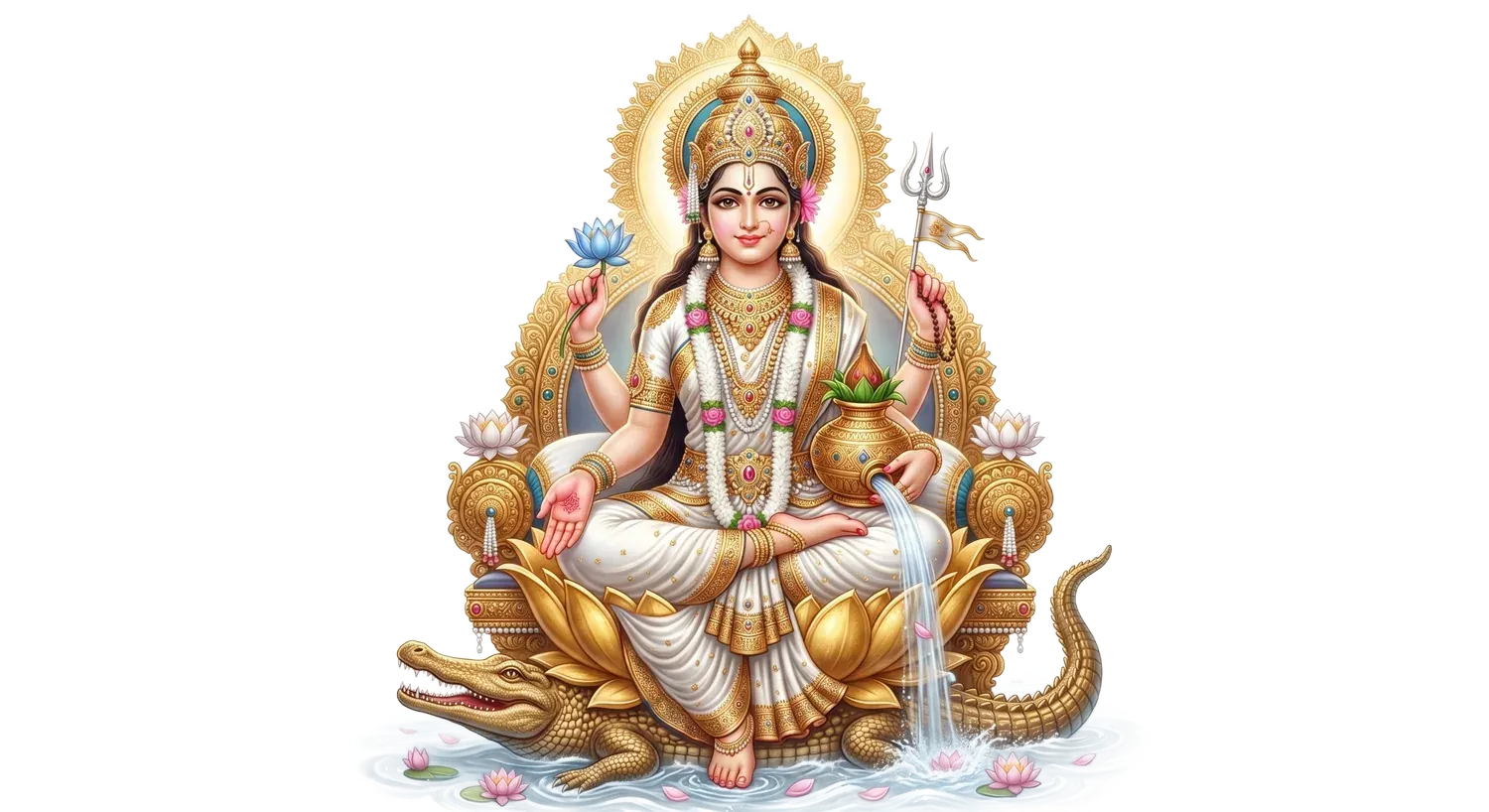
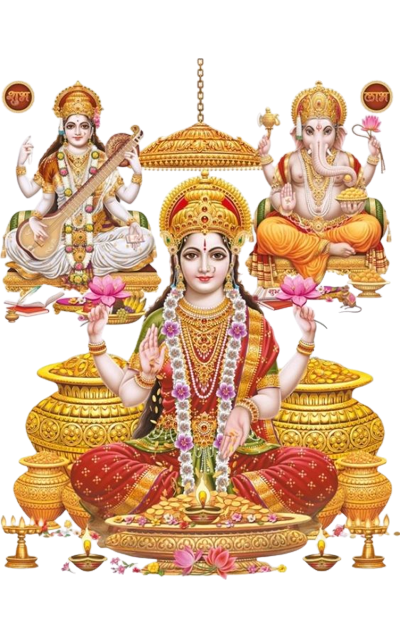
The hymn addresses the Goddess through a series of vivid, symbolic images: golden-complexioned, adorned with garlands of silver and gold, radiant like the moon, seated upon a lotus, accompanied by elephants that bathe her in the celestial Ganga, and as the very embodiment of fertility, nourishment, fame and abundance. It also contains powerful verses specifically for the banishment of alakshmi - hunger, thirst, poverty and misfortune - making it uniquely suited for both inviting prosperity and clearing obstacles to it.
Complete Shri Suktam (Devanagari)
ॐ हिरण्यवर्णां हरिणीं सुवर्णरजतस्रजाम्। चन्द्रां हिरण्मयीं लक्ष्मीं जातवेदो म आवह॥१॥
तां म आवह जातवेदो लक्ष्मीमनपगामिनीम्। यस्यां हिरण्यं विन्देयं गामश्वं पुरुषानहम्॥२॥
अश्वपूर्वां रथमध्यां हस्तिनादप्रबोधिनीम्। श्रियं देवीमुपह्वये श्रीर्मा देवी जुषताम्॥३॥
कां सोस्मितां हिरण्यप्राकारामार्द्रां ज्वलन्तीं तृप्तां तर्पयन्तीम्। पद्मे स्थितां पद्मवर्णां तामिहोपह्वये श्रियम्॥४॥
चन्द्रां प्रभासां यशसा ज्वलन्तीं श्रियं लोके देवजुष्टामुदाराम्। तां पद्मिनीमीं शरणमहं प्रपद्येऽलक्ष्मीर्मे नश्यतां त्वां वृणे॥५॥
आदित्यवर्णे तपसोऽधिजातो वनस्पतिस्तव वृक्षोऽथ बिल्वः। तस्य फलानि तपसानुदन्तु मायान्तरायाश्च बाह्या अलक्ष्मीः॥६॥
उपैतु मां देवसखः कीर्तिश्च मणिना सह। प्रादुर्भूतोऽस्मि राष्ट्रेऽस्मिन् कीर्तिमृद्धिं ददातु मे॥७॥
क्षुत्पिपासामलां ज्येष्ठामलक्ष्मीं नाशयाम्यहम्। अभूतिमसमृद्धिं च सर्वां निर्णुद मे गृहात्॥८॥
गन्धद्वारां दुराधर्षां नित्यपुष्टां करीषिणीम्। ईश्वरीं सर्वभूतानां तामिहोपह्वये श्रियम्॥९॥
मनसः काममाकूतिं वाचः सत्यमशीमहि। पशूनां रूपमन्नस्य मयि श्रीः श्रयतां यशः॥१०॥
कर्दमेन प्रजाभूता मयि सम्भव कर्दम। श्रियं वासय मे कुले मातरं पद्ममालिनीम्॥११॥
आपः सृजन्तु स्निग्धानि चिक्लीत वस मे गृहे। नि च देवीं मातरं श्रियं वासय मे कुले॥१२॥
आर्द्रां पुष्करिणीं पुष्टिं पिङ्गलां पद्ममालिनीम्। चन्द्रां हिरण्मयीं लक्ष्मीं जातवेदो म आवह॥१३॥
आर्द्रां यः करिणीं यष्टिं सुवर्णां हेममालिनीम्। सूर्यां हिरण्मयीं लक्ष्मीं जातवेदो म आवह॥१४॥
तां म आवह जातवेदो लक्ष्मीमनपगामिनीम्। यस्यां हिरण्यं प्रभूतं गावो दास्योऽश्वान् विन्देयं पुरुषानहम्॥१५॥
यः शुचिः प्रयतो भूत्वा जुहुयादाज्यमन्वहम्। सूक्तं पंचदशर्चं च श्रीकामः सततं जपेत्॥
Meaning
Verse 1: O Jataveda (Agni, the knower of all beings), invoke for me that golden-hued Lakshmi, radiant like a doe, adorned with garlands of silver and gold, moon-like and made of gold itself.
Verse 2: Invoke for me, O Agni, that unwavering Lakshmi, by whose grace I may attain gold, cattle, horses and offspring.
Verse 3: I invoke that Goddess Shri, preceded by horses, seated in the middle of a chariot, awakened by the trumpeting of elephants - may Goddess Shri be pleased to dwell with me.
Verse 4: I invoke here that Shri who is gently smiling, surrounded by a rampart of gold, moist and radiant, ever satisfied and ever satisfying others, seated on a lotus, lotus-hued in complexion.
Verse 5: I take refuge in that lotus-dwelling Goddess who shines like the moon, blazing with fame, beloved by the gods, generous in the world - may Alakshmi (misfortune) be destroyed; I choose you, O Shri, over her.
Verse 6: O sun-hued Goddess, from your penance was born the Bilva tree among the forest trees; may its fruits, through their power, dispel both the inner and outer forms of Alakshmi (misfortune) from me.
Verse 7: May Kirti (fame), the friend of the gods, along with wealth in the form of jewels, come to me; having been made manifest in this land, may she grant me fame and prosperity.
Verse 8: I destroy the eldest sister Alakshmi, who manifests as hunger and thirst; may all forms of poverty and lack of prosperity be driven from my home.
Verse 9: I invoke here that Shri who is the gateway of fragrance, unassailable, ever-nourished, abundant like the fertile earth, the sovereign ruler of all beings.
Why Shri Suktam Is Chanted
Shri Suktam is chanted to invoke Goddess Lakshmi's blessings of material and spiritual prosperity - wealth, good health, fertility, fame, and the removal of poverty and misfortune. Being a Vedic hymn, it is considered exceptionally powerful and is traditionally recited during havan (fire ritual), Lakshmi puja, Diwali, and Sharad Purnima. It is also commonly recited alongside Purusha Suktam in temple rituals and Vedic ceremonies dedicated to Vishnu and Lakshmi together.
How and When to Chant
Shri Suktam is best chanted after a purifying bath, in a clean space, ideally accompanied by a ghee lamp offered to Goddess Lakshmi. It holds special significance on Fridays, during Diwali, Sharad Purnima, and Navratri, and is traditionally recited with ghee oblations during a havan for those seeking its full ritual benefit. It can also be recited daily as part of one's personal sadhana, either independently or before a Lakshmi puja.
Dos and Don'ts
Maintain cleanliness and purity of both body and space while reciting, as emphasized in the phalashruti itself. Chant with correct pronunciation where possible, as it is a Vedic hymn with specific svara (tonal accent) traditionally taught by a learned teacher; however, sincere devotional recitation even without perfect accent is still valued. Avoid reciting for greedy or harmful intentions; the Suktam's true purpose is the invocation of dharmic abundance shared with one's family and community, not hoarding at another's expense.
FAQ
Question: What is the difference between Shri Suktam and Kanakadhara Stotram? Answer: Shri Suktam is an ancient Vedic hymn (shruti) attached to the Rig Veda, while Kanakadhara Stotram is a later devotional composition by Adi Shankaracharya. Both invoke Lakshmi's grace for prosperity, but Shri Suktam carries the specific ritual weight of Vedic chanting, often used in havan.
Question: How many verses does Shri Suktam have? Answer: The commonly recited core of Shri Suktam has fifteen richas (verses), as stated in its own phalashruti, though some traditions include additional khila verses.
Question: Can Shri Suktam be recited without performing a havan? Answer: Yes, while it is traditionally paired with havan and ghee oblations for maximum ritual benefit, it can also be recited independently as a devotional and meditative practice before an image of Goddess Lakshmi.
Question: When is the best time to recite Shri Suktam? Answer: Fridays, Diwali, Sharad Purnima and Navratri are especially auspicious, though it can be recited daily as part of a regular sadhana for prosperity and well-being.
Quick guide
Before you begin
Mantra
Lakshmi mantra
Om Shreem Mahalakshmyai Namah
Chant on Friday or during Lakshmi puja for prosperity, grace, and sattvic abundance.
Bhav
Benefits devotees pray for
FAQ
Common questions
What is the difference between Shri Suktam and Kanakadhara Stotram?
Shri Suktam is an ancient Vedic hymn (shruti) attached to the Rig Veda, while Kanakadhara Stotram is a later devotional composition by Adi Shankaracharya. Both invoke Lakshmi's grace for prosperity, but Shri Suktam carries the specific ritual weight of Vedic chanting, often used in havan.
How many verses does Shri Suktam have?
The commonly recited core of Shri Suktam has fifteen richas (verses), as stated in its own phalashruti, though some traditions include additional khila verses.
Can Shri Suktam be recited without performing a havan?
Yes, while it is traditionally paired with havan and ghee oblations for maximum ritual benefit, it can also be recited independently as a devotional and meditative practice before an image of Goddess Lakshmi.
When is the best time to recite Shri Suktam?
Fridays, Diwali, Sharad Purnima and Navratri are especially auspicious, though it can be recited daily as part of a regular sadhana for prosperity and well-being.
Perform a Complete Lakshmi Puja with Havan
Invite prosperity into your home with a full Lakshmi puja and havan performed by our pandits, including Shri Suktam recitation.