
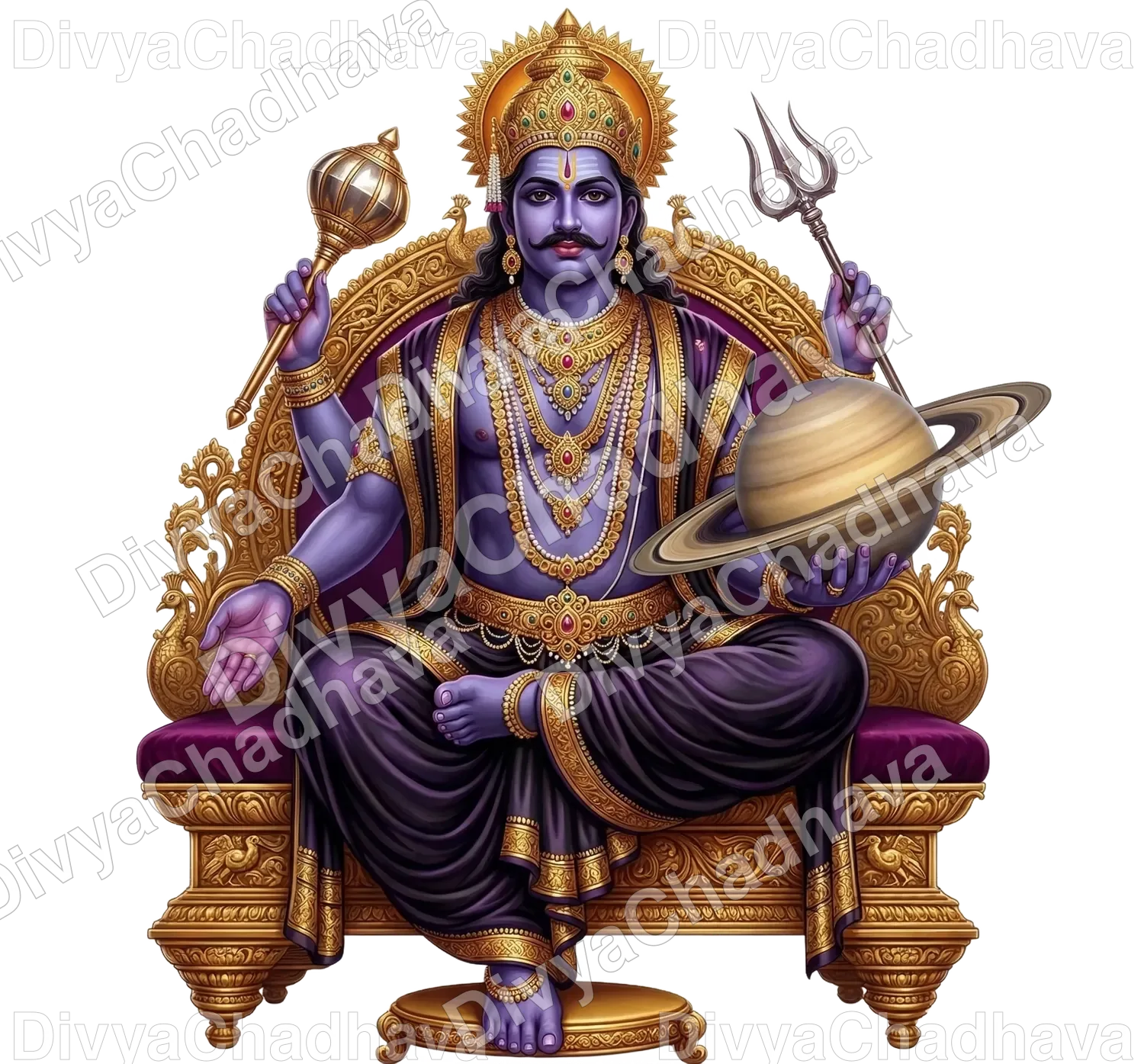
 शनैश्चराय नमः
The story of Shani Dev's birth and the complete vidhi for observing Shani Jayanti vrat to seek his grace and relief from hardship.
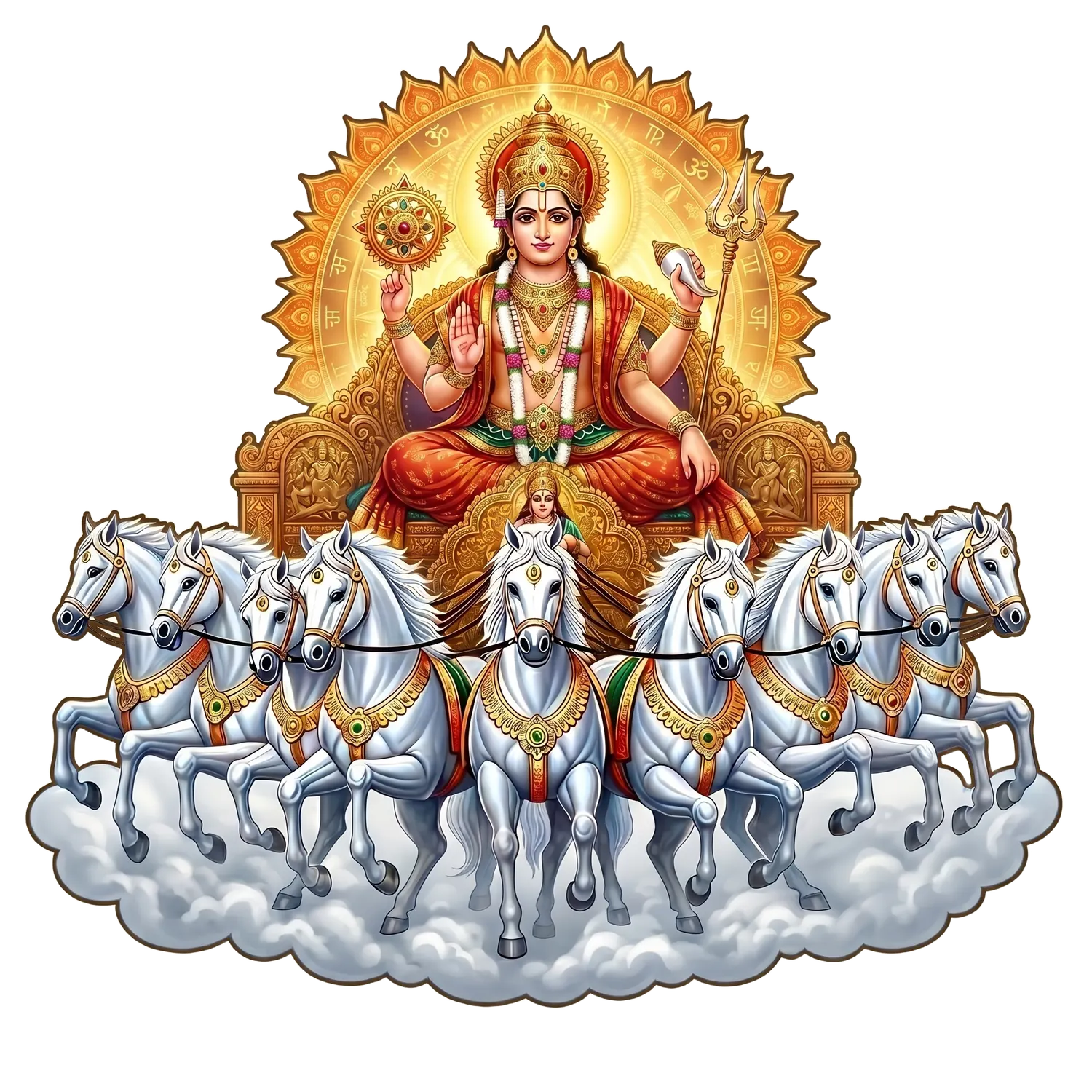
Shani Jayanti is celebrated as the birth anniversary of Shani Dev, the son of Surya (the Sun God) and his wife Chhaya. It falls on Amavasya (new moon) in the month of Jyeshtha according to the Hindu calendar, and in some regions is also observed on Vaishakh Krishna Trayodashi. On this day devotees observe a vrat (fast), worship Shani Dev, and perform remedies to reduce the hardship of Shani's unfavourable transits such as Sade Sati and Dhaiyya.
The Birth of Shani Dev
According to the Puranas, Surya Dev married Sangya, the daughter of Vishwakarma. Unable to bear the intense brilliance and heat of her husband, Sangya created a shadow-image of herself named Chhaya and asked her to stay in her place while she went to her father's home to do penance. Chhaya lived with Surya as his wife, and from her union with Surya, Shani Dev was born.
From birth, Shani was dark in complexion, and because Chhaya loved him more than her own eyes, Surya, not knowing the truth of Chhaya's identity, doubted her fidelity and treated Shani coldly. This early rejection by his own father is said to be the root of Shani's stern, justice-seeking nature. When the truth came out, that Chhaya was indeed a devoted wife and Shani a legitimate son, Surya realised his error, but Shani, hurt by the injustice, became the deity of karma and justice, one who treats every soul, king or beggar, exactly according to their deeds.
Shani undertook severe penance to Bhagwan Shiva through his childhood and youth. Pleased with his devotion and discipline, Shiva blessed him with the position of a planet (graha) and the authority to be the dispenser of the fruits of karma for every being in the universe. It is said that whichever person or even deity Shani looks upon with his gaze, feels the effect of their past karma manifesting swiftly.
Why Shani Is Feared and Revered
Shani Dev is often misunderstood as a malefic or vengeful deity, but scriptures describe him as the most just of all the grahas. He does not create suffering out of malice; he simply ensures that every soul receives the results of its own actions, good or bad, in due time. This is why Shani is called Nyaydhish, the Lord of Justice. Those who live righteously, are honest in their dealings, respect their elders, and do not exploit the weak, find that Shani's transits bring stability, discipline and eventual prosperity rather than hardship. It is only unrighteous conduct that invites his corrective influence.
The Story Connecting Shani and Hanuman Ji
A well-known katha tells how Shani once tried to test Hanuman Ji's strength and attempted to sit upon his shoulder to begin his effect. Hanuman Ji, in his playful strength, held Shani tightly against a mountain, causing him great pain, until Shani begged for release and promised never to trouble true devotees of Hanuman Ji. This is why worship of Hanuman Ji is considered a powerful shield against the harsher effects of Shani, and reciting the Hanuman Chalisa on Saturdays is a common remedy.
Sade Sati and Dhaiyya
When Shani transits through the zodiac sign before one's moon sign, the sign itself, and the sign after, it is called Sade Sati, a period of about seven and a half years that arrives roughly once every thirty years. When Shani transits the fourth or eighth sign from the moon sign, it is called Dhaiyya, a shorter period of about two and a half years. These periods are widely feared, but they are, in truth, periods of restructuring, hard lessons, and eventual growth for those who remain patient, humble, and righteous.
Shani Jayanti Vrat Vidhi
On the day of Shani Jayanti, devotees should wake before sunrise, bathe, and wear blue, black, or dark-coloured clothes, colours associated with Shani. A vrat (fast) is observed through the day, taking only fruits or a single simple meal in the evening, according to one's capacity and health.
A picture or idol of Shani Dev, or simply a Shani Yantra, is placed facing west, since Shani is associated with the western direction. The deity is offered mustard oil, black til (sesame seeds), urad dal, black cloth, iron items, and blue or black flowers. A diya of mustard oil is lit before the murti.
The Shani Chalisa and Shani mantras are recited, and the Shani Stotra or Dasharatha-krita Shani Stotra may be read for deeper protection. It is customary to visit a Shani temple, especially the famous Shani Shingnapur temple in Maharashtra, and to donate items associated with Shani such as black sesame, mustard oil, iron, black clothes, umbrellas, or shoes to the poor, especially to those who serve the underprivileged, since charity is considered the most powerful remedy for pleasing Shani Dev.
At sunset, an aarti is performed, and the fast is broken with a simple satvik meal, avoiding non-vegetarian food, alcohol, and dishonest dealings on this day in particular.
Mantra for the Day
The simplest mantra chanted throughout the day is: Om Shan Shanaishcharaya Namah. Devotees may chant this 108 times using a mala of rudraksha or a black thread. Reciting the Shani Beej Mantra with devotion and discipline is said to calm the harsher effects of Shani's transits.
Benefits of Observing the Vrat
Those who observe the Shani Jayanti vrat with sincerity are said to receive relief from the ill effects of Sade Sati and Dhaiyya, protection from unexpected obstacles, delays, and losses, and blessings of discipline, patience, and long-term stability in career and finances. Since Shani rewards righteous conduct, the vrat is also an opportunity to reflect on one's own actions and resolve to live with greater honesty and compassion.
A Gentle Note
Shani Jayanti vrat and its remedies are rooted in devotion, self-discipline, and charity, not fear. No planetary transit is meant to be viewed as a fixed, inescapable doom; Vedic tradition teaches that sincere worship, righteous living, and remedial measures can soften even the most challenging periods. This vrat is a matter of faith and tradition and is not a substitute for professional medical, legal, or financial advice.
Quick guide
Before you begin
Mantra
Shani mantra
Om Sham Shanaishcharaya Namah
Chant on Saturday with patience, honesty, and a commitment to right action.
Bhav
Benefits devotees pray for
FAQ
Common questions
When is Shani Jayanti observed?
Shani Jayanti is observed on Amavasya (new moon) of Jyeshtha month according to the Hindu calendar; some traditions also mark it on Vaishakh Krishna Trayodashi.
What should be donated on Shani Jayanti?
Black sesame seeds, mustard oil, urad dal, iron items, black clothes, umbrellas and shoes are traditionally donated to the needy on this day.
Is Shani Dev truly harmful?
No, Shani Dev is regarded as the most just of grahas. He gives every soul the fruit of its own karma; righteous, honest living softens his influence considerably.
Which mantra is best for Shani Jayanti?
Om Shan Shanaishcharaya Namah is the simplest and most widely chanted mantra, along with the Shani Chalisa and Hanuman Chalisa.
Seek Shani Dev's Grace with a Guided Puja
Let our experienced pandits perform authentic Shani puja and remedies on your behalf, with full vidhi and video proof.