 गंगे च यमुने चैव
Ganga is revered in Hindu dharma not merely as a river but as a living goddess who descended from the heavens through Lord Shiva's matted locks to liberate the souls of King Bhagiratha's ancestors.
Every evening, as the sun dips behind the ghats of Varanasi, Haridwar and Rishikesh, thousands gather along the banks of a river to watch flames rise in perfect unison during the Ganga Aarti, priests waving brass lamps in circular arcs as conch shells sound and bells ring. This daily spectacle is not simply cultural performance - it is the worship of a goddess whom millions consider their own mother, Maa Ganga, whose waters are believed to wash away lifetimes of sin and whose very name is uttered at the moment of death by devout Hindus hoping for liberation.
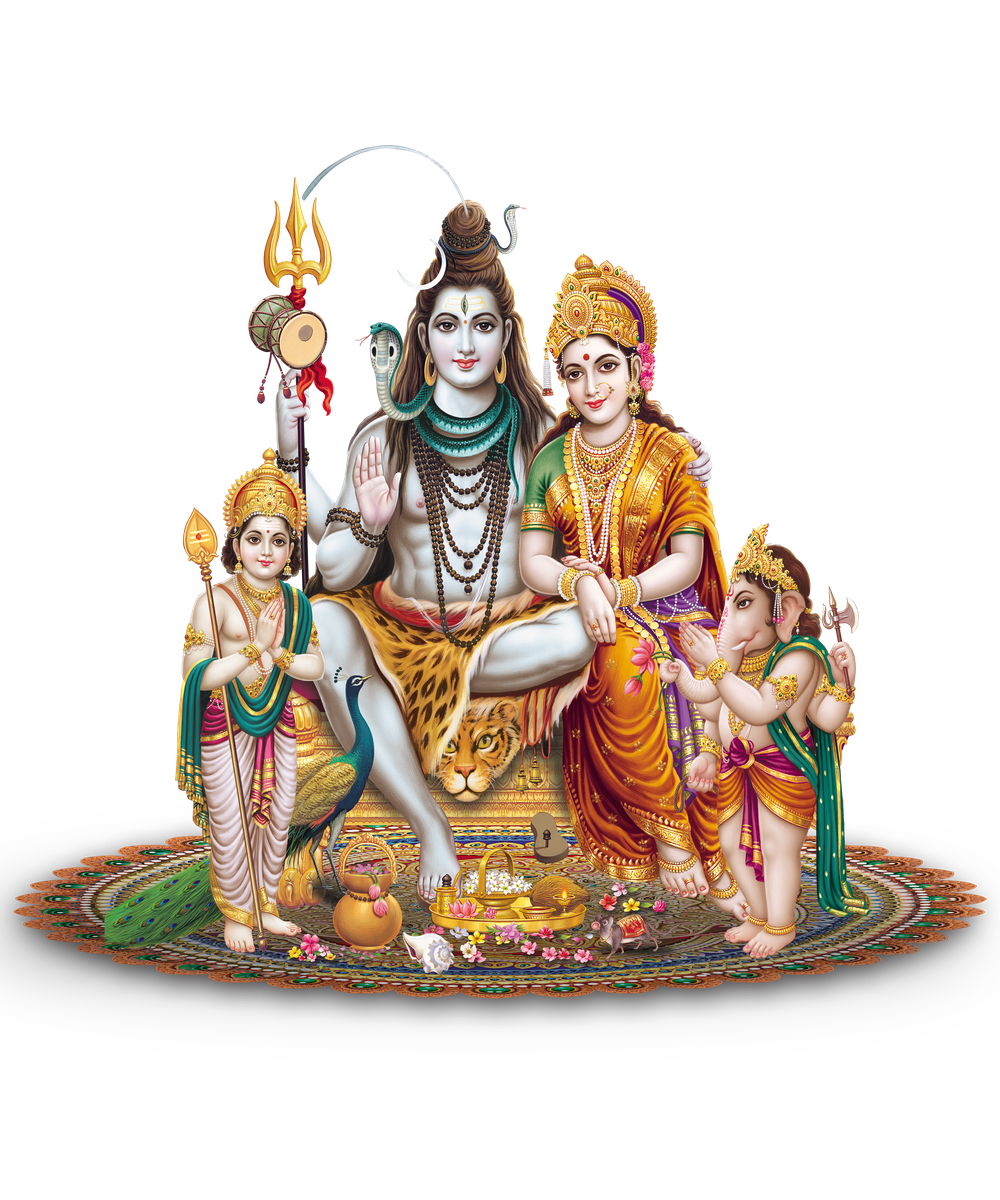
The story of Ganga's arrival on earth is one of the most beloved narratives in Hindu mythology, found in the Ramayana, the Mahabharata and several Puranas. King Sagara's sixty thousand sons were reduced to ashes by the wrath of sage Kapila after they disturbed his meditation while searching for a stolen sacrificial horse. Their souls remained trapped, unable to attain moksha, until their descendant Bhagiratha undertook extraordinary tapasya, penance, to bring the celestial river Ganga down from the heavens to touch their ashes and liberate them. Ganga agreed to descend, but her force was so immense that the earth could not bear the impact of her fall. It was Lord Shiva who agreed to receive her in his matted locks, the jata, breaking her descent and releasing her in gentle, life-giving streams across the earth. This is why Shiva is called Gangadhara, the bearer of Ganga, and why images of Shiva so often show a small figure of Ganga emerging from his hair.
Ganga finally reached the ashes of Bhagiratha's ancestors and liberated their souls, which is why the river is also known as Bhagirathi in her upper reaches near her Himalayan source at Gaumukh, close to Gangotri. This story establishes Ganga's core theological role in Hindu dharma - she is not simply a purifier of the body but a liberator of souls, capable of granting moksha even to those who could not achieve it through their own actions in life.
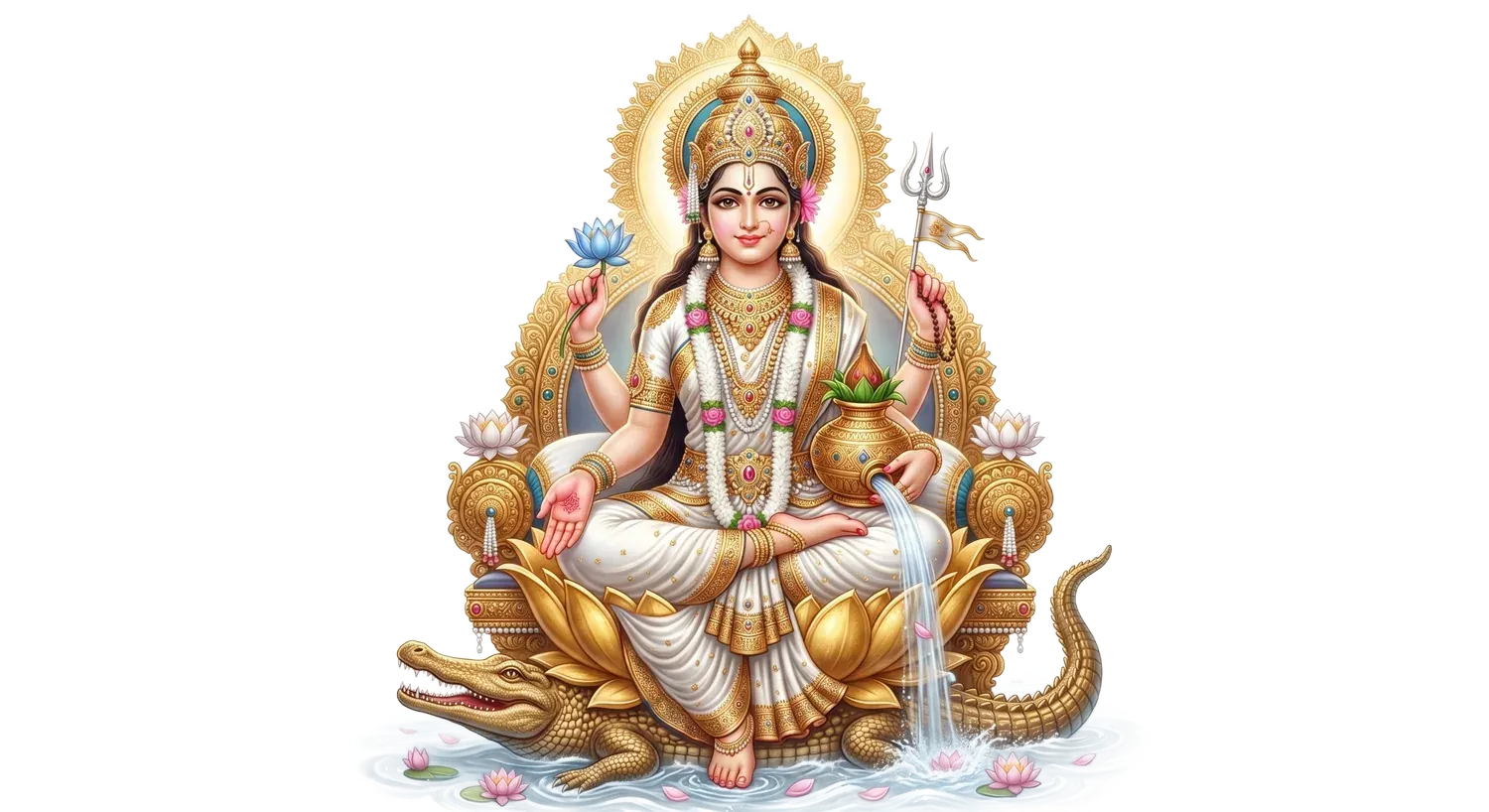
Ganga's divine identity is layered and rich. She is worshipped as a goddess in her own right, often depicted as a beautiful woman seated upon a makara, a crocodile-like celestial creature, holding a water pot and a lotus. She is also considered one of the consorts of Lord Vishnu in some traditions, and closely associated with Lord Shiva as the one who rests upon his head, making her presence felt in Shiva temples across India where Ganga jal is used for the abhishekam of the Shivalinga. Alongside Yamuna and Saraswati, Ganga forms the trio of sacred rivers, and the confluence of these three at Triveni Sangam in Prayagraj is considered one of the most sacred spots in all of Hinduism, drawing millions during the Kumbh Mela.
Ganga jal, water collected from the Ganga, holds a uniquely revered place in Hindu ritual life. It is used to consecrate temples, purify homes, perform the final rites of the deceased, and is often kept in small vessels within household shrines for daily worship. A few drops of Ganga jal are traditionally placed in the mouth of a dying person, in the belief that it eases the soul's passage and grants a measure of liberation regardless of one's past deeds. Immersion in the Ganga, particularly at sacred tirthas like Haridwar, Varanasi, Prayagraj and Rishikesh, is considered capable of washing away papa, accumulated sin, which is why pilgrims travel great distances specifically to bathe in her waters during auspicious occasions such as Makar Sankranti, Kumbh Mela and Ganga Dussehra.
Ganga Dussehra itself is celebrated as the specific day of her descent to earth, observed with elaborate rituals, fasting, and river worship across northern India. On this day devotees offer ten types of items or perform ten dips in her waters, corresponding to the ten sins the ritual is believed to cleanse. The daily Ganga Aarti performed at Har Ki Pauri in Haridwar and the ghats of Varanasi has become one of the most recognized devotional rituals in the world, drawing pilgrims and travelers alike into a shared act of reverence for the river as a living, conscious being rather than a mere natural resource.
The reverence for Ganga also carries a profound ecological dimension that resonates deeply today. Because she is regarded as a mother and goddess rather than simply a water source, traditional Hindu culture placed strong emphasis on keeping her waters pure, treating pollution of the river as a spiritual transgression as much as an environmental one. Modern efforts to clean and protect the Ganga, whatever their practical success, draw directly upon this ancient dharmic understanding that a mother is to be honored, not defiled.
To chant Om Namah Shivaya while remembering Gangadhara, to whisper Ganga's name at the hour of death, or simply to fold one's hands at the sight of her flowing waters is to participate in a devotional tradition unbroken for thousands of years. Whether approached through the story of Bhagiratha's tapasya, her intimate bond with Shiva, or the simple act of dipping into her cool waters at dawn, Maa Ganga remains among the most beloved and universally worshipped forms of the divine feminine in all of Sanatan Dharma.
Quick guide
Before you begin
Mantra
Ganga mantra
Om Gange Namah
Chant while praying for purity, forgiveness, and inner cleansing.
Bhav
Benefits devotees pray for
FAQ
Common questions
Why is the Ganga considered sacred in Hinduism?
Ganga is believed to be a goddess who descended from heaven to liberate the souls of King Bhagiratha's ancestors, breaking her fall in Lord Shiva's matted locks. Her waters are believed to wash away sins and grant moksha.
What is the significance of Ganga jal?
Ganga jal is used to consecrate temples, purify homes, perform last rites, and is placed in the mouth of the dying as a means of granting a peaceful passage of the soul. It is kept in most Hindu households for daily worship.
What is Ganga Dussehra?
Ganga Dussehra marks the day Ganga descended to earth. Devotees observe fasts, perform ten ritual dips or offerings symbolizing the cleansing of ten sins, and gather for special river worship across northern India.
Why is Ganga associated with Lord Shiva?
When Ganga descended from the heavens, her force was too immense for the earth to bear, so Lord Shiva received her in his matted locks, gently releasing her onto the earth. This is why he is called Gangadhara, the bearer of Ganga.
Wish to Seek Maa Ganga's Blessings and Purification?
Our pandits perform authentic pujas with proper sankalp and vidhi, sending you the video of your ritual.