
 ॐ रां राहवे नमः, ॐ कें केतवे नमः
The Rahu-Ketu Yantra is a dharmic remedial tool worshipped to bring balance and peace when the shadow planets Rahu and Ketu bring confusion, sudden upheaval, or unexplained anxiety into life.
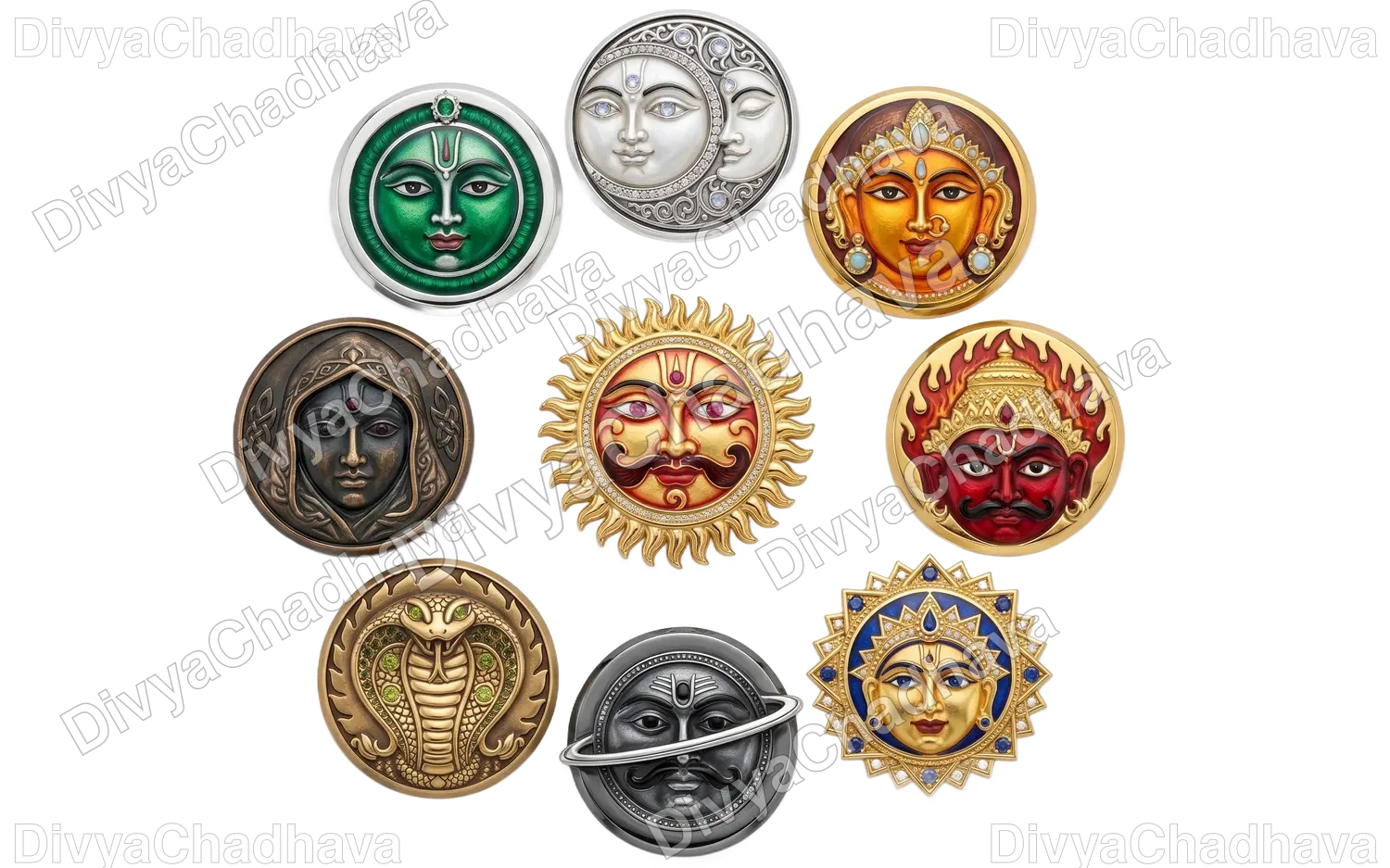
In Vedic astrology, Rahu and Ketu occupy a unique place among the nine grahas (Navagraha). They are not physical planets but chhaya grahas — shadow points formed by the intersection of the moon's orbit with the earth's orbital plane around the sun, known as the north and south lunar nodes. Despite having no physical body, their influence in a birth chart (kundali) is considered profound, shaping the unseen, karmic and psychological dimensions of a person's life — desire, ambition, illusion, detachment, sudden change and the working-out of past-life karma.
Rahu represents worldly desire, ambition, obsession, and the pull toward the unfamiliar and unconventional; Ketu represents detachment, spirituality, endings, and a sense of already having "been there" in some deep, karmic sense. When either graha is poorly placed or afflicted in a chart, or during their significant transits and dashas, individuals may experience confusion, sudden reversals, unexplained fear or anxiety, obsessive thinking, health concerns that resist ordinary diagnosis, or a persistent feeling of being pulled off one's true path. The Rahu-Ketu Yantra is a dharmic remedial tool used to bring balance, clarity and peace during such periods.
What Is the Rahu-Ketu Yantra
The Rahu-Ketu Yantra typically combines the individual numeric grid or geometric structures traditionally associated with each graha — Rahu's yantra is often built around specific auspicious numeral or geometric arrangements believed to harmonise his energy, while Ketu's yantra carries its own complementary structure. Together, framed within a square bhupura, they are designed to work in tandem, since Rahu and Ketu always sit exactly opposite each other in a chart and their effects are deeply interconnected — pacifying one without the other is considered incomplete.
At the heart of the yantra's purpose is not the removal of Rahu or Ketu's influence altogether — which is neither possible nor desirable in the Vedic worldview, since these nodes carry important karmic lessons — but the harmonising and softening of their more disruptive expressions, so the native can move through their influence with steadiness rather than turmoil.
Why Devotees Worship the Rahu-Ketu Yantra
Relief from Rahu-Ketu dosha effects: Those whose birth chart shows challenging placements of these nodes — commonly associated with sudden setbacks, deception, health confusion, or repeated instability — turn to this yantra for relief.
Support during Rahu or Ketu Mahadasha/Antardasha: Vedic astrology holds that the major planetary periods of Rahu and Ketu can bring intense, transformative experiences; worship of this yantra is a traditional way to navigate these periods with greater steadiness.
Reducing anxiety and confusion: Rahu's energy in particular is associated with a racing, restless mind; regular worship before this yantra is believed to calm obsessive thought patterns and restore clarity of decision-making.
Protection from sudden, unexplained events: Unexpected accidents, sudden financial loss, or abrupt reversals in circumstances are traditionally linked to afflicted Rahu-Ketu; the yantra is worshipped for protective grace during such vulnerable periods.
Support in matters requiring detachment: Since Ketu governs endings, letting go, and spiritual insight, its balanced energy — invoked through this yantra — is also sought by those going through major life transitions, such as the end of a relationship, career, or a phase of grief.
Health concerns without clear diagnosis: In traditional belief, certain unexplained or recurring health difficulties are associated with these shadow planets; worship is undertaken alongside, never instead of, proper medical care.
How to Install and Worship the Rahu-Ketu Yantra
Direction and placement: This yantra is traditionally placed in the south-west direction of the home, facing east or north while worshipping, in a clean and undisturbed part of the puja space.
Best day to begin: Saturday is most commonly recommended for Rahu-Ketu remedies, since Saturday carries a similar shadow, karmic quality in Vedic tradition; some traditions also recommend beginning during Rahu Kaal on a Saturday for those specifically seeking to pacify Rahu, though this is a more advanced practice best guided by a knowledgeable priest.
Simple daily vidhi: 1. Clean the yantra respectfully with a soft, dry cloth. 2. Light a mustard oil diya, since mustard oil is traditionally associated with pacifying Shani, Rahu and Ketu energies alike. 3. Offer a dark-coloured flower and, if possible, a few grains of urad dal or til (sesame seeds) as symbolic naivedya. 4. Chant the mantras below calmly, 11, 21 or 108 times, using a mala kept specifically for this purpose. 5. Close with a prayer for clarity, steadiness, and the safe passage of any current difficulty, trusting the process of karmic resolution rather than demanding an immediate outcome.
Rahu and Ketu Mantras
For Rahu: ॐ रां राहवे नमः
For Ketu: ॐ कें केतवे नमः
The longer beej mantras, for those undertaking a more dedicated sadhana, are: ॐ भ्रां भ्रीं भ्रौं सः राहवे नमः ॐ श्रां श्रीं श्रौं सः केतवे नमः
Devotees may also recite the Navagraha Stotra in full, since Rahu and Ketu are addressed within it alongside the other seven grahas, offering a more complete planetary balancing.
Dos and Don'ts
Do approach Rahu-Ketu worship with calm acceptance rather than fear; these grahas respond to steady, sincere devotion, not anxious repetition. Do combine yantra worship with simple acts of daan (charity) traditionally associated with these grahas — donating blankets, mustard oil, or food to the needy on a Saturday is widely practised. Do maintain patience, since the resolution of nodal-period difficulties is considered gradual and karmic in nature.
Do not treat this yantra as a substitute for medical treatment, legal advice, or financial planning when those are genuinely required — sacred remedies in our tradition are always meant to work alongside sound worldly action, never in place of it. Do not approach the practice from panic or superstition. Do not neglect regular worship once begun, as inconsistency is believed to weaken its calming effect.
A Gentle Note
Rahu and Ketu are teachers as much as they are challengers in the Vedic worldview — their difficult periods often carry the seeds of significant, though sometimes painful, spiritual growth. This yantra and its worship are offered purely as a matter of faith to bring peace, clarity and steadiness, and are not deterministic predictions of doom nor a substitute for professional medical, legal or financial guidance. Approach this practice, and any period of astrological difficulty, with hope — every dasha, however testing, does pass.
Frequently Asked Questions
The answers below address common questions devotees ask about the Rahu-Ketu Yantra.
Quick guide
Before you begin
Mantra
Rahu mantra
Om Bhram Bhreem Bhraum Sah Rahave Namah
Chant 108 times with discipline, especially when praying for relief from hidden obstacles.
Bhav
Benefits devotees pray for
FAQ
Common questions
Who should worship the Rahu-Ketu Yantra?
Those facing Rahu or Ketu Mahadasha/Antardasha, unexplained anxiety, sudden reversals, or chart placements a knowledgeable astrologer identifies as challenging may benefit from this worship.
Can Rahu-Ketu doshas be completely removed?
Vedic tradition views these nodes as carrying important karmic lessons rather than problems to be erased; the yantra helps harmonise and soften their expression rather than eliminate their influence.
Is it necessary to worship Rahu and Ketu together?
Yes, since they always sit opposite each other in a chart and their energies are deeply linked, traditional practice worships them together for balanced results.
Does this yantra replace consulting an astrologer or doctor?
No. It is a faith-based remedial support meant to be used alongside, never instead of, professional astrological, medical, legal or financial guidance.
Find Peace from Rahu-Ketu's Influence
Let our pandits perform a dedicated Rahu-Ketu shanti puja to bring balance, clarity and steadiness during challenging planetary periods.