
 ॐ नमः शिवाय
The Panchakshari Mantra, Namah Shivaya, is the five-syllable heart mantra of Lord Shiva, believed to grant inner peace, protection and liberation with sincere daily chanting.
Among all the mantras dedicated to Lord Shiva, none is more universally known, more frequently chanted, or more deeply revered than the Panchakshari Mantra, the five-syllable mantra. It is found at the heart of the Shri Rudram, is chanted in every Shiva temple across India, and is often the very first mantra a devotee learns in childhood. Its simplicity is deceptive, for within these five syllables lies the entire philosophy of surrender, dissolution of ego, and union with the formless, eternal consciousness that Shiva represents.
The Panchakshari Mantra
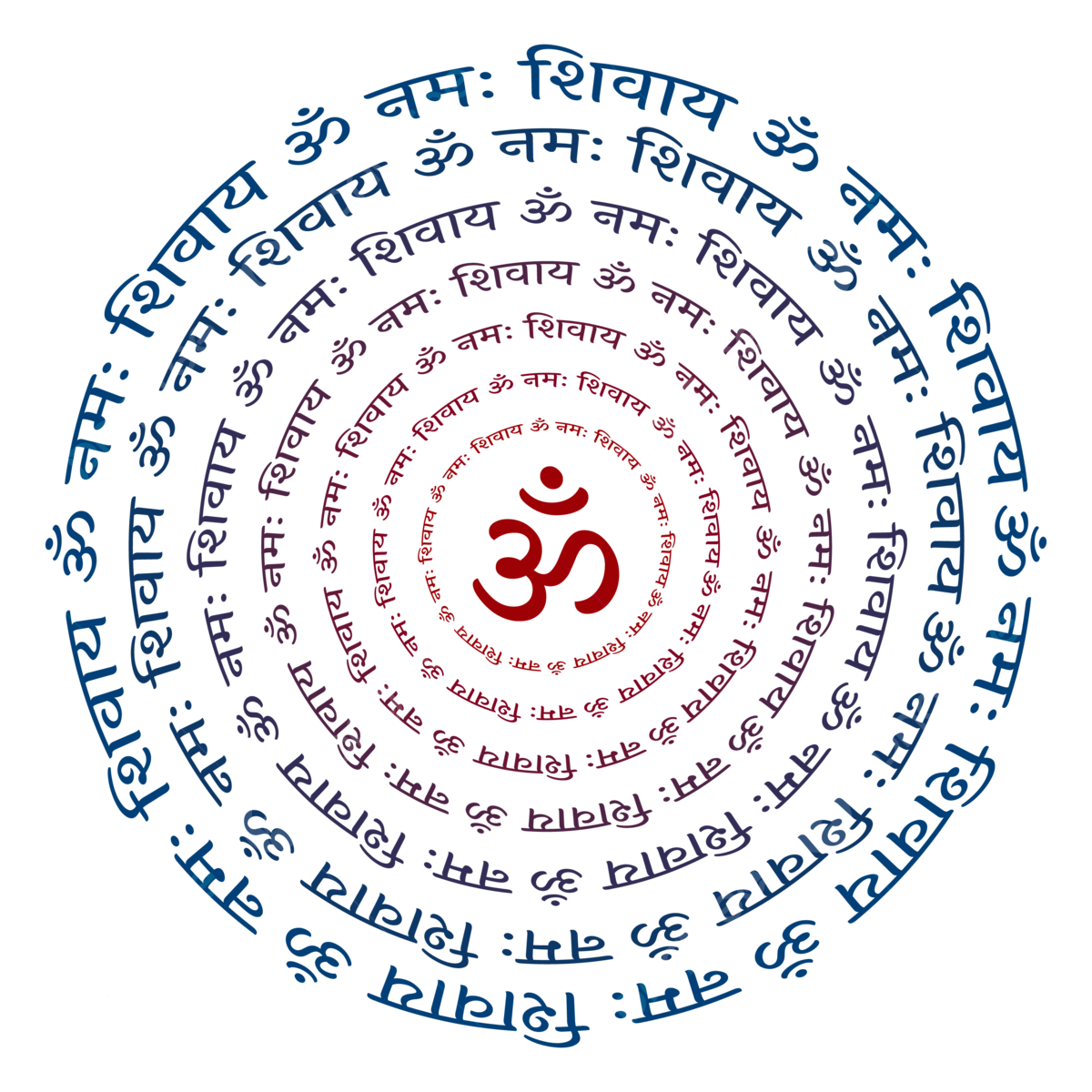
नमः शिवाय
Namah Shivaya
When Om is added before it, as is customary, it becomes the six-syllable form:
ॐ नमः शिवाय
Om Namah Shivaya
Though Om Namah Shivaya is the form most commonly heard, the five core syllables that give the mantra its name are Na, Ma, Shi, Va and Ya.
Meaning of each syllable
According to the Shiva Purana and later commentaries, each of the five syllables corresponds to one of the five elements, one of the five faces of Shiva, and one core aspect of existence:
Na represents Prithvi, the earth element, and is linked to Shiva's face Sadyojata, governing stability and grounding.
Ma represents Jal, the water element, linked to the face Vamadeva, governing emotion, nourishment and flow.
Shi represents Agni, the fire element, linked to the face Aghora, governing transformation, purification and the burning away of impurity.
Va represents Vayu, the air element, linked to the face Tatpurusha, governing breath, movement and life force.
Ya represents Akasha, the space element, linked to the face Ishana, governing consciousness, the infinite and the formless.
Taken together, Namah Shivaya is understood as a surrender of the entire embodied self, built of the five elements, at the feet of Shiva, the consciousness that pervades and transcends them all. Literally, Namah means salutation or surrender, and Shivaya means to the auspicious one, so the mantra can be translated simply as I bow to Shiva, the auspicious.
Why it is called the heart mantra
Ancient texts describe Namah Shivaya as hridaya mantra, the heart mantra, because it does not demand elaborate ritual, caste, gender or scholarly qualification to chant. It is considered accessible to every sincere soul, and is often the mantra given first to spiritual seekers because of its power to quiet the mind and awaken devotion regardless of one's background.
How to chant the Panchakshari Mantra
Sit in a clean, quiet place, ideally facing east or north, after a bath. A rudraksha mala is traditionally used, one bead moved for each repetition. Begin with Om, then chant Namah Shivaya with steady breath, either aloud, in a whisper, or silently within the mind, completing 108 repetitions per round. Monday, Pradosh Vrat days, and the entire month of Sawan are considered especially powerful times to chant this mantra, as is any time spent before a Shivling with an offering of water, bael leaves, or milk.
Some traditions also chant an extended eight-syllable form, Om Namah Shivaya, adding Om as its own syllable, or link the mantra to the Panchakshari Stotram, a hymn of five verses attributed to Adi Shankaracharya, each verse ending with one of the five syllables, praising Shiva's qualities associated with that element.
Benefits of chanting Om Namah Shivaya
Regular, sincere chanting is believed to still the restless mind, dissolve fear, ego and attachment, protect the chanter from negative influences, and gradually draw the practitioner toward inner peace and self-realisation. Because the mantra invokes Shiva as the destroyer of illusion and ignorance, it is especially chanted during times of confusion, major life transitions, illness, or when seeking clarity and courage.
A note on faith
The Panchakshari Mantra is a matter of devotion and inner practice. It supports peace of mind and spiritual growth but is not a replacement for medical treatment or professional guidance in matters of health or major life decisions; it works best alongside such care, not instead of it.
Quick guide
Before you begin
Mantra
Shiva mantra
Om Namah Shivaya
Chant with a quiet mind, especially on Monday, Pradosh, or during Shiva puja.
Bhav
Benefits devotees pray for
FAQ
Common questions
What is the meaning of Om Namah Shivaya?
Namah means salutation or surrender, and Shivaya means to the auspicious one, Shiva. The five core syllables Na Ma Shi Va Ya also correspond to the five elements earth, water, fire, air and space.
Why is it called the Panchakshari Mantra?
Panchakshari means five syllables, referring to Na, Ma, Shi, Va and Ya, the core of the mantra. Om is often added before it as a customary prefix.
When is the best time to chant this mantra?
Monday, Pradosh Vrat days, and the month of Sawan are especially auspicious, as is any time spent worshipping a Shivling with water, bael leaves or milk.
Do I need a rudraksha mala to chant it?
A rudraksha mala is traditional and helpful for counting repetitions, but the mantra can be chanted sincerely with or without one, silently or aloud.
Book a Shiva Puja for Peace & Protection
Let our pandits perform an authentic Rudrabhishek or Shiva puja for you, invoking blessings of peace and protection.