
 नवग्रह कृपा साधना
Navgraha Shanti Puja worships all nine planetary deities together, seeking balance and grace when one or more grahas are causing difficulty in life.
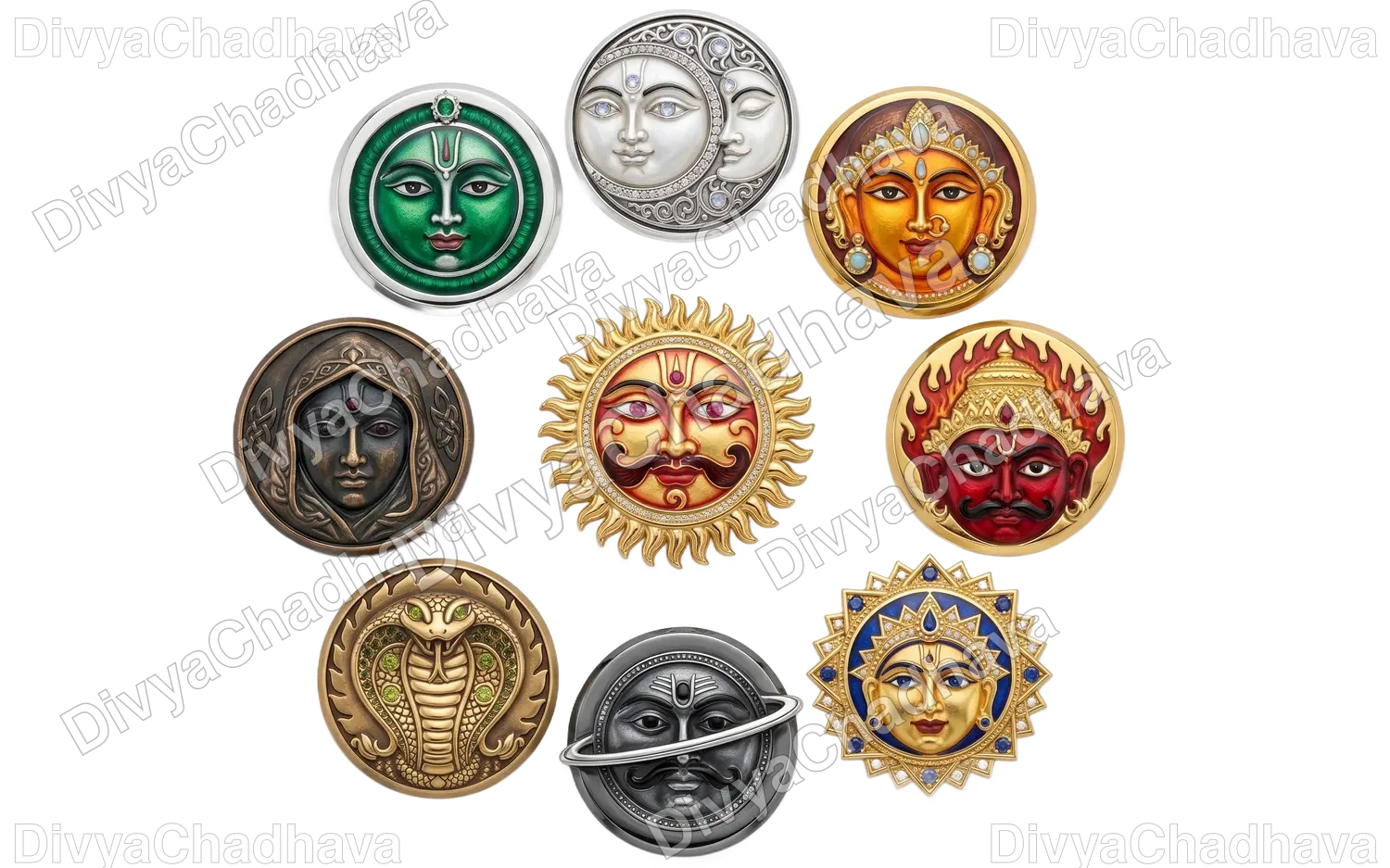
Navgraha Shanti Puja is a sacred Vedic ritual dedicated to the nine celestial deities — Surya, Chandra, Mangal, Budh, Guru, Shukra, Shani, Rahu and Ketu — who are believed to govern different aspects of our lives according to their position in our janam kundali. When one or more of these grahas is weak, afflicted or passing through a challenging period (such as Shani's Sade Sati or a difficult mahadasha), devotees perform this puja to invoke balance, protection and grace from all nine planetary energies together.
Who the Navgraha Are
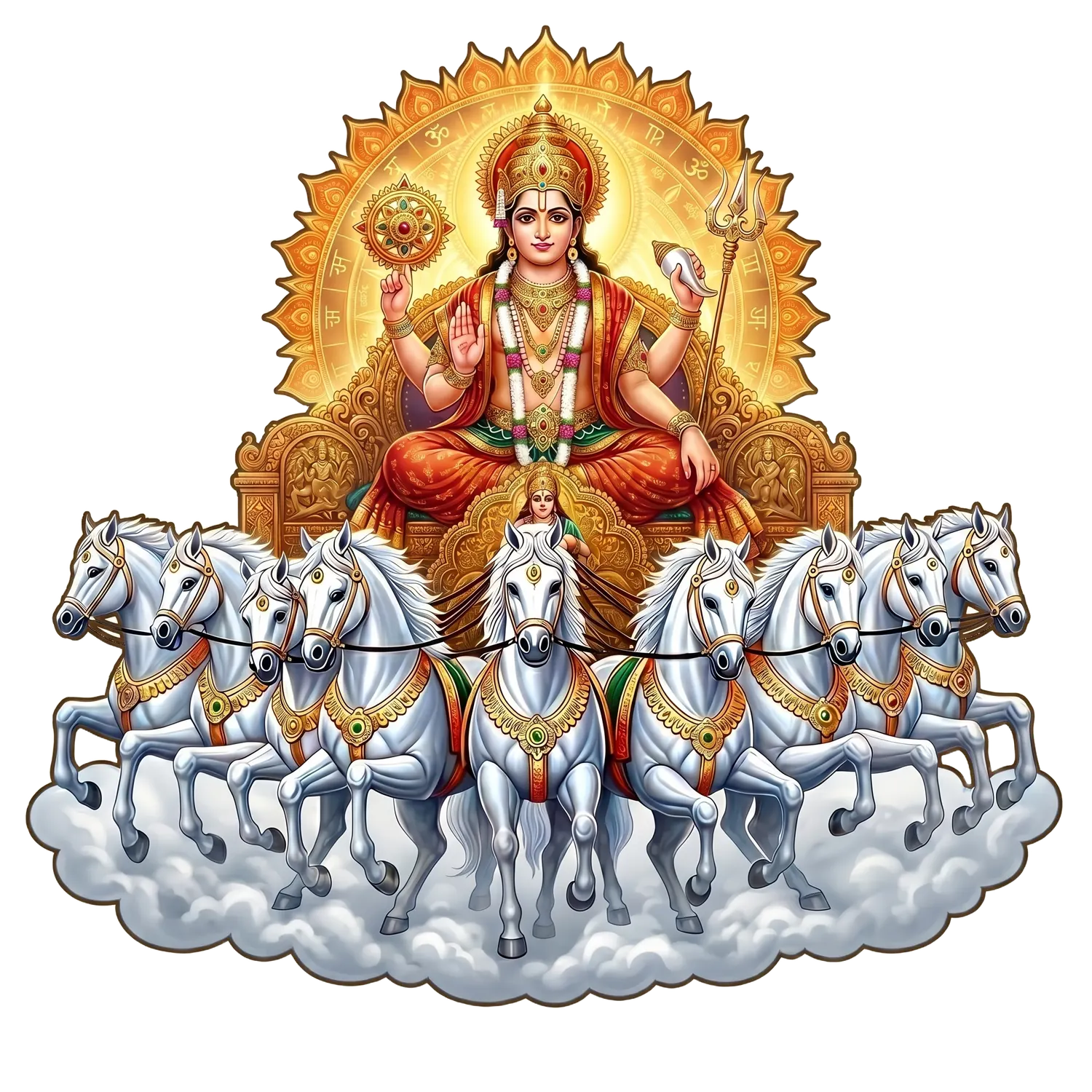
Surya (Sun) governs soul, vitality, authority and father. Chandra (Moon) governs mind, emotions and mother. Mangal (Mars) governs courage, energy and siblings. Budh (Mercury) governs intellect, communication and business. Guru (Jupiter) governs wisdom, wealth and dharma. Shukra (Venus) governs love, beauty and material comfort. Shani (Saturn) governs discipline, karma and longevity. Rahu governs illusion, ambition and sudden change. Ketu governs detachment, spirituality and past-life karma. Together, these nine grahas are seen as cosmic forces that shape both the outer circumstances and inner nature of every soul.
Why Navgraha Shanti Puja Is Performed
Devotees turn to this puja during periods of prolonged difficulty — repeated obstacles in career, health issues that don't resolve easily, delays in marriage, financial instability, or persistent mental unrest — especially when an astrologer identifies a weak, combust, debilitated or malefic-afflicted graha in the birth chart. It is also commonly performed proactively, as a protective measure before starting something important, or during known challenging transits like Shani's Sade Sati, Dhaiya, or Rahu-Ketu's transit through sensitive houses.
The Puja Vidhi (Method)
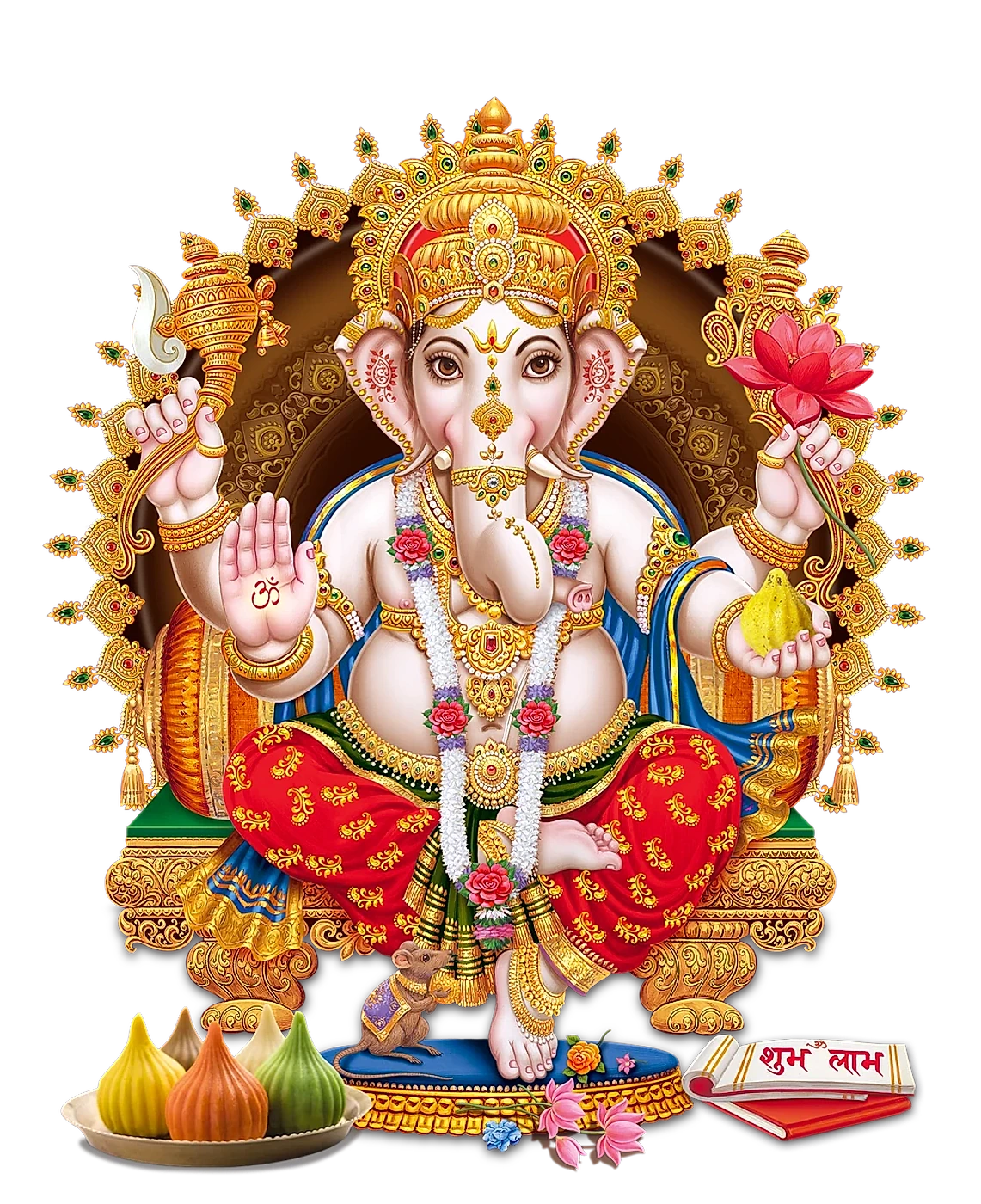
The puja typically begins with Ganesh Vandana, invoking Lord Ganesha to remove obstacles before any other ritual begins. A kalash sthapana is performed, followed by individual invocation and worship of each of the nine grahas, usually represented by their respective yantras, images, or coloured cloth placed in the nine directions of a specially prepared mandala. Each graha is offered its associated items — for example, red flowers and jaggery for Mangal, white flowers and rice for Chandra, yellow items for Guru, and black sesame (til) for Shani.
Each planet's beej mantra is chanted a specified number of times (often 108 or in multiples), followed by a collective havan (fire ritual) where samagri suited to each graha is offered into the sacred fire while its mantra is recited. The puja concludes with aarti, distribution of prasad, and often a small daan (charitable donation) associated with the graha causing the most difficulty — this act of giving is considered especially powerful in pacifying planetary distress.
Benefits of Navgraha Shanti Puja
Devotees perform this puja seeking relief from obstacles across career, health, relationships and finances; protection during difficult planetary periods like Sade Sati or Rahu-Ketu transits; improved mental peace, clarity and reduced anxiety; and removal of doshas such as Kaal Sarp Dosh or Pitra Dosh that may be linked to planetary affliction. It is also performed simply as an act of gratitude and cosmic balance, even when no specific problem is present, as a way of honouring the forces that govern time and destiny.
When to Perform Navgraha Shanti Puja
While this puja can be performed on any auspicious day, Sundays are traditionally considered favourable since Surya is regarded as the king among the Navgraha and sets the tone for the entire chart. It is also commonly performed during Navgraha related festivals, at the start of Sade Sati, before major life events like marriage or a new venture, or whenever an astrologer recommends it based on a kundali reading.
A Word of Balance
Navgraha Shanti Puja is a devotional and dharmic practice meant to bring peace, humility and cosmic alignment — it is not a mechanical formula that erases karma or guarantees specific outcomes. Its true power lies in the sincerity, faith and surrender with which it is performed, alongside continued honest effort in daily life. For serious health, legal or financial matters, always seek qualified professional guidance alongside your spiritual practice.
Frequently Asked Questions
Who should perform Navgraha Shanti Puja? Anyone facing prolonged obstacles, difficult planetary transits, or seeking general planetary balance and protection can perform this puja, ideally guided by a qualified pandit.
How long does the puja take? A full Navgraha Shanti Puja with havan typically takes between two and four hours, depending on the scale of the ritual and the number of participants.
Can it be done for just one troublesome planet? Yes, a focused puja for a single graha (such as Shani Shanti or Mangal Shanti) is common, but a full Navgraha puja is preferred when overall balance is sought, since all nine planets are interconnected.
Is Navgraha Shanti Puja a one-time ritual? It can be performed once during a specific difficult period, or repeated periodically (such as annually) as an ongoing devotional practice for sustained peace and protection.
Quick guide
Before you begin
Mantra
Navagraha mantra
Om Navagrahebhyo Namah
Chant with a calm sankalp while praying for balanced graha shanti and guidance.
Bhav
Benefits devotees pray for
FAQ
Common questions
Who should perform Navgraha Shanti Puja?
Anyone facing prolonged obstacles or difficult transits, or seeking general planetary balance, guided by a qualified pandit.
How long does the puja take?
A full puja with havan typically takes two to four hours depending on scale.
Can it be done for just one planet?
Yes, a focused Shani or Mangal Shanti is common, but a full Navgraha puja suits overall balance.
Is it a one-time ritual?
It can be a one-time remedy or repeated periodically as an ongoing devotional practice.
Facing Prolonged Planetary Troubles?
Book a Navgraha Shanti Puja performed with full traditional vidhi to invoke balance and grace from all nine grahas.