
 जय जय नवग्रह देव हमारे
The complete Navgrah Chalisa in Devanagari with meaning, chanting vidhi and how it helps pacify the nine planets and reduce their malefic effects.
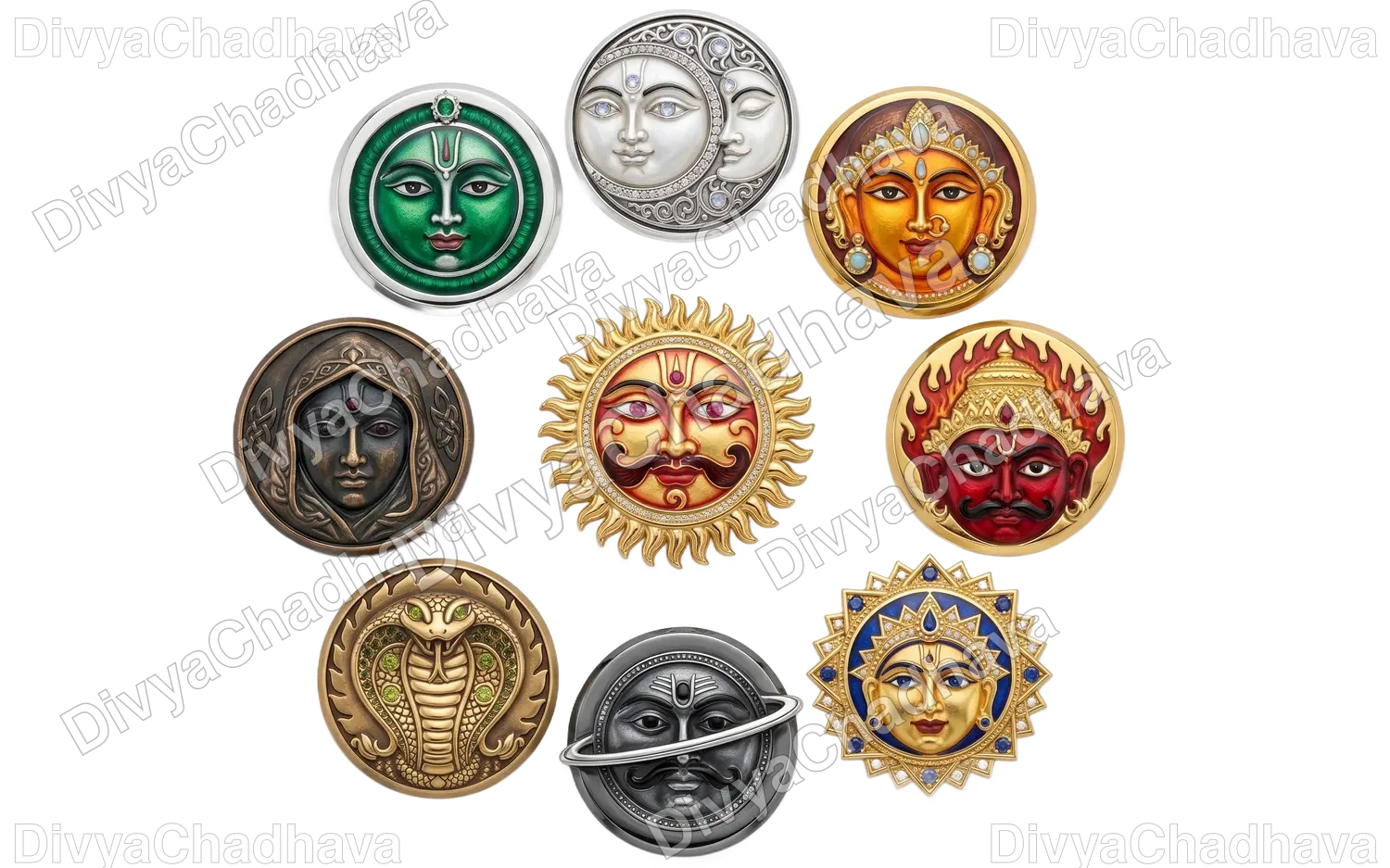
In Vedic astrology, the nine grahas — Surya (Sun), Chandra (Moon), Mangal (Mars), Budh (Mercury), Guru (Jupiter), Shukra (Venus), Shani (Saturn), Rahu and Ketu — are believed to influence every aspect of a person's life: health, career, relationships, wealth and mental peace. When a graha is weak or afflicted in one's birth chart, it can manifest as recurring obstacles, ill health, delays or anxiety. The Navgrah Chalisa is recited to pacify all nine planetary energies together, seeking their combined blessing and the reduction of their malefic effects, rather than propitiating only one troublesome graha.
Complete Navgrah Chalisa (Devanagari)
दोहा
जय जय नवग्रह देव हमारे। संकट में हो सबके सहारे॥ सूर्य चंद्र मंगल शशि तारे। कृपा करो हे ग्रह न्यारे॥
चौपाई
जय जय जय नवग्रह भगवाना। तुम बिन सूना सकल जहाना॥ सूर्य प्रथम तुम तेज के दाता। जग को दो प्रकाश विधाता॥
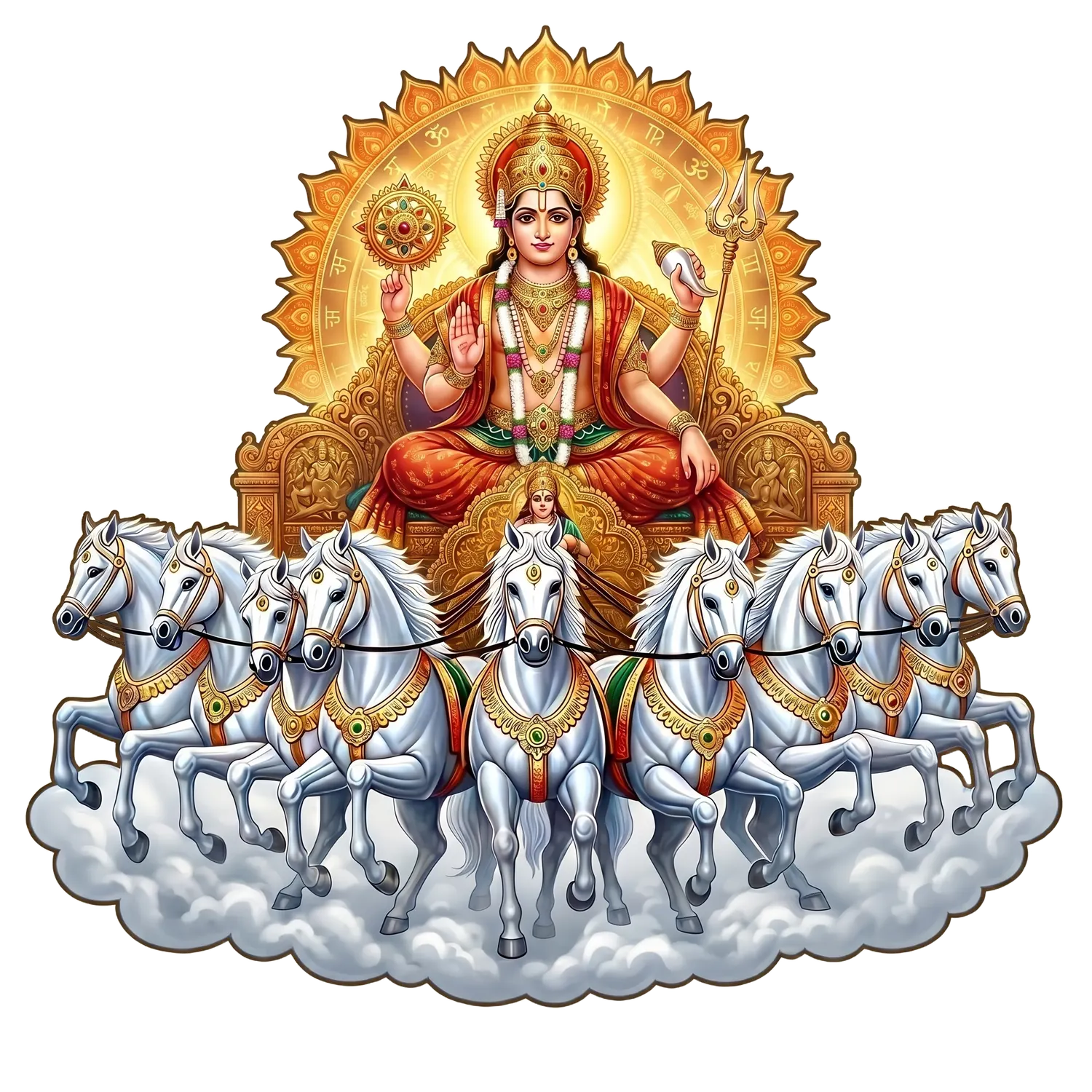
रथ पर सवार सप्त अश्व धारी। हे दिनकर हो तेज तुम्हारी॥ आतमबल आरोग्य दिखाओ। पिता समान कृपा बरसाओ॥
चंद्रदेव मन के अधिकारी। शीतलता के तुम्हीं पुजारी॥ मन को शांति सदा दो स्वामी। रोहिणी पति अंतर्यामी॥
मंगल देव धरा के पूता। लाल वरण तुम रक्त सा जूता॥ साहस शक्ति भूमि के दाता। ऋण मुक्ति के तुम्हीं विधाता॥
बुध ग्रह तुम बुद्धि प्रदाता। वाणी विद्या के सुखदाता॥ हरित वरण तुम हरित सा तेजा। व्यापार बुद्धि दो हे विशेषा॥
गुरु ग्रह तुम ज्ञान के सागर। देवताओं के गुरु मनोहर॥ पीत वरण तुम शुभ फलदाई। संतान धन विद्या दो भाई॥
शुक्र ग्रह तुम कला के स्वामी। सुख वैभव के अंतर्यामी॥ श्वेत वरण तुम दैत्य गुरु ज्ञानी। सुंदरता वैभव के दानी॥
शनि देव तुम न्याय के दाता। कर्मों का फल देत विधाता॥ काले वरण तुम कर्म के साक्षी। साढ़ेसाती ढैया के रक्षी॥
राहु ग्रह तुम छाया धारी। भ्रम मोह के तुम अधिकारी॥ सत्य मार्ग पर हमें चलाओ। भ्रम का पर्दा दूर हटाओ॥
केतु ग्रह तुम मोक्ष के दाता। आध्यात्म ज्ञान के तुम्हीं विधाता॥ वैराग्य भक्ति का दो वरदाना। जीवन को दो शुभ परिणामा॥
नवों ग्रह मिल कृपा बरसाओ। जीवन में सुख शांति लाओ॥ जो यह चालीसा नित गावे। सो नर उत्तम फल को पावे॥
ग्रह पीड़ा जिसके घर होई। नवग्रह पूजा करे सो कोई॥ दान पुण्य जप हवन कराए। ग्रहदोष का नाश कराए॥
रविवार सूर्य को ध्याओ। सोम सोमवार पूजा पाओ॥ मंगल को दिन मंगल पूजो। बुध बुधवार में मन मोड़ो॥
गुरुवार गुरु का दिन प्यारा। शुक्रवार शुक्र का न्यारा॥ शनिवार शनि पूजा कीजै। नवग्रह शांति विधि से कीजै॥
रत्न दान अरु मंत्र जपाई। ग्रह शांति हो कृपा सहाई॥ जो यह पाठ करे मन लाई। ता के कटे बाधा सब भाई॥
नवग्रह देव सुनो अरजाई। भक्त पुकारे शरण में आई॥ जन्म कुंडली के दुःख हरो। जीवन में शुभ फल सब भरो॥
जय जय जय नवग्रह भगवाना। भक्तन पर करुणा निधाना॥ शरण पड़ा हूँ द्वार तुम्हारे। भव सागर से पार उतारे॥
दोहा
नवग्रह चालीसा पढ़े, जो नर धरि विश्वास। ग्रह पीड़ा सब दूर हो, पूरण हो मन आस॥
॥इति श्री नवग्रह चालीसा सम्पूर्णम्॥
Meaning
The opening doha invokes all nine planetary deities together as protectors in every difficulty. The chaupais then honour each graha individually in traditional order: Surya (Sun) as the giver of vitality and health, seated on his seven-horse chariot; Chandra (Moon) as ruler of the mind, bringing coolness and peace; Mangal (Mars) as the red-hued son of Earth, granter of courage and freedom from debt; Budh (Mercury) as the giver of intellect, speech and business acumen; Guru (Jupiter) as the ocean of wisdom, teacher of the gods, granter of children, wealth and learning; Shukra (Venus) as lord of the arts, beauty and worldly comforts; Shani (Saturn) as the just dispenser of karmic results, protector through Sade Sati and Dhaiya; Rahu as the shadow planet governing illusion, whom devotees ask to be guided toward truth; and Ketu as the planet of moksha and spiritual wisdom, granting detachment and auspicious life outcomes.
The chalisa then instructs devotees on the day-wise worship of each graha (Sunday for Surya, Monday for Chandra, and so on through the week) and recommends charity (daan), mantra japa and havan as remedies when a planet causes affliction in one's chart. It closes with a prayer that the nine grahas together remove every difficulty recorded in one's birth chart (janma kundali) and fill life with auspicious results.
Why Devotees Chant the Navgrah Chalisa
Vedic astrology holds that no single planet acts in isolation — the nine grahas work together to shape a person's destiny, and even a well-placed chart can face temporary difficulty when planetary periods (dashas) shift unfavourably. Rather than propitiating each graha separately with nine different remedies, many devotees find it simpler and equally powerful to chant the combined Navgrah Chalisa, seeking overall planetary harmony. It is especially popular among those going through Shani Sade Sati, Rahu-Ketu transits, a difficult dasha period, or simply seeking general protection from unseen astrological obstacles.
How and When to Chant
Best day: Sunday (as the week's first day, dedicated to Surya, the chief among the grahas) is commonly chosen to begin regular recitation, though the chalisa may be read daily.
Time: Early morning, ideally at or before sunrise, is considered most auspicious for planetary worship, though evening recitation is also acceptable.
Method: Face east if possible, light a ghee lamp before a Navgrah yantra or image, and recite the chalisa with its opening and closing doha. Many devotees follow it with a short prayer naming their specific troubling graha (for example Shani or Rahu) and offering relevant items — mustard oil for Shani, white flowers for Shukra, red flowers for Mangal.
Count: One recitation daily is a common practice; some devotees increase this to 9 recitations (one for each graha) on a Sunday or during a Navgrah Shanti puja.
Dos and Don'ts
Do maintain regularity — planetary energies are believed to respond best to sustained, steady devotion rather than one-time intense effort. Do combine chanting with simple dharmic conduct: honesty, discipline, respect for elders and the needy, since planetary remedies work best alongside good karma. Do consult a qualified astrologer for a personalised reading if a specific graha appears strongly afflicted in your chart.
Do not treat this chalisa as a substitute for medical, legal or financial professional advice — planetary remedies are a matter of faith and tradition meant to support, not replace, appropriate real-world action. Do not fall into fear or fatalism about "bad" planets; Vedic tradition holds that sincere remedy, patience and right conduct soften even the most challenging planetary periods.
Mahatmya (Significance)
The Navgrahas are worshipped as a unified mandala in most Hindu temples, typically installed around the main sanctum, because they are understood to govern time itself and the unfolding of karma in a person's life. Ancient jyotish texts describe how each graha's blessing brings a particular gift — the Sun's vitality, the Moon's peace, Jupiter's wisdom, Venus's grace — while affliction from any one graha can be eased through worship, charity and right conduct, never through fear or superstition. The Navgrah Chalisa distills this vast tradition into an accessible daily prayer for householders who cannot perform elaborate havans but still wish to seek planetary grace.
Benefits of Reciting the Navgrah Chalisa
Devotees report reduced intensity of Sade Sati and other difficult transits, improved mental clarity and reduced anxiety about the future, smoother resolution of career, health and relationship obstacles once attributed to planetary affliction, and a settled sense that one's efforts are supported by cosmic harmony rather than working against it.
Disclaimer: Planetary remedies are a matter of faith and tradition. They are meant to bring peace of mind and support alongside — never as a substitute for — appropriate medical, legal or financial professional advice.
Frequently Asked Questions
Q: Should I chant the Navgrah Chalisa even if I don't know which planet is troubling me? A: Yes. The chalisa addresses all nine grahas together, so it is beneficial general practice even without a detailed chart reading; for a specific problem, a personalised astrological consultation can help target the remedy further.
Q: How is the Navgrah Chalisa different from individually worshipping Shani or Rahu? A: Individual worship (like the Shani Chalisa) focuses remedy on one particularly afflicted planet, while the Navgrah Chalisa seeks harmony among all nine together, useful as an ongoing general practice.
Q: Can this chalisa replace a Navgrah Shanti puja or havan? A: Regular chanting is a valuable daily practice, but for serious planetary afflictions many families still perform a formal Navgrah Shanti puja with a qualified priest for more elaborate remedy.
Q: Is Rahu-Ketu worship safe within Sanatan tradition? A: Yes, Rahu and Ketu are worshipped as legitimate grahas within the Navgrah mandala across Hindu temples; the chalisa's approach is entirely gentle and devotional, seeking guidance rather than fear.
Quick guide
Before you begin
Mantra
Navagraha mantra
Om Navagrahebhyo Namah
Chant with a calm sankalp while praying for balanced graha shanti and guidance.
Bhav
Benefits devotees pray for
FAQ
Common questions
Should I chant this even if I don't know which planet is troubling me?
Yes, it addresses all nine grahas together as beneficial general practice; a personalised reading can target a specific remedy further.
How is it different from worshipping Shani or Rahu individually?
Individual worship focuses on one afflicted planet; the Navgrah Chalisa seeks harmony among all nine as ongoing general practice.
Can this chalisa replace a Navgrah Shanti puja or havan?
Regular chanting is valuable daily practice, but serious afflictions still warrant a formal puja with a qualified priest.
Is Rahu-Ketu worship safe within Sanatan tradition?
Yes, both are legitimate grahas within the Navgrah mandala; the chalisa's approach is gentle and devotional, seeking guidance not fear.
Seeking Relief from Planetary Afflictions?
Book a Navgrah Shanti puja for harmony among the nine planets and relief from graha dosh.