


 सूर्यादि नवग्रह वंदना
The complete Navgrah Aarti invoking Surya, Chandra, Mangal, Budh, Guru, Shukra, Shani, Rahu and Ketu for peace, balance and grah shanti.
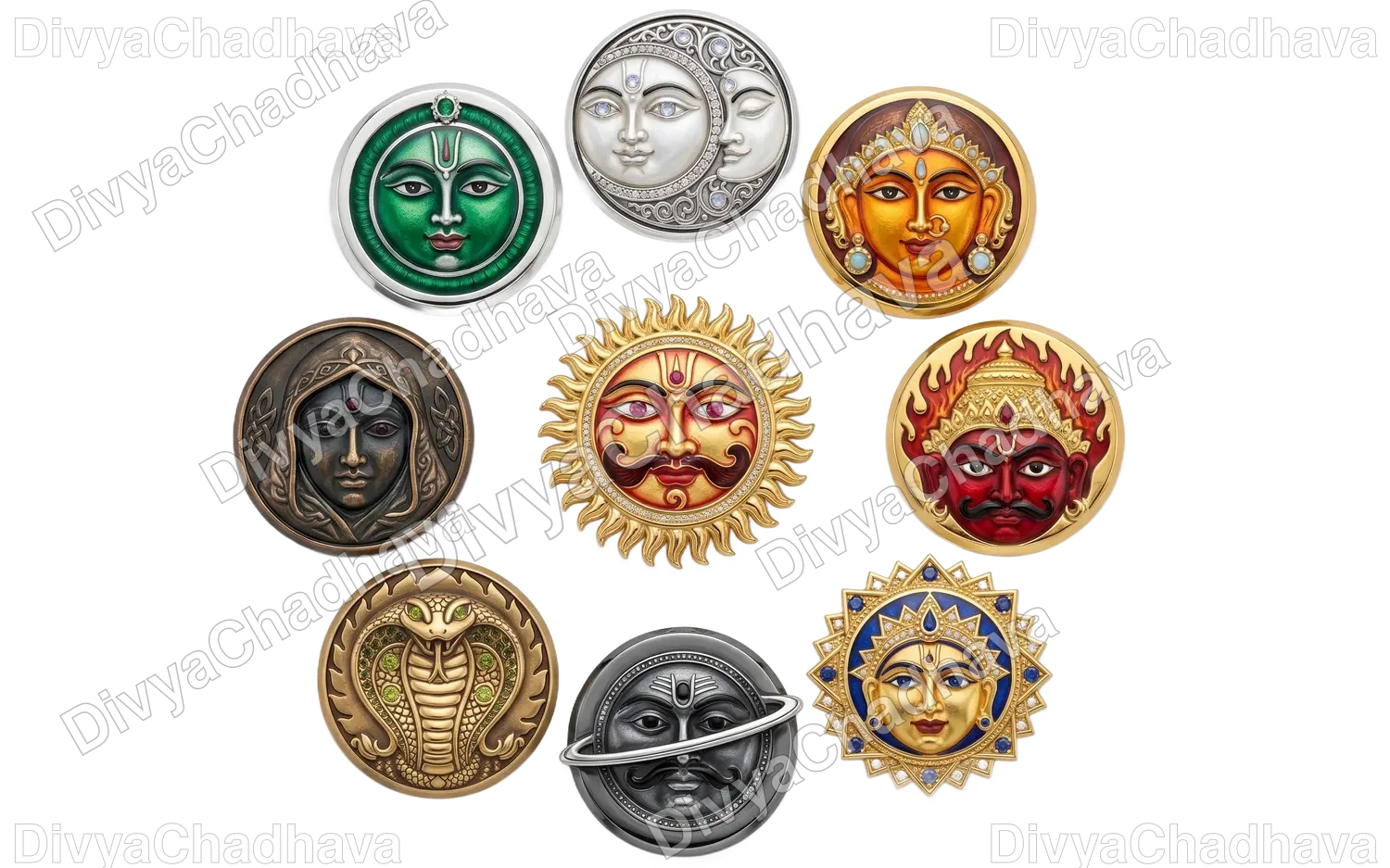
The nine grahas — Surya, Chandra, Mangal, Budh, Guru, Shukra, Shani, Rahu and Ketu — are regarded in Sanatan Dharma not merely as astronomical bodies but as living deities who govern the fruits of our karma. The Navgrah Aarti is sung to invoke the blessings of all nine together, seeking their combined grace, balance and protection from the difficulties (dosh) that an unfavourable planetary position can bring.
Complete Navgrah Aarti (Devanagari)
ॐ जय नवग्रह देवा, प्रभुजी जय नवग्रह देवा सूर्य चन्द्र मंगल बुध, गुरु शुक्र शनि सेवा ॐ जय नवग्रह देवा
राहु केतु सहित तुम, नवधा रूप धरे हो जगत नियन्ता स्वामी, कर्मफलदाता हो ॐ जय नवग्रह देवा
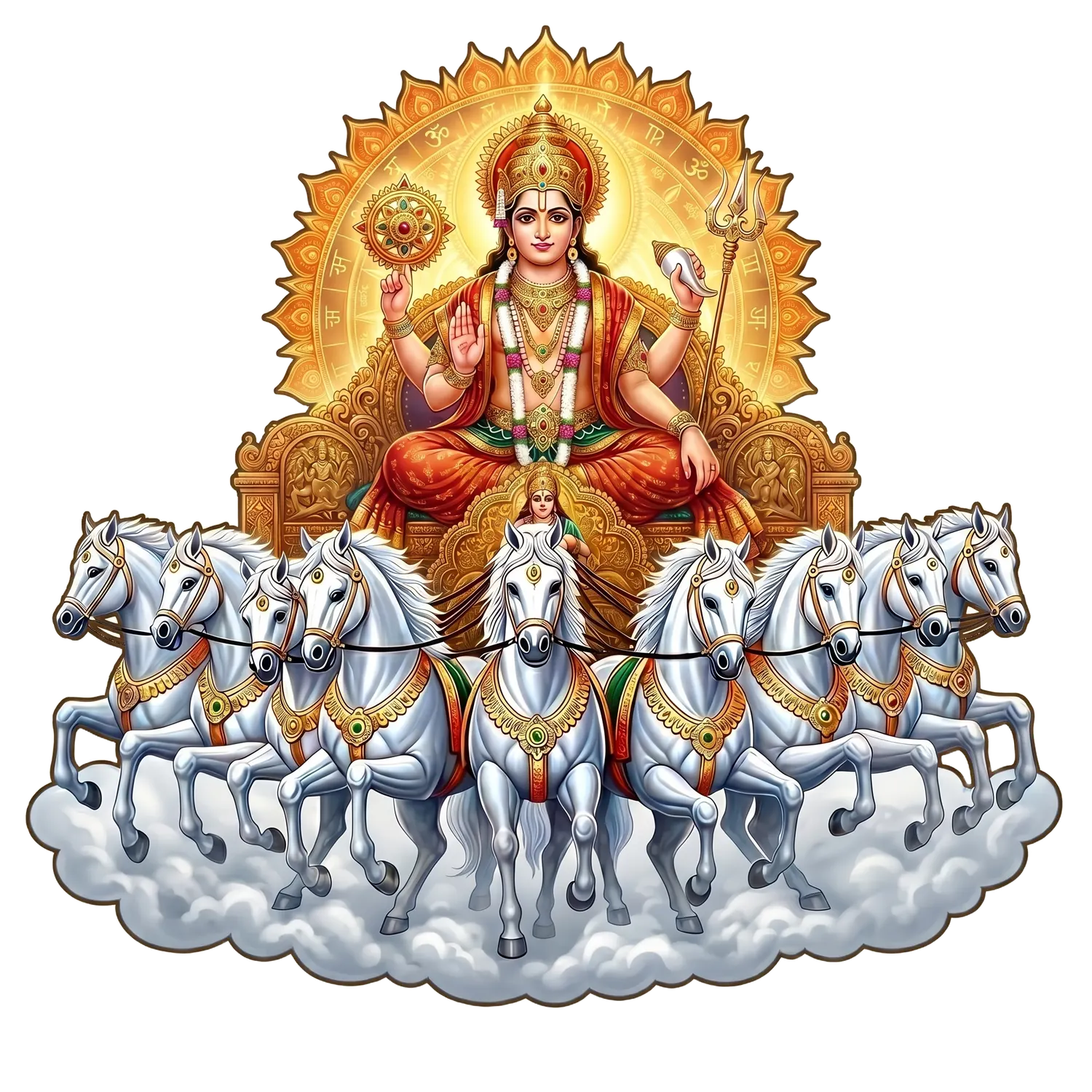
सूर्यदेव तुम प्रकट, तेज प्रताप दिखाओ चन्द्रमा शीतलता दे, मन को शांत बनाओ ॐ जय नवग्रह देवा
मंगल बल साहस दो, बुध बुद्धि विवेका गुरुदेव ज्ञान सिखाओ, शुक्र सुख देवा एका ॐ जय नवग्रह देवा
शनिदेव न्याय करो प्रभु, कर्म अनुसार फल दो राहु केतु की माया से, हमको तुम रख लो ॐ जय नवग्रह देवा
जो नवग्रह गुण गावे, संकट सब टारे मन इच्छित फल पावे, भव सागर तारे ॐ जय नवग्रह देवा
ॐ जय नवग्रह देवा, प्रभुजी जय नवग्रह देवा जो कोई श्रद्धा से भजे, पावे सुख सेवा ॐ जय नवग्रह देवा
Meaning
The aarti begins with a salutation to all nine grahas together — Surya, Chandra, Mangal, Budh, Guru, Shukra and Shani, along with the shadow planets Rahu and Ketu — describing them as the controllers of the universe who dispense the fruit of every soul's karma.
It then addresses each graha individually: Surya (the Sun) is asked to reveal his radiance and glory; Chandra (the Moon) to cool and calm the mind; Mangal (Mars) to grant strength and courage; Budh (Mercury) to grant intellect and discrimination; Guru (Jupiter) to impart wisdom; Shukra (Venus) to grant comfort and harmony; Shani (Saturn) to dispense justice strictly according to one's karma; and Rahu-Ketu are prayed to for protection from illusion, confusion and unexpected upheaval.
The closing verses declare that whoever sings the praises of the Navgrah with devotion finds their obstacles dissolved, their heartfelt wishes fulfilled, and is helped to cross the ocean of worldly difficulties.
Why the Navgrah Aarti Is Performed
In Jyotish, every soul's chart (kundali) is shaped by the position of these nine grahas at the moment of birth. A graha that is weak, afflicted or running an unfavourable dasha/antardasha is believed to create delays, obstacles, health issues or mental unrest in the corresponding area of life. Rather than fear the grahas, Sanatan tradition teaches devotees to honour and appease them through bhakti — the Navgrah Aarti is the simplest, most accessible way to do this daily.
How and When to Chant
Best day: Saturdays are especially auspicious for Navgrah worship (since Shani is considered the strictest judge among the grahas), but the aarti can be sung any day, ideally at sunrise or sunset.
Best time: Pradosh kaal (twilight) or during a Navgrah Shanti puja, Grahan (eclipse) period ritual, or before starting an important new venture.
Vidhi: Light a ghee or til-oil lamp before an image or yantra of the Navgrah. Offer flowers, akshat (unbroken rice) and incense. Recite the aarti with folded hands, then circulate the lamp (aarti) in a clockwise motion before the deity image, and conclude by touching the flame's warmth to your eyes as prasad.
Along with the aarti, many devotees also chant each graha's beej mantra nine or eleven times, or recite the Navgrah Stotra for deeper remedial effect, especially during a difficult dasha period.
Benefits of Navgrah Aarti
Regular recitation is believed to bring balance to a chart where multiple grahas are weak or conflicting, reduce the intensity of dosh such as Sade Sati, Kaal Sarp Dosh or Mangal Dosh, improve clarity of mind and decision-making, and bring steady progress in career, health, relationships and finances by aligning one's efforts with cosmic support.
Dos and Don'ts
Do chant with a calm, devotional mind rather than out of fear of the grahas. Do keep the space clean and light a lamp facing east or north. Do combine the aarti with simple daan (charity) suited to the weak graha in your chart, guided by a knowledgeable astrologer or priest.
Do not treat the grahas as malevolent forces to be "defeated" — in Sanatan Dharma they are devatas who reward right action and correct misalignment with grace when approached with humility. Do not skip the aarti out of superstition on any particular day; consistency matters more than any single date.
FAQ
Q: Can the Navgrah Aarti be sung by anyone, regardless of their kundali? A: Yes. It is a universal prayer of gratitude and protection that anyone can sing daily, irrespective of which grahas are strong or weak in their own chart.
Q: Is chanting the Navgrah Aarti a substitute for consulting an astrologer about a serious dosh? A: No. The aarti is a devotional practice that brings peace and grace; for a specific, deeply troubling planetary affliction, it is wise to also consult a qualified jyotish along with continuing your bhakti.
Q: Which day is best for Navgrah puja? A: Saturday is traditionally considered most powerful for Navgrah worship, though Sunday (for Surya) is also widely observed, and any day of sincere devotion is accepted.
Quick guide
Before you begin
Mantra
Navagraha mantra
Om Navagrahebhyo Namah
Chant with a calm sankalp while praying for balanced graha shanti and guidance.
Bhav
Benefits devotees pray for
FAQ
Common questions
Can the Navgrah Aarti be sung by anyone, regardless of their kundali?
Yes, it is a universal prayer that anyone can sing daily for peace and grace.
Is it a substitute for astrological remedies?
No, it complements them — for a serious dosh, also consult a qualified jyotish.
Which day is best for Navgrah puja?
Saturday is considered most powerful, though any day of sincere devotion is accepted.
Seeking Grah Shanti?
If your kundali shows an afflicted graha, a guided Navgrah Puja can bring lasting peace and balance.