 या देवी सर्वभूतेषु शक्तिरूपेण संस्थिता
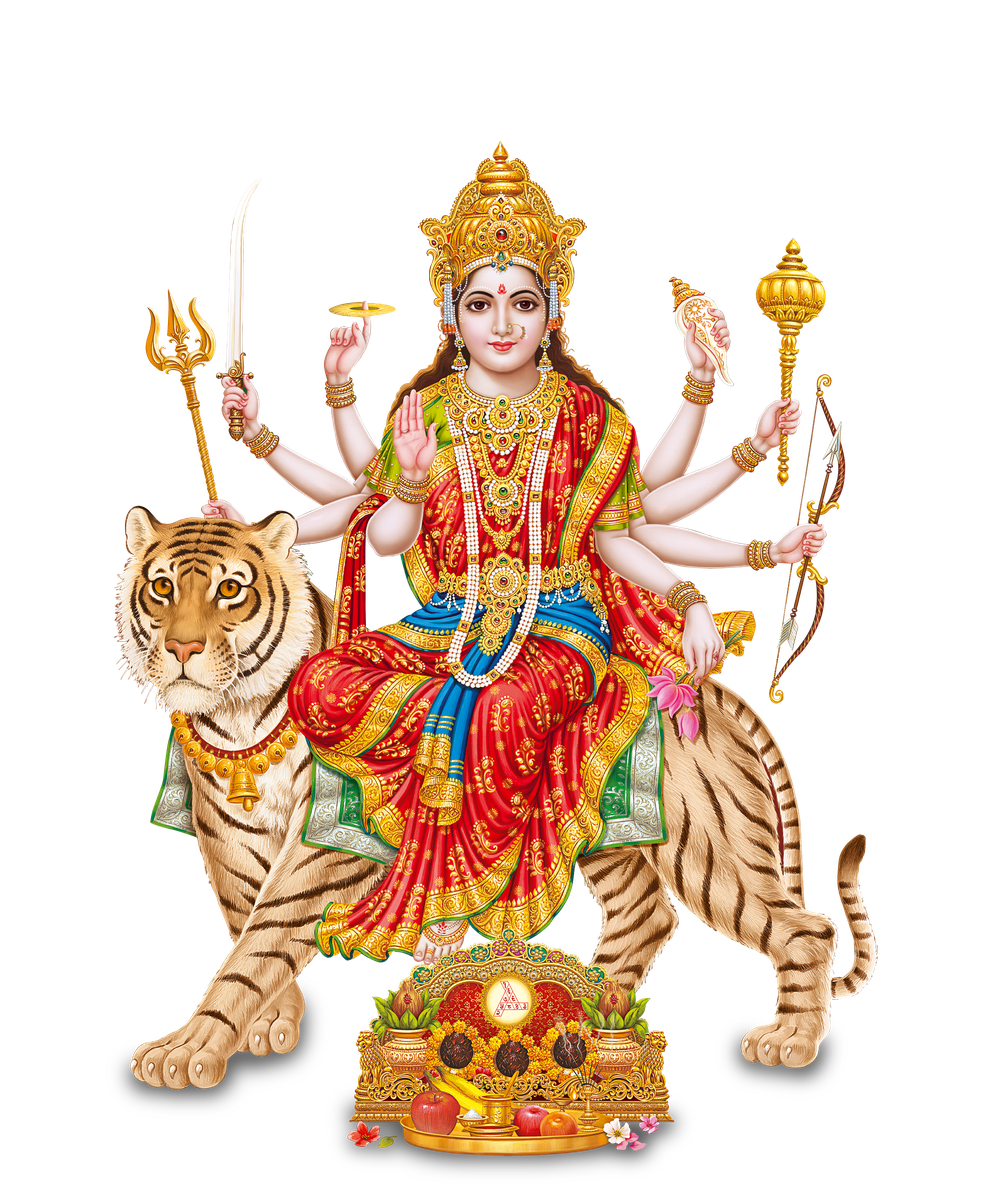
During the nine nights of Navratri, Goddess Durga is worshipped in nine distinct forms, each representing a stage of spiritual growth and a different divine quality.
Navratri, the nine sacred nights of the Goddess, is one of the most beloved festivals in Sanatan Dharma. Across these nine nights, devotees worship nine distinct forms of Adi Shakti, collectively known as Navdurga. Each form is not a separate goddess but a facet of the same infinite Mother, revealed in a sequence that mirrors the soul's own journey from innocence to ultimate wisdom.
The nine forms are worshipped one per day, and together they tell the story of the Devi's growth, her marriage to Lord Shiva, her motherhood, her fierce battles against evil, and finally her bestowal of perfection upon her devotees.
Day 1: Shailaputri
Shailaputri, meaning Daughter of the Mountain, is the first form of Durga, born to Himavan, the king of the Himalayas. She rides a bull and holds a trishul and lotus. She represents Mother Nature and the raw, unshaped potential of the universe. Worshipping her on the first day grounds the devotee in strength and stability, the same qualities as the mountains themselves.
Day 2: Brahmacharini
Brahmacharini is the unmarried ascetic form of the Goddess, who performed intense penance to attain Lord Shiva as her husband. She carries a japa mala and a kamandal. She embodies tapasya, discipline, and unwavering determination. Her worship teaches devotees the value of patience and steady effort on the spiritual path.
Day 3: Chandraghanta
After her marriage to Shiva, the Goddess adorned her forehead with a half-moon shaped like a bell, and became Chandraghanta. She rides a tiger and carries various weapons in her ten hands, ready to destroy evil. She represents courage, grace, and bravery combined, and her worship removes fear and grants inner peace along with strength.
Day 4: Kushmanda
Kushmanda is believed to have created the universe with her divine smile, when there was only darkness. Kushmanda means one who holds the cosmic egg within her. She resides in the core of the sun and radiates light and energy in all directions. Her worship brings health, vitality, and radiance to the devotee's life.
Day 5: Skandamata
Skandamata is the mother of Lord Skanda (Kartikeya), the commander of the divine army. She is depicted holding baby Skanda on her lap, seated on a lotus. She represents maternal love, nurturing, and the strength a mother draws upon to protect her child. Devotees pray to her for the wellbeing of their children and family.
Day 6: Katyayani
Katyayani was born from the combined energy of all the gods, in the ashram of Sage Katyayana, specifically to destroy the demon Mahishasura. She rides a lion and is depicted as fierce and warrior-like. She represents righteous anger and the power to fight injustice. Unmarried girls traditionally pray to her for a good life partner, following the example of Gopis who worshipped her for union with Krishna.
Day 7: Kalaratri
Kalaratri, the dark night, is the fiercest form of the Goddess, with a complexion as dark as night, dishevelled hair, and a fearsome appearance, yet she is also called Shubhankari, the auspicious one, because she protects her devotees from all harm. She represents the destroyer of ignorance and darkness. Worshipping her on the seventh night removes negative energies, fear, and obstacles.
Day 8: Mahagauri
Mahagauri represents purity, calm, and compassion. After years of severe penance turned her skin dark, Lord Shiva blessed her by cleansing her with the water of the Ganga, restoring her to a radiant, fair complexion, hence the name Mahagauri, the extremely fair one. She rides a bull and grants peace, forgiveness of past sins, and purification of the mind.
Day 9: Siddhidatri
On the final day, the Goddess appears as Siddhidatri, the bestower of siddhis, the eight supernatural powers and spiritual perfections. It is said Lord Shiva himself attained these siddhis by worshipping her, and this is why he is depicted as half-woman in the Ardhanarishwara form. She represents the culmination of the spiritual journey, completion, and fulfilment.
The Deeper Meaning of Navdurga
The nine forms are not random; they follow the arc of creation itself. Shailaputri is raw potential, Brahmacharini is discipline, Chandraghanta is the union of grace and power, Kushmanda is the creative spark of the universe, Skandamata is nurturing love, Katyayani is righteous strength, Kalaratri is the destruction of darkness, Mahagauri is purity restored, and Siddhidatri is the fruit of the entire journey, perfection itself. Together they teach that the divine feminine contains every quality a soul needs: gentleness and ferocity, patience and power, motherhood and mastery.
How Navdurga Is Worshipped
During Navratri, each form is worshipped with a specific colour associated with the day, along with her preferred flower, offering (bhog), and mantra. Many households keep a Kalash, perform daily aarti, recite the Durga Saptashati or Devi Kavach, and observe fasting. On Ashtami and Navami, Kanya Pujan is performed, honouring young girls as living forms of the Goddess, since the divine feminine is believed to reside in every woman and girl.
Why Navdurga Matters Today
In a fast-paced world, Navdurga's nine faces remind devotees that strength and softness are not opposites, and that the same Mother who nurtures also protects fiercely when needed. Worshipping her nine forms is an invitation to cultivate each of these qualities within oneself over the nine days, moving from raw potential to true spiritual accomplishment.
Quick guide
Before you begin
Mantra
Devi mantra
Om Dum Durgaye Namah
Chant 11, 21, or 108 times according to your time and capacity.
Bhav
Benefits devotees pray for
FAQ
Common questions
Are the nine forms of Navdurga worshipped in a fixed order?
Yes, traditionally they are worshipped in the sequence Shailaputri, Brahmacharini, Chandraghanta, Kushmanda, Skandamata, Katyayani, Kalaratri, Mahagauri, and Siddhidatri, one form on each of the nine nights of Navratri.
Which form of Durga should unmarried girls pray to for marriage?
Devotees traditionally worship Maa Katyayani on the sixth day of Navratri for a good life partner, following the example of the Gopis who worshipped her to attain union with Krishna.
What is the significance of Kanya Pujan during Navdurga worship?
Kanya Pujan honours young girls as living representatives of the Devi, since the divine feminine energy is believed to reside in every girl and woman. It is usually performed on Ashtami or Navami.
Do all nine forms need to be worshipped together, or can one form alone be worshipped?
While Navratri worship traditionally covers all nine forms across nine days, devotees may also focus on one form throughout the year depending on their personal devotion or specific need, since all nine are aspects of the same Mother Durga.
Seek Maa Durga's Blessings This Navratri
Book a personalised puja for Maa Durga performed by experienced pandits, and receive the sankalp and blessings for your family.