

 ऐं ह्रीं क्लीं चामुण्डायै विच्चे
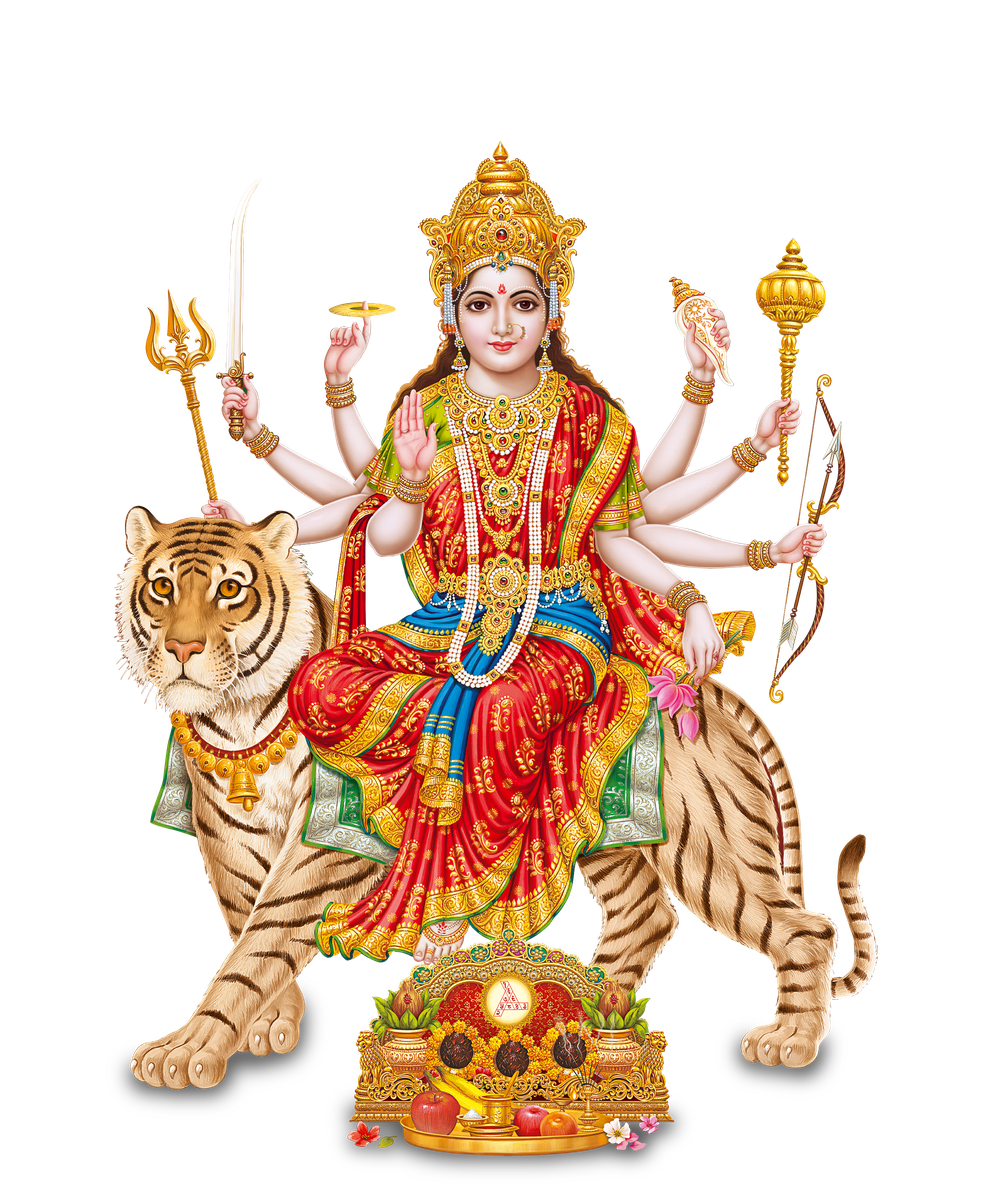
The Navarna Mantra is the nine-syllable heart of Durga Saptashati worship, invoking Maa Durga's three primary forces of will, knowledge and action.
The Complete Navarna Mantra (Devanagari)
ॐ ऐं ह्रीं क्लीं चामुण्डायै विच्चे
This nine-syllable (nava-arna) mantra is counted syllable by syllable as: ऐं-ह्रीं-क्लीं-चा-मु-ण्डा-यै-वि-च्चे. The preceding ॐ is the pranava and is chanted with it, though the mantra's name comes from these nine core sounds.
Transliteration
Om Aim Hreem Kleem Chamundayai Vichche
Word-by-Word Meaning
Om: the primordial cosmic sound, invoking the presence of the Divine.
Aim: the beej (seed) mantra of Goddess Saraswati, representing knowledge, speech and wisdom (Mahasaraswati shakti).
Hreem: the beej mantra of Goddess Mahamaya or Bhuvaneshwari, representing illusion, transformation and the power to dissolve ego (Mahalakshmi shakti).
Kleem: the beej mantra of attraction and fulfilment, representing desire rightly directed and material-spiritual balance (Mahakali shakti).
Chamundayai: salutation to Goddess Chamunda, the fierce form of Durga who slew the demons Chanda and Munda, representing the power that destroys negativity, ego and fear.
Vichche: a mystical closing syllable meaning "cut" or "sever" — the prayer to sever bondage, doubt, sorrow and obstacles at their root.
Overall Meaning
The Navarna Mantra is considered the combined essence of the three great forces of the Divine Mother described in the Durga Saptashati (Devi Mahatmya): Mahakali (power of destruction of negativity), Mahalakshmi (power of preservation and abundance) and Mahasaraswati (power of knowledge and clarity). Chanting it invokes all three together, asking Chamunda Devi to cut through every obstacle — fear, illness, poverty of spirit and confusion — that stands between the devotee and their highest good.
Significance in Durga Saptashati
The Navarna Mantra is central to the recitation of the Durga Saptashati (Chandi Path), especially during Navratri. Traditionally, before beginning the Saptashati, devotees chant this mantra 108 times or more, and it is repeated at key junctures of the text (before and after each chapter in some traditions) to keep the mind anchored in the Devi's presence throughout the reading.
Jaap Vidhi (How to Chant)
Begin by sitting in a clean, quiet place, ideally facing east or north, after a bath. Light a diya and incense before an image or yantra of Durga. Take a sankalp (intention) — silently state your name, gotra if known, and the purpose of your jaap, such as protection, clarity of mind, removal of obstacles or spiritual growth.
Use a rudraksha or red-sandalwood (chandan) mala of 108 beads. Chant the full mantra "Om Aim Hreem Kleem Chamundayai Vichche" once per bead, completing one round (mala) at a time. Beginners may start with 1 mala daily and increase to 3, 5, 9 or 11 malas during Navratri.
The mantra may be chanted silently (manasik), in a whisper (upanshu), or aloud (vaachik) — a whisper is considered ideal for regular daily practice, while aloud chanting is common during group Chandi Path.
Best Time and Days
The Brahma Muhurta (roughly 4 to 6 AM) is the most powerful time for this mantra. Tuesdays, Fridays and especially all nine days of Navratri (Chaitra and Sharad) and Ashtami/Navami are especially auspicious for beginning or intensifying this practice.
Benefits
Regular, sincere chanting of the Navarna Mantra is believed to remove fear and negative energies, sharpen intellect and decision-making (through the Saraswati beej), attract stability, prosperity and protection (through the Lakshmi beej), and dissolve deep-rooted obstacles, doubts and inertia (through the Kali beej and "vichche"). It is widely used before exams, interviews, new beginnings, and during times of hardship, as it is believed to invoke the Divine Mother's complete, three-fold protection.
Dos and Don'ts
Maintain cleanliness of body and mind before chanting. Avoid non-vegetarian food, alcohol and intoxicants on the days you chant intensively. Do not chant with anger, greed or ill intent toward another — this mantra is for protection and upliftment, not harm. If possible, learn the correct pronunciation from a knowledgeable elder, priest or trusted audio source, since Sanskrit beej mantras carry power partly through correct sound (dhwani).
Mahatmya (Glory) of the Mantra
Scriptural tradition holds that the Navarna Mantra is one of the most potent condensed forms of Devi worship, equivalent in essence to reciting the entire Durga Saptashati, because it contains the seed sounds of all three principal goddesses. Sages and householders alike have used it for centuries as a complete daily sadhana requiring no elaborate ritual, only sincerity, cleanliness and regularity.
Frequently Asked Questions
Can anyone chant the Navarna Mantra, or is initiation (diksha) required? While formal diksha from a guru deepens the practice and is traditionally recommended for advanced tantric use, the Navarna Mantra is widely chanted by householders without initiation, especially during Navratri, as an accessible form of Devi worship. Chant with devotion and respect.
How many times should it be chanted daily? Even one mala (108 times) daily brings steady benefit. During Navratri many devotees do 3 to 11 malas, or continuous jaap alongside Durga Saptashati path.
What if I mispronounce a syllable? Don't be anxious — the Divine Mother values sincerity above technical perfection. Try to learn correct pronunciation over time, but do not let fear of error stop you from chanting.
Is this mantra safe to chant for beginners? Yes. It is a protective, purifying mantra suitable for all sincere devotees, from beginners to advanced sadhakas.
Quick guide
Before you begin
Mantra
Devi mantra
Om Dum Durgaye Namah
Chant 11, 21, or 108 times according to your time and capacity.
Bhav
Benefits devotees pray for
FAQ
Common questions
Can anyone chant the Navarna Mantra, or is initiation (diksha) required?
It is widely chanted by householders without formal diksha, especially during Navratri, though guru-diksha deepens advanced practice. Chant with devotion and respect.
How many times should it be chanted daily?
Even one mala (108 times) daily brings steady benefit; during Navratri many chant 3 to 11 malas.
What if I mispronounce a syllable?
Sincerity matters most. Try to learn correct pronunciation over time from a trusted source, but do not let fear of error stop your practice.
Is this mantra safe for beginners?
Yes, it is a protective, purifying mantra suitable for sadhakas at every level.
Seek Maa Durga's Blessings
Offer a personalised puja to Maa Durga for protection, strength and the removal of obstacles.