

 सूर्यादि नवग्रह
A complete guide to the nine Navagraha of Vedic astrology — their names, presiding deities, beej mantras, and remedies for a balanced, blessed life.
In Vedic astrology (Jyotish Shastra), the Navagraha — the nine celestial bodies — are believed to govern every aspect of human life: health, wealth, relationships, career, and destiny. The word "Navagraha" comes from "Nava" (nine) and "Graha" (that which grasps or influences). These nine grahas are not merely astronomical bodies; in Sanatan Dharma they are revered as living deities, each with its own presiding god, colour, gemstone, mantra and temple, and each casting its unique influence over a person's birth chart (kundali) depending on its placement at the time of birth.
Worship of the Navagraha is one of the oldest traditions in Hindu astrology-based worship, found in temples across India, especially the famous Navagraha temples of Tamil Nadu. Understanding each graha helps a devotee recognise which planetary energies are strong or challenging in their life, and which simple, dharmic remedies (upay) can help restore balance.
The Nine Navagraha and Their Significance
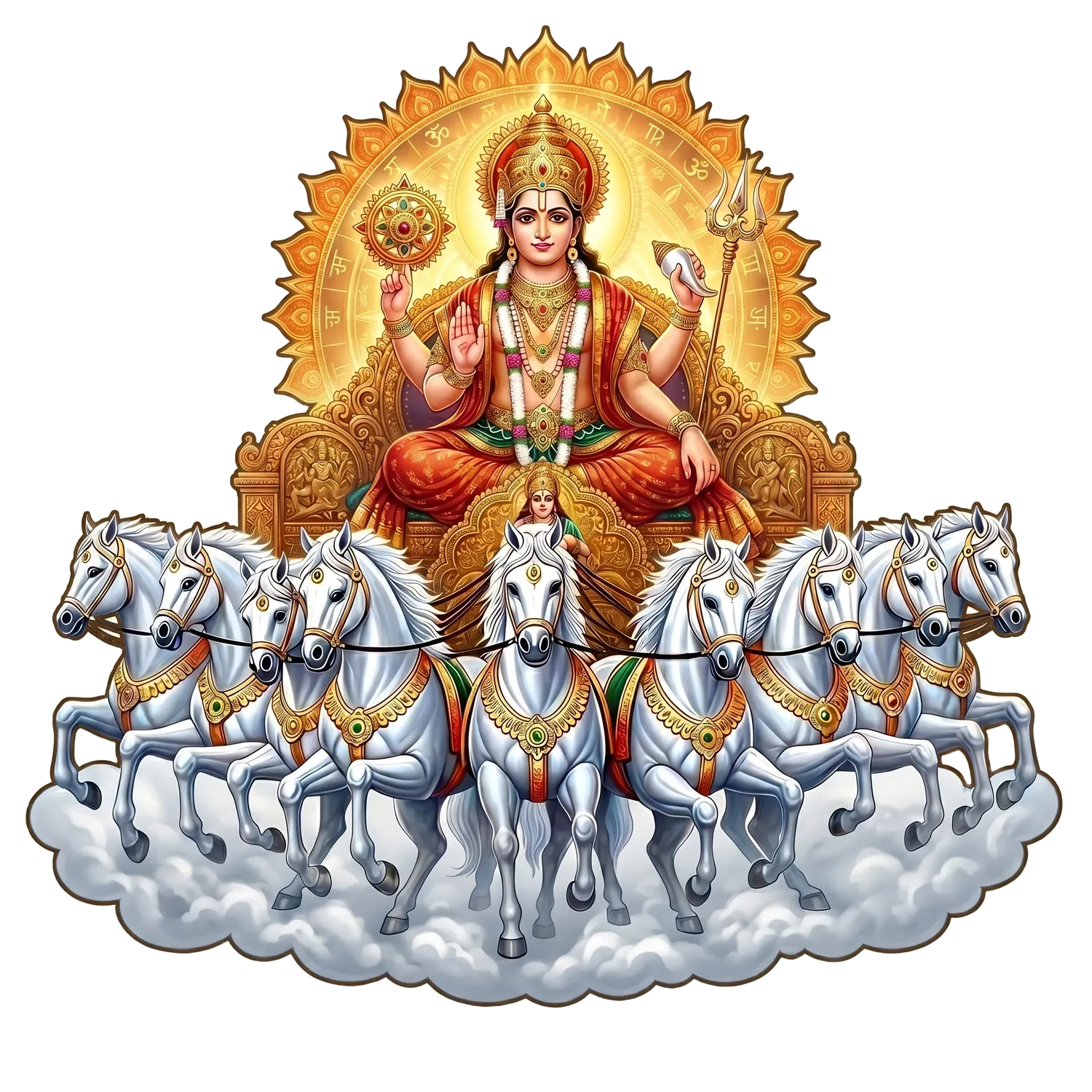
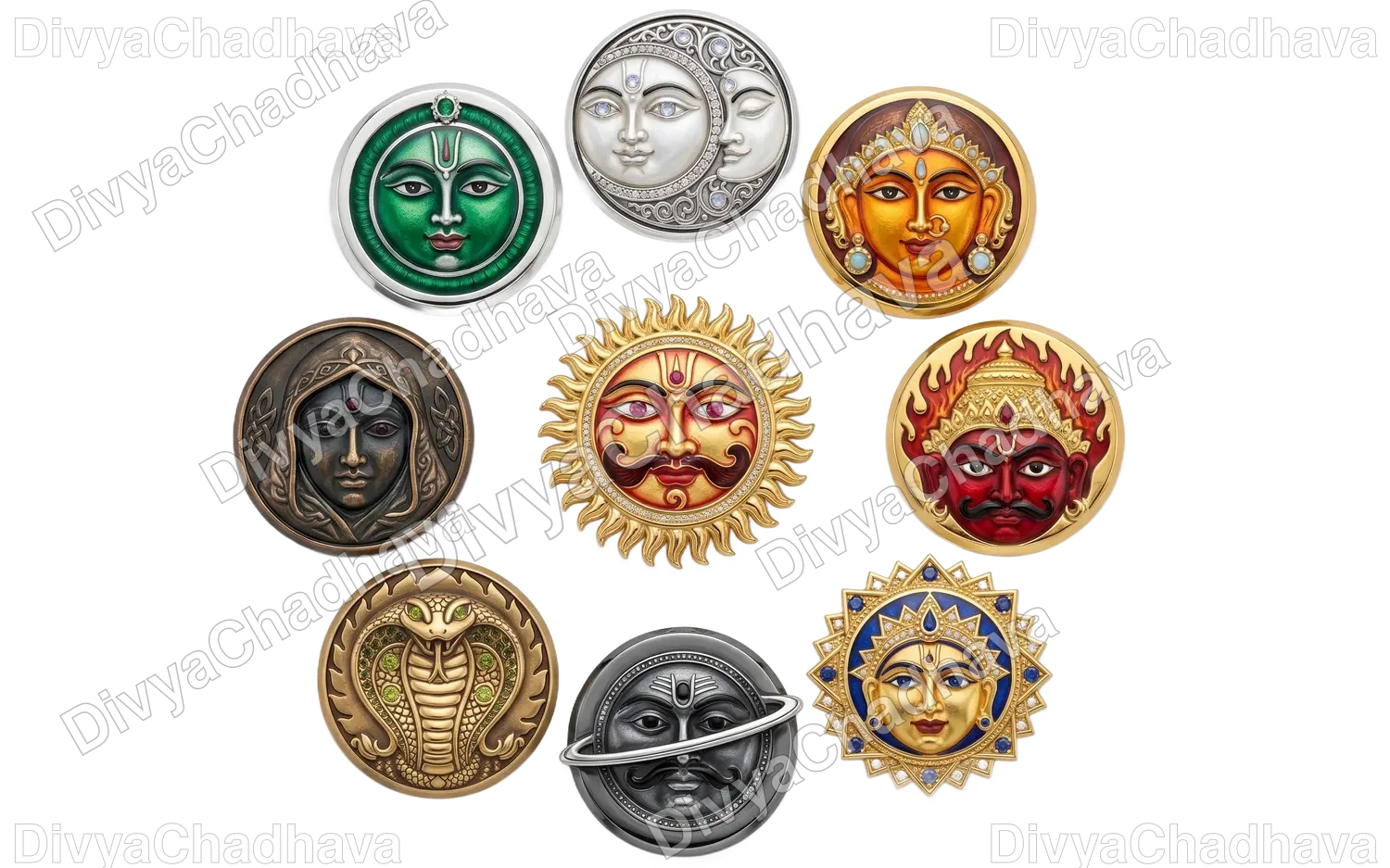
Surya (Sun): Surya is the king of the Navagraha, the soul (atmakaraka) of the horoscope, representing the self, father, authority, vitality, confidence and government-related success. He is worshipped as the source of all light and life. His colour is red/copper, his gemstone is Ruby (Manik), and Sunday is his day.
Chandra (Moon): Chandra represents the mind, emotions, mother, intuition and inner peace. A strong Moon gives calmness and emotional stability, while an afflicted Moon can cause anxiety and mood fluctuation. His colour is white, his gemstone is Pearl (Moti), and Monday is his day.
Mangal (Mars): Mangal is the planet of energy, courage, siblings, land and property, and physical strength. He is worshipped as Bhaumi, the fiery warrior. His colour is red, his gemstone is Red Coral (Moonga), and Tuesday is his day. Mangal Dosha in a kundali is a well-known astrological concern related to marriage compatibility.
Budh (Mercury): Budh governs intellect, communication, business, analytical skill and humour. A well-placed Budh gives sharp wit and success in trade, education and speech. His colour is green, his gemstone is Emerald (Panna), and Wednesday is his day.
Guru (Jupiter): Guru, also called Brihaspati, is the planet of wisdom, knowledge, teachers, dharma, wealth and children. He is considered the most benefic (auspicious) graha, associated with growth, expansion and good fortune. His colour is yellow, his gemstone is Yellow Sapphire (Pukhraj), and Thursday is his day.
Shukra (Venus): Shukra governs love, marriage, beauty, luxury, art and material comforts. He is the guru of the demons in Puranic lore but is a benefic planet for material and relational happiness. His colour is white/pink, his gemstone is Diamond (Heera), and Friday is his day.
Shani (Saturn): Shani is the planet of discipline, karma, hard work, delays, and justice. Though often feared, Shani is not malefic by nature — he simply demands patience, integrity and effort, rewarding sincere labour and punishing shortcuts. His colour is black/blue, his gemstone is Blue Sapphire (Neelam — to be worn only after expert consultation), and Saturday is his day.
Rahu (North Lunar Node): Rahu is a shadow planet (chhaya graha) representing illusion, ambition, foreign connections, sudden gains or losses, and unconventional paths. He has no physical body but has a powerful psychological and karmic influence. His colour is smoky/dark blue, and remedies typically involve Durga or Bhairav worship.
Ketu (South Lunar Node): Ketu, Rahu's counterpart, represents detachment, spirituality, past-life karma, and moksha (liberation). Ketu often brings sudden, unexplainable events and a pull toward the spiritual over the material. His colour is grey/brown, and remedies typically involve Ganesha worship.
Navagraha Beej Mantras (Complete)
Each graha has a beej (seed) mantra that is chanted to strengthen its positive influence and pacify its challenges. These may be chanted 108 times daily, ideally on the graha's associated day.
Surya Beej Mantra: Om Hraam Hreem Hraum Sah Suryaya Namah
Chandra Beej Mantra: Om Shraam Shreem Shraum Sah Chandraya Namah
Mangal Beej Mantra: Om Kraam Kreem Kraum Sah Bhaumaya Namah
Budh Beej Mantra: Om Braam Breem Braum Sah Budhaya Namah
Guru Beej Mantra: Om Graam Greem Graum Sah Gurave Namah
Shukra Beej Mantra: Om Draam Dreem Draum Sah Shukraya Namah
Shani Beej Mantra: Om Praam Preem Praum Sah Shanaishcharaya Namah
Rahu Beej Mantra: Om Bhraam Bhreem Bhraum Sah Rahave Namah
Ketu Beej Mantra: Om Sraam Sreem Sraum Sah Ketave Namah
Simple Dharmic Remedies (Upay) for the Navagraha
If a graha is weak or causing difficulty in your kundali, traditional remedies include chanting its beej mantra, fasting on its associated day (Surya on Sunday, Chandra on Monday, and so on), donating items associated with the graha to the needy (red items for Mangal, yellow items for Guru, black sesame for Shani, and so on), worshipping the related deity (Vishnu or Surya for Surya, Shiva for Chandra, Hanuman for Mangal, Vishnu for Budh, Vishnu/Brihaspati for Guru, Lakshmi for Shukra, Hanuman/Shani Dev for Shani, Durga or Bhairav for Rahu, Ganesha for Ketu), and visiting a Navagraha temple or performing Navagraha Shanti Puja under proper guidance.
These remedies are rooted in faith and tradition, meant to bring mental peace, discipline and positive intention — they work alongside, not as a replacement for, sincere effort, and should never be treated as a substitute for professional, medical, legal or financial advice.
A Gentle Note
Vedic astrology teaches that no graha is purely "bad" — every planet has both a challenging and a nurturing side, and the same graha that brings hardship in one period can bring great success in another when its energy is respected and worked with, rather than feared. The purpose of Navagraha worship is not to escape one's karma, but to approach it with awareness, humility and grace.
Frequently Asked Questions
Answers to common questions about the Navagraha are provided below.
Quick guide
Before you begin
Mantra
Navagraha mantra
Om Navagrahebhyo Namah
Chant with a calm sankalp while praying for balanced graha shanti and guidance.
Bhav
Benefits devotees pray for
FAQ
Common questions
What are the nine Navagraha in order?
The nine Navagraha are Surya (Sun), Chandra (Moon), Mangal (Mars), Budh (Mercury), Guru (Jupiter), Shukra (Venus), Shani (Saturn), Rahu and Ketu (the two lunar nodes).
Are Rahu and Ketu real planets?
Rahu and Ketu are not physical planets but shadow points (chhaya graha) — the points where the Moon's orbit crosses the Sun's path (the lunar nodes). In Vedic astrology they are treated as powerful karmic influences equal in importance to the seven physical planets.
Which graha is considered the most auspicious?
Guru (Jupiter/Brihaspati) is generally considered the most benefic planet, associated with wisdom, growth, dharma and good fortune.
How can I know which graha is weak in my kundali?
A qualified Vedic astrologer can analyse your birth chart (kundali) based on your date, time and place of birth to identify strong and weak planetary placements, and suggest appropriate remedies.
Balance Your Planetary Energies
Book a Navagraha Puja or Graha Shanti ritual to bring harmony to your life's journey.