

 इन्द्रकृत श्री महालक्ष्म्यष्टकम्
The complete eight-verse Mahalakshmi Ashtakam attributed to Indra, with meaning, chanting method and the blessings it invites.
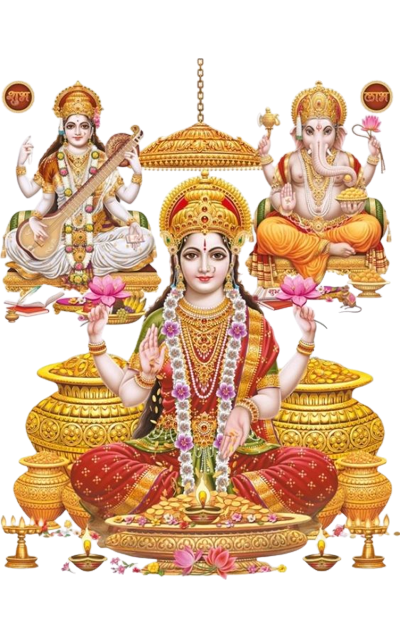
The Mahalakshmi Ashtakam is one of the most cherished hymns dedicated to Devi Mahalakshmi, the goddess of wealth, prosperity, fortune and grace. Tradition holds that this eight-verse stotra was composed by Indra, the king of the devas, after Mahalakshmi left the heavens during a curse from Sage Durvasa, taking prosperity away with her. When Lakshmi Ji returned pleased with the devas' devotion, Indra offered this hymn in gratitude and surrender. Reciting it with faith is believed to invite the Goddess's steady presence in the home, remove obstacles to wealth, and bring peace along with prosperity.
Complete Mahalakshmi Ashtakam (Devanagari)
नमस्तेऽस्तु महामाये श्रीपीठे सुरपूजिते। शङ्खचक्रगदाहस्ते महालक्ष्मि नमोऽस्तु ते॥१॥
नमस्ते गरुडारूढे कोलासुरभयङ्करि। सर्वपापहरे देवि महालक्ष्मि नमोऽस्तु ते॥२॥
सर्वज्ञे सर्ववरदे सर्वदुष्टभयङ्करि। सर्वदुःखहरे देवि महालक्ष्मि नमोऽस्तु ते॥३॥
सिद्धिबुद्धिप्रदे देवि भुक्तिमुक्तिप्रदायिनि। मन्त्रमूर्ते सदा देवि महालक्ष्मि नमोऽस्तु ते॥४॥
आद्यन्तरहिते देवि आद्यशक्तिमहेश्वरि। योगजे योगसंभूते महालक्ष्मि नमोऽस्तु ते॥५॥
स्थूलसूक्ष्ममहारौद्रे महाशक्तिमहोदरे। महापापहरे देवि महालक्ष्मि नमोऽस्तु ते॥६॥
पद्मासनस्थिते देवि परब्रह्मस्वरूपिणि। परमेशि जगन्मातर्महालक्ष्मि नमोऽस्तु ते॥७॥
श्वेताम्बरधरे देवि नानालङ्कारभूषिते। जगत्स्थिते जगन्मातर्महालक्ष्मि नमोऽस्तु ते॥८॥
महालक्ष्म्यष्टकं स्तोत्रं यः पठेद्भक्तिमान्नरः। सर्वसिद्धिमवाप्नोति राज्यं प्राप्नोति सर्वदा॥
एककाले पठेन्नित्यं महापापविनाशनम्। द्विकालं यः पठेन्नित्यं धनधान्यसमन्वितः॥
त्रिकालं यः पठेन्नित्यं महाशत्रुविनाशनम्। महालक्ष्मीर्भवेन्नित्यं प्रसन्ना वरदा शुभा॥
Meaning
Verse 1: Salutations to you, O Great Illusion (Mahamaya), seated upon the great throne, worshipped by the devas, holding conch, discus and mace in your hands — O Mahalakshmi, I bow to you.
Verse 2: Salutations to you who ride upon Garuda, who struck fear into the demon Kola, who removes all sins — O Mahalakshmi, I bow to you.
Verse 3: O all-knowing one, granter of all boons, terror to the wicked, remover of all sorrows — O Mahalakshmi, I bow to you.
Verse 4: Giver of siddhi and buddhi (accomplishment and wisdom), bestower of both worldly enjoyment and liberation, ever the embodiment of sacred mantra — O Mahalakshmi, I bow to you.
Verse 5: Without beginning or end, the Primordial Power, the Great Goddess, born of and manifest through yoga — O Mahalakshmi, I bow to you.
Verse 6: Present in gross and subtle forms, of fierce and great power, remover of the gravest sins — O Mahalakshmi, I bow to you.
Verse 7: Seated on the lotus, the very form of the Supreme Brahman, the Supreme Goddess, Mother of the universe — O Mahalakshmi, I bow to you.
Verse 8: Clad in white garments, adorned with many ornaments, abiding within and sustaining the universe, O Mother of the world — O Mahalakshmi, I bow to you.
Phala Shruti (fruits of recitation): One who recites this Mahalakshmi Ashtakam with devotion attains all accomplishment and, in due course, prosperity and standing in life. One who recites it once a day is freed from great sin; one who recites it twice a day is blessed with wealth and grain; one who recites it three times a day sees the destruction of great adversity, and Mahalakshmi remains ever pleased, granting boons and auspiciousness.
Significance and Benefits
The Mahalakshmi Ashtakam is treated as a complete surrender to the Goddess in her many aspects — as Mahamaya who creates the play of the world, as the fierce protector who removes fear and sin, as the giver of siddhi (spiritual accomplishment) and buddhi (right intellect), and as the Supreme Mother who is both the material and spiritual source of all things. Regular recitation is associated with:
Steady and honest prosperity in the household, free from the instability that comes with ill-gotten wealth.
Removal of obstacles in business, career and financial decisions.
Protection from the effects of past mistakes and accumulated sin (papa) that block growth.
Inner contentment alongside outer abundance, since the hymn repeatedly links Lakshmi to Brahman itself, not merely to money.
Harmony in the home, since Lakshmi is said to dwell where there is cleanliness, gratitude and devotion.
How and When to Chant
Best days: Friday (dedicated to Devi Lakshmi), and especially during Sharad Purnima, Diwali, and the entire month of Kartik.
Best time: Early morning after bathing, or in the evening at the time of the sandhya lamp (pradosh kaal, around dusk), facing east or north.
Method: Light a ghee lamp before an image or yantra of Mahalakshmi, offer a fresh flower or a few grains of rice, and recite the eight verses with a calm, unhurried voice. The phala shruti verses at the end may also be recited as part of the stotra.
Count: Recite once daily for steady results; those seeking faster relief from a specific financial difficulty may recite it two or three times a day, as indicated in the hymn's own phala shruti.
A short prayer of gratitude at the end, thanking the Goddess for what one already has, is considered as important as the recitation itself.
Do's and Don'ts
Maintain cleanliness of body, mind and the puja space before reciting.
Avoid greed or a purely transactional attitude while chanting — approach the Goddess with gratitude, not demand alone.
Do not recite in a hurried or careless manner; even a shorter, calm recitation is more fruitful than a rushed one.
Avoid non-vegetarian food and alcohol on the day of an important recitation, especially on Fridays or during Diwali sadhana.
Frequently Asked Questions
embedded below
Quick guide
Before you begin
Mantra
Lakshmi mantra
Om Shreem Mahalakshmyai Namah
Chant on Friday or during Lakshmi puja for prosperity, grace, and sattvic abundance.
Bhav
Benefits devotees pray for
FAQ
Common questions
Who composed the Mahalakshmi Ashtakam?
Tradition attributes it to Devraj Indra, who offered it to Mahalakshmi in gratitude when she returned to bless the devas after having withdrawn her grace.
Can it be recited by anyone, without initiation?
Yes. The Mahalakshmi Ashtakam is a devotional stotra open to all sincere devotees; no formal initiation is required, only cleanliness, faith and a calm mind.
How many times should it be recited for best results?
The stotra itself states that reciting once a day removes past sin, twice a day brings wealth and grain, and three times a day removes major obstacles — choose a count you can sustain daily.
Is Friday the only suitable day?
Friday is considered especially auspicious for Lakshmi worship, but the Ashtakam may be recited daily; it is particularly powerful during Diwali, Sharad Purnima and the month of Kartik.
Seek Mahalakshmi's Grace Through Puja
If you wish to have a Mahalakshmi puja and havan performed with sankalp in your name, our pandits can conduct it with full vidhi.