 श्वेते वृषे समारूढा श्वेताम्बरधरा शुचिः
The complete Maha Gauri mantra, beej mantra and dhyana verse, chanted for timely, harmonious marriage and lasting marital happiness.
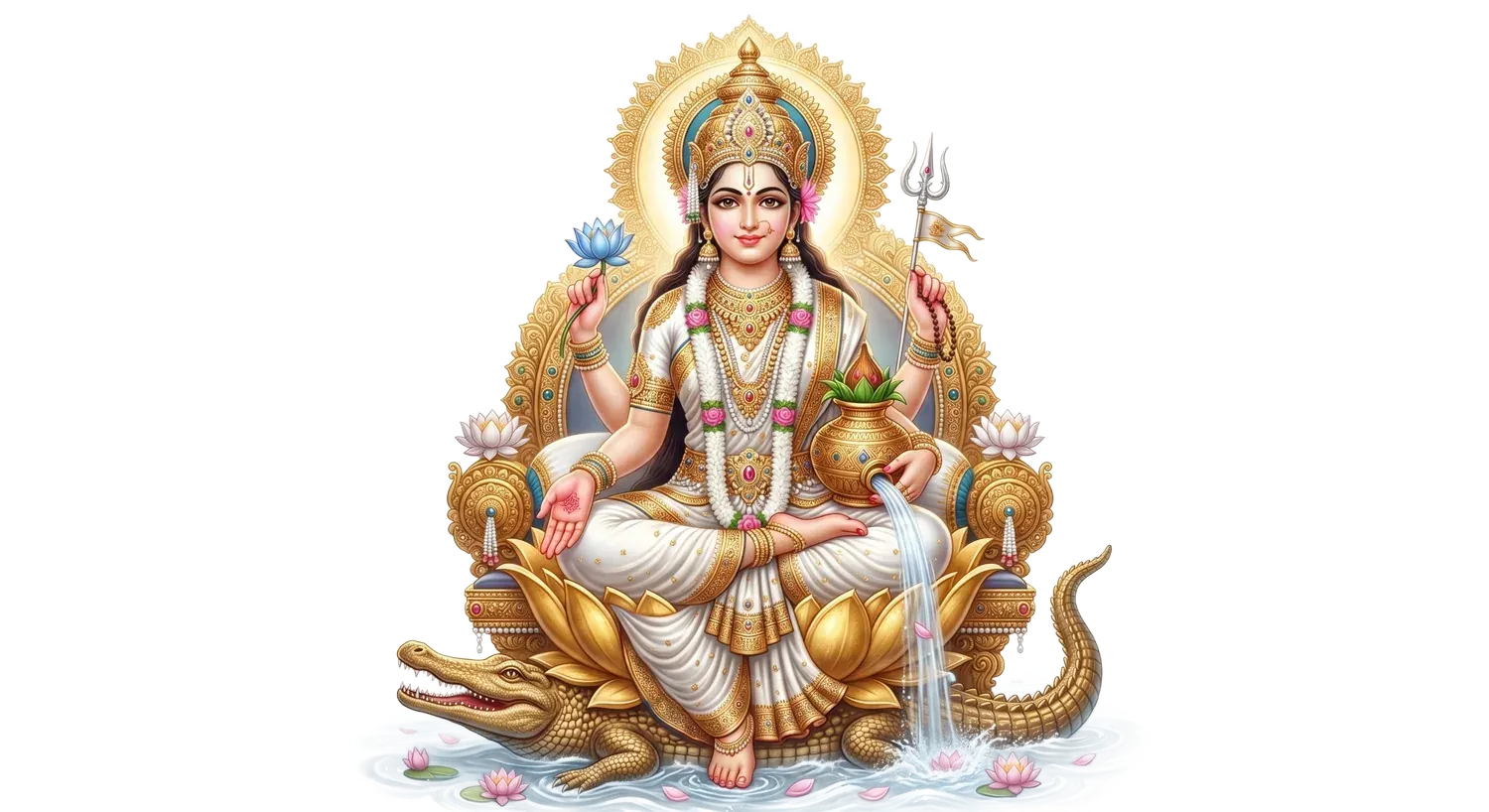
Maha Gauri is the eighth form of Navadurga, worshipped on the eighth day (Ashtami) of Navratri. She represents Devi Parvati in her purest, most radiant form — fair as the moon, seated on a bull, clad in white, symbolising purity, forgiveness and calm inner strength. Maha Gauri is especially invoked by those seeking a timely and suitable marriage, and by married couples seeking to restore or deepen harmony, since her own story is one of unwavering devotion rewarded with the ideal union — she performed intense tapasya to attain Bhagwan Shiva as her husband.
Complete Maha Gauri Mantra (Devanagari)
बीज मंत्र:
ॐ ह्रीं महागौर्यै नमः।
ध्यान श्लोक:
श्वेते वृषे समारूढा श्वेताम्बरधरा शुचिः। महागौरी शुभं दद्यान्महादेवप्रमोददा॥
पूजा मंत्र:
या देवी सर्वभूतेषु महागौरी रूपेण संस्थिता। नमस्तस्यै नमस्तस्यै नमस्तस्यै नमो नमः॥
विवाह हेतु प्रार्थना मंत्र:
सर्वमङ्गलमाङ्गल्ये शिवे सर्वार्थसाधिके। शरण्ये त्र्यम्बके गौरि नारायणि नमोऽस्तु ते॥
Transliteration
Om hreem Mahagauryai namah.
Shvete vrishe samaarudha shvetaambara-dharaa shuchih, Mahagauri shubham dadyaan-mahaadeva-pramoda-daa.
Yaa devi sarva-bhooteshu Mahagauri rupena samsthitaa, namastasyai namastasyai namastasyai namo namah.
Sarva-mangala-maangalye shive sarva-artha-saadhike, sharanye tryambake gauri Naaraayani namo'stu te.
Meaning
The beej mantra Om Hreem Mahagauryai Namah is a direct salutation to Devi Maha Gauri, with the beej Hreem invoking her power of illusion, protection and grace.
The dhyana shloka describes her: seated upon a white bull, clothed in white garments, utterly pure — Maha Gauri grants auspiciousness and is the source of joy for Mahadev (Shiva) himself, indicating the completeness and happiness of a union blessed by her.
The puja mantra, from the Devi Mahatmya, declares that the Goddess who resides in all beings in the form of Maha Gauri is bowed to again and again — recognising her presence as the feminine, auspicious power within all existence.
The marriage prayer mantra, also from the Devi Mahatmya's Ratri Suktam, calls her Sarva-mangala-maangalye — the very source of all auspiciousness — and asks Shive (the auspicious one), Gauri, Narayani for shelter and the fulfilment of all righteous purposes, including a good and lasting marriage.
Significance for Marriage and Marital Bliss
Maha Gauri's own story — years of severe tapasya undertaken with unwavering resolve to attain Shiva as her husband — is why she is invoked by those seeking marriage. She represents patient devotion rewarded, not a hasty or forced union. For those already married, she represents purity of intention and forgiveness restoring harmony after conflict, since Gauri also means the one who is gentle and forgiving.
Unmarried devotees pray to her for a suitable, timely marriage aligned with their nature and values.
Married couples chant her mantra to dissolve misunderstandings, restore affection, and deepen mutual respect.
Parents of a marriageable son or daughter often observe her vrat on Durga Ashtami with this mantra in mind.
How and When to Chant
Best day: Ashtami during Navratri (Chaitra or Sharad), and Mondays generally associated with Devi worship in many households.
Best time: Morning after bathing, facing east, before an image or picture of Maha Gauri (white bull, white garments).
Method: Offer a white flower (such as jasmine or a white lotus if available), light a ghee lamp, and chant the beej mantra followed by the dhyana shloka and the Sarva-mangala verse.
Count: A full mala of 108 repetitions of the beej mantra is customary during Navratri Ashtami; on ordinary days, 11 or 21 repetitions maintain the practice.
Duration: Those seeking marriage often continue this daily for at least one full Navratri cycle, or for 40 consecutive days, with sincere intention.
Do's and Don'ts
Approach the mantra with patience — like Maha Gauri's own tapasya, the outcome unfolds in its right time, not on demand.
Maintain purity of thought and speech, especially avoiding harsh words toward one's partner or family during the period of chanting.
Avoid non-vegetarian food and alcohol on the day of chanting, particularly during Navratri.
Do not use this mantra to force a particular person into marriage; it is a prayer for a righteous, well-matched union or restored harmony, offered with an open heart.
A Gentle Note
This mantra is a matter of faith and devotional practice. For any serious relationship difficulty, please also seek honest conversation, family guidance or professional counselling alongside the spiritual practice.
Quick guide
Before you begin
Mantra
Devi mantra
Om Dum Durgaye Namah
Chant 11, 21, or 108 times according to your time and capacity.
Bhav
Benefits devotees pray for
FAQ
Common questions
Who should chant the Maha Gauri mantra?
It may be chanted by unmarried individuals seeking a suitable marriage, married couples seeking harmony, and parents praying for their children's timely marriage.
Is Navratri Ashtami compulsory for starting this mantra?
It is considered the most auspicious day, but the mantra can be started on any Monday or auspicious day with sincere devotion; continuing through Navratri Ashtami adds special power.
Can this mantra resolve serious marital conflict on its own?
It supports patience, forgiveness and restored harmony, but serious conflicts should also be addressed through honest conversation and, where needed, professional counselling.
How many times should the mantra be chanted daily?
11 to 21 repetitions daily is common; a full mala of 108 is customary on Navratri Ashtami or when observing a focused 40-day practice.
Seek Maa Maha Gauri's Blessings
For a dedicated Maha Gauri or Navdurga puja with sankalp for marriage or marital harmony, our pandits can perform it with full vidhi.