
 जय काली कलिमलहर काली
The complete Kali Chalisa in Devanagari with meaning, chanting vidhi and the protective, fear-dispelling blessings of Maa Kali.
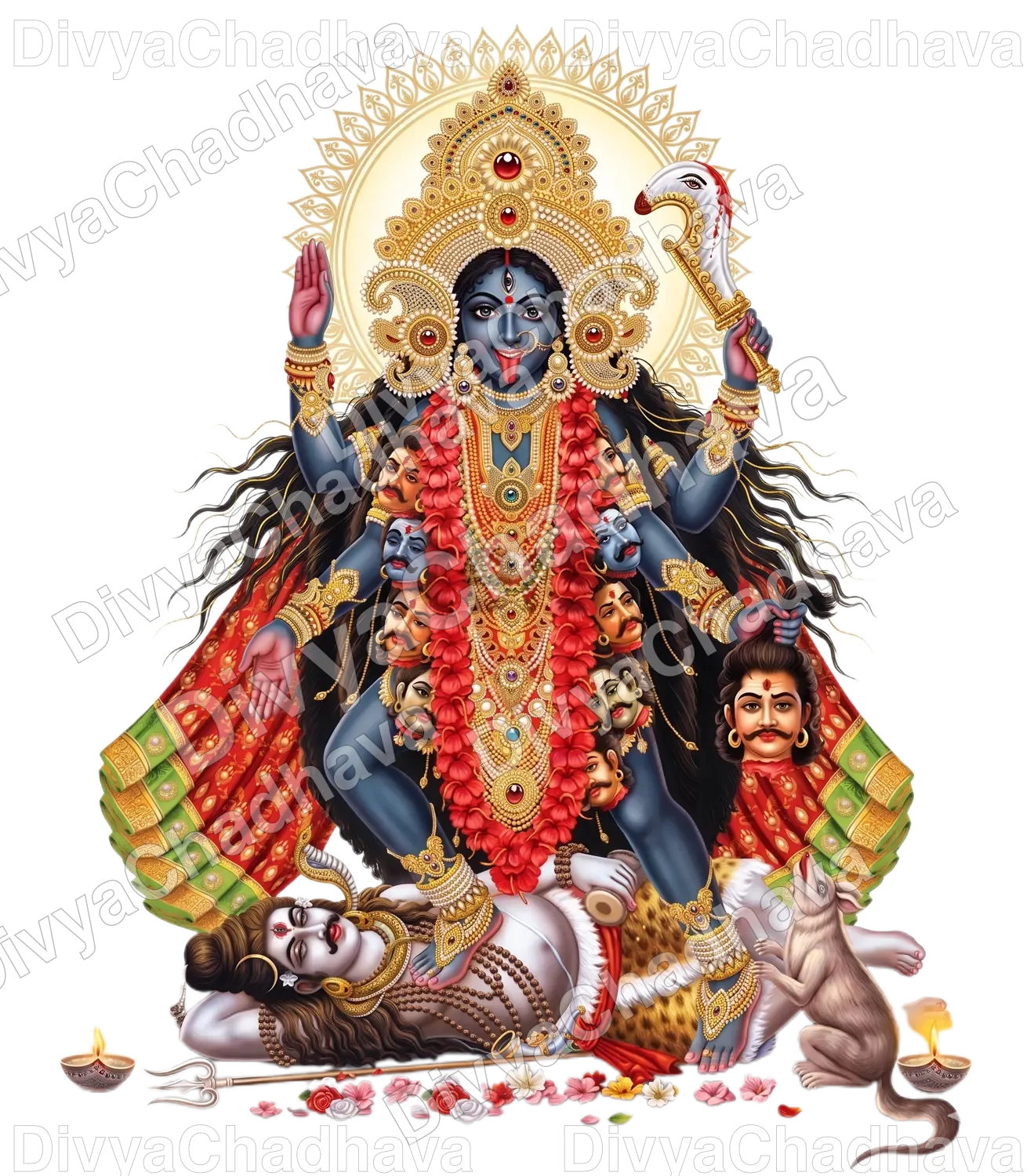
Maa Kali is the fierce, protective form of Adi Shakti — the destroyer of ego, fear, negativity and evil forces. Where Durga battles asuras on the battlefield, Kali is the raw, primal energy that annihilates darkness at its root, standing beyond time (kaal) itself. Devotees who feel surrounded by fear, black magic, enemies or deep despair turn to the Kali Chalisa for fearless protection, believing that Maa Kali's ferocious form exists only to shield her children, never to harm the sincere devotee.
Complete Kali Chalisa (Devanagari)
दोहा
जय काली कलिमलहर काली। कर में खप्पर खड्ग कराली॥ जय जय जय जगदम्ब भवानी। हरो पीर सब जग की रानी॥
चौपाई
जय जय जय काली महारानी। कर में खड्ग खप्पर धारिणी॥ मुण्डमाल गल शोभित सोहे। रक्तवर्ण नयना मन मोहे॥
दिगम्बरी तुम रूप तुम्हारा। भक्तन के दुःख दूर निवारा॥ काल रूप हो कालरात्रि तुम। संहारक हो दुष्ट प्रवृत्ति तुम॥
शिव के हृदय चरण तुम धारो। असुर विनाशक रूप तुम्हारो॥ रक्तबीज का नाश कीन्हा। महिषासुर संहार कीन्हा॥
महाकाली तुम शक्ति अपारा। तीनों लोक करत जयकारा॥ सिंह वाहिनी दुर्गा रूपा। महाशक्ति तुम अद्भुत रूपा॥
भक्तन के सब कष्ट मिटावो। शत्रु नाश कर विजय दिलावो॥ जो तुमको सच्चे मन ध्यावे। सो निर्भय हो जीवन पावे॥
तंत्र मंत्र का भय ना ताही। जाको हो माँ काली सहाई॥ भूत पिशाच निकट नहिं आवे। जो यह चालीसा नित गावे॥
काल भैरव के संग विराजो। श्मशान वासिनी रूप तुम साजो॥ भय बिनाशिनी नाम तुम्हारा। संकट में हो तुम्हीं सहारा॥
निशा काल में शक्ति दिखावो। तंत्र साधक सिद्धि पावो॥ जो तेरी शरण में आवे। सो भव सागर पार लगावे॥
दुर्गम कारज करत सुहाई। तुरतहि जाय संकट मिटाई॥ जो नर तेरो जाप जपावे। ताको सुख सम्पति नित पावे॥
रोग शोक सब दूर भगाओ। दुष्ट बुद्धि से मुक्ति दिखाओ॥ शत्रु सेना को दूर भगाओ। भक्तन को अभयदान सुनाओ॥
काली माँ की महिमा भारी। वेद पुराण करत बलिहारी॥ ब्रह्मा विष्णु महेश बखानी। तुम्हरी महिमा अगम कहानी॥
जय जय जय जगदम्बे काली। तुम ही आदि तुम्हीं हो काली॥ जो यह पाठ करे मन लाई। ताके सब संकट मिट जाई॥
निर्भय होय भक्त तुम्हारा। जग में होय जय जयकारा॥ काली माँ भवसागर तारो। भक्तन को निज शरण उबारो॥
दोहा
जय जय जय महाकालिके। भवसागर की तार। जो यह चालीसा पढ़े। होय भवसिन्धु पार॥
॥इति श्री काली चालीसा सम्पूर्णम्॥
Meaning
The opening doha honours Maa Kali as the remover of kali-mal — the impurities and negativity of this age — wielding the sword and skull-bowl (khappar) as symbols of destroying ego and ignorance. The chaupais describe her fierce form: the garland of skulls (mundamala), her digambari (sky-clad) simplicity beyond material vanity, and her identity as Kaalratri, the very embodiment of time that dissolves all things.
The verses recall her mythological victories — the destruction of the demon Raktabeeja, whose every drop of blood spawned a new demon until Kali drank the blood before it touched the ground, and her role alongside Durga in the defeat of Mahishasura. She is described as fearless protector against tantric harm, evil spirits and black magic, one who grants nirbhayata (fearlessness) to any devotee who calls upon her with a sincere heart. The chalisa closes with the assurance that reciting it removes every obstacle and carries the devotee across the ocean of worldly suffering (bhavsagar).
Why Devotees Chant the Kali Chalisa
Kali worship is central to Shakta tradition, especially in Bengal, Assam and among tantric practitioners, but her chalisa is chanted across India by anyone seeking courage in the face of fear, protection from negative energy, enemies or black magic, and the inner strength to destroy destructive habits, addictions or self-doubt. Because Kali represents the dissolution of illusion and ego, many devotees also chant her chalisa during difficult life transitions, when old patterns must be surrendered for new growth to begin.
How and When to Chant
Best day: Tuesday or Friday, and especially during Navratri, Kali Puja (Diwali night in Bengal) or on Amavasya (new moon), which is considered auspicious for Kali worship.
Time: Night is traditionally considered powerful for Kali sadhana, though the chalisa may be recited at any time with equal devotion; morning recitation after bathing is common for regular householders.
Method: Light a lamp (a mustard oil or ghee diya) before an image of Maa Kali, offer red flowers such as hibiscus (jaba/gudhal), and recite the chalisa with the opening and closing doha. Many devotees precede it with the beej mantra "Om Kreem Kalikayai Namah" or "Om Krim Kali" a few times.
Count: One complete recitation daily is sufficient for regular devotion; on Amavasya or during Navratri, some devotees repeat it 3, 7 or 11 times.
Dos and Don'ts
Do approach Maa Kali with reverence, not fear — she is described in scripture as the compassionate mother beneath her fierce form. Do keep the space clean and the mind calm before beginning. Do combine the chalisa with simple daily conduct rather than seeking her only in moments of crisis.
Do not use this chalisa or any Kali sadhana as a means to harm others — Sanatan tradition strictly holds that invoking a deity's power against another person for malice backfires spiritually. Do not attempt elaborate tantric rituals without a qualified guide; the chalisa itself is safe and complete for all devotees.
Mahatmya (Significance)
Kali is described in the Devi Mahatmya and Shakta tantras as the fiercest and most primal form of the Divine Mother, born from Durga's forehead in the heat of battle to destroy the demon Raktabeeja when ordinary weapons failed. Beyond mythology, Kali represents time itself (kaal), the force that dissolves every illusion, every false identity and every fear, so that only truth remains. Her dark form is not inauspicious — it represents the space beyond all colour and form from which creation arises. Devotees regard her as the most direct and swiftly-answering form of the Mother for those who approach her sincerely.
Benefits of Reciting the Kali Chalisa
Regular devotees describe increased courage and freedom from irrational fear, protection from negative energy, envy and ill-wishing, victory over difficult obstacles and adversaries, and a felt sense of the Mother's fierce protection surrounding the home and family.
Frequently Asked Questions
Q: Is it safe for a beginner to chant the Kali Chalisa? A: Yes. The chalisa is a devotional prayer, not a tantric ritual, and is completely safe for any sincere devotee, including beginners.
Q: What is the best day to start chanting the Kali Chalisa? A: Tuesday, Friday, Amavasya, or any day of Navratri are considered especially auspicious, but one may begin on any day with sincerity.
Q: Why is Maa Kali depicted with a fierce, dark form? A: Her fierce form represents the destruction of ego, fear and illusion, not malice; she is considered deeply compassionate to her devotees despite her terrifying appearance to negative forces.
Q: Can the Kali Chalisa help with protection from black magic or negative energy? A: Many devotees chant it precisely for this reason, believing Maa Kali's protective power dissolves harmful energy; it should always be practised with faith and good intent, never to harm another.
Quick guide
Before you begin
Mantra
Kali mantra
Om Kreem Kalikayai Namah
Chant with humility while praying for courage, protection, and transformation.
Bhav
Benefits devotees pray for
FAQ
Common questions
Is it safe for a beginner to chant the Kali Chalisa?
Yes, it is a devotional prayer, not a tantric ritual, and is safe for any sincere devotee including beginners.
What is the best day to start chanting?
Tuesday, Friday, Amavasya or any day of Navratri are especially auspicious, though one may begin any day with sincerity.
Why is Maa Kali depicted with a fierce, dark form?
Her fierce form represents destruction of ego, fear and illusion, not malice; she is considered deeply compassionate to devotees.
Can the Kali Chalisa protect from black magic or negative energy?
Many devotees chant it for this reason with faith and good intent; it should never be used to harm another.
Seeking Maa Kali's Protection?
Book a puja dedicated to Maa Kali for protection, courage and removal of negative energy.