
 राहोः रत्नम्
Gomed (hessonite garnet) is the traditional gemstone for Rahu, worn to calm sudden upheavals, confusion and obstacles caused by an afflicted Rahu in the birth chart.
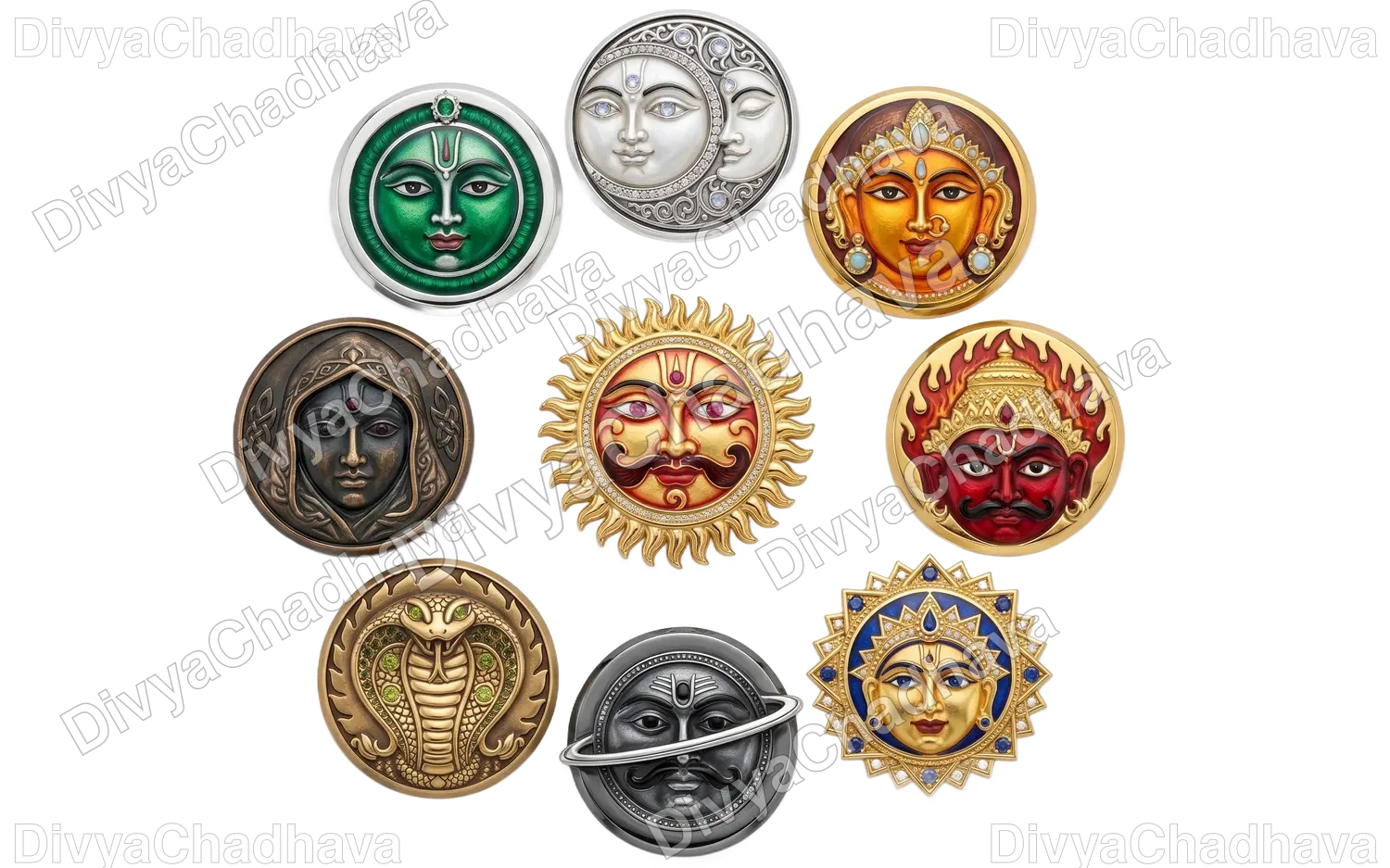
Rahu is one of the two shadow planets (chhaya graha) in Vedic astrology, along with Ketu. Unlike the seven classical grahas, Rahu has no physical body — it is the north lunar node, a mathematical point representing the head of the mythological serpent Svarbhanu. Rahu is associated with illusion (maya), sudden ambition, foreign connections, unconventional paths, obsession, technology and worldly desire. When well-placed, Rahu can bring extraordinary success, especially in unconventional fields, foreign travel, politics or research. When afflicted or poorly placed, it can bring confusion, deception, sudden losses, anxiety, addictions and obstacles that seem to appear out of nowhere.
Gomed, known in English as hessonite garnet, is the gemstone traditionally prescribed for Rahu in Vedic Ratna Shastra. Its warm, honey-cinnamon colour is said to resonate with Rahu's intense, restless energy and to help ground and stabilise its effects.
Who Should Consider Wearing Gomed
Gomed is typically suggested for people who are:
Experiencing the Mahadasha or Antardasha of Rahu and want to navigate this period with more clarity and less turbulence.
Facing sudden, unexplained obstacles, confusion, or repeated setbacks that seem to have no clear cause.
Dealing with anxiety, restlessness, or a scattered mind linked to an afflicted Rahu.
Seeking success in foreign travel, foreign settlement, technology, research, politics or other unconventional career paths where Rahu's energy is significant.
Experiencing Kaal Sarp Dosh or other Rahu-Ketu axis afflictions, where a qualified astrologer may recommend Gomed alongside remedial worship.
Because Rahu's placement and its relationship to the ascendant lord varies enormously from chart to chart, Gomed should only be worn after a proper astrological consultation. For some ascendants, Rahu may not need gemstone remedy at all, and simple worship-based remedies may be more appropriate.
Benefits Traditionally Associated with Gomed
Helps reduce confusion, anxiety and a scattered state of mind.
Supports clarity of thought and better decision-making during turbulent periods.
Believed to reduce sudden losses, accidents and unexpected obstacles.
May support success in foreign ventures, technology and unconventional careers.
Used traditionally alongside remedies for Kaal Sarp Dosh and other Rahu-related afflictions.
How to Select an Authentic Gomed
A genuine hessonite garnet has a warm honey, cinnamon or reddish-brown colour, is transparent to translucent, and should be free from major cracks or cloudiness. Traditional texts describe a good Gomed as smooth, glossy and consistent in colour throughout. Since hessonite is sometimes confused with cheaper garnets or artificially treated stones, it is important to purchase from a trusted source and, where possible, have the stone tested for authenticity.
How and When to Wear Gomed
Metal: Traditionally set in silver, panchdhatu (five-metal alloy) or ashtadhatu (eight-metal alloy), not gold.
Finger: The middle finger of the working hand.
Day: Saturday, during the evening twilight hours (Rahu Kaal is generally avoided for wearing, but the ring is put on after sunset on a Saturday in many traditions — always confirm timing with your astrologer).
Weight: Commonly advised between 4 to 7 carats depending on the individual and astrologer's guidance.
Before wearing, the stone is purified in raw milk or Gangajal and energised by chanting the Rahu beej mantra:
Oम् भ्रां भ्रीं भ्रौं सः राहवे नमः
This mantra is traditionally chanted 108 times, ideally 18,000 times in total over a dedicated period (as per traditional practice) before wearing, though even sincere daily repetition offers ongoing benefit.
A Gentle Note of Caution
Gemstone remedies belong to India's ancient jyotish and Ratna Shastra tradition and are shared here as spiritual and cultural guidance rooted in faith, not as a scientifically guaranteed cure or a substitute for medical, legal or financial advice. Rahu is a complex and highly individual influence — please consult a qualified, experienced astrologer before wearing Gomed, and seek appropriate professional help for health, legal or financial matters.
Simple Alternatives to Gemstones
If wearing Gomed is not suitable or feasible, one can worship at a Kaal Bhairav or Rahu temple, offer mustard oil or black sesame seeds in charity on Saturdays, feed black dogs or crows, recite the Rahu Chalisa or Durga Saptashati, and chant the Rahu beej mantra daily as a gentler, accessible remedy.
Quick guide
Before you begin
Mantra
Rahu mantra
Om Bhram Bhreem Bhraum Sah Rahave Namah
Chant 108 times with discipline, especially when praying for relief from hidden obstacles.
Bhav
Benefits devotees pray for
FAQ
Common questions
Is Gomed suitable for everyone with Rahu problems?
No. Rahu's effect depends on its house, sign and the lord of the ascendant in each individual chart. A qualified astrologer should confirm suitability before wearing Gomed.
Can Gomed be worn with other gemstones?
Combining gemstones requires careful compatibility checking, since some planetary energies conflict. Always consult an astrologer before combining Gomed with another stone.
What if I cannot afford a genuine Gomed?
Worship-based remedies such as offering mustard oil, feeding crows or black dogs on Saturdays, and chanting the Rahu beej mantra are accessible alternatives believed to offer similar support.
Is Gomed linked to Kaal Sarp Dosh remedies?
Yes, it is traditionally used alongside worship and remedies for Kaal Sarp Dosh and other Rahu-Ketu axis afflictions, always under proper astrological guidance.
Calm Rahu's Turbulence With Puja
Alongside gemstone guidance, a dedicated Rahu puja or Kaal Sarp Dosh Nivaran puja can help invoke stability and clarity.