



 गंगे च यमुने चैव
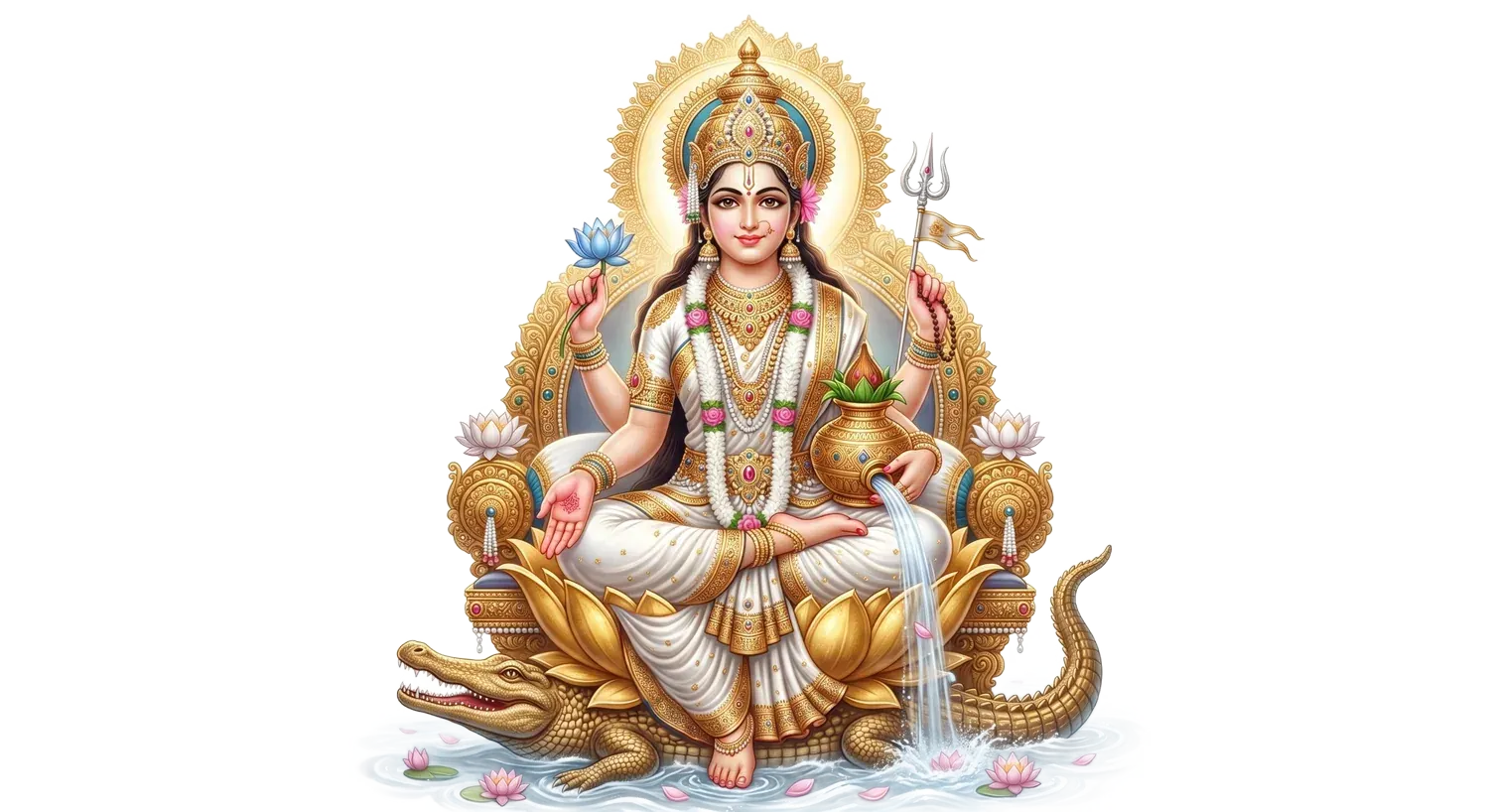
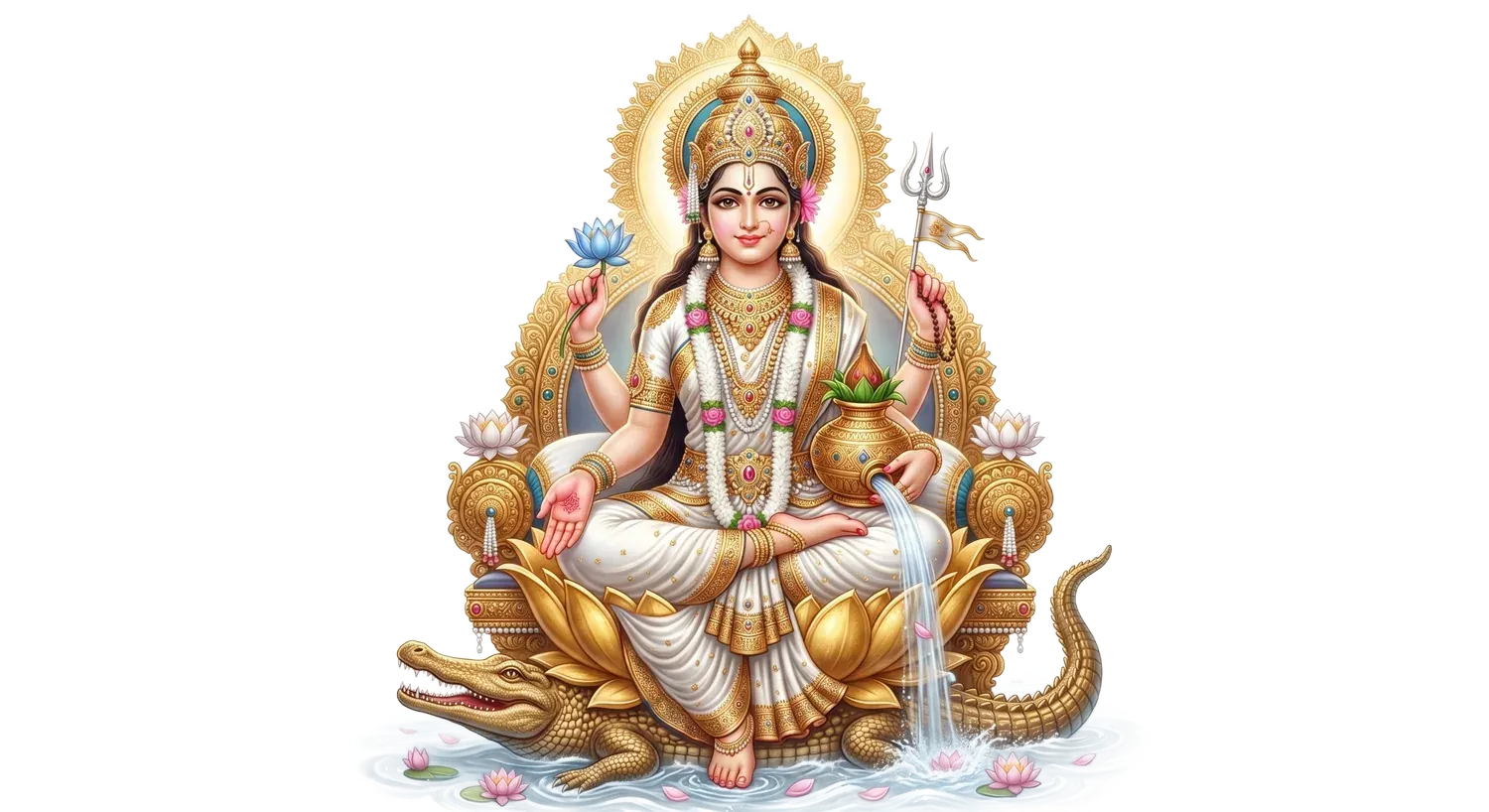
Ganga Saptami celebrates the reappearance of Maa Ganga on earth, remembered as her symbolic second descent that renewed her sacred flow for all humanity.
Ganga Saptami is celebrated on the Shukla Paksha Saptami of the Vaishakh month, and it holds a special place among Ganga-related festivals as it commemorates a second, renewed appearance of Maa Ganga on the earth after her first descent on Ganga Dussehra. While Ganga Dussehra marks Ganga's original descent from the heavens to earth through the matted locks of Bhagwan Shiva, Ganga Saptami is remembered by many devotees, especially in eastern and northern India, as the day her sacred flow was reaffirmed and revealed anew, sanctifying the land for the deliverance of the souls of King Sagar's sons.
The Story of Bhagirath's Tapasya
The katha of Ganga's descent begins with King Sagar of the Ikshvaku dynasty, ancestor of Bhagwan Ram. King Sagar performed a hundred Ashwamedha Yagnas to establish his supremacy. Indra, fearing the loss of his throne after the hundredth sacrifice, stole the sacrificial horse and tied it near the ashram of the sage Kapila, who was in deep meditation.
Sagar's sixty thousand sons, searching for the horse, reached Kapila's ashram and, believing the sleeping sage to be the thief, insulted him. Disturbed from his meditation, Sage Kapila opened his eyes, and his fiery gaze instantly reduced all sixty thousand princes to ashes. Their souls could not attain liberation and remained wandering, bound by the unfulfilled rites of cremation, since their bodies had turned to ash without proper rituals performed with sacred water.
Generations passed. Sagar's descendant, King Bhagirath, was informed that only the waters of the celestial Ganga, flowing over the ashes of his ancestors, could liberate their souls and grant them moksha. Bhagirath undertook severe and prolonged tapasya, first to please Brahma Deva, who agreed to send Ganga down to earth, but warned that her tremendous force would shatter the earth upon her fall. Bhagirath then performed further austerities to please Bhagwan Shiva, requesting him to receive Ganga's descent in his matted locks (jata) to break her fall and release her gently onto the earth.
Bhagwan Shiva agreed. When Ganga descended from the heavens with great force, thinking she could sweep away even Shiva himself, he humbled her pride by catching her entirely within the coils of his hair, letting her wander lost within his locks for a long time before releasing a single gentle stream, which then flowed down to earth, following Bhagirath as he led the way. This is why Ganga is also called Bhagirathi, and this whole event is honoured principally on Ganga Dussehra.
The Second Descent — Ganga Saptami
Ganga Saptami is remembered in some regional traditions and Puranic references as marking a further, distinct event tied to Ganga's flow reaching and fully sanctifying the earth, particularly her waters finally reaching and flowing over the ashes of Sagar's sons at the ashram of Kapila Muni, thereby granting them liberation. Because the fruits of Bhagirath's efforts — the actual moksha of his ancestors — were completed a little after her initial descent, Ganga Saptami is honoured as a second, completing chapter of the same sacred story: the day Ganga's grace was fully realised on earth.
Some traditions also describe Ganga Saptami as the day Ganga is said to have appeared to devotees a second time in a particular yuga to renew her blessing upon the earth when her waters were believed to have grown weak or when devotees needed her purifying presence once more, hence being called her "punarawatarana," her re-manifestation.
Significance of the Day
Ganga Saptami is considered equal in merit to Ganga Dussehra by many devotees, and bathing in the Ganga or any sacred river on this day, or even bathing at home with a few drops of Gangajal mixed in water while chanting her name, is believed to cleanse sins accumulated over lifetimes, purify the mind and body, and open the path to spiritual growth.
It is also considered an auspicious day to perform shraddha and tarpan for ancestors, as Ganga's water is believed to be uniquely capable of liberating souls, exactly as it liberated the sixty thousand sons of Sagar.
Puja Vidhi for Ganga Saptami
On this day, devotees rise before sunrise, bathe in a river if possible, or at home by adding a few drops of Gangajal into their bathing water. A small lamp of ghee is lit and offered to Maa Ganga, along with red flowers, rice, and a coconut. The Ganga Chalisa or Ganga Stuti is recited, followed by an aarti. Many devotees keep a fast through the day, breaking it in the evening with a simple satvik meal. Charity, especially the giving of water, food, umbrellas or fans to the needy in the hot Vaishakh season, is considered highly meritorious.
A simple mantra chanted on this day is: "Om Namah Shivayai Gangayai Namo Namah," invoking Maa Ganga's purifying and liberating grace.
The Eternal Lesson
The story of Ganga Saptami teaches the power of unwavering devotion and effort, as embodied by Bhagirath, whose name today is a byword in Hindi for any relentless, heroic effort ("Bhagirath prayas"). It also reminds devotees that divine grace, once invoked with sincerity, continues to flow and complete its work, exactly as Ganga's waters completed the liberation of Sagar's sons even after her initial descent. Ganga Saptami, therefore, stands as a reminder that patience, faith and continued devotion eventually bring the fullness of divine blessing.
Quick guide
Before you begin
Mantra
Ganga mantra
Om Gange Namah
Chant while praying for purity, forgiveness, and inner cleansing.
Bhav
Benefits devotees pray for
FAQ
Common questions
What is the difference between Ganga Dussehra and Ganga Saptami?
Ganga Dussehra marks Ganga's original descent from heaven through Shiva's jata, while Ganga Saptami is honoured as the completion of that story, when her waters fully reached and liberated the ashes of Sagar's sons.
Who was Bhagirath and why is he remembered on this day?
Bhagirath was the descendant of King Sagar who performed severe tapasya to bring Ganga to earth so his ancestors' souls could attain moksha, giving rise to the phrase Bhagirath prayas for any relentless effort.
Can Ganga Saptami be observed without visiting the river Ganga?
Yes, adding a few drops of Gangajal to bathing water at home, along with sincere prayer and chanting, is considered an acceptable and meritorious way to observe the day.
Is Ganga Saptami a good day for shraddha and tarpan?
Yes, it is considered highly auspicious for shraddha and tarpan, since Ganga's water is believed to be uniquely capable of liberating ancestral souls.
Invoke Maa Ganga's Grace This Ganga Saptami
Let our pandits perform a sankalp-based Ganga puja and tarpan on your behalf for purity and ancestral blessings.