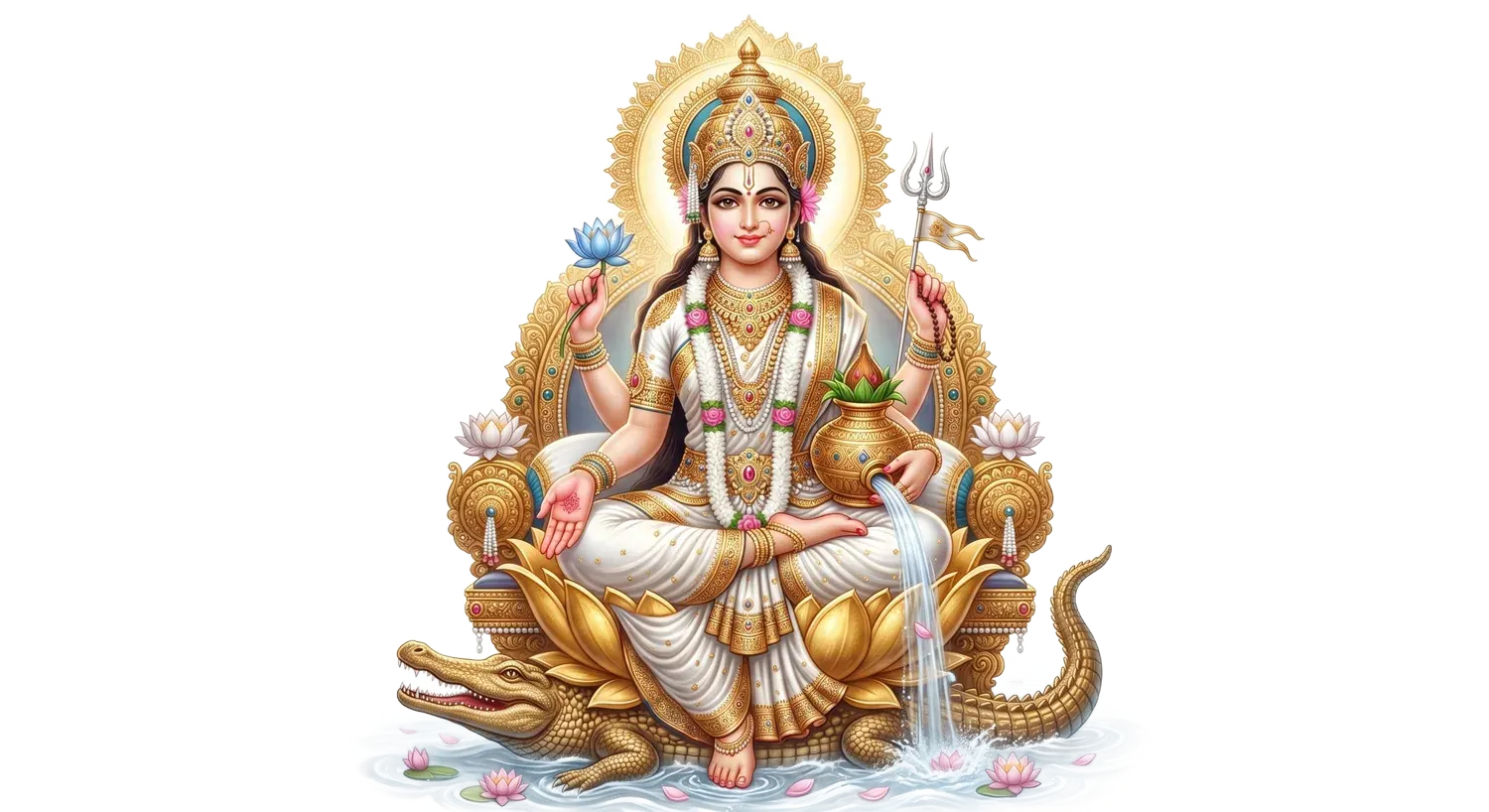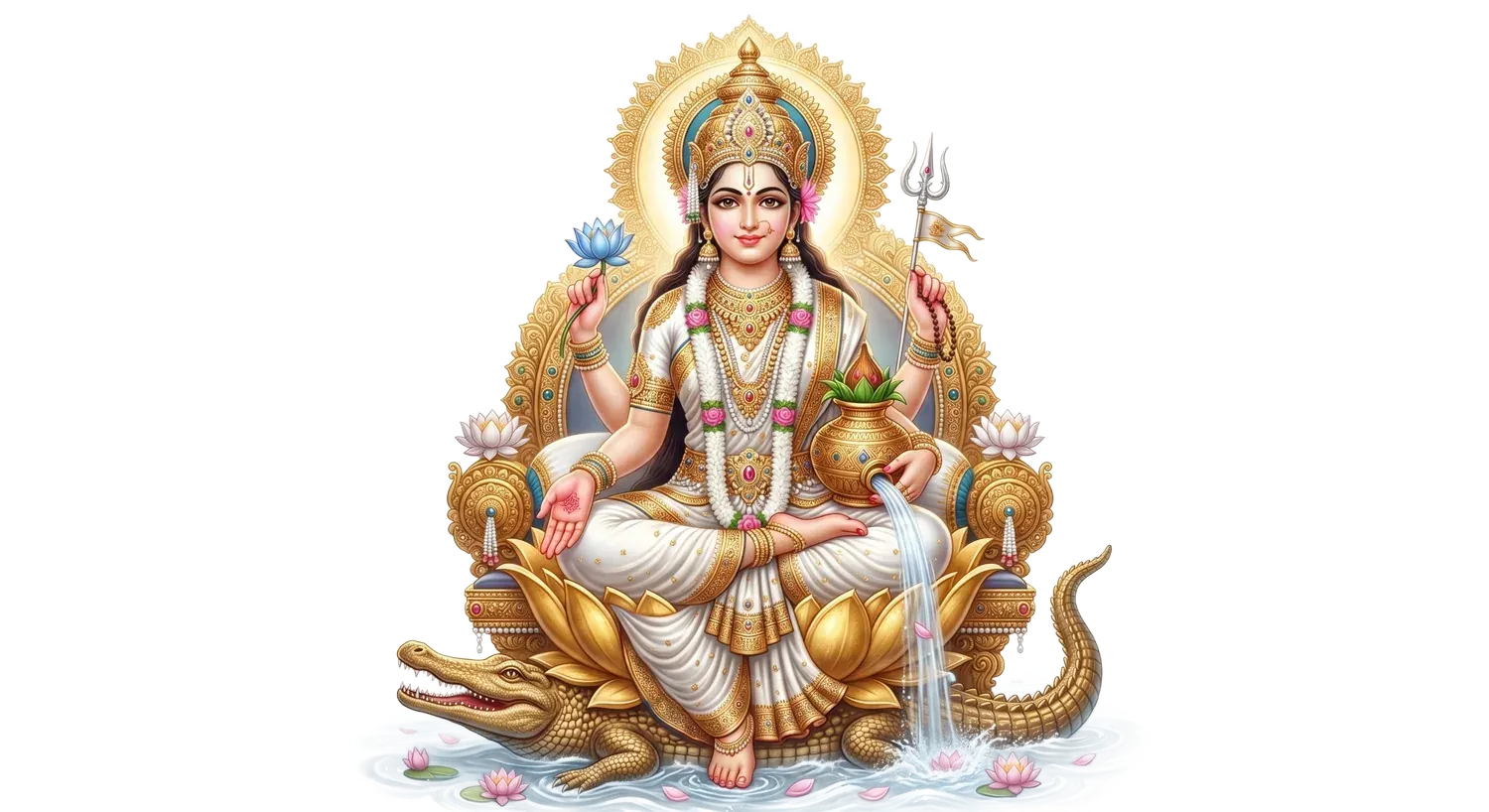



 त्रिपथगामिनी माँ गंगे
The complete Ganga Chalisa in Devanagari with meaning, benefits and the correct method of chanting to invoke Ganga Maa's purifying grace.
Ganga is revered in Sanatan Dharma as Ganga Maa — the celestial river descended to earth to liberate humanity, flowing from Lord Vishnu's feet, held in Lord Shiva's matted locks, and brought down through the tapasya of King Bhagirath for the salvation of his ancestors. She is worshipped as a goddess of purification, life and moksha; every major life event, from birth to the final rites, is blessed by her waters. The Ganga Chalisa is a forty-verse hymn glorifying her divine origin, her role as the sustainer of countless lives, and the merit gained by those who bathe in, remember or worship her with devotion.
Complete Ganga Chalisa (Devanagari)
दोहा जय जय गंगे जय जगदम्बे, हरि-पद-प्रकट सुधामा। भागीरथ तप से अवतरी, हरो जगत के तापा।।
चौपाई जय जय जय जय माँ गंगे रानी। शिव जटा से निकसी वाणी।। हिमगिरि से हो प्रकट भई हो। सुरसरि नाम जगत में छाई हो।। भागीरथ के तप से आई। सगर सुतन को मुक्ति दिलाई।। विष्णु चरण से प्रकटी धारा। शिव शीश धारण करी प्यारा।। त्रिलोक तारिणी नाम तुम्हारा। पतित पावनी जग विस्तारा।। स्वर्ग मृत्यु पाताल बहावें। तीनों लोक पवित्र कहावें।। काशी में तुम अविरल बहतीं। मुक्ति सकल जन को हो कहतीं।। हरिद्वार में गंगा द्वारा। सबका करती पाप निवारा।। प्रयाग संगम अति है न्यारा। तीन धार का मेल अपारा।। गंगासागर संगम कीजे। पितरन को तर्पण फिर दीजे।। स्नान करे जो श्रद्धा भावा। पाप सकल का हो मिटावा।। मरण समय जल गंगा पावें। सो निश्चय ही मुक्ति सो पावें।। पतित उधारिणि नाम तुम्हारा। तार दियो कितनन को न्यारा।। राजा भगीरथ पुरखा तारे। तुम बिन कौन करे बेड़ा पारे।। शिव के सिर पर बासा तेरा। तीन लोक में यश है घनेरा।। गंगा जल अति पावन होई। रोग शोक ना छूवे कोई।। गंगाजल घर में जो राखे। सुख समृद्धि नित उसको भाखे।। गंगा माता करुणा खानी। भक्तन हित बरसावें पानी।। दुख दरिद्र सब दूर भगावें। जो जन गंगा चरण मन लावें।। कल-कल करती धारा बहती। भक्तन के सब कष्ट वह हरती।। माघ मास में स्नान जो करते। सो नर सारे पाप सो हरते।। गंगा दशहरा पर्व मनावें। भक्त निछावर शीश चढ़ावें।। कार्तिक स्नान परम फलदाई। गंगा तट पर दीप जलाई।। गंगा आरती संध्या होई। हर घाट पर दर्शन होई।। वाराणसी में आरती सोहे। लाखों जन का मन को मोहे।। गंगा तुम हो जीवनदायी। खेत खलिहान सभी हरियाई।। करोड़ों जन का पालन करतीं। पावन धारा नित नित बहतीं।। गंगा बिन जीवन ना चलता। हर प्राणी इस जल से पलता।। गंगा रक्षा सबका धर्मा। स्वच्छ रखें यह पावन कर्मा।। मैली गंगा मन को भावे। स्वच्छ करे जो पुण्य कमावे।। गंगा स्तुति जो नित गावे। सुख सौभाग्य अखंड वह पावे।। संकट में जो गंगा ध्यावे। तुरत सहायक वह हो जावे।। गंगा माता की जय बोलो। हर संकट में तुमको तोलो।। अमृत तुल्य तेरा है पानी। पीवत मिटे रोग की हानी।। गंगा तट पर तप जो करते। सिद्धि अलौकिक वे नर धरते।। ऋषि मुनि सब गंगा तट बैठे। तप कर पाया ज्ञान अनूठे।। गंगा माँ का जो गुण गावे। मन वांछित फल निश्चय पावे।। यह चालीसा जो नित गावे। गंगा कृपा अखंड सो पावे।। सुत सम्पत्ति सुख शांति मिलेगी। भव सागर से पार करेगी।। अंत समय गंगा जल दीजे। मुक्ति सुनिश्चित हो कर लीजे।।
दोहा जय जय जय जय माँ गंगे, त्रिपथगामिनी धार। शरण पड़ा हूँ मात अब, करो भवसागर पार।।
Meaning
Opening doha: Salutations to Ganga Maa, the great mother of the world who descended from Lord Vishnu's feet, brought forth by the tapasya of King Bhagirath to remove the world's sufferings.
Verses 1-8 recount her descent from Shiva's matted locks upon the Himalayas, her role in liberating Bhagirath's ancestors, and her title as 'Tripath-gamini' (flowing through heaven, earth and the nether world) and 'Patit Pavani' (purifier of the fallen).
Verses 9-16 glorify the sacred bathing sites — Kashi, Haridwar, Prayag Sangam and Gangasagar — where devotees perform tarpan for ancestors and are freed from sin by bathing with faith; it is said that whoever attains her water at the time of death is assured of liberation.
Verses 17-24 speak of Ganga water's purity and its power to ward off disease and grief when kept in the home, her compassion as she showers her waters for the welfare of devotees, and the merit of bathing in her during Magh month and celebrating Ganga Dussehra.
Verses 25-32 describe her as the giver of life to fields and countless beings, the duty of every devotee to keep her waters clean, and the swift help she grants to those who remember her in times of crisis — her water being likened to nectar (amrit) that removes disease.
Verses 33-40 tell of sages performing tapasya on her banks and attaining divine wisdom, and assure that whoever sings this Chalisa regularly attains peace, prosperity and safe passage across the ocean of worldly existence; the closing prayer asks for her sacred water at the time of death, assuring liberation.
Why Chant the Ganga Chalisa
Chanting the Ganga Chalisa is believed to purify the mind and body, remove accumulated sins and negative karma, and invoke Ganga Maa's grace for health, prosperity and ultimately moksha. It also cultivates reverence for the sanctity of water and the duty to keep rivers clean.
How and When to Chant
Chant the Ganga Chalisa at sunrise after bathing, ideally facing east or towards a picture of the Ganga, especially during Ganga Dussehra, Magh month, Kartik Purnima, or whenever visiting a Ganga ghat. Offer a lamp, flowers and a few drops of Ganga jal if available, and recite the Chalisa with a pure heart, followed by the Ganga aarti if possible.
Dos and Don'ts
Never pollute or disrespect any river, especially the Ganga; treat her water as sacred and use it sparingly and respectfully. Approach the recitation with humility rather than as a mere formality. Avoid intoxicants and non-vegetarian food on days of Ganga worship. Keep a small bottle of Gangajal at home in a clean, respectful place, never on the floor.
Mahatmya (Glory)
The Puranas describe Ganga as capable of liberating even the departed souls of ancestors through the merit of a single bath or a handful of her water offered in shraddha rites. Her descent to earth through Bhagirath's unwavering tapasya remains one of the most cherished stories of devotion and perseverance in Sanatan Dharma, teaching that sincere effort can bring even the divine down to earth for the welfare of all.
Quick guide
Before you begin
Mantra
Ganga mantra
Om Gange Namah
Chant while praying for purity, forgiveness, and inner cleansing.
Bhav
Benefits devotees pray for
FAQ
Common questions
When is the best time to read the Ganga Chalisa?
Early morning after bathing is ideal, especially during Ganga Dussehra, Magh month, Kartik Purnima, or when visiting a Ganga ghat.
Can this Chalisa be read without visiting the Ganga physically?
Yes. Devotees anywhere can recite it with devotion, facing a picture of the Ganga or simply with sincere remembrance in the heart.
What is the significance of keeping Gangajal at home?
Gangajal is considered highly pure and is kept at home for daily worship, purification rituals and as a blessing during important life events.
Does reciting the Chalisa help with ancestral (pitru) rites?
Yes, remembering Ganga Maa with devotion is believed to support the merit of tarpan and shraddha rites performed for ancestors.
Invoke Maa Ganga's Grace
Offer a sankalp-based puja in Ganga Maa's name for purity, prosperity and the well-being of your family and ancestors.