

 जय अम्बे गौरी
The complete, widely-sung Durga Ji Aarti (Jai Ambe Gauri) in Devanagari with full meaning, significance and vidhi.
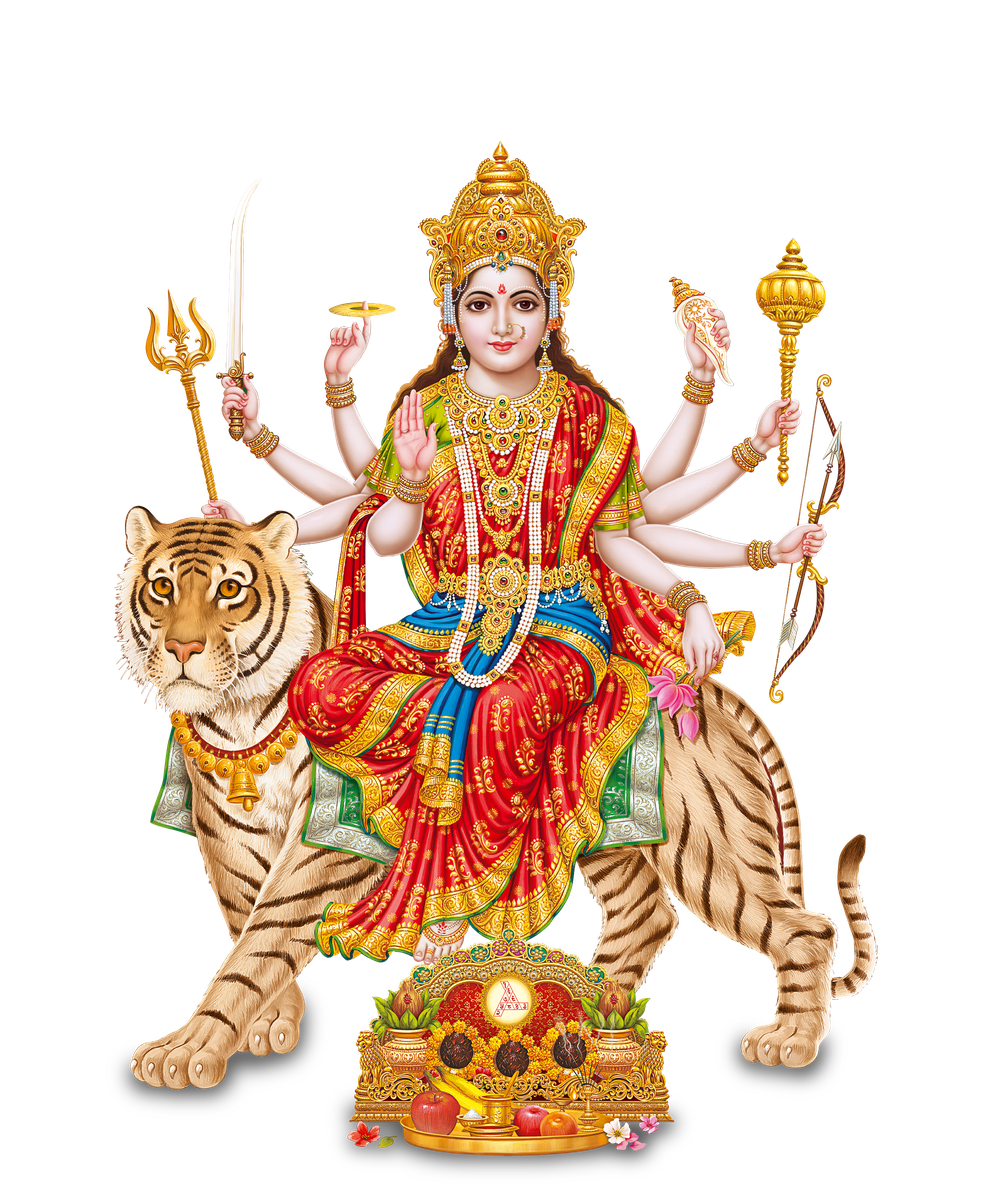
Maa Durga is the fierce, protecting form of the Divine Mother, the one who removes durgati, sorrow and adversity, from the lives of her devotees. She rides the lion, holds weapons in her many hands, and destroys the demons of ego, fear and ignorance while showering grace on all who call to her with a sincere heart. Her aarti, sung every evening in millions of homes and every temple during Navratri, is one of the most beloved devotional songs in Sanatan Dharma.
Complete Durga Ji Aarti — Jai Ambe Gauri (Devanagari)
जय अम्बे गौरी, मैया जय श्यामा गौरी तुमको निशदिन ध्यावत, हरि ब्रह्मा शिवरी ॥ जय अम्बे गौरी...
मांग सिंदूर विराजत, टीको मृगमद को उज्ज्वल से दो नैना, चंद्रवदन नीको ॥ जय अम्बे गौरी...
कनक समान कलेवर, रक्ताम्बर राजे रक्तपुष्प गल माला, कंठन पर साजे ॥ जय अम्बे गौरी...
केहरि वाहन राजत, खड्ग खप्पर धारी सुर-नर-मुनिजन सेवत, तिनके दुःखहारी ॥ जय अम्बे गौरी...
कानन कुण्डल शोभित, नासाग्रे मोती कोटिक चंद्र दिवाकर, राजत सम ज्योति ॥ जय अम्बे गौरी...
शुम्भ निशुम्भ बिदारे, महिषासुर घाती धूम्र विलोचन नैना, निशिदिन मदमाती ॥ जय अम्बे गौरी...
चण्ड मुण्ड संहारे, शोणित बीज हरे मधु कैटभ दोउ मारे, सुर भय दूर करे ॥ जय अम्बे गौरी...
ब्रह्माणी, रुद्राणी, तुम कमला रानी आगम निगम बखानी, तुम शिव पटरानी ॥ जय अम्बे गौरी...
चौंसठ योगिनि मंगल गावत, नृत्य करत भैरो बाजत ताल मृदंगा, अरु बाजत डमरू ॥ जय अम्बे गौरी...
तुम ही जग की माता, तुम ही हो भरता भक्तन की दुःख हरता, सुख सम्पत्ति करता ॥ जय अम्बे गौरी...
भुजा चार अति शोभित, खड्ग खप्पर धारी मनवांछित फल पावत, सेवत नर नारी ॥ जय अम्बे गौरी...
कंचन थाल विराजत, अगर कपूर बाती श्री मालकेतु में राजत, कोटि रतन ज्योति ॥ जय अम्बे गौरी...
श्री अम्बेजी की आरती, जो कोई नर गावे कहत शिवानंद स्वामी, सुख सम्पत्ति पावे ॥ जय अम्बे गौरी...
Meaning
The opening verse hails Mother Amba, the golden-radiant Gauri, whom Vishnu, Brahma and Shiva themselves meditate upon day and night. The next verses describe her beauty in loving detail: vermilion in her parting, a musk tilak on her forehead, bright eyes, a moon-like face, a golden form draped in red, and a garland of red flowers around her neck.
Further verses describe her seated on the lion, holding sword and skull-bowl, served by gods, humans and sages whose sorrows she removes. Her earrings shine, a pearl adorns her nose, and her radiance equals millions of moons and suns together. She is then glorified as the slayer of the demons Shumbh-Nishumbh, Mahishasura, the smoke-eyed Dhumralochana, Chanda-Munda and the blood-drop demon Raktabija, and as the one who killed Madhu-Kaitabh, removing fear from the gods.
She is Brahmani, Rudrani and Kamala, praised by the Vedas and scriptures, the divine consort of Shiva. Sixty-four yoginis sing her glory while Bhairav dances, to the sound of tal, mridang and damaru. She alone is the mother and sustainer of the world, remover of devotees' sorrows and giver of wealth and happiness. With four beautifully adorned arms bearing sword and skull-bowl, she grants the heartfelt wishes of every man and woman who serves her. The closing verse says: whoever sings this aarti of Mother Amba with a golden plate of aromatic camphor lamps before her, as Shivanand Swami declares, attains happiness and prosperity.
Why We Sing This Aarti
This aarti is sung to invoke Durga's protective, motherly presence, to express gratitude for her grace, and to seek relief from fear, illness, obstacles and sorrow. It is central to daily temple worship, evening household puja, and especially the nine nights of Navratri, when it is sung with the fullest devotion, often accompanied by a dhol or manjira.
How to Perform This Aarti
Light a ghee lamp with cotton wicks, prepare a plate with a diya, incense, flowers and a little kumkum, and stand facing the image or idol of Durga. Sing the aarti with full voice and devotion, and at its conclusion circle the lit lamp in a clockwise direction before the deity. After the aarti, pass your hands over the flame and then over your eyes and head, and distribute prasad to those present.
Dos and Don'ts
Sing this aarti with a pure heart rather than mechanically; a few sincere words matter more than perfect pronunciation. It is best performed in the evening after sunset, though it may be sung at any time of devotion. Avoid singing it while distracted or in an unclean state; a few minutes of quiet preparation beforehand deepens its effect.
FAQ
What is the best time to sing Durga Ji Ki Aarti: traditionally in the evening after sunset, and especially during Navratri.
Can this aarti be sung by everyone: yes, with sincerity and respect, this aarti may be sung by anyone in any home or temple.
What should be kept ready before the aarti: a ghee lamp, incense, flowers and a small plate for the aarti thali.
Quick guide
Before you begin
Mantra
Devi mantra
Om Dum Durgaye Namah
Chant 11, 21, or 108 times according to your time and capacity.
Bhav
Benefits devotees pray for
FAQ
Common questions
Durga Ji Ki Aarti gaane ka sahi samay kya hai?
Parampara ke anusaar sunset ke baad sandhya ke samay, aur khaaskar Navratri ke nau dinon mein iska paath sabse shubh mana jata hai.
Kya yeh aarti sabhi log gaa sakte hain?
Haan, shraddha aur samman ke saath kisi bhi ghar ya mandir mein koi bhi vyakti yeh aarti gaa sakta hai.
Aarti se pehle kya tayaar rakhna chahiye?
Ghee ka deepak, dhoop, phool aur aarti thali ke liye ek chhoti thali tayaar rakhein.
Invoke Maa Durga's Grace
Book a pandit-led Durga puja with proper sankalp and vidhi for protection and prosperity.