
 दुर्गा अष्टमी एवं कन्या पूजन कथा
Durga Ashtami, the eighth day of Navratri dedicated to Maa Mahagauri, is celebrated with Kanya Pujan, worshipping young girls as living forms of the Devi, along with Sandhi Puja and Ashtami Vrat.
What is Durga Ashtami
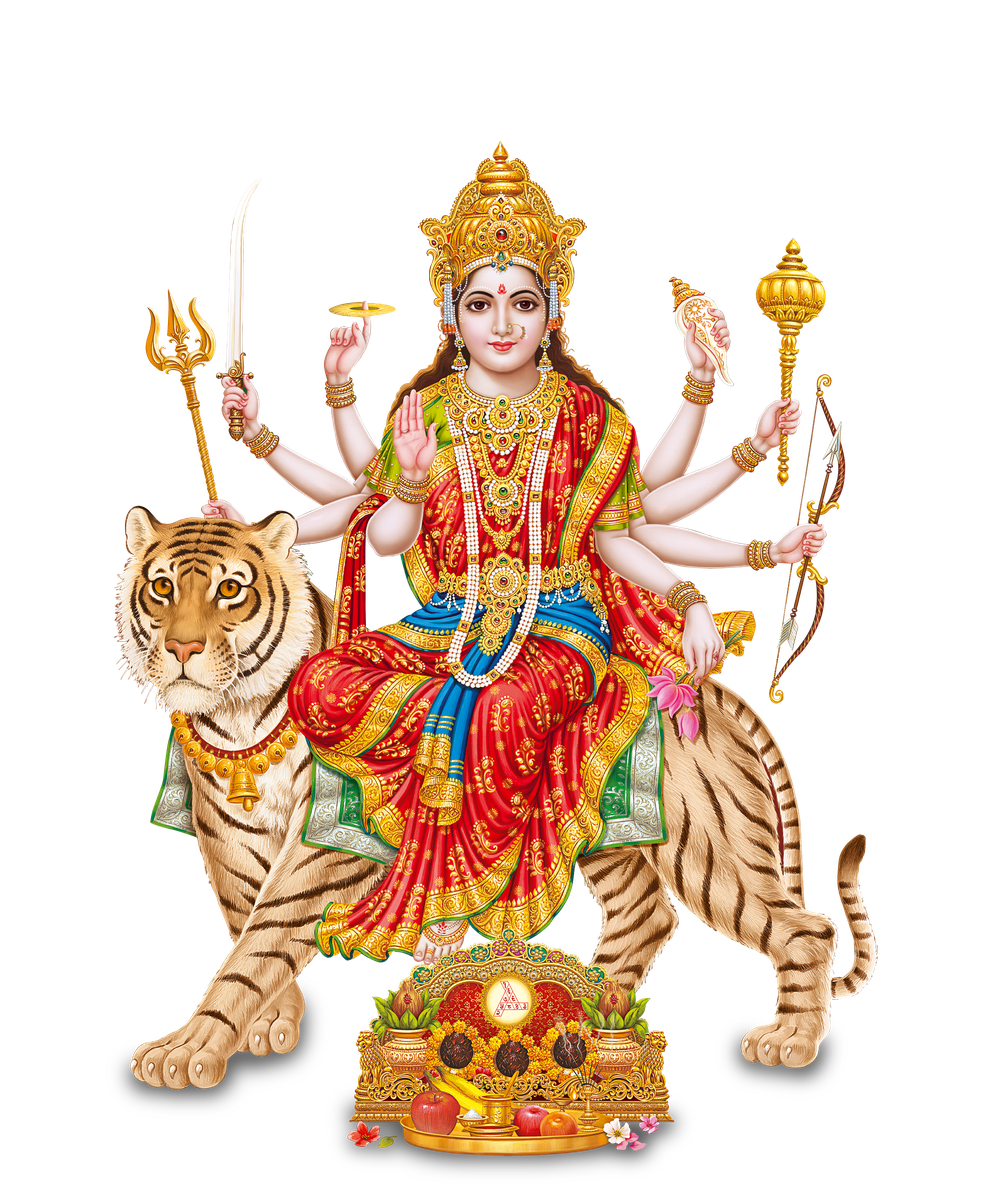
Durga Ashtami, also called Maha Ashtami, is the eighth day of Sharad Navratri (and equally observed during Chaitra Navratri), one of the most important days of the nine-day festival. It is dedicated to Maa Mahagauri, the eighth of the Navadurga, whose radiant, pure white form represents purity, calm and the culmination of the Devi's tapasya. On this day, temples and homes across India resound with the tradition of Kanya Pujan, the ritual worship of young girls as living embodiments of the divine feminine, along with the profound and precisely timed Sandhi Puja.
The Katha of Maa Mahagauri and the Origin of Kanya Pujan
According to the Puranas, Maa Parvati performed intense and prolonged tapasya to win Bhagwan Shiva as her husband, undertaking penance so severe and so long in the forests and on the mountains that her fair, luminous skin turned dark from prolonged exposure and austerity. Pleased at last by her unwavering devotion, Bhagwan Shiva accepted her, and to honour the purity of her penance, he bathed her in the sacred waters of the Ganga, restoring her skin to a form of dazzling white radiance, more brilliant than a conch shell or the moon. In this luminous form she came to be known as Mahagauri, "the greatly fair one," seated upon Nandi, holding a trishul and damaru, radiating serenity and grace earned through her penance.
The tradition of Kanya Pujan finds its roots in the Devi Mahatmya and later Puranic and folk traditions, which hold that the Devi, though formless and infinite, chooses to manifest and be honoured through young, unmarried girls, who are considered to embody the innocence, purity and untouched divine energy (Shakti) most closely aligned with the goddess herself. It is said that in one tale, a devotee who had fasted through all nine days of Navratri but performed no other ritual was troubled that his worship felt incomplete. In a dream, the Devi herself appeared to him and said that she resides in young girls before their first menstruation, in their innocence and purity, and that whoever wishes to complete their Navratri worship must feed and honour nine such girls, treating them with the same reverence as the goddess, offering them a seat, washing their feet, applying tilak, offering them new clothes or gifts, and feeding them a meal with love and respect.
The devotee did exactly this on Ashtami, inviting nine young girls representing the Navadurga into his home, and it is said that from that day, his household knew nothing but prosperity, peace and the Devi's unbroken blessing. This story is why Kanya Pujan, ideally with nine girls representing the nine forms of Durga (and often accompanied by one young boy representing Bhagwan Bhairav, her guardian), became an essential closing ritual of Navratri, most commonly performed on Ashtami or Navami.
Sandhi Puja: The Precise Moment of Power
Durga Ashtami also carries the tradition of Sandhi Puja, performed at the exact junction of the last 24 minutes of Ashtami tithi and the first 24 minutes of Navami tithi, a total window of 48 minutes considered the most powerful moment of the entire Navratri. It is believed that it was at precisely this juncture that Maa Durga, in her fierce form as Chamunda, slew the demons Chanda and Munda, and shortly after, the formidable Raktabija, whose blood created a thousand more demons with every drop spilled, until the Devi in her Chamunda/Kali form drank his blood before it could touch the ground, finally ending his tyranny. Because this moment marks the peak of the Devi's shakti in her battle against evil, Sandhi Puja is observed with 108 diyas, a special offering of hibiscus flowers, and utmost devotion, believed to grant devotees the direct blessing of the Devi's victorious energy.
Puja Vidhi: How to Observe Durga Ashtami
Wake before sunrise, bathe, and wear clean or festive clothes, white being especially auspicious in honour of Maa Mahagauri.
Offer white flowers, particularly if available, along with coconut and sweets like halwa, puri and chana, which form the traditional prasad for both Mahagauri and the Kanya Pujan meal.
Recite the Durga Saptashati, Argala Stotram, or Mahagauri stuti, and perform the daily Navratri aarti with a diya lit for the Devi.
If observing Sandhi Puja, prepare in advance so the ritual, including the lighting of 108 diyas and the offering to the Devi, is completed within the precise 48-minute window that spans the Ashtami-Navami junction (times vary by location and should be checked against the local panchang each year).
For Kanya Pujan, invite nine young girls (traditionally aged two to ten, before their first menses) representing the Navadurga, and optionally one young boy representing Bhairav Baba. Wash their feet, apply tilak on their foreheads, tie a moli (sacred thread) on their wrists, offer them a seat, and serve them a meal of halwa, puri, kala chana, and seasonal fruits with genuine reverence, as one would serve the Devi herself.
After the meal, offer each girl a small gift, be it clothes, stationery, sweets, or a token amount of money, along with your pranam, and seek their blessings before they leave.
Significance and Benefits
Durga Ashtami and its Kanya Pujan are regarded as the spiritual high point of Navratri, when the Devi's shakti is believed to be at its most accessible and responsive. Observing the Ashtami vrat and performing Kanya Pujan with sincerity is believed to bring the removal of obstacles and negative energy, the blessing of courage, strength and clarity to face life's challenges, prosperity and protection for the household, and the fulfilment of righteous wishes held with devotion through the nine days of Navratri.
The practice of Kanya Pujan also carries a broader social and cultural teaching: it is a reminder, renewed every year, to honour, protect and value the girl child as a living form of divine energy, a value the festival has carried forward through generations.
Dos and Don'ts
Do perform Kanya Pujan with genuine warmth and respect, ensuring the girls are treated comfortably and with dignity, not merely as a ritual formality.
Do check the local panchang each year for the precise Sandhi Puja timing, since it shifts slightly year to year and location to location.
Avoid negative or unkind words, anger, or non-vegetarian food and alcohol on this day, particularly while observing the Ashtami vrat.
Those fasting through all nine days should break their fast only after completing Kanya Pujan (or Ashtami/Navami puja, per family tradition), and those with health limitations may observe a fruit-based fast rather than a strict one, since devotion matters more than austerity.
A Gentle Closing Note
Durga Ashtami, through Mahagauri's serene grace and the living worship of young girls, reminds every devotee that the divine feminine is not distant or abstract, but present, close and worthy of honour in the everyday, in the innocence of a child and the quiet strength earned through devotion.
Quick guide
Before you begin
Mantra
Devi mantra
Om Dum Durgaye Namah
Chant 11, 21, or 108 times according to your time and capacity.
Bhav
Benefits devotees pray for
FAQ
Common questions
Should Kanya Pujan be done on Ashtami or Navami?
Both are traditional; family and regional customs vary. Many households perform it on Ashtami, others on Navami, and some on both days. What matters most is performing it with sincere devotion.
How many girls should be invited for Kanya Pujan, and why?
Traditionally nine girls are invited, each representing one of the Navadurga, the nine forms of the goddess worshipped across Navratri. A young boy representing Bhairav Baba, the Devi's guardian, is often included as a tenth.
What is Sandhi Puja and why is its timing so precise?
Sandhi Puja is performed during the 48-minute junction between Ashtami and Navami tithi, believed to be the exact moment Maa Durga defeated the demons Chanda, Munda and Raktabija. Because this window is precisely timed astrologically, it varies each year and must be checked against the local panchang.
What should be offered to the girls during Kanya Pujan?
A meal of halwa, puri, kala chana and seasonal fruit is traditional, along with washing their feet, applying tilak, tying a moli thread, and offering a small gift such as clothes, sweets or money as a token of respect.
Book a Durga Ashtami & Kanya Pujan Puja
Let our experienced pandits guide your Durga Ashtami vrat, Sandhi Puja and Kanya Pujan with complete Vedic vidhi on your behalf.