



 जय श्री विष्णु
A complete guide to the ten avatars of Lord Vishnu, from Matsya to Kalki, their stories, purpose, and spiritual meaning for devotees today.
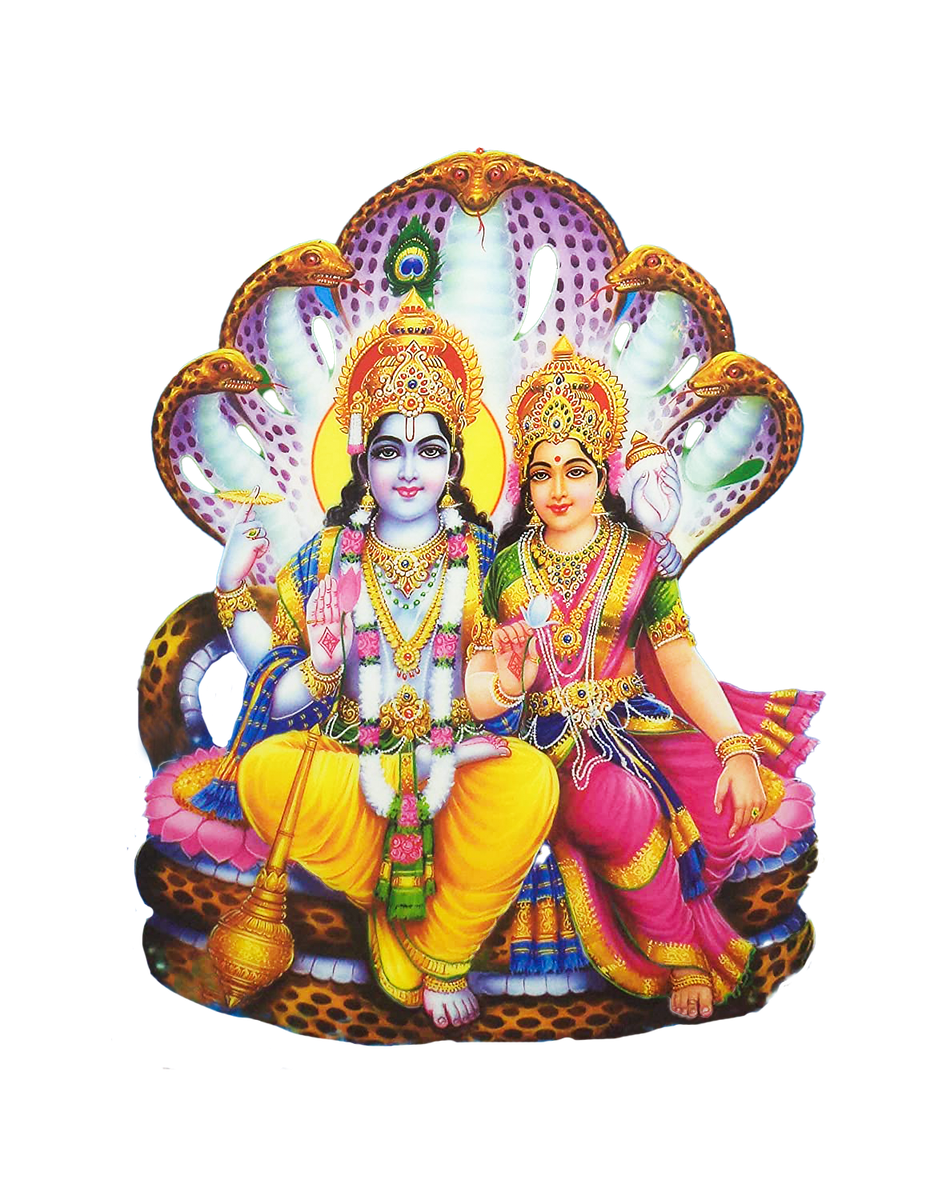
Dashavatar refers to the ten principal avatars (divine incarnations) of Lord Vishnu, the preserver of the universe in Sanatan Dharma. Whenever adharma (unrighteousness) grows overwhelming and threatens the balance of creation, Vishnu is believed to descend to earth in a form suited to the need of the age, restore dharma, and protect His devotees. This promise is famously captured in the Bhagavad Gita, where Krishna declares that whenever righteousness declines, He manifests again to re-establish balance.
The ten avatars are traditionally believed to follow the arc of evolution itself, moving from aquatic life to amphibian, to animal, to part-animal-part-human, to human forms of increasing refinement, and finally to a future, yet-to-come avatar.
1. Matsya - The Fish Avatar
In the earliest age, a great deluge threatened to destroy all life on earth. Vishnu took the form of Matsya, a giant fish, to warn the sage-king Manu of the coming flood and guide his boat, carrying the seeds of all life and the sacred Vedas, to safety. Matsya represents Vishnu's role as the ultimate protector of knowledge and life itself.
2. Kurma - The Tortoise Avatar
When the devas and asuras churned the ocean of milk (Samudra Manthan) to obtain amrita, the nectar of immortality, they needed Mount Mandara as a churning rod, but the mountain began sinking into the ocean. Vishnu became Kurma, a giant tortoise, and supported the mountain on His back, allowing the churning to continue and treasures like Lakshmi and Dhanvantari to emerge.
3. Varaha - The Boar Avatar
The demon Hiranyaksha dragged the earth (Bhudevi) to the depths of the cosmic ocean. Vishnu took the form of Varaha, a mighty boar, dove into the depths, slew the demon in a fierce battle, and lifted the earth back onto His tusks, restoring her to her rightful place in the universe.
4. Narasimha - The Man-Lion Avatar
Hiranyakashipu, brother of Hiranyaksha, obtained a boon making him nearly invincible - he could not be killed by man or beast, indoors or outdoors, during day or night, on earth or in the sky, by any weapon. Yet he tyrannised the world and even tried to kill his own devout son, Prahlad, for worshipping Vishnu. To protect Prahlad and honour the boon's exact wording while still delivering justice, Vishnu manifested as Narasimha, half-man half-lion, appearing at twilight (neither day nor night) on a threshold (neither indoors nor outdoors), placing the demon on His lap (neither earth nor sky), and tearing him apart with His claws (no weapon). This avatar embodies the truth that unwavering devotion always finds protection.
5. Vamana - The Dwarf Avatar
The benevolent demon king Bali, through his righteousness and generosity, had grown so powerful that he threatened the balance between the three worlds. Vishnu appeared as Vamana, a humble Brahmin dwarf, and asked Bali for only as much land as He could cover in three steps. Bali agreed. Vamana then grew to cosmic proportions, covering the earth in one step and the heavens in the second. For the third step, the humbled Bali offered his own head, and Vishnu, pleased by his humility and sacrifice, granted him rulership of the netherworld (Patala) and eternal remembrance.
6. Parashurama - The Warrior with the Axe
Born to sage Jamadagni, Parashurama became a fierce warrior-sage after witnessing the arrogance and tyranny of corrupt Kshatriya kings who had abandoned dharma. He is said to have rid the earth of tyrannical rulers who abused their power, restoring balance and righteous rule to the kingdoms. Parashurama is also notable as one of the Chiranjeevis, immortals who continue to exist even today.
7. Rama - The Ideal King
One of the most beloved avatars, Rama was born as the eldest son of King Dasharatha of Ayodhya to defeat the demon king Ravana of Lanka, who had grown tyrannical and abducted Rama's wife, Sita. Rama's life, chronicled in the Ramayana, exemplifies dharma in every relationship - as a son, husband, brother, king, and friend. With the help of Hanuman and the Vanara army, Rama built the Ram Setu, crossed to Lanka, defeated Ravana, and rescued Sita, establishing Ram Rajya, an era of ideal, righteous governance.
8. Krishna - The Divine Statesman
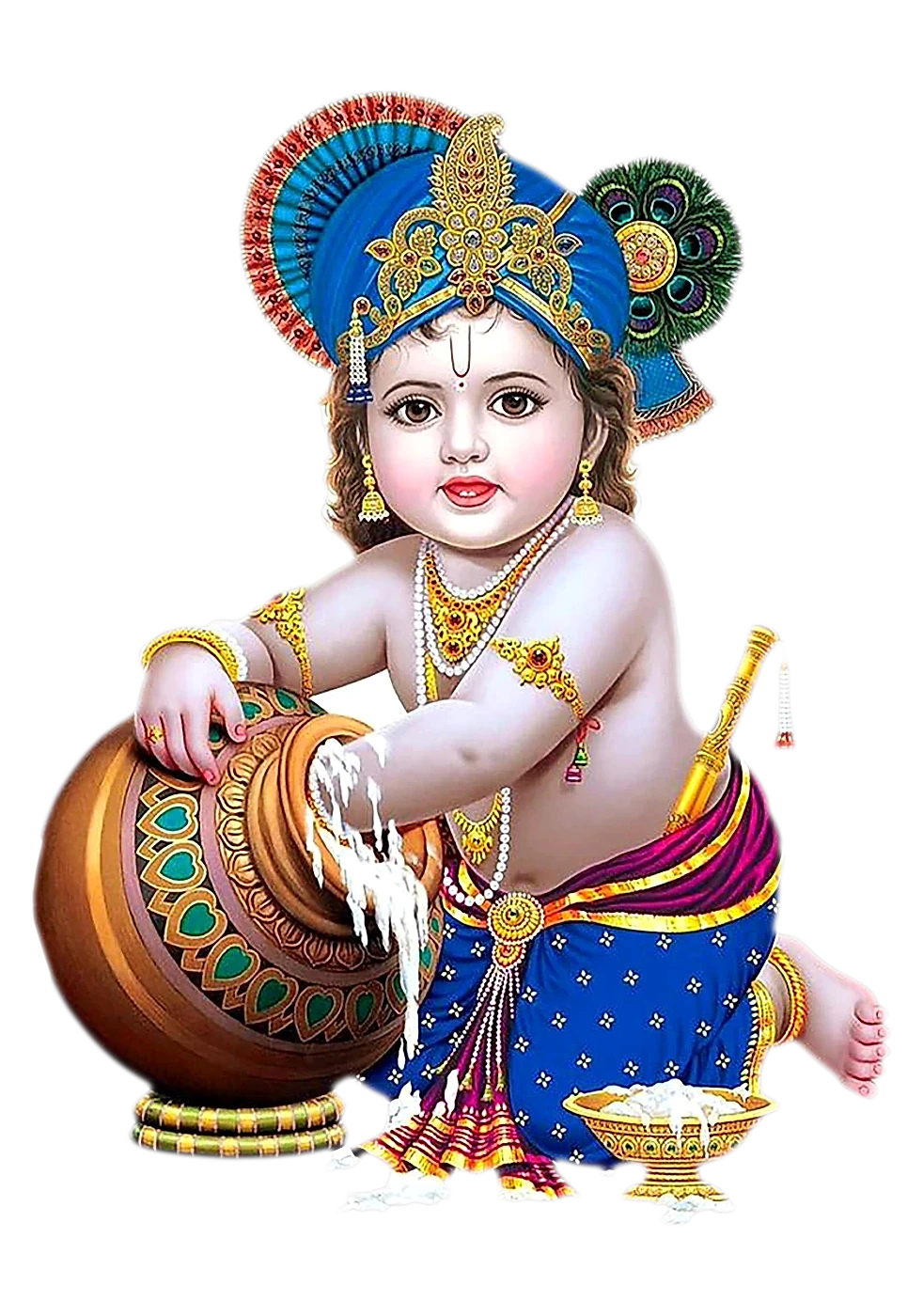
Born in Mathura to Devaki and Vasudev but raised in Gokul/Vrindavan to escape his tyrant uncle Kansa, Krishna's life spans from a playful, mischievous cowherd child performing miraculous leelas, to the wise statesman and charioteer who delivered the Bhagavad Gita to Arjuna on the battlefield of Kurukshetra. Krishna later built and ruled the kingdom of Dwarka. He is worshipped both as a supreme avatar and, by many traditions, as a complete manifestation of Vishnu Himself.
9. Buddha - The Enlightened One
In many Puranic traditions, Gautam Buddha is regarded as an avatar of Vishnu who appeared to teach compassion, non-violence (ahimsa), and turn people away from blind ritualism toward genuine spiritual wisdom. This inclusion reflects Sanatan Dharma's broad, absorptive spirit, recognising Buddha's teachings as part of the same eternal truth.
10. Kalki - The Avatar Yet to Come
According to the Puranas, Kalki is the final avatar, prophesied to appear at the end of Kali Yuga, the current age of darkness and moral decline, riding a white horse and wielding a blazing sword. Kalki is destined to destroy adharma completely, punish the wicked, and usher in a new Satya Yuga, an age of truth and righteousness, beginning the cosmic cycle anew.
The Deeper Meaning of Dashavatar
Beyond their individual stories, the Dashavatar collectively teach devotees that the divine is never distant or indifferent to the suffering of the righteous. Whenever the world tips too far toward injustice, cruelty, or spiritual forgetfulness, Vishnu's compassion finds a way to intervene, in whatever form the moment demands - be it as a fish saving life itself, a dwarf humbling arrogance, or a charioteer offering timeless wisdom.
How Devotees Honour the Dashavatar
Many temples across India depict all ten avatars together, and devotees often recite the Dashavatar Stotra composed by Jayadeva, which praises each incarnation in turn. On festivals dedicated to specific avatars - Ram Navami for Rama, Janmashtami for Krishna, Narasimha Jayanti for Narasimha - devotees observe fasts, sing bhajans, and perform puja to honour that particular form of Vishnu's grace.
Frequently Asked Questions
Why does Vishnu take different avatars instead of one form? Each age (yuga) and each crisis demands a different kind of divine intervention. Vishnu adapts His form to the specific need of the moment, whether physical rescue, moral correction, or spiritual teaching.
Is Kalki avatar already born? No, according to scripture, Kalki is yet to appear and is prophesied to arrive toward the end of the current Kali Yuga, which is believed to still have a very long time remaining.
Why is Buddha included among Vishnu's avatars? Some Puranic texts include Buddha to show that his teachings of compassion and non-violence are seen as part of the same eternal dharma that Vishnu upholds, though this is understood differently across traditions.
Which avatar is most worshipped today? Rama and Krishna are by far the most widely worshipped avatars in contemporary practice, with dedicated festivals, temples, and daily devotion across India.
Quick guide
Before you begin
Mantra
Vishnu mantra
Om Namo Bhagavate Vasudevaya
Chant before katha or aarti while praying for protection, dharma, and peace.
Bhav
Benefits devotees pray for
FAQ
Common questions
Why does Vishnu take different avatars instead of one form?
Each age and crisis demands a different kind of divine intervention. Vishnu adapts His form to the specific need of the moment.
Is the Kalki avatar already born?
No, according to scripture Kalki is yet to appear, prophesied toward the end of the current Kali Yuga.
Why is Buddha included among Vishnu's avatars?
Some Puranic texts include Buddha to show his teachings of compassion and non-violence as part of the same eternal dharma Vishnu upholds.
Which avatar is most worshipped today?
Rama and Krishna are by far the most widely worshipped avatars in contemporary practice.
Seek Vishnu's Blessings Through Puja
Honour Lord Vishnu and His avatars with an authentic puja and chadhava performed by qualified pandits with your personal sankalp.