
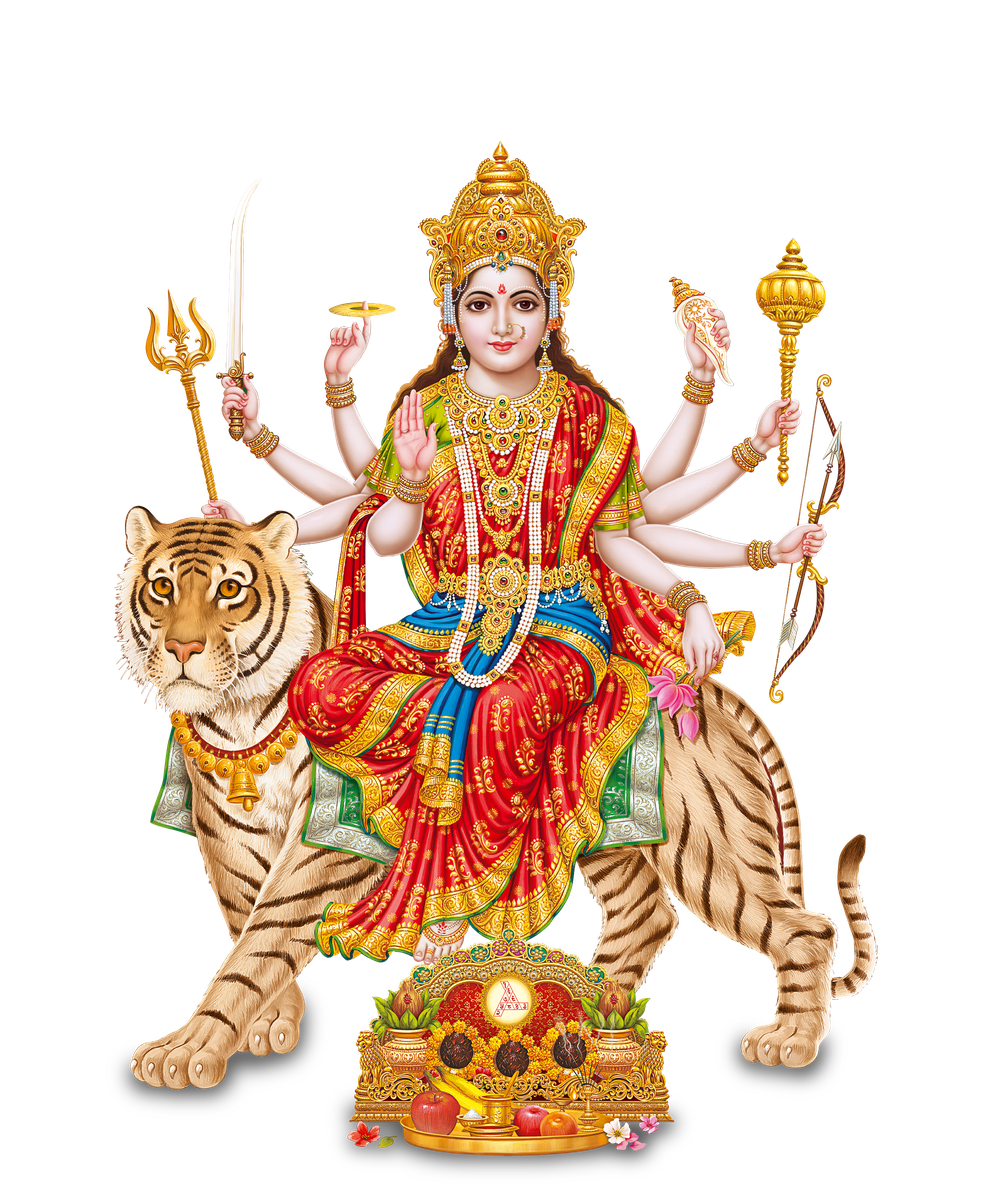
 देवी चण्डिका स्तुति
The complete Argala Stotram in Devanagari with meaning, benefits and the correct way to recite it as part of Durga Saptashati.
The Argala Stotram is a powerful hymn to Devi Chandika (Durga) traditionally recited between the Kilaka Stotram and the beginning of the first chapter of Durga Saptashati (Devi Mahatmyam), especially during Navratri. The word Argala means a bolt or bar that fastens a door — the stotra is believed to unlock the fruits of the Saptashati recitation, removing the obstacles that block a devotee's wishes.
Complete Argala Stotram (Devanagari)
ॐ अस्य श्रीअर्गलास्तोत्रमन्त्रस्य विष्णुः ऋषिः, अनुष्टुप् छन्दः, श्रीमहालक्ष्मीर्देवता, श्रीजगदम्बाप्रीत्यर्थे सप्तशती पाठाङ्गत्वेन जपे विनियोगः॥
ॐ नमश्चण्डिकायै॥
मार्कण्डेय उवाच ॐ जय त्वं देवि चामुण्डे जय भूतापहारिणि। जय सर्वगते देवि कालरात्रि नमोऽस्तु ते॥ १॥
जयन्ती मङ्गला काली भद्रकाली कपालिनी। दुर्गा क्षमा शिवा धात्री स्वाहा स्वधा नमोऽस्तु ते॥ २॥
मधुकैटभविध्वंसि विधातृवरदे नमः। रूपं देहि जयं देहि यशो देहि द्विषो जहि॥ ३॥
महिषासुरनिर्नाशि भक्तानां सुखदे नमः। रूपं देहि जयं देहि यशो देहि द्विषो जहि॥ ४॥
धूम्रनेत्रवधे देवि धर्मकामार्थदे नमः। रूपं देहि जयं देहि यशो देहि द्विषो जहि॥ ५॥
रक्तबीजवधे देवि चण्डमुण्डविनाशिनि। रूपं देहि जयं देहि यशो देहि द्विषो जहि॥ ६॥
निशुम्भशुम्भनिर्नाशि त्रैलोक्यशुभदे नमः। रूपं देहि जयं देहि यशो देहि द्विषो जहि॥ ७॥
वन्दिताङ्घ्रियुगे देवि सर्वसौभाग्यदायिनि। रूपं देहि जयं देहि यशो देहि द्विषो जहि॥ ८॥
अचिन्त्यरूपचरिते सर्वशत्रुविनाशिनि। रूपं देहि जयं देहि यशो देहि द्विषो जहि॥ ९॥
नतेभ्यः सर्वदा भक्त्या चापर्णे दुरितापहे। रूपं देहि जयं देहि यशो देहि द्विषो जहि॥ १०॥
स्तुवद्भ्यो भक्तिपूर्वं त्वां चण्डिके व्याधिनाशिनि। रूपं देहि जयं देहि यशो देहि द्विषो जहि॥ ११॥
चण्डिके सततं ये त्वामर्चयन्तीह भक्तितः। रूपं देहि जयं देहि यशो देहि द्विषो जहि॥ १२॥
देहि सौभाग्यमारोग्यं देहि देवि परं सुखम्। रूपं देहि जयं देहि यशो देहि द्विषो जहि॥ १३॥
विधेहि द्विषतां नाशं विधेहि बलमुच्चकैः। रूपं देहि जयं देहि यशो देहि द्विषो जहि॥ १४॥
विधेहि देवि कल्याणं विधेहि परमां श्रियम्। रूपं देहि जयं देहि यशो देहि द्विषो जहि॥ १५॥
विद्यावन्तं यशस्वन्तं लक्ष्मीवन्तञ्च मां कुरु। रूपं देहि जयं देहि यशो देहि द्विषो जहि॥ १६॥
देवि प्रचण्डदोर्दण्डदैत्यदर्पनिषूदिनि। रूपं देहि जयं देहि यशो देहि द्विषो जहि॥ १७॥
प्रचण्डदैत्यदर्पघ्नि चण्डिके प्रणताय मे। रूपं देहि जयं देहि यशो देहि द्विषो जहि॥ १८॥
चतुर्भुजे चतुर्वक्त्रसंस्तुते परमेश्वरि। रूपं देहि जयं देहि यशो देहि द्विषो जहि॥ १९॥
कृष्णेन संस्तुते देवि शश्वद्भक्त्या सदाम्बिके। रूपं देहि जयं देहि यशो देहि द्विषो जहि॥ २०॥
हिमाचलसुतानाथसंस्तुते परमेश्वरि। रूपं देहि जयं देहि यशो देहि द्विषो जहि॥ २१॥
इन्द्राणीपतिसद्भावपूजिते परमेश्वरि। रूपं देहि जयं देहि यशो देहि द्विषो जहि॥ २२॥
देवि प्रसीद सततं सर्वकल्याणकारिणि। रूपं देहि जयं देहि यशो देहि द्विषो जहि॥ २३॥
दैत्यदर्पनिषूदिन्यै सर्वदेवनमस्कृते। रूपं देहि जयं देहि यशो देहि द्विषो जहि॥ २४॥
सर्वस्वरूपे सर्वेशे सर्वशक्तिसमन्विते। भयेभ्यस्त्राहि नो देवि दुर्गे देवि नमोऽस्तु ते॥ २५॥
एतत्ते वदनं सौम्यं लोचनत्रयभूषितम्। पातु नः सर्वभीतेभ्यः कात्यायनि नमोऽस्तु ते॥ २६॥
ज्वालाकरालमत्युग्रमशेषासुरसूदनम्। त्रिशूलं पातु नो भीतेर्भद्रकालि नमोऽस्तु ते॥ २७॥
हिनस्ति दैत्यतेजांसि स्वनेनापूर्य या जगत्। सा घण्टा पातु नो देवि पापेभ्यो नः सुतानिव॥ २८॥
असुरासृगवद्ध्वस्तशरीरां शरीरिणाम्। खड्गं पातु विशेषेण नैऋत्यां दिशमाश्रिता॥ २९॥
रोगान् अशेषान् अपहंसि तुष्टा रुष्टा तु कामान् सकलानभीष्टान्। त्वामाश्रितानां न विपन्नराणां त्वामाश्रिता ह्याश्रयतां प्रयान्ति॥ ३०॥
एतत् कृतं यत्कदाचिद्विनाश-कारणं सर्वजगत्ततोऽद्य। त्वत्तो अनुसंधाय पदाम्बुजं ते नतोऽस्मि सर्वेश्वरि पाहि मां त्वम्॥ ३१॥
सर्वमङ्गलमाङ्गल्ये शिवे सर्वार्थसाधिके। शरण्ये त्र्यम्बके गौरि नारायणि नमोऽस्तु ते॥ ३२॥
इति श्री अर्गलास्तोत्रं सम्पूर्णम्॥
Meaning
The stotra opens with the great sage Markandeya bowing to Devi as Chamunda, remover of every affliction, ever-present in all beings, and as Kalratri — the night of dissolution. Verse two lists her many forms: Jayanti, Mangala, Kali, Bhadrakali, Kapalini, Durga, Kshama (forgiveness), Shiva (auspiciousness), Dhatri (nourisher), and the offerings Swaha and Swadha personified.
From the third verse onward, the stotra recalls each of Devi's great victories — over Madhu and Kaitabha, over Mahishasura, over Dhumralochana, over Raktabija, over Chanda-Munda, and over Shumbha-Nishumbha — and after each recollection repeats the central refrain: rupam dehi jayam dehi yasho dehi dvisho jahi — grant me beauty/grace, grant me victory, grant me fame, and destroy my adversaries (inner and outer obstacles).
The later verses praise Devi's feet worshipped by all for good fortune, her form beyond comprehension, her power to destroy every enemy, her compassion toward those who bow to her, and her ability to remove disease and grant health, supreme happiness, strength, and auspiciousness. Devotees ask to be made learned, famous and prosperous. She is praised as four-armed, praised by the four-faced Brahma, ever adored by Krishna, praised by the Lord of the Himalayas' daughter (Shiva) and by Indra, and worshipped by all the gods.
The closing verses describe her serene three-eyed face that protects from all fear, her terrifying trident and flame that destroys demons, her conch/bell whose sound shatters demonic power and protects devotees like children, and her sword that protects when she resides in the southwest direction. The final verses declare that she removes all disease, that those who take refuge in her never come to harm, and end with a surrender at her lotus feet, praying she who is auspiciousness itself, fulfiller of all purposes, refuge of all, wife of the three-eyed Shiva, and Narayani, protect the devotee.
Why and When to Recite the Argala Stotram
The Argala Stotram is traditionally recited as part of the preliminary stotras of Durga Saptashati — after the Kavach and Kilaka Stotram, and before beginning the main text — especially during the nine nights of Navratri (Sharad Navratri and Chaitra Navratri) and on Ashtami/Navami. It can also be recited independently on any Tuesday or Friday, or whenever seeking Devi's protection, victory over difficulties, or removal of obstacles standing in the way of a righteous goal.
How to Recite (Path Vidhi)
Bathe and sit facing east or north before a lamp lit in front of Devi's image or yantra. If reciting as part of the full Saptashati path, begin with the Kavach, then the Argala Stotram, then the Kilaka Stotram, before starting Chapter One. If reciting independently, simply invoke Devi with a short prayer, then recite the full stotra with devotion, repeating the refrain "rupam dehi jayam dehi yasho dehi dvisho jahi" with sincere focus on your intention.
Benefits
Regular recitation is believed to remove obstacles blocking one's righteous goals, grant courage and victory over difficulties, improve health and remove disease, bring wealth, wisdom and good fortune, and open the way for the fuller benefits of Durga Saptashati recitation, of which it forms a key preparatory limb.
Frequently Asked Questions
What does Argala mean? Argala means a bolt or bar on a door; the stotra is believed to "unlock" the fruits of the Durga Saptashati recitation.
Can the Argala Stotram be recited without doing the full Durga Saptashati? Yes, it can be recited independently as a complete prayer to Devi Chandika for protection, health and removal of obstacles.
When is the best time to recite it? During Navratri, especially on Ashtami and Navami, and generally on Tuesdays or Fridays, though it may be recited any day with devotion.
What is the meaning of the repeated line "rupam dehi jayam dehi"? It is a heartfelt request to Devi — grant me grace/beauty, grant me victory, grant me fame, and destroy my adversaries — repeated after recalling each of her victories, as a reminder that she who conquered great demons can remove our obstacles too.
Quick guide
Before you begin
Mantra
Ram mantra
Shri Ram Jai Ram Jai Jai Ram
Chant slowly with devotion for courage, truth, protection, and mental peace.
Bhav
Benefits devotees pray for
FAQ
Common questions
What does Argala mean?
Argala means a bolt or bar on a door; the stotra is believed to unlock the fruits of the Durga Saptashati recitation.
Can the Argala Stotram be recited without doing the full Durga Saptashati?
Yes, it can be recited independently as a complete prayer to Devi Chandika for protection, health and removal of obstacles.
When is the best time to recite it?
During Navratri, especially on Ashtami and Navami, and generally on Tuesdays or Fridays, though it may be recited any day with devotion.
What is the meaning of the repeated line rupam dehi jayam dehi?
It is a heartfelt request to Devi — grant grace, victory, fame, and destroy adversaries — repeated after recalling each of her victories.
Seek Devi Durga's Grace
Book a Durga puja or Navratri seva conducted with full vidhi for protection, victory and prosperity.