


 Mahabharata · Parva 8
About the Karna Parva
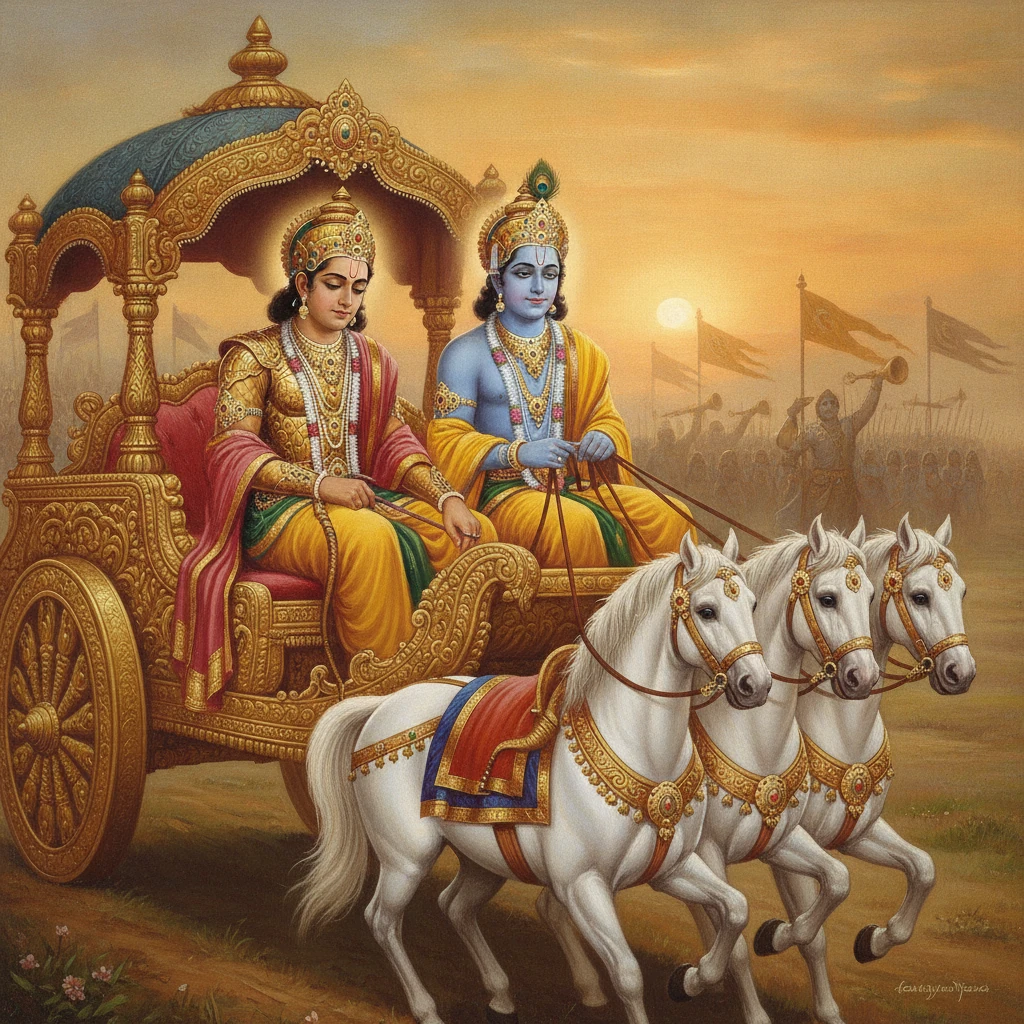
The two days Karna leads the Kaurava army, with Shalya as his charioteer — great and terrible duels, and at last the fated combat between Karna and Arjuna, in which Karna’s chariot-wheel sinks in the earth and he is slain.
How it is read
The Karna Parva is given below in its original Sanskrit (Devanagari), numbered by chapter (adhyaya) and shloka. Read verse by verse; the Mahabharata is traditionally heard as itihasa-shravana, for dharma and discernment.
Original Text
Verses & Meaning
[व] ततॊ दरॊणे हते राजन दुर्यॊधनमुखा नृपाः भृशम उद्विग्नमनसॊ दरॊणपुत्रम उपागमन
Vaishampayana said: O King, after Drona was slain, Duryodhana and the other kings, their minds greatly agitated, came to Drona's son (Ashvatthama).
ते दरॊणम उपशॊचन्तः कश्मलाभिहतौजसः पर्युपासन्त शॊकार्तास ततः शारद्वती सुतम
Grieving for Drona, their strength shattered by despair, they sat sorrowfully around the son of Sharadvat's daughter (Kripa), lamenting.
मुहूर्तं ते समाश्वास्य हेतुभिः शास्त्रसंमितैः रात्र्यागमे महीपालाः सवानि वेश्मानि भेजिरे
After being consoled for a while with reasons drawn from the scriptures, when night fell the kings returned each to his own tent.
विशेषतः सूतपुत्रॊ राजा चैव सुयॊधनः दुःशासनॊ ऽथ शकुनिर न निद्राम उपलेभिरे
But especially the son of the charioteer (Karna), King Suyodhana (Duryodhana), Dushasana, and Shakuni could not find sleep.
ते वेश्मस्व अपि कौरव्य पृथ्वीशा नाप्नुवन सुखम चिन्तयन्तः कषयं तीव्रं निद्रां नैवॊपलेभिरे
Even in their own dwellings, O descendant of Kuru, those lords of the earth found no peace; brooding on the terrible destruction, they could not sleep.
सहितास ते निशायां तु दुर्यॊधन निवेशने अतिप्रचण्डाद विद्वेषात पाण्डवानां महात्मनाम
That night, gathered together in Duryodhana's dwelling, consumed by fierce hatred for the great-souled Pandavas,
यत तद दयूतपरिक्लिष्टां कृष्णाम आनिन्यिरे सभाम तत समरन्तॊ ऽनवतप्यन्त भृशम उद्विग्नचेतसः
remembering how they had once dragged Krishna (Draupadi), tormented by the dice game, into the assembly hall, they burned inwardly with deep agitation.
चिन्तयन्तश च पार्थानां तान कलेशान दयूतकारितान कृच्छ्रेण कषणदां राजन निन्युर अब्द शतॊपमाम
Thinking of the sufferings the sons of Pritha had endured because of that gambling match, O King, they passed that night with great difficulty, as if it were a hundred years long.
ततः परभाते विमले सथिता दिष्टस्य शासने चक्रुर आवश्यकं सर्वे विधिदृष्टेन कर्मणा
Then, when the clear dawn came, standing firm in obedience to destiny, they all performed their necessary morning duties according to the prescribed rites.
ते कृत्वावश्य कार्याणि समाश्वस्य च भारत यॊगम आज्ञापयाम आसुर युद्धाय च विनिर्ययुः
Having completed their required duties and taken comfort, O Bharata, they ordered the army to array itself and marched out for battle.
कर्णं सेनापतिं कृत्वा कृतकौतुक मङ्गलाः वाचयित्वा दविजश्रेष्ठान दधि पात्रघृताक्षतैः
Making Karna their commander-in-chief, having performed the auspicious rites, they had the foremost brahmins recite blessings with curds, ghee-vessels, and unbroken grain.
निष्कैर गॊभिर हिरण्येन वासॊभिश च महाधनैः वर्ध्यमाना जयाशीर्भिः सूतमागधबन्दिभिः
They were honored with gold coins, cows, precious metals, and costly garments, while bards, panegyrists, and chroniclers proclaimed blessings of victory.
तथैव पाण्डवा राजन कृतसर्वाह्णिक करियाः शिबिरान निर्ययू राजन युद्धाय कृतनिश्चयाः
Likewise, O King, the Pandavas too, having completed their daily rites, marched out of their camp resolved upon battle.
ततः परववृते युद्धं तुमुलं रॊमहर्षणम कुरूणां पाण्डवानां च परस्परवधैषिणाम
Then began the tumultuous, hair-raising battle between the Kurus and the Pandavas, each side seeking the other's destruction.
तयॊर दवे दिवसे युद्धं कुरुपाण्डवसेनयॊः कर्णे सेनापतौ राजन्न अभूद अद्भुतदर्शनम
For two days, O King, that battle raged between the armies of the Kurus and Pandavas with Karna as commander, presenting a wondrous spectacle.
ततः शत्रुक्षयं कृत्वा सुमहान्तं रणे वृषः पश्यतां धार्तराष्ट्राणां फल्गुनेन निपातितः
Then, after causing great destruction to the enemy in that battle, the bull-like Karna was struck down by Arjuna before the very eyes of Dhritarashtra's sons.
ततस तत संजयः सर्वं गत्वा नागाह्वयं पुरम आचख्यौ धृतराष्ट्राय यद्वृत्तं कुरुजाङ्गले
Then Sanjaya went to the city of Nagahvaya (Hastinapura) and told Dhritarashtra everything that had happened in Kurujangala.
[ज] आपगेयं हतं शरुत्वा दरॊणं च समरे परैः यॊ जगाम पराम आर्तिं वृद्धॊ राजाम्बिका सुतः
Janamejaya said: Having heard of the killing of the son of Ganga (Bhishma) and of Drona by his enemies in battle, the aged son of Ambika (Dhritarashtra), who felt supreme anguish—
स शरुत्वा निहतं कर्णं दुर्यॊधनहितैषिणम कथं दविज वरप्राणान अधारयत दुःखितः
Having heard of Karna's death, the well-wisher of Duryodhana, how did that sorrowing king, best among the twice-born, sustain his life?
यस्मिञ जयाशां पुत्राणाम अमन्यत स पार्थिवः तस्मिन हते स कौरव्यः कथं पराणान अधारयत
That king in whom he had placed his sons' hopes of victory — when he was slain, how did that Kaurava sustain his life?
दुर्मरं बत मन्ये ऽहं नृषां कृच्छ्रे ऽपि वर्तताम यत्र कर्णं हतं शरुत्वा नात्यजज जीवितं नृपः
I think, indeed, that it is hard for men to die even amid such calamities, since upon hearing of Karna's death the king did not give up his life.
तथा शांतनवं वृद्धं बरह्मन बाह्लिकम एव च दरॊणं च सॊमदत्तं च भूरिश्रवसम एव च
Likewise, upon hearing of the aged Shantanava (Bhishma), Bahlika, Drona, Somadatta, and Bhurishrava —
तथैव चान्यान सुहृदः पुत्रपौत्रांश च पातितान शरुत्वा यन नाजहात पराणांस तन मन्ये दुष्करं दविज
and upon hearing of other friends, sons and grandsons who had fallen, I think it strange, O Brahmin, that he did not give up his life.
एतन मे सर्वम आचक्ष्व विस्तरेण तपॊधन न हि तृप्यामि पूर्वेषां शृण्वानश चरितं महत
Tell me all this in full detail, O ascetic of great austerity, for I am never satiated hearing of the great deeds of my forefathers.
[व] हते कर्णे महाराज निशि गावल्गणिस तदा दीनॊ ययौ नागपुरम अश्वैर वातसमैर जवे
Vaishampayana said: O great king, when Karna was slain, Gavalgana's son Sanjaya, sorrowful, went that very night to the city of elephants (Hastinapura) with horses as swift as the wind.
स हास्तिनपुरं गत्वा भृशम उद्विग्नमानसः जगाम धृतराष्ट्रस्य कषयं परक्षीणबान्धवम
Reaching Hastinapura with a deeply troubled heart, he went to the dwelling of Dhritarashtra, whose kinsmen had been utterly diminished.
स समुद्वीक्ष्य राजानं कश्मलाभिहतौजसम ववन्दे पराञ्जलिर भूत्वा मूर्ध्ना पादौ नृपस्य ह
Beholding the king, his vigor crushed by despair, Sanjaya bowed to him with joined palms, touching the king's feet with his head.
संपूज्य च यथान्यायं धृतराष्ट्रं महीपतिम हा कष्टम इति चॊक्त्वा स ततॊ वचनम आददे
Having duly honored King Dhritarashtra, he exclaimed 'Alas, what calamity!' and then began to speak.
संजयॊ ऽहं कषितिपते कच चिद आस्ते सुखं भवान सवदॊषेणापदं पराप्य कच चिन नाद्य विमुह्यसि
'I am Sanjaya, O lord of the earth. Are you well? Having fallen into calamity through your own fault, I hope you are not overcome with despair now.'
हितान्य उक्तानि विदुर दरॊण गाङ्गेय केशवैः अगृहीतान्य अनुस्मृत्य कच चिन न कुरुषे वयथाम
'Recalling the beneficial counsel given by Vidura, Drona, Bhishma and Krishna which was not heeded, I hope you do not grieve.'
राम नारद कण्वैश च हितम उक्तं सभा तले न गृहीतम अनुस्मृत्य कच चिन न कुरुषे वयथाम
'Recalling the good counsel spoken by Rama, Narada and Kanva in the assembly hall, which was not accepted, I hope you do not grieve.'
सुहृदस तवद्धिते युक्तान भीष्मद्रॊणमुखान परैः निहतान युधि संस्मृत्य कच चिन न कुरुषे वयथाम
'Recalling how your well-wishers, Bhishma, Drona and others devoted to your welfare, were slain in battle by the enemy, I hope you do not grieve.'
तम एवं वादिनं राजा सूतपुत्रं कृताञ्जलिम सुदीर्घम अभिनिःश्वस्य दुःखार्त इदम अब्रवीत
To the charioteer's son thus speaking with joined palms, the king, sighing very deeply, spoke these words afflicted with grief.
गाङ्गेये निहते शूरे दिव्यास्त्रवति संजय दरॊणे च परमेष्वासे भृशं मे वयथितं मनः
'O Sanjaya, with the heroic Gangeya (Bhishma), master of divine weapons, and the mighty archer Drona both slain, my mind is deeply anguished.'
यॊ रथानां सहस्राणि दंशितानां दशैव हि अहन्य अहनि तेजस्वी निजघ्ने वसु संभवः
'He, the resplendent Vasu-born one, who day after day used to destroy ten thousand armored chariots —','
स हतॊ यज्ञसेनस्य पुत्रेणेह शिखण्डिना पाण्डवेयाभिगुप्तेन भृशं मे वयथितं मनः
'that Drona was slain here by Yajnasena's son Shikhandin, protected by the Pandavas; my mind is deeply anguished.'
भार्गवः परददौ यस्मै परमास्त्रं महात्मने साक्षाद रामेण यॊ बाल्ये धनुर्वेद उपाकृतः
'He to whom the great-souled Bhargava (Parashurama) himself gave the supreme weapon, and who in his boyhood was taught the science of archery directly by Rama —'
यस्य परसादात कौन्तेया राजपुत्रा महाबलाः महारथत्वं संप्राप्तास तथान्ये वसुधाधिपाः
'by whose grace the mighty sons of Kunti attained the status of great warriors, as did other rulers of the earth —'
तं दरॊणं निहतं शरुत्वा धृष्टद्युम्नेन संयुगे सत्यसंधं महेष्वासं भृशं मे वयथितं मनः
'hearing that Drona, the truthful, the great archer, was slain in battle by Dhrishtadyumna, my mind is deeply anguished.'
तरैलॊक्ये यस्य शास्त्रेषु न पुमान विद्यते समः तं दरॊणं निहतं शरुत्वा किम अकुर्वत मामकाः
'In all three worlds there was no man equal to him in the science of weapons; hearing that Drona was slain, what did my men do?'
संशप्तकानां च बले पाण्डवेन महात्मना धनंजयेन विक्रम्य गमिते यमसादनम
'When the great-souled Pandava Dhananjaya (Arjuna) by his valor sent the army of the Samshaptakas to Yama's abode —'
नारायणास्त्रे निहते दरॊणपुत्रस्य धीमतः हतशेषेष्व अनीकेषु किम अकुर्वत मामकाः
'and when the wise Drona's son (Ashvatthama) slew with the Narayana weapon what remained of the enemy's ranks, what did my men do?'
विप्रद्रुतान अहं मन्ये निमग्नः शॊकसागरे परवमानान हते दरॊणे सन्ननौकान इवार्णवे
'I imagine my army fled in disarray, sunk in an ocean of grief when Drona fell, like sinking boats scattered on a heaving sea.'
दुर्यॊधनस्य कर्णस्य भॊजस्य कृतवर्मणः मद्रराजस्य शल्यस्य दरौणेश चैव कृपस्य च
'Of Duryodhana, Karna, Bhoja, Kritavarma, the king of the Madras Shalya, the son of Drona, and Kripa —'
मत पुत्र शेषस्य तथा तथान्येषां च संजय विप्रकीर्णेष्व अनीकेषु मुखवर्णॊ ऽभवत कथम
'and of my remaining sons and the others, O Sanjaya, what became of their faces' color amid the scattered ranks?'
एतत सर्वं यथावृत्तं तत्त्वं गावल्गणे रणे आचक्ष्व पाण्डवेयानां मामकानां च सर्वशः
'Tell me all this, O son of Gavalgana, exactly as it happened in the battle, of both the Pandavas and my own men, in full.'
[स] पाण्डवेयैर हि यद्वृत्तं कौरवेयेषु मारिष तच छरुत्वा मा वयथां कार्षीद इष्टे न वयथते मनः
Sanjaya said: O revered one, whatever befell the Kauravas at the hands of the Pandavas, hearing it, may you not grieve; the mind of one whose fate is fixed does not waver.
यस्माद अभावी भावी वा भवेद अर्थॊ नरं परति अप्राप्तौ तस्य वा पराप्तौ न कश चिद वयथते बुधः
For whatever result is destined not to occur or destined to occur for a man, the wise do not grieve whether it is attained or not attained.
[धृ] न वयथा शृण्वतः का चिद विद्यते मम संजय दिष्टम एतत पुरा मन्ये कथयस्व यथेच्छकम
Dhritarashtra said: O Sanjaya, there is no grief at all in me as I listen; I believe this was ordained long ago — tell me as you wish.
[स] हते दरॊणे महेष्वासे तव पुत्रा महारथाः बभूवुर आश्वस्त मुखा विषण्णा गतचेतसः
Sanjaya said: When the great archer Drona was slain, your sons, the great warriors, though feigning composure on their faces, were dejected and lost in mind.
अवाङ्मुखाः शस्त्रभृतः सर्व एव विशां पते अप्रेक्षमाणाः शॊकार्ता नाभ्यभाषन परस्परम
O lord of the people, all the weapon-bearers, faces bowed down, sorrow-stricken, without looking at one another, did not speak to each other.
तान दृष्ट्वा वयथिताकारान सैन्यानि तव भारत ऊर्ध्वम एवाभ्यवेक्षन्त दुःखत्रस्तान्य अनेकशः
O Bharata, seeing them looking so distressed, your soldiers repeatedly glanced upward at them, themselves trembling with sorrow.
शस्त्राण्य एषां च राजेन्द्र शॊणिताक्तान्य अशेषतः पराभ्रश्यन्त कराग्रेभ्यॊ दृष्ट्वा दरॊणं निपातितम
O Indra among kings, seeing Drona fallen, their weapons, entirely smeared with blood, slipped from the tips of their fingers.
तानि बद्धान्य अनिष्टानि लम्बमानानि भारत अदृश्यन्त महाराज नक्षत्राणि यथा दिवि
O Bharata, O great king, those bound and hanging weapons, ill-omened, appeared like stars fallen in the sky.
तथार्तं सतिमितं दृष्ट्वा गतसत्त्वम इव सथितम सवं बलं तन महाराज राजा दुर्यॊधनॊ ऽबरवीत
O great king, seeing his own army thus stricken with grief, motionless, as if lifeless, King Duryodhana spoke to it.
भवतां बाहुवीर्यं हि समाश्रित्य मया युधि पाण्डवेयाः समाहूता युद्धं चेदं परवर्तितम
'Relying on the might of your arms in battle, I summoned the Pandavas and set this war in motion.'
तद इदं निहते दरॊणे विषण्णम इव लक्ष्यते युध्यमानाश च समरे यॊधा वध्यन्ति सर्वतः
'Now that Drona has fallen, this army appears as if despondent; yet warriors fighting in battle are slain from all sides.'
जयॊ वापि वधॊ वापि युध्यमानस्य संयुगे भवेत किम अत्र चित्रं वै युध्यध्वं सर्वतॊ मुखाः
'Whether victory or death comes to one fighting in battle, what is strange in that? Fight, facing every direction!'
पश्यध्वं च महात्मानं कर्णं वैकर्तनं युधि परचरन्तं महेष्वासं दिव्यैर अस्त्रैर महाबलम
'Behold the great-souled Karna, son of Vikartana, mighty archer moving through the battle, wielding divine weapons with great strength.'
यस्य वै युधि संत्रासात कुन्तीपुत्रॊ धनंजयः निवर्तते सदामर्षात सिंहात कषुद्रमृगॊ यथा
'From fear of whom in battle Kunti's son Dhananjaya, out of persistent resentment, withdraws — like a small deer from a lion.'
येन नागायुत पराणॊ भीमसेनॊ महाबलः मानुषेणैव युद्धेन ताम अवस्थां परवेशितः
'By whom the mighty Bhimasena, strong as ten thousand elephants, was reduced to that state by mere human combat.'
येन दिव्यास्त्रविच छूरॊ मायावी स घटॊत्कचः अमॊघया रणे शक्त्या निहतॊ भैरवं नदन
'By whom the heroic sorcerer Ghatotkacha, skilled in divine weapons, roaring fearsomely, was slain in battle by an unfailing spear.'
तस्य दुष्पार वीर्यस्य सत्यसंधस्य धीमतः बाह्वॊर दरविणम अक्षय्यम अद्य दरक्ष्यथ संयुगे
'Today in battle you shall see the inexhaustible wealth of strength in the arms of that wise one, hard to conquer, true to his vows.'
दरॊणपुत्रस्य विक्रान्तं राधेयस्यैव चॊभयॊः पाण्डुपाञ्चाल सैन्येषु दरक्ष्यथापि महात्मनॊः
'You shall also see the valor of both great souls, the son of Drona and the son of Radha (Karna), among the ranks of the Pandu and Panchala forces.'
सर्व एव भवन्तश च शूराः पराज्ञाः कुलॊद्गताः शीलवन्तः कृतास्त्राश च दरक्ष्यथाद्य परस्परम
'You are all heroic, wise, high-born, virtuous, and skilled in weaponry; today you shall see one another's valor displayed.'
एवम उक्ते महाराज कर्णॊ वैकर्तनॊ नृपः सिंहनादं विनद्यॊच्चैः परायुध्यत महाबलः
O great king, when Duryodhana had spoken thus, King Karna Vaikartana roared a lion's roar and fought with great might.
स सृञ्जयानां सर्वेषां पाञ्चालानां च पश्यताम केकयानां विदेहानाम अकरॊत कदनं महत
Before the eyes of all the Srinjayas, Panchalas, Kekayas and Videhas, he wrought great slaughter among them.
तस्येषु धाराः शतशः परादुरासञ शरासनात अग्रे पुङ्खे च संसक्ता यथा भरमरपङ्क्तयः
Hundreds of streams of arrows poured forth from his bow, joined tip to tip and nock to nock like rows of bees.
स पीडयित्वा पाञ्चालान पाण्डवांश च तरस्विनः हत्वा सहस्रशॊ यॊधान अर्जुनेन निपातितः
After tormenting the swift Panchalas and Pandavas and slaying warriors by the thousand, Karna was finally struck down by Arjuna.
[वै] एतच छरुत्वा महाराज धृतराष्ट्रॊ ऽमबिका सुतः शॊकस्यान्तम अपश्यन वै हतं मत्वा सुयॊधनम विह्वलः पतितॊ भूमौ नष्टचेता इव दविपः
Vaishampayana said: O great king, hearing this, Dhritarashtra, son of Ambika, seeing no end to his grief, believing Suyodhana slain, fell to the ground overwhelmed, senseless like an elephant losing consciousness.
तस्मिन निपतिते भूमौ विह्वले राजसत्तमे आर्तनादॊ महान आसीत सत्रीणां भरतसत्तम
O best of the Bharatas, when that greatest of kings fell overwhelmed to the ground, there arose a great cry of anguish from the women.
स शब्दः पृथिवीं सर्वां पूरयाम आस सर्वशः शॊकार्णवे महाघॊरे निमग्ना भरत सत्रियः
That sound filled the whole earth on every side; the women of the Bharata house were submerged in a vast, terrible ocean of grief.
राजानं च समासाद्य गान्धारी भरतर्षभ निःसंज्ञा पतिता भूमौ सर्वाण्य अन्तःपुराणि च
O bull of the Bharatas, upon reaching the king, Gandhari and all the women of the inner palace fell unconscious to the ground.
ततस ताः संजयॊ राजन समाश्वासयद आतुराः मुह्यमानाः सुबहुशॊ मुञ्चन्त्यॊ वारि नेत्रजम
O King, then Sanjaya consoled those afflicted women, who, again and again losing consciousness, shed streams of tears.
समाश्वस्ताः सत्रियस तास तु वेपमाना मुहुर मुहुः कदल्य इव वातेन धूयमानाः समन्ततः
Consoled, those women trembled again and again, like plantain trees shaken all around by the wind.
राजानं विदुरश चापि परज्ञा चक्षुषम ईश्वरम आश्वासयाम आस तदा सिञ्चंस तॊयेन कौरवम
Then Vidura too consoled the king, the lord whose eye was wisdom, sprinkling the Kaurava with water.
स लब्ध्वा शनकैः संज्ञां ताश च दृष्ट्वा सत्रियॊ नृप उन्मत्त इव राजा स सथितस तूष्णीं विशां पते
O king, having slowly regained consciousness and seeing those women, the king sat silent, like one deranged, O lord of the people.
ततॊ धयात्वा चिरं कालं निःश्वसंश च पुनः पुनः सवान पुत्रान गर्हयाम आस बहु मेने च पाण्डवान
Then, brooding for a long time, sighing again and again, he blamed his own sons and thought highly of the Pandavas.
गर्हयित्वात्मनॊ बुद्धिं शकुनेः सौबलस्य च धयात्वा च सुचिरं कालं वेपमानॊ मुहुर मुहुः
Blaming his own judgment and that of Shakuni, son of Subala, brooding for a long while, trembling again and again,
संस्तभ्य च मनॊ भूयॊ राजा धैर्यसमन्वितः पुनर गावल्गणिं सूतं पर्यपृच्छत संजयम
then, composing his mind once more, the king, endowed with fortitude, again questioned Sanjaya, son of Gavalgana.
यत तवया कथितं वाक्यं शरुतं संजय तन मया कच चिद दुर्यॊधनः सूत न गतॊ वै यमक्षयम बरूहि संजय तत्त्वेन पुनर उक्तां कथाम इमाम
एवम उक्तॊ ऽबरवीत सूतॊ राजानं जनमेजय हतॊ वैकर्तनॊ राजन सह पुत्रैर महारथैः भरातृभिश च महेष्वासैः सूतपुत्रैस तनुत्यजैः
दुःशासनश च निहतः पाण्डवेन यशस्विना पीतं च रुधिरं कॊपाद भीमसेनेन संयुगे
[वै] एतच छरुत्वा महाराज धृतराष्ट्रॊ ऽमबिका सुतः अब्रवीत संजयं सूतं शॊकव्याकुल चेतनः
दुष्प्रणीतेन मे तात मनसाभिप्लुतात्मनः हतं वैकर्तनं शरुत्वा शॊकॊ मर्माणि कृन्तति
कृतास्त्र परमाः शल्ये दुःखपारं तितीर्षवः कुरूणां सृञ्जयानां च के नु जीवन्ति के मृताः
[स] हतः शांतनवॊ राजन दुराधर्षः परतापवान हत्वा पाण्डव यॊधानाम अर्बुदं दशभिर दिनैः
ततॊ दरॊणॊ महेष्वासः पाञ्चालानां रथव्रजान निहत्य युधि दुर्धर्षः पश्चाद रुक्मरथॊ हतः
हतशिष्टस्य भीष्मेण दरॊणेन च महात्मना अर्धं निहत्य सैन्यस्य कर्णॊ वैकर्तनॊ हतः
विविंशतिर महाराज राजपुत्रॊ महाबलः आनर्तयॊधाञ शतशॊ निहत्य निहतॊ रणे
अथ पुत्रॊ विकर्णस ते कषत्रव्रतम अनुस्मरन कषीणवाहायुधः शूरः सथितॊ ऽभिमुखतः परान
घॊररूपान परिक्लेशान दुर्यॊधनकृतान बहून परतिज्ञां समरता चैव भीमसेनेन पातितः
विन्दानुविन्दाव आवन्त्यौ राजपुत्रौ महाबलौ कृत्वा न सुकरं कर्म गतौ वैवस्वतक्षयम
सिन्धुराष्ट्रमुखानीह दश राष्ट्राणि यस्य वै वशे तिष्ठन्ति वीरस्य यः सथितस तव शासने
अक्षौहिणीर दशैकां च निर्जित्य निशितैः शरैः अर्जुनेन हतॊ राजन महावीर्यॊ जयद्रथः
तथा दुर्यॊधन सुतस तरस्वी युद्धदुर्मदः वर्तमानः पितुः शास्त्रे सौभद्रेण निपातितः
तथा दौःशासनिर वीरॊ बाहुशाली रणॊत्कटः दरौपदेयेन विक्रम्य गमितॊ यमसादनम
किरातानाम अधिपतिः सागरानूपवासिनाम देवराजस्य धर्मात्मा परियॊ बहुमतः सखा
भगदत्तॊ महीपालः कषत्रधर्मरतः सदा धनंजयेन विक्रम्य गमितॊ यमसादनम
तथा कौरव दायादः सौमदत्तिर महायशाः हतॊ भूरिश्रवा राजञ शूरः सात्यकिना युधि
Quick guide
Before you begin
Bhav
Benefits devotees pray for
FAQ
Common questions
What is the Karna Parva of the Mahabharata about?
The two days Karna leads the Kaurava army, with Shalya as his charioteer — great and terrible duels, and at last the fated combat between Karna and Arjuna, in which Karna’s chariot-wheel sinks in the earth and he is slain.
What is the Mahabharata?
The Mahabharata is the great Sanskrit itihasa (epic) composed by Maharishi Vyasa, telling of the Kuru dynasty and the war between the Pandavas and the Kauravas at Kurukshetra. In its eighteen parvas (books) it contains the Bhagavad Gita, the Vishnu Sahasranama and a vast treasury of dharma, and is revered as the fifth Veda.
Offer a path or seva in your name
Have a Gita paath or seva performed in your naam-gotra for peace and clarity. Book a seva, or read on in Sanatan Sahitya.