



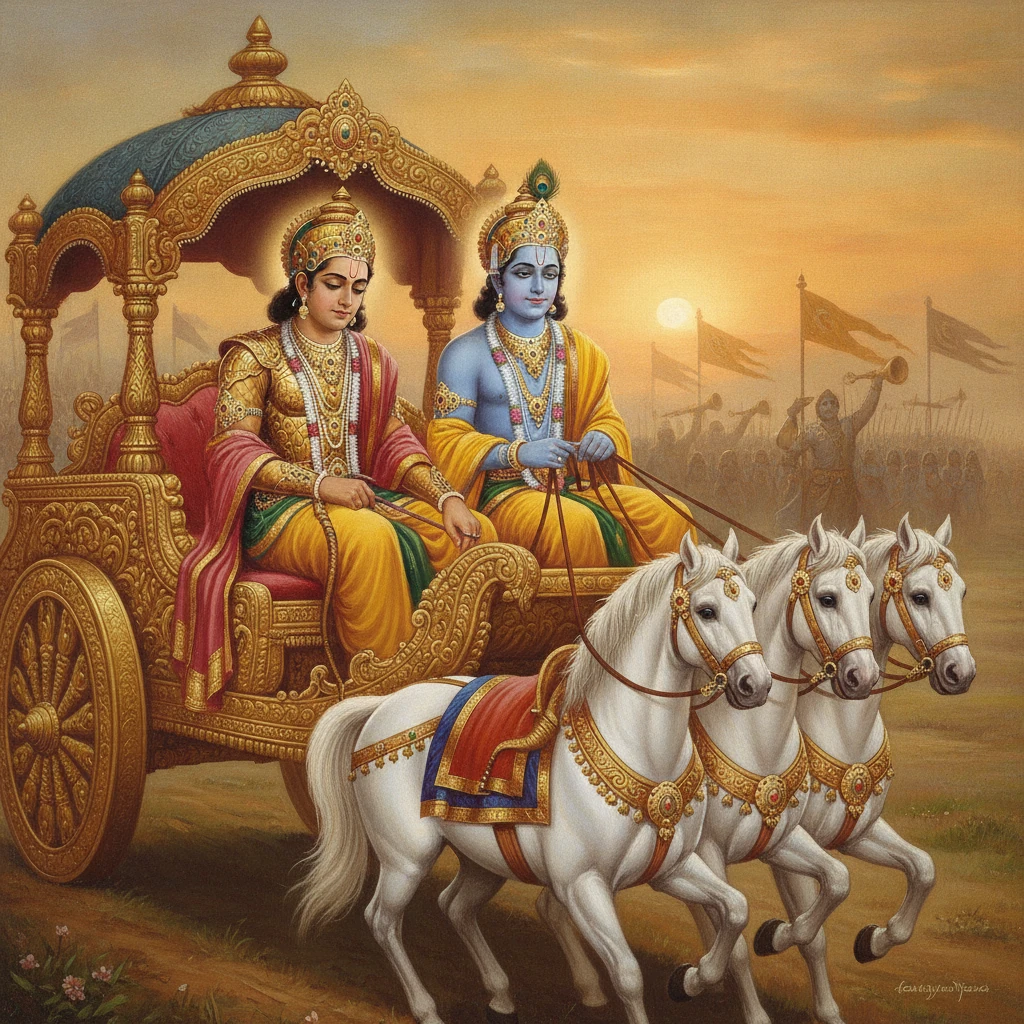
 Mahabharata · Parva 4
About the Virata Parva
The thirteenth year, spent in disguise in King Virata’s realm — Yudhishthira as a courtier, Bhima as cook, Arjuna as the dance-teacher Brihannala, and Draupadi as a maidservant. Kichaka is slain for insulting Draupadi, and in a cattle-raid Arjuna reveals himself and routs the Kaurava army.
How it is read
The Virata Parva is given below in its original Sanskrit (Devanagari), numbered by chapter (adhyaya) and shloka. Read verse by verse; the Mahabharata is traditionally heard as itihasa-shravana, for dharma and discernment.
Original Text
Verses & Meaning
[ज] कथं विराटनगरे मम पूर्वपितामहाः अज्ञातवासम उषिता दुर्यॊधन भयार्दिताः
Janamejaya asked, "How did my forefathers, tormented by fear of Duryodhana, live unrecognized in Virata's city during their year of hiding?"
तथा तु स वराँल लब्ध्वा धर्माधर्मभृतां वरः गत्वाश्रमं बराह्मणेभ्य आचख्यौ सर्वम एव तत
Having thus obtained the boons, that best upholder of dharma went to the hermitage and told the Brahmins everything that had happened.
कथयित्वा तु तत सर्वं बराह्मणेभ्यॊ युधिष्ठिरः अरणी सहितं तस्मै बराह्मणाय नयवेदयत
After telling the Brahmins everything, Yudhishthira entrusted the sacred fire-sticks to that Brahmin for safekeeping.
ततॊ युधिष्ठिरॊ राजा धर्मपुत्रॊ महामनाः संनिवर्त्यानुजान सर्वान इति हॊवाच भारत
Then King Yudhishthira, the great-minded son of Dharma, called back all his younger brothers and spoke to them, O Bharata.
दवादशेमानि वर्षाणि राष्ट्राद विप्रॊषिता वयम तरयॊदशॊ ऽयं संप्राप्तः कृच्छ्रः परमदुर्वसः
"We have been exiled from our kingdom for twelve years; now this most difficult thirteenth year has arrived."
स साधु कौन्तेय इतॊ वासम अर्जुन रॊचय यत्रेमा वसतीः सर्वा वसेमाविदिताः परैः
"O Arjuna, son of Kunti, choose well a place to live where we may all stay unrecognized by our enemies."
तस्यैव वरदानेन धर्मस्य मनुजाधिप अज्ञाता विचरिष्यामॊ नराणा भरतर्षभ
"By the very grace of Dharma, O ruler of men, we shall move about among people unrecognized, O best of the Bharatas."
किं तु वासाय राष्ट्राणि कीर्तयिष्यामि कानि चित रमणीयानि गुप्तानि तेषां किं चित सम रॊचय
"But for our stay I shall name a few delightful and well-protected kingdoms; choose among them whichever you prefer."
सन्ति रम्या जनपदा बह्व अन्नाः परितः कुरून पाञ्चालाश चेदिमत्स्याश च शूरसेनाः पटच्चराः दशार्णा नव राष्ट्रं च मल्लाः शाल्व युगंधराः
"Around the Kurus lie delightful, prosperous lands - the Panchalas, Chedis, Matsyas, Shurasenas, Patacharas, Dasharnas, Navarashtra, Mallas, Shalvas and Yugandharas."
एतेषां कतमॊ राजन निवासस तव रॊचते वत्स्यामॊ यत्र राजेन्द्र संवत्सरम इमं वयम
"Among these, O king, which residence pleases you, where we, O lord of kings, may dwell for this coming year?"
एवम एतन महाबाहॊ यथा स भगवान परभुः अब्रवीत सर्वभूतेशस तत तथा न तद अन्यथा
"So be it, mighty-armed one, exactly as the illustrious lord of all beings has decreed; it shall not be otherwise."
अवश्यं तव एव वासार्थं रमणीयं शिवं सुखम संमन्त्र्य सहितैः सर्वैर दरष्टव्यम अकुतॊभयम
"Surely a delightful, auspicious and comfortable place for our stay, free of danger, should be chosen together after consulting with everyone."
मत्स्यॊ विराटॊ बलवान अभिरक्षेत स पाण्डवान धर्मशीलॊ वदान्यश च वृद्धश च सुमहाधनः
"The mighty King Virata of Matsya, righteous, generous, aged and immensely wealthy, will protect the Pandavas."
विराटनगरे तात संवत्सरम इमं वयम कुर्वन्तस तस्य कर्माणि विहरिष्याम भारत
"In Virata's city, dear ones, we shall spend this coming year, O Bharata, passing our time in his service."
यानि यानि च कर्माणि तस्य शक्ष्यामहे वयम कर्तुं यॊ यत स तत कर्म बरवीतु कुरुनन्दनाः
"Let each of you, sons of Kuru, declare which task he is capable of performing there."
नरदेव कथं कर्म राष्ट्रे तस्य करिष्यसि विराट नृपतेः साधॊ रंस्यसे केन कर्मणा
"O godlike king, how will you carry out work in Virata's kingdom? O virtuous one, by what occupation will you pass your time there?"
मृदुर वदान्यॊ हरीमांश च धार्मिकः सत्यविक्रमः राजंस तवम आपदा कलिष्टः किं करिष्यसि पाण्डव
"You are gentle, generous, modest, righteous and truthful in valor, O king - afflicted by such calamity, what will you do, Pandava?"
न दुःखम उचितं किं चिद राजन वेद यथा जनः स इमाम आपदं पराप्य कथं घॊरां तरिष्यसि
"You have never known suffering as ordinary people do; having fallen into this terrible calamity, how will you overcome it?"
शृणुध्वं यत करिष्यामि कर्म वै कुरुनन्दनाः विराटम अनुसंप्राप्य राजानं पुरुषर्षभम
"Listen, sons of Kuru, to the work I shall do upon reaching King Virata, that bull among men."
सभास्तारॊ भविष्यामि तस्य राज्ञॊ महात्मनः कङ्कॊ नाम दविजॊ भूत्वा मताक्षः परिय देविता
"I shall become a courtier of that great-souled king, taking the form of a Brahmin named Kanka, skilled in dice and fond of gambling."
वैडूर्यान काञ्चनान दान्तान फलैर जयॊती रसैः सह कृष्णाक्षाँल लॊहिताक्षांश च निर्वर्त्स्यामि मनॊरमान
"I shall fashion beautiful dice of ivory and gold, set with gems and light, marked with black and red eyes."
आसं युधिष्ठिरस्याहं पुरा पराणसमः सखा इति वक्ष्यामि राजानं यदि माम अनुयॊक्ष्यते
"If the king questions me, I shall say I was once Yudhishthira's friend, as dear to him as his own life."
इत्य एतद वॊ मयाख्यातं विहरिष्याम्य अहं यथा वृकॊदर विराटे तवं रंस्यसे केन कर्मणा
"This is how I have told you I shall pass the time. Now Vrikodara, how will you occupy yourself in Virata's kingdom?"
[भम] पौरॊगवॊ बरुवाणॊ ऽहं बल्लवॊ नाम नामतः उपस्थास्यामि राजानं विराटम इति मे मतिः
Bhima said, "I shall present myself as a cook named Ballava; I intend to enter King Virata's service."
सूपानस्य करिष्यामि कुशलॊ ऽसमि महानसे कृतपूर्वाणि यैर अस्य वयञ्जनानि सुशिक्षितैः तान अप्य अभिभविष्यामि परीतिं संजनयन्न अहम
"I shall prepare his dishes, for I am skilled in the kitchen; I shall surpass even his well-trained past cooks and win his favor."
आहरिष्यामि दारूणां निचयान महतॊ ऽपि च तत परेक्ष्य विपुलं कर्म राजा परीतॊ भविष्यति
"I shall bring in huge quantities of firewood; seeing this great feat, the king will be delighted."
दविपा वा बलिनॊ राजन वृषभा वा महाबलाः विनिग्राह्या यदि मया निग्रहीष्यामि तान अपि
"If powerful elephants or mighty bulls need to be subdued, O king, I shall subdue them too."
ये च के चिन नियॊत्स्यन्ति समाजेषु नियॊधकाः तान अहं निहनिष्यामि परीतिं तस्य विवर्धयन
"Whatever wrestlers challenge others in the arenas, I shall overcome them, adding to the king's delight."
न तव एतान युध्यमानां वै हनिष्यामि कथं चन तथैतान पातयिष्यामि यथा यास्यन्ति न कषयम
"But I shall never actually kill those who wrestle with me; I shall throw them down in such a way that they do not perish."
आरालिकॊ गॊविकर्ता सूपकर्ता नियॊधकः आसं युधिष्ठिरस्याहम इति वक्ष्यामि पृच्छतः
"As cook, animal-trainer, dish-maker and wrestler, when asked I shall say I was once in Yudhishthira's service."
आत्मानम आत्मना रक्षंश चरिष्यामि विशां पते इत्य एतत परतिजानामि विहरिष्याम्य अहं यथा
"Protecting myself by my own effort, I shall move about, O lord of the people; this I promise, and thus I shall pass the time."
यम अग्निर बराह्मणॊ भूत्वा समागच्छन नृणां वरम दिधक्षुः खाण्डवं दावं दाशार्ह सहितं पुरा
"He whom Agni, taking the form of a Brahmin, once approached along with Krishna, wishing to burn the Khandava forest -"
महाबलं महाबाहुम अजितं कुरुनन्दनम सॊ ऽयं किं कर्म कौन्तेयः करिष्यति धनंजयः
"That mighty, unconquered joy of the Kurus, mighty-armed - what task will that son of Kunti, Dhananjaya, undertake?"
यॊ ऽयम आसाद्य तं तावं तर्पयाम आस पावकम विजित्यैक रथेनेन्द्रं हत्वा पन्नगरक्षसान शरेष्ठः परतियुधां नाम सॊ ऽरजुनः किं करिष्यति
"He who satisfied Agni at Khandava, conquering even Indra single-handedly in his chariot and slaying serpents and rakshasas, the foremost of warriors - what will that Arjuna do?"
सूर्यः परपततां शरेष्ठॊ दविपदां बराह्मणॊ वरः आशीविषश च सर्पाणाम अग्निस तेजस्विनां वरः
"As the sun is best among luminaries, the Brahmin best among men, the venomous serpent best among snakes, and fire best among the radiant -"
आयुधानां वरॊ वर्जः ककुद्मी च गवां वरः हरदानाम उदधिः शरेष्ठः पर्जन्यॊ वर्षतां वरः
"As the thunderbolt is best among weapons, the humped bull best among cattle, the ocean best among waters, and the rain-cloud best among those that pour rain -"
धृतराष्ट्रश च नागानां हस्तिष्व ऐरावतॊ वरः पुत्रः परियाणाम अधिकॊ भार्या च सुहृदां वरा
"As the serpent-king Dhritarashtra is best among nagas, Airavata best among elephants, a son the dearest among the beloved, and a wife the best among friends -"
यथैतानि विशिष्टानि जात्यां जात्यां वृकॊदर एवं युवा गुडाकेशः शरेष्ठः सर्वधनुर्मताम
"Just as each of these is supreme in its own kind, O Vrikodara, so is the young Gudakesha the foremost of all archers."
सॊ ऽयम इन्द्राद अनवरॊ वासुदेवाच च भारत गाण्डीवधन्वा शवेताश्वॊ बीभत्सुः किं करिष्यति
"That one who is second only to Indra and Krishna, O Bharata, wielder of the Gandiva bow, owner of white horses, known as Bibhatsu - what will he do?"
उषित्वा पञ्चवर्षाणि सहस्राक्षस्य वेश्मनि दिव्यान्य अस्त्राण्य अवाप्तानि देवरूपेण भास्वता
"Having dwelt five years in the abode of Indra, he obtained divine weapons from that radiant god who appeared to him."
यं मन्ये दवादशं रुद्रम आदित्यानां तरयॊदशम यस्य बाहू समौ दीर्घौ जया घातकठिन तवचौ दक्षिणे चैव सव्ये च गवाम इव वहः कृतः
"I consider him the twelfth Rudra, the thirteenth Aditya, whose two long arms, hardened by the bowstring's strike, are like a yoke upon oxen, equal on the right and left."
हिमवान इव शैलानां समुद्रः सरिताम इव तरिदशानां यथा शक्रॊ वसूनाम इव हव्यवाः
"Like the Himalaya among mountains, the ocean among rivers, Indra among the gods, and Agni among the Vasus -"
मृगाणाम इव शार्दूलॊ गरुडः पतताम इव वरः संनह्यमानानाम अर्जुनः किं करिष्यति
"Like the tiger among beasts, Garuda among birds, so Arjuna is foremost among warriors ready for battle - what will he do?"
परतिज्ञां षण्ढकॊ ऽसमीति करिष्यामि महीपते जया घातौ हि महान्तौ मे संवर्तुं नृप दुष्करौ
"O king, I shall pass myself off as a eunuch, for it is very hard for me to conceal these two mighty arms scarred by the bowstring."
कर्णयॊः परतिमुच्याहं कुण्डले जवलनॊपमे वेणी कृतशिरॊ राजन नाम्ना चैव बृहन्नडा
"O king, wearing blazing earrings in my ears and my hair braided, I shall go by the name Brihannala."
पठन्न आख्यायिकां नाम सत्रीभावेन पुनः पुनः रमयिष्ये महीपालम अन्यांश चान्तःपुरे जनान
"Reciting tales again and again in the guise of a woman, I shall entertain the king and the other people of the inner apartments."
गीतं नृत्तं विचित्रं च वादित्रं विविधं तथा शिक्षयिष्याम्य अहं राजन विराट भवने सत्रियः
"O king, I shall teach the women of Virata's palace singing, varied dance and different kinds of instrumental music."
परजानां समुदाचारं बहु कर्मकृतं वदन छादयिष्यामि कौन्तेय माययात्मानम आत्मना
"Speaking of common everyday matters and doing much menial work, O son of Kunti, I shall conceal myself through this disguise."
युधिष्ठिरस्य गेहे ऽसमि दरौपद्याः परिचारिका उषितास्मीति वक्ष्यामि पृष्टॊ राज्ञा च भारत
"O Bharata, when the king asks, I shall say I served as Draupadi's attendant in Yudhishthira's household."
एतेन विधिना छन्नः कृतकेन यथा नलः विहरिष्यामि राजेन्द्र विराट भवने सुखम
"By this disguise, hidden like Nala once was, O king, I shall pass my time happily in Virata's palace."
[वै] किं तवं नकुल कुर्वाणस तत्र तात चरिष्यसि सुकुमारश च शूरश च दर्शनीयः सुखॊचितः
Vaishampayana said, "Nakula, dear one, being so delicate, brave, handsome and used to comfort, what work will you do there?"
अश्वबन्धॊ भविष्यामि विराट नृपतेर अहम गरन्थिकॊ नाम नाम्नाहं कर्मैतत सुप्रियं मम
"I shall become King Virata's horse-keeper, taking the name Granthika; this work is very dear to me."
कुशलॊ ऽसम्य अश्वशिक्षायां तथैवाश्वचिकित्सिते परियाश च सततं मे ऽशवाः कुरुराज यथा तव
"I am skilled in training and treating horses; horses have always been as dear to me as they are to you, O Kuru king."
ये माम आमन्त्रयिष्यन्ति विराटनगरे जनाः तेभ्य एवं परवक्ष्यामि विहरिष्याम्य अहं यथा
"Whoever in Virata's city asks about me, I shall tell them this, and thus shall I pass my time."
सहदेव कथं तस्य समीपे विहरिष्यसि किं वा तवं तात कुर्वाणः परच्छन्नॊ विचरिष्यसि
"Sahadeva, how will you spend your time near him? Dear one, what work will you do while moving about in disguise?"
गॊसंख्याता भविष्यामि विराटस्य महीपतेः परतिषेद्धा च दॊग्धा च संख्याने कुशलॊ गवाम
"I shall become King Virata's cattle-counter, skilled at controlling, milking and counting the cows."
तन्तिपाल इति खयातॊ नाम्ना विदितम अस्तु ते निपुणं च चरिष्यामि वयेतु ते मानसॊ जवरः
"Let it be known to you that I shall be called Tantipala; I shall work with great skill, and let your inner anxiety be dispelled."
अहं हि भवता गॊषु सततं परकृतः पुरा तत्र मे कौशलं कर्म अवबुद्धं विशां पते
"O lord of the people, you have long entrusted the cattle to my care; my skill in that work is well known to you."
लक्षणं चरितं चापि गवां यच चापि मङ्गलम तत सर्वं मे सुविदितम अन्यच चापि महीपते
"O king, all the signs, behavior and auspicious marks of cows, and much else besides, are well known to me."
वृषभान अपि जानामि राजन पूजित लक्षणान येषां मूत्रम उपाघ्राय अपि वन्ध्या परसूयते
"O king, I even know of prized bulls whose scent alone can make a barren cow conceive."
सॊ ऽहम एवं चरिष्यामि परीतिर अत्र हि मे सदा न च मां वेत्स्यति परस तत ते रॊचतु पार्थिव
"So shall I live, always finding joy in this work; no one will recognize me - may this please you, O king."
इयं तु नः परिया भार्या पराणेभ्यॊ ऽपि गरीयसी मातेव परिपाल्या च पूज्या जयेष्ठेव च सवसा
"But this our beloved wife, dearer to us than life, must be protected like a mother and honored like an elder sister."
केन सम कर्मणा कृष्णा दरौपदी विचरिष्यति न हि किं चिद विजानाति कर्म कर्तुं यथा सत्रियः
"By what occupation will Draupadi live? She knows nothing of the work ordinary women do."
सुकुमारी च बाला च राजपुत्री यशस्विनी पतिव्रता महाभागा कथं नु विचरिष्यति
"Delicate, young, a renowned princess devoted to her husband, greatly blessed - how indeed will she manage to live?"
माल्यगन्धान अलंकारान वस्त्राणि विविधानि च एतान्य एवाभिजानाति यतॊ जाता हि भामिनी
"Garlands, perfumes, ornaments and various fine garments - only these does that noble lady know, from the household in which she was born."
सैरन्ध्र्यॊ ऽरक्षिता लॊके भुजिष्याः सन्ति भारत नैवम अन्याः सत्रियॊ यान्ति इति लॊकस्य निश्चयः
"O Bharata, in this world unattached serving-women called sairandhris move about freely; other women do not - this is the world's settled custom."
साहं बरुवाणा सैरन्ध्री कुशला केशकर्मणि आत्मगुप्ता चरिष्यामि यन मां तवम अनुपृच्छसि
"Calling myself a sairandhri skilled in hairdressing, I shall move about protecting myself, as you ask of me."
सुदेष्णां परत्युपस्थास्ये राजभार्यां यशस्विनीम सा रक्षिष्यति मां पराप्तां मा ते भूद दुःखम ईदृशम
"I shall present myself to the renowned queen Sudeshna; she will protect me once I reach her - may you not suffer such sorrow over me."
[य] कल्याणं भाषसे कृष्णे कुले जाता यथा वदेत न पापम अभिजानासि साधु साध्वी वरते सथिता
Yudhishthira said, "You speak well, Draupadi, as befits one born in a noble family; you know nothing of sin and stand firm in a virtuous vow."
[य] कर्माण्य उक्तानि युष्माभिर यानि तानि करिष्यथ मम चापि यथाबुद्धिरुचितानि विनिश्चयात
Yudhishthira said, "You shall each carry out the tasks you have described, and I too, according to my own judgment, have decided upon what is fitting."
पुरॊहितॊ ऽयम अस्माकम अग्निहॊत्राणि रक्षतु सूदपौरॊगवैः सार्धं दरुपदस्य निवेशने
"Let our family priest, together with the cooks and attendants, guard our sacred fires in Drupada's household."
इन्द्रसेन मुखाश चेमे रथान आदाय केवलान यान्तु दवारवतीं शीघ्रम इति मे वर्तते मतिः
"It is my resolve that Indrasena and the others should take the empty chariots and go swiftly to Dvaraka."
इमाश च नार्यॊ दरौपद्याः सर्वशः परिचारिकाः पाञ्चालान एव गच्छन्तु सूदपौरॊगवैः सह
"And let these women, all of Draupadi's attendants, go to the Panchala kingdom along with the cooks and attendants."
सर्वैर अपि च वक्तव्यं न परज्ञायन्त पाण्डवाः गता हय अस्मान अपाकीर्य सर्वे दवैतवनाद इति
"Let it be said by everyone that the Pandavas' whereabouts are unknown - that having scattered from the Dvaita forest, all have gone their separate ways."
विदिते चापि वक्तव्यं सुहृद्भिर अनुरागतः अतॊ ऽहम अपि वक्ष्यामि हेतुमात्रं निबॊधत
"Yet to those who already know the truth, our well-wishers must tell it out of affection; therefore I too shall state only the reason - understand this."
हन्तेमां राजवसतिं राजपुत्रा बरवीमि वः यथा राजकुलं पराप्य चरन परेष्यॊ न रिष्यति
"Listen, O princes, I tell you this about staying at a king's court, so that one serving there as a subject comes to no harm."
दुर्वसं तव एव कौरव्या जानता राजवेश्मनि अमानितैः सुमानार्हा अज्ञातैः परिवत्सरम
"For us Kauravas, deserving of honor, it will be very hard to live unrecognized and without due respect in a royal household for a whole year."
दिष्ट दवारॊ लभेद दवारं न च राजसु विश्वसेत तद एवासनम अन्विच्छेद यत्र नाभिषजेत परः
"One should gain entry to the king only through a door fate provides, never trust kings, and always seek a seat where no rival can harm him."
नास्य यानं न पर्यङ्कं न पीठं न जगं रथम आरॊहेत संमतॊ ऽसमीति स राजवसतिं वसेत
"He should never mount the king's vehicle, couch, seat or chariot claiming special favor - thus should one live in a king's household."
अथ यत्रैनम आसीनं शङ्केरन दुष्टचारिणः न तत्रॊपविशेज जातु स राजवसतिं वसेत
"And where wicked people might grow suspicious seeing him seated, he should never sit there - thus should one live in a king's household."
न चानुशिष्येद राजानम अपृच्छन्तं कदा चन तूष्णीं तव एनम उपासीत काले समभिपूजयन
One should never instruct a king when he has not asked for advice; instead one should attend upon him silently, honoring him at the proper time.
असूयन्ति हि राजानॊ जनान अनृतवादिनः तथैव चावमन्यन्ते मन्त्रिणं वादिनं मृषा
Kings resent people who speak falsely, and in the same way they despise a minister or advisor who speaks untruthfully.
नैषां दारेषु कुर्वीत मैत्रीं पराज्ञः कथं चन अन्तःपुर चरा ये च दवेष्टि यानहिताश च ये
A wise man should never form friendship with the king's wives, nor with those who move about in the inner apartments, nor with anyone the king hates or who is hostile to him.
विदिते चास्य कुर्वीत कर्याणि सुलघून्य अपि एवं विचरतॊ राज्ञॊ न कषतिर जायते कव चित
Even the smallest tasks should be carried out with the king's knowledge; one who conducts himself this way in the king's service comes to no harm anywhere.
यत्नाच चॊपचरेद एनम अग्निवद देववच च ह अनृतेनॊपचीर्णॊ हि हिंस्याद एनम असंशयम
One should serve the king carefully, as one would serve fire or a deity; if served with deceit, he will surely bring ruin upon that person.
यच च भर्तानुयुञ्जीत तद एवाभ्यनुवर्तयेत परमादम अवलेहां च कॊपं च परिवर्जयेत
Whatever task the master assigns should be carried out accordingly, while avoiding negligence, greed, and anger.
समर्थनासु सर्वासु हितं च परियम एव च संवर्णयेत तद एवास्य परियाद अपि हितं वदेत
In every discussion one should speak what is both beneficial and pleasing, but should speak what is beneficial to the king even before what is merely pleasant.
अनुकूलॊ भवेच चास्य सर्वार्थेषु कथासु च अप्रियं चाहितं यत सयात तद अस्मै नानुवर्णयेत
One should remain favorable to the king in all matters and conversations, and should never relate to him anything that is unpleasant or harmful.
नाहम अस्य परियॊ ऽसमीति मत्वा सेवेत पण्डितः अप्रमत्तश च यत्तश च हितं कुर्यात परियं च यत
A wise man should serve the king without thinking 'I am not dear to him'; remaining vigilant and attentive, he should do what is both beneficial and pleasing.
नास्यानिष्टानि सेवेत नाहितैः सह संवसेत सवस्थानान न विकम्पेत स राजवसतिं वसेत
He should not pursue what is disagreeable to the king nor keep company with his enemies; not wavering from his rightful place, thus one should dwell in a king's service.
दक्षिणं वाथ वामं वा पार्श्वम आसीत पण्डितः रक्षिणां हय आत्तशस्त्राणां सथानं पश्चाद विधीयते नित्यं विप्रतिषिद्धं तु पुरस्ताद आसनं महत
A wise man should sit either to the king's right or left; the seat behind is reserved for armed guards, while a prominent seat directly in front is always forbidden.
न च संदर्शने किं चित परवृद्धम अपि संजपेत अपि हय एतद दरिद्राणां वयलीक सथानम उत्तमम
In the king's presence one should never whisper anything, however important it may be, for even this can become a chief source of suspicion for those of humble means.
न मृषाभिहितं राज्ञॊ मनुष्येषु परकाशयेत यं चासूयन्ति राजानः पुरुषं न वदेच च तम
One should never disclose to others a falsehood spoken by the king, nor speak about a man against whom the king harbors resentment.
शूरॊ ऽसमीति न दृप्तः सयाद बुद्धिमान इति वा पुनः परियम एवाचरन राज्ञः परियॊ भवति भॊगवान
One should not become arrogant thinking 'I am brave' or 'I am wise'; by always acting agreeably toward the king, one becomes dear to him and prospers.
ऐश्वर्यं पराप्य दुष्प्रापं परियं पराप्य च राजतः अप्रमत्तॊ भवेद राज्ञः परियेषु च हितेषु च
Having attained hard-won prosperity and the king's favor, one should remain vigilant regarding both what pleases him and what benefits him.
यस्य कॊपॊ महाबाधः परसादश च महाफलः कस तस्य मनसापीच्छेद अनर्थं पराज्ञसंमतः
Whose anger brings great harm and whose favor bears great fruit — what wise and respected person would even wish him ill in his heart?
न चौष्ठौ निर्भुजेज जातु न च वाक्यं समाक्षिपेत सदा कषुतं च वातं च षठीवनं चाचरेच छनैः
One should never bite one's lips or interrupt someone's speech; sneezing, passing wind, and spitting should always be done quietly.
हास्यवस्तुषु चाप्य अस्य वर्तमानेषु केषु चित नातिगाढं परहृष्येत न चाप्य उन्मत्तवद धसेत
Even when something amusing occurs in the king's presence, one should not laugh too heartily, nor laugh like someone deranged.
न चातिधैर्येण चरेद गुरुतां हि वरजेत तथा समितं तु मृदुपूर्वेण दर्शयेत परसादजम
One should not behave with excessive gravity, for that turns into arrogance; rather one should show a gentle smile born of goodwill.
लाभे न हर्षयेद यस तु न वयथेद यॊ ऽवमानितः असंमूढश च यॊ नित्यं स राजवसतिं वसेत
He who is not elated by gain, not distressed when insulted, and never confused — such a man is fit to dwell in a king's service.
Quick guide
Before you begin
Bhav
Benefits devotees pray for
FAQ
Common questions
What is the Virata Parva of the Mahabharata about?
The thirteenth year, spent in disguise in King Virata’s realm — Yudhishthira as a courtier, Bhima as cook, Arjuna as the dance-teacher Brihannala, and Draupadi as a maidservant. Kichaka is slain for insulting Draupadi, and in a cattle-raid Arjuna reveals himself and routs the Kaurava army.
What is the Mahabharata?
The Mahabharata is the great Sanskrit itihasa (epic) composed by Maharishi Vyasa, telling of the Kuru dynasty and the war between the Pandavas and the Kauravas at Kurukshetra. In its eighteen parvas (books) it contains the Bhagavad Gita, the Vishnu Sahasranama and a vast treasury of dharma, and is revered as the fifth Veda.
Offer a path or seva in your name
Have a Gita paath or seva performed in your naam-gotra for peace and clarity. Book a seva, or read on in Sanatan Sahitya.