



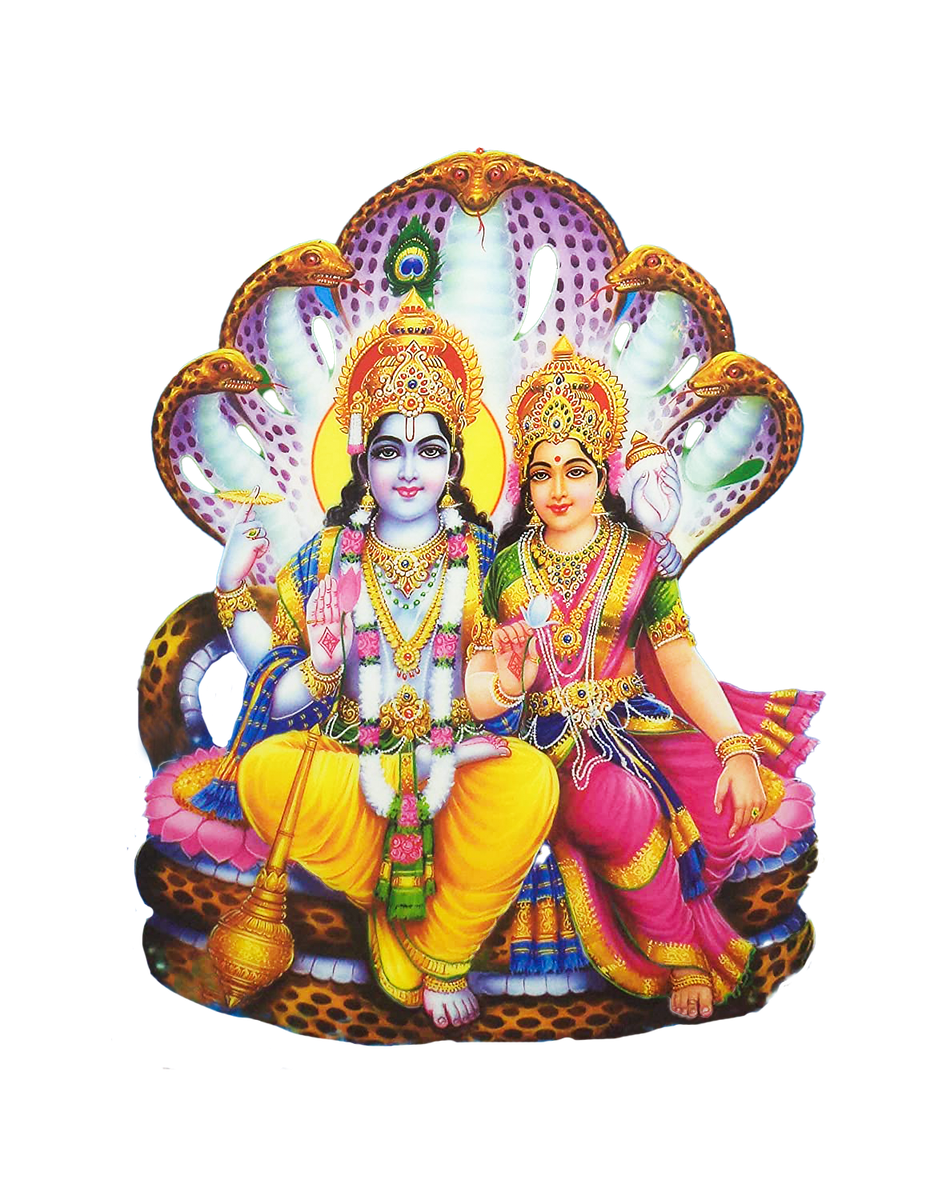
 Om Namo Narayanaya
Chant these 108 names of Lord Vishnu, the preserver of the universe, to invite peace, protection and prosperity into your life.
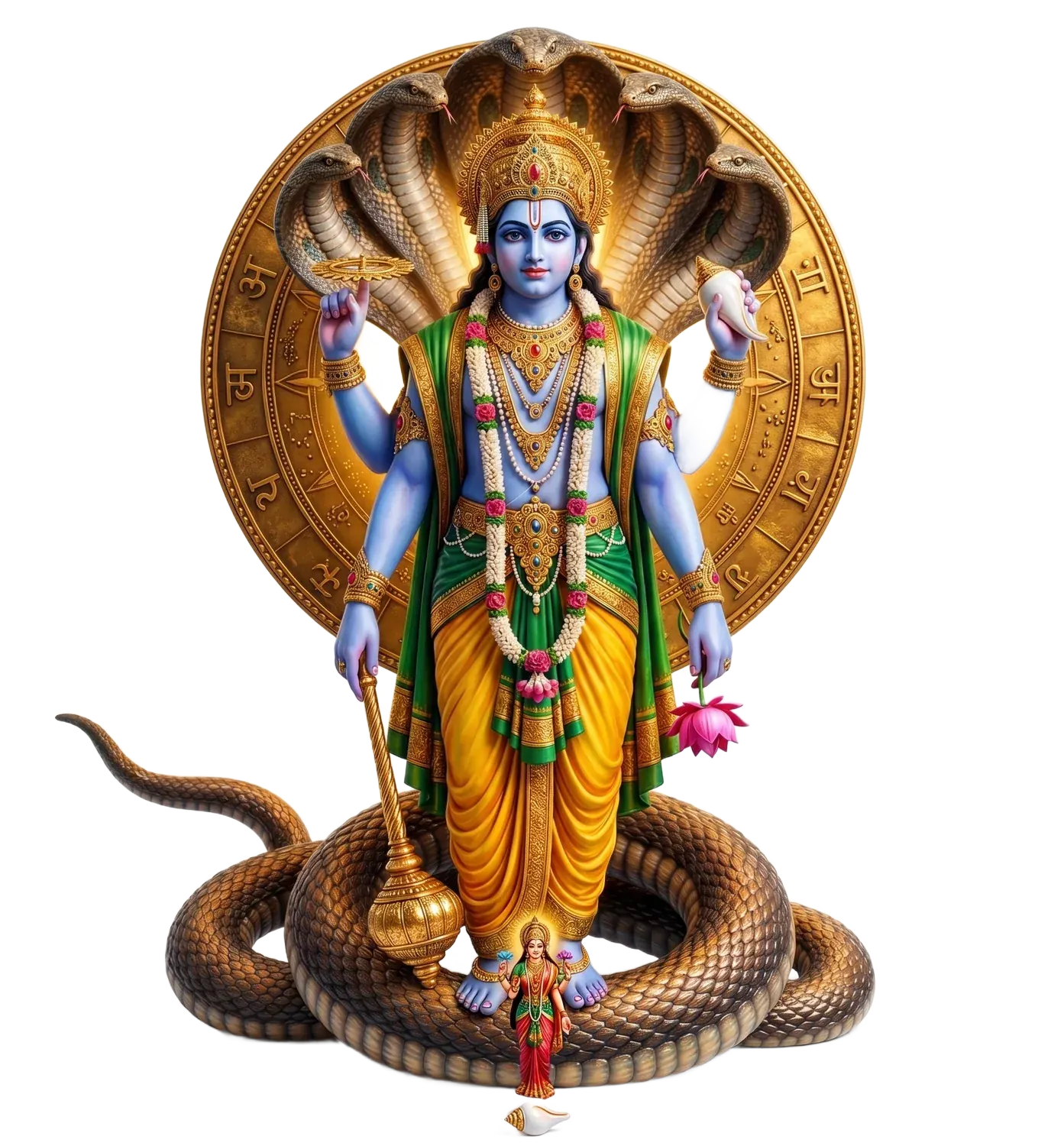
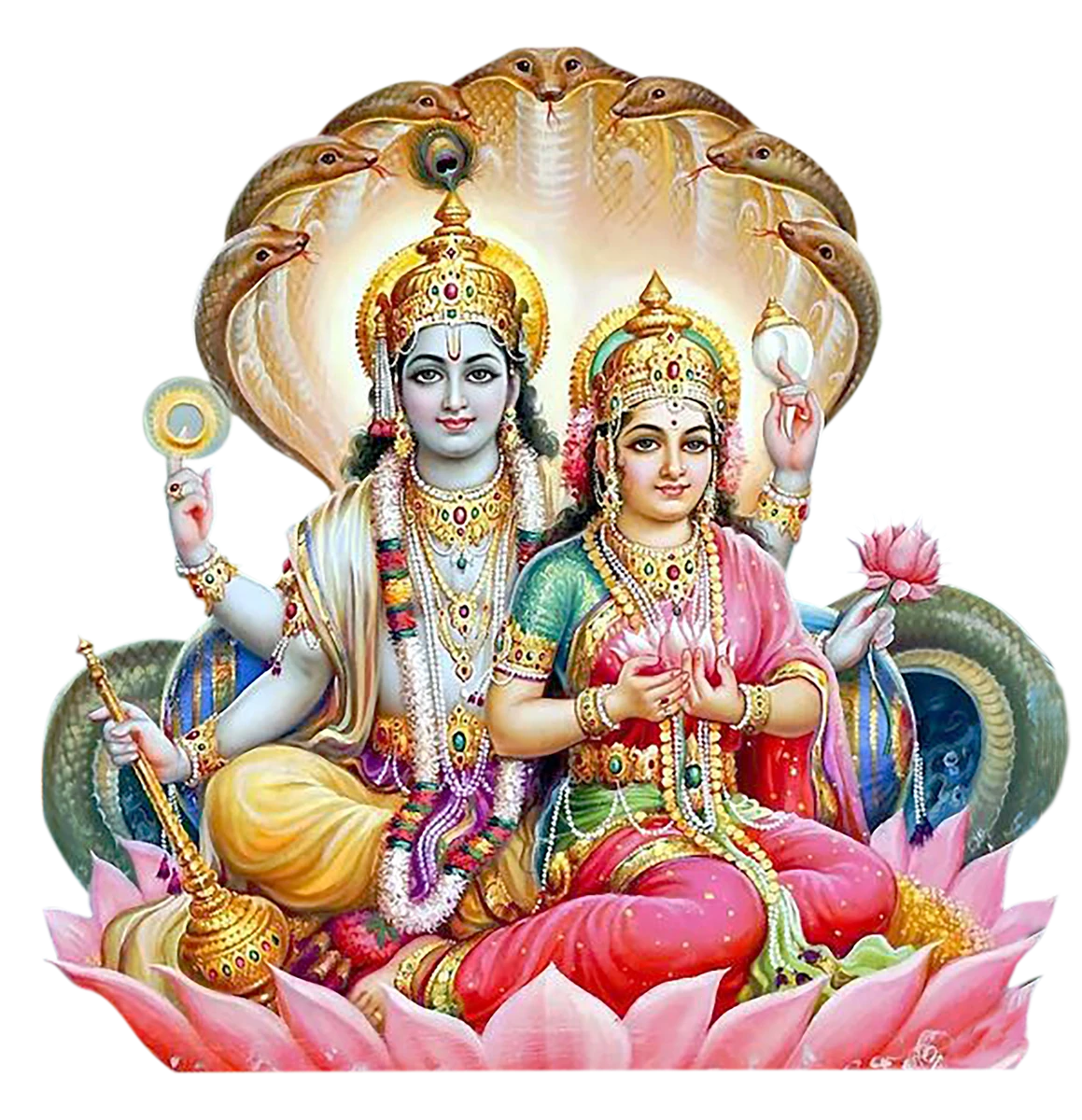
Lord Vishnu is the second deity of the Hindu Trimurti, revered as the preserver and protector of the universe. Whenever dharma declines, Vishnu is believed to descend to earth in various avatars to restore balance. His thousand names are recorded in the Vishnu Sahasranama, but for daily worship, devotees commonly chant a shorter Ashtottara Shatanamavali - a garland of 108 names - each one a Sanskrit epithet describing a quality, deed or divine form of the Lord.
Reciting these 108 names, ideally with a tulsi mala, is considered one of the simplest and most powerful ways to invoke Vishnu's grace, remove obstacles, and cultivate inner peace, gratitude and steadiness of mind.
Why 108 Names?
The number 108 holds deep significance in Sanatan Dharma - it is the count of beads on a japa mala, the number of Upanishads, and a number associated with cosmic completeness. Chanting 108 names is a full circle of remembrance, engaging the mind fully in the form, deeds and virtues of the Lord rather than a single repeated syllable.
Complete List of 108 Names of Lord Vishnu
1. विष्णु (Vishnu) - The all-pervading one 2. लक्ष्मीपति (Lakshmipati) - Lord of Goddess Lakshmi 3. कृष्ण (Krishna) - The dark, all-attractive one 4. वैकुण्ठनाथ (Vaikunthanatha) - Lord of Vaikuntha 5. गरुड़ध्वज (Garudadhvaja) - One whose banner bears Garuda 6. त्रिविक्रम (Trivikrama) - One who took three strides 7. देवकीनन्दन (Devakinandana) - Son of Devaki 8. अच्युत (Achyuta) - The infallible one 9. श्रीधर (Sridhara) - Bearer of Sri (Lakshmi) 10. हृषीकेश (Hrishikesha) - Lord of the senses 11. पद्मनाभ (Padmanabha) - One with a lotus navel 12. दामोदर (Damodara) - One bound at the waist by a rope 13. माधव (Madhava) - Husband of Lakshmi / Lord of knowledge 14. गोविन्द (Govinda) - Protector of cows and the earth 15. नारायण (Narayana) - Refuge of all beings 16. वामन (Vamana) - The dwarf incarnation 17. जलशायी (Jalashayi) - One who reclines on the cosmic waters 18. यज्ञेश (Yajnesha) - Lord of sacrifice 19. चतुर्भुज (Chaturbhuja) - The four-armed one 20. जनार्दन (Janardhana) - One who bestows fruits to devotees 21. उपेन्द्र (Upendra) - Younger brother of Indra 22. इन्द्रप्रिय (Indrapriya) - Beloved of Indra 23. श्रीवत्सकौस्तुभधर (Shrivatsakaustubhadhara) - Bearer of Shrivatsa and Kaustubha jewel 24. पीताम्बर (Peetambara) - One dressed in yellow garments 25. अज (Aja) - The unborn one 26. अनेकमूर्ति (Anekamurti) - One with countless forms 27. अव्यक्त (Avyakta) - The unmanifest one 28. शिपिविष्ट (Shipivishta) - One who dwells in the rays of the sun 29. अमृत (Amrita) - The immortal one 30. सर्वेश्वर (Sarveshwara) - Lord of all 31. सनातन (Sanatana) - The eternal one 32. अनन्त (Ananta) - The endless one 33. सर्वग (Sarvaga) - One who pervades everywhere 34. पुरुषोत्तम (Purushottama) - The Supreme Being 35. आदिदेव (Adideva) - The primeval God 36. अधोक्षज (Adhokshaja) - One beyond sensory perception 37. अनादि (Anadi) - One without beginning 38. भूमिपति (Bhoomipati) - Lord of the earth 39. भूतभावन (Bhutabhavana) - Source of all beings 40. चक्रपाणि (Chakrapani) - One who holds the discus 41. दानवेन्द्र (Danavendra) - Foremost among the generous 42. दैत्यकुलान्तक (Daityakula) - Destroyer of demon clans 43. दीननाथ (Deenanatha) - Protector of the humble 44. देवदेव (Devadeva) - God of gods 45. धरणीधर (Dharaneedhara) - Bearer of the earth 46. गदाधर (Gadadhara) - Wielder of the mace 47. गोपीश्वर (Gopeeshwara) - Lord of the gopis 48. हरि (Hari) - One who removes sorrow 49. हिरण्यगर्भ (Hiranyagarbha) - Golden-wombed cosmic origin 50. जगन्निवास (Jagannivasa) - Abode of the universe 51. जगत्पति (Jagatpati) - Lord of the universe 52. कैटभजित् (Kaitabhajit) - Conqueror of the demon Kaitabha 53. कमलानाथ (Kamalanatha) - Lord of the lotus (Lakshmi) 54. कंसान्तक (Kamsantaka) - Destroyer of Kamsa 55. केशव (Keshava) - One with beautiful locks; slayer of Keshi 56. कीर्तिमान (Kirtiman) - One of great renown 57. लोकनाथ (Lokanatha) - Lord of all worlds 58. मधुसूदन (Madhusudana) - Slayer of the demon Madhu 59. महाबाहु (Mahabahu) - The mighty-armed one 60. महाद्युति (Mahadyuti) - One of great splendour 61. महेश्वर (Maheshwara) - The great Lord 62. मनोहर (Manoharan) - One who captivates the mind 63. मुरारि (Muraari) - Enemy of the demon Mura 64. नन्दगोपप्रिय (Nandagopapriya) - Beloved son of Nanda 65. नृसिंह (Nrisimha) - The man-lion incarnation 66. पद्मगर्भ (Padmagarbha) - One seated within the lotus 67. पद्मसम्भव (Padmasambhava) - Origin of the lotus 68. पाण्डुरंग (Panduranga) - The fair-complexioned lord (Vitthala) 69. परमात्मा (Paramatma) - The Supreme Soul 70. परापर (Parapara) - The highest and the closest 71. पार्वतीनाथ (सहित) (Parvatinatha) - Companion of all divine consorts 72. पीताम्बर (Pitambara) - Wearer of yellow silk 73. पुण्यकीर्ति (Punyakeerti) - One of sacred fame 74. पुण्डरीकाक्ष (Pundareekaksha) - Lotus-eyed one 75. राघव (Raghava) - Descendant of Raghu, as Sri Rama 76. रक्षकर्ता (Rakshakarta) - The protector 77. रणछोड़ (Ranachora) - One who left the battlefield for peace 78. रविलोचन (Ravilochana) - One whose eye is the sun 79. रिपुघ्न (Ripughna) - Destroyer of enemies 80. ऋषिकेश (Rishikesha) - Lord of the sages 81. सहस्रशीर्ष (Sahasrasira) - The thousand-headed one 82. सहस्राक्ष (Sahasrakshara) - The thousand-eyed one 83. सर्वभूतेश (Sarvabhutesha) - Lord of all creatures 84. सर्वज्ञ (Sarvajna) - The all-knowing one 85. सत्यवचन (Satyavachana) - One whose word is truth 86. सत्यसन्ध (Satyasandha) - One firm in truth 87. शान्तः (Shantah) - The tranquil one 88. शाश्वत (Shashwata) - The everlasting one 89. शेषशायी (Shesashayi) - One who reclines on Shesha Naga 90. श्रीनिवास (Shreenivasa) - Abode of Lakshmi 91. श्रीपति (Shreepati) - Consort of Sri 92. शुभंकर (Shubhankara) - Doer of auspicious deeds 93. सुदर्शनधर (Sudarshanadhara) - Bearer of the Sudarshana chakra 94. सुरगण (Suragana) - Refuge of the celestials 95. सुरारि (हन्ता) (Suraari) - Destroyer of enemies of the gods 96. सुव्रत (Suvrata) - One of virtuous vows 97. स्वयम्भू (Swayambhu) - The self-manifested one 98. त्रिलोकेश (Trilokesha) - Lord of the three worlds 99. त्रिनेत्र (सम) (Trinetra) - One equal to the three-eyed Lord in glory 100. वासुदेव (Vaasudeva) - Son of Vasudeva; the all-pervading Lord 101. वनमाली (Vanamali) - Wearer of the forest garland 102. वराह (Varaaha) - The boar incarnation 103. विभु (Vibhu) - The all-pervading, mighty one 104. विश्वकर्मा (Vishwakarma) - The architect of the universe 105. विश्वम्भर (Vishwambhara) - Sustainer of the universe 106. विश्वरूप (Vishwarupa) - One of the cosmic universal form 107. वृषकपि (Vrishakapi) - A mystic Vedic form of the Lord 108. यज्ञपुरुष (Yagnapurusha) - The Lord who is the essence of sacrifice 109. योगीश्वर (Yogeeshwara) - Lord of yogis 110. भक्तवत्सल (Bhaktavatsala) - One affectionate to devotees
Meaning and Significance
These names are not random titles; each captures an aspect of Vishnu's cosmic role. Names like Narayana and Vaikunthanatha speak of Him as the ultimate refuge and abode of peace. Names like Trivikrama, Varaha and Nrisimha recall His great avatars who protected dharma. Names like Padmanabha and Sheshashayi describe His mystical form reclining on the serpent Shesha in the cosmic ocean, with the lotus of creation emerging from His navel. Names like Bhaktavatsala and Deenanatha remind devotees that however small or humble they feel, the Lord is always affectionately close to those who call upon Him with faith.
How and When to Chant
Time: Early morning after bathing, or during the evening sandhya, are considered most auspicious. Ekadashi, Thursdays (Vishnu's day), Vaikuntha Chaturdashi and Kartik month are especially powerful times.
Method: Sit facing east or north on a clean seat. Light a diya and offer tulsi leaves, which are extremely dear to Vishnu. Hold a tulsi or sandalwood mala and recite each name, ideally prefixing it with "Om" and ending with "Namah" (for example, "Om Narayanaya Namah"), one name per bead, completing one full round of 108.
Frequency: One round daily is enough for regular devotees; during Ekadashi or festivals, three or more rounds may be done.
Benefits of Chanting Vishnu's 108 Names
Cultivates inner calm, patience and contentment by turning the mind toward the Lord's protective, preserving nature.
Believed to remove obstacles, financial worry and instability when chanted with sincere faith and regularity.
Strengthens family harmony, as Vishnu is worshipped as the upholder of dharmic order in the household.
Deepens devotion (bhakti) and gradually purifies the mind, preparing it for deeper meditation and self-inquiry.
A Short Mahatmya (Glory)
It is said in the puranas that even uttering the name of Vishnu once, with or without full understanding, purifies a person the way fire purifies gold. Sages and householders alike have used the practice of naming Vishnu - nama-japa - as an accessible path to liberation, requiring no elaborate ritual, only sincerity and steadiness.
Frequently Asked Questions
Do I need a mala to chant these names? A mala helps maintain count and focus, but it is not compulsory. You may simply read and recite the names slowly with devotion.
Can these names be chanted by anyone, regardless of caste, gender or background? Yes. Vishnu's names are open to every sincere devotee. Bhakti in Sanatan Dharma has never been restricted; what matters is faith and humility.
Is there a specific day best suited for this practice? Thursday, Ekadashi and Vaikuntha Chaturdashi are traditionally considered especially auspicious for Vishnu worship, though any day of sincere devotion is welcomed.
What if I cannot pronounce the Sanskrit perfectly? Vishnu is understood to receive the intention and devotion behind the chant far more than perfect pronunciation. Chant with a humble, open heart and practice will refine pronunciation over time.
Quick guide
Before you begin
Mantra
Vishnu mantra
Om Namo Bhagavate Vasudevaya
Chant before katha or aarti while praying for protection, dharma, and peace.
Bhav
Benefits devotees pray for
FAQ
Common questions
Do I need a mala to chant these names?
A mala helps maintain count and focus, but it is not compulsory. You may simply read and recite the names slowly with devotion.
Can these names be chanted by anyone?
Yes. Vishnu's names are open to every sincere devotee regardless of background; faith and humility matter most.
Is there a specific best day?
Thursday, Ekadashi and Vaikuntha Chaturdashi are traditionally auspicious, though any day of sincere devotion is welcomed.
What if my Sanskrit pronunciation is imperfect?
Vishnu receives the devotion behind the chant more than perfect pronunciation. Chant humbly and it will improve with practice.
Seek Lord Vishnu's Blessings
Book a Vishnu puja performed with full vidhi by our pandits, or explore more sacred texts.