



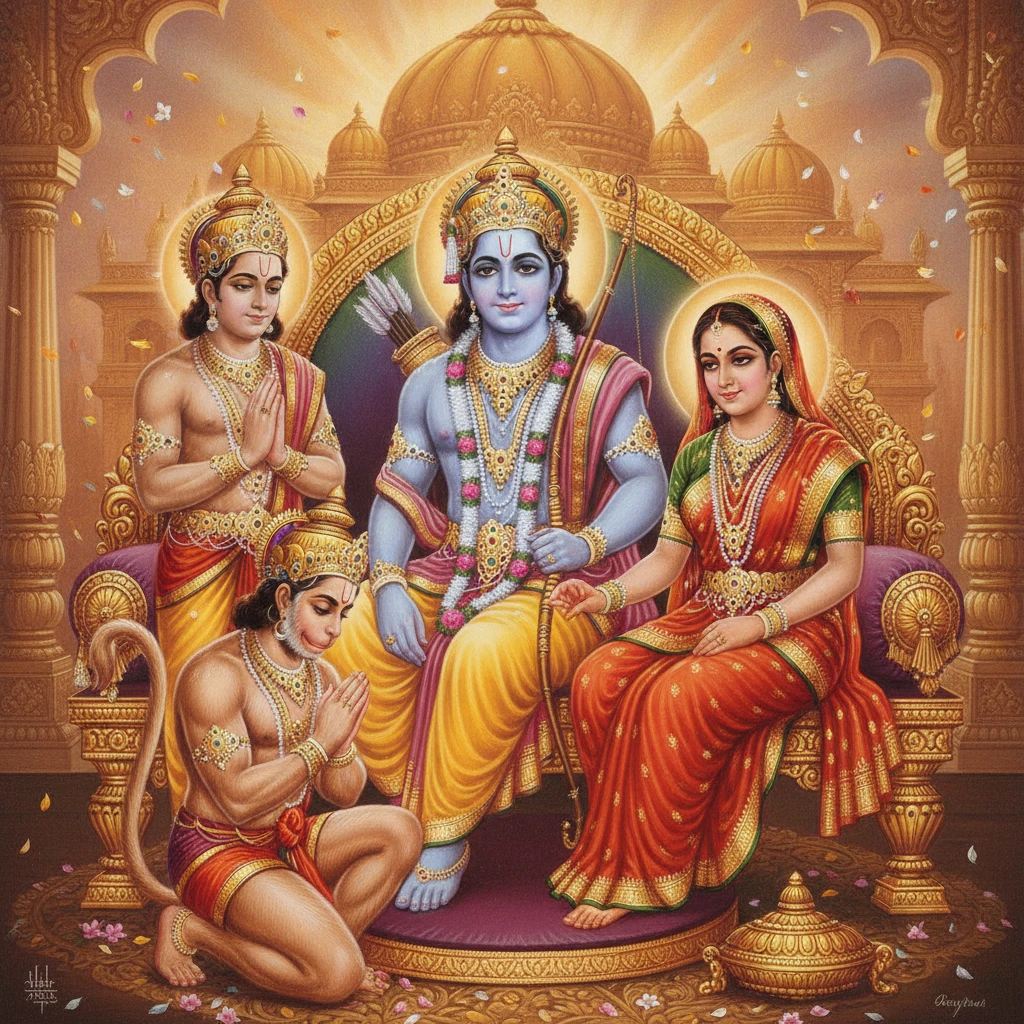
 Valmiki Ramayana · Kanda 7
About the Uttara Kanda
The last book recounts Ram’s coronation and the golden age of Ram Rajya, the later histories of Ravana and Hanuman, the birth of Lav and Kush who learn the Ramayana from Valmiki himself, and Sita’s return to the earth — closing the Adi Kavya.
How it is read
The Uttara Kanda is given below in its original Sanskrit (Devanagari), numbered by sarga and shloka. Read verse by verse; the Sundara Kanda in particular is recited as a paath for courage and protection.
Original Text
Verses & Meaning
प्राप्तराज्यस्य रामस्य राक्षसानां वधे कृते ।आजग्मुर्ऋषयः सर्वे राघवं प्रतिनन्दितुम् ।। ७.१.१ ॥
After Rama had obtained the kingdom and the rakshasas had been slain, all the sages came to congratulate Raghava.
कौशिको ऽथ यवक्रीतो गार्ग्यो गालव एव च ।कण्वो मेधातिथेः पुत्रः पूर्वस्यां दिशि ये श्रिताः ।। ७.१.२ ॥
Kaushika, Yavakrita, Gargya, Galava, and Kanva the son of Medhatithi were among those sages who dwelt in the eastern direction.
स्वस्त्यात्रेयो ऽथ भगवान्नमुचिः प्रमुचिस्तथा ।आजग्मुस्ते सहागस्त्या ये श्रिता दक्षिणां दिशम् ।। ७.१.३ ॥
Svastyatreya, the blessed Namuchi, and Pramuchi came together with Agastya - these were the sages who dwelt in the southern direction.
नृषद्गुः कवषो धौम्यो रौद्रेयश्च महानृषिः ।ते ऽप्याजग्मुः सशिष्या वै ये श्रिताः पश्चिमां दिशम् ।। ७.१.४ ॥
Nrishadgu, Kavasha, Dhaumya, and the great sage Raudreya also came with their disciples - these were the sages who dwelt in the western direction.
वसिष्ठः कश्यपो ऽथात्रिर्विश्वामित्रः सगौतमः ।जमदग्निर्भरद्वाजस्ते ऽपि सप्तर्षयस्तथा ।। ७.१.५ ॥
Vasishtha, Kashyapa, Atri, Vishvamitra, Gautama, Jamadagni, and Bharadvaja - these were the seven great sages.
उदीच्यां दिशि सप्तैते नित्यमेव निवासिनः ।। ७.१.६ ॥
These seven ever dwelt in the northern direction.
सम्प्राप्य ते महात्मानो राघवस्य निवेशनम् ।विष्टिताः प्रतिहारार्थं हुताशनसमप्रभाः ।वेदवेदाङ्गविदुषो नानाशास्त्रविशारदाः ।। ७.१.७ ॥
These great souls, radiant like fire and learned in the Vedas, Vedangas, and many other scriptures, reached Raghava's dwelling and stood there awaiting the doorkeeper to announce them.
द्वाःस्थं प्रोवाच धर्मात्मा अगस्त्यो मुनिसत्तमः ।निवेद्यतां दाशरथेर्ऋषीनस्मान्समागतान् ।। ७.१.८ ॥
The righteous Agastya, foremost of sages, told the doorkeeper to inform the son of Dasharatha that these sages had arrived.
प्रतीहारस्ततस्तूर्णमगस्त्यवचनाद्द्रुतम् ।समीपं राघवस्याशु प्रविवेश महात्मनः ।। ७.१.९ ॥
Then the doorkeeper, on Agastya's word, swiftly went into the presence of the great-souled Raghava.
नयेङ्गितज्ञः सद्वृत्तो दक्षो धैर्यसमन्वितः ।स रामं दृश्य सहसा पूर्णचन्द्रसमप्रभम् ।। ७.१.१० ॥
That doorkeeper, skilled at reading intentions, well-mannered, capable, and steady, suddenly beheld Rama, radiant like the full moon.
अगस्त्यं कथयामास सम्प्राप्तमृषिभिः सह ।। ७.१.११ ॥
He informed Rama that Agastya had arrived together with the sages.
श्रुत्वा प्राप्तान्मुनींस्तांस्तु बालसूर्यसमप्रभान् ।प्रत्युवाच ततो द्वास्स्थं प्रवेशय यथासुखम् ।। ७.१.१२ ॥
Hearing that those sages, radiant like the newly risen sun, had arrived, Rama told the doorkeeper to let them enter at their ease.
तान् सम्प्राप्तान् मुनीन् दृष्ट्वा प्रत्युत्थाय कृताञ्जलिः ।पाद्यार्घ्यादिभिरानर्च गां निवेद्य च सादरम् ।। ७.१.१३ ॥
Seeing the sages arrive, Rama rose with joined palms, honored them with water for the feet, offerings, and the like, and respectfully presented them a cow.
रामो ऽभिवाद्य प्रयत आसनान्यादिदेश ह ।तेषु काञ्चनचित्रेषु महत्सु च वरेषु च ।। ७.१.१४ ॥
Rama saluted them reverently and offered them great and excellent seats adorned with gold.
कुशान्तर्धानदत्तेषु मृगचर्मयुतेषु च ।यथार्हमुपविष्टास्ते आसनेष्वृषिपुङ्गवाः ।। ७.१.१५ ॥
Those seats were spread with kusha grass and deerskins, and the eminent sages sat upon them each as befitted his station.
रामेण कुशलं पृष्टाः सशिष्याः सपुरोगमाः ।महर्षयो वेदविदो रामं वचनमब्रुवन् ।। ७.१.१६ ॥
Asked by Rama about their welfare, those Veda-knowing great sages, together with their disciples and leaders, spoke these words to Rama.
कुशलं नो महाबाहो सर्वत्र रघुनन्दन ।त्वां तु दिष्ट्या कुशलिनं पश्यामो हतशात्रवम् ।। ७.१.१७ ॥
O mighty-armed joy of the Raghus, all is well with us everywhere; and by good fortune we now see you well and your enemies slain.
दिष्ट्या त्वया हतो राजन्रावणो लोकरावणः ।न हि भारः स ते राम रावणः पुत्रपौत्रवान् ।। ७.१.१८ ॥
By good fortune, O king, you have slain Ravana who made the worlds cry out; indeed Ravana, with his sons and grandsons, was no burden for you at all.
सधनुस्त्वं हि लोकांस्त्रीन्विजयेथा न संशयः ।दिष्ट्या त्वया हतो राम रावणो राक्षसेश्वरः ।। ७.१.१९ ॥
With your bow you could without doubt conquer all three worlds; by good fortune Ravana, lord of the rakshasas, has been slain by you.
दिष्ट्या विजयिनं त्वाद्य पश्यामः सह सीतया ।लक्ष्मणेन च धर्मात्मन्भ्रात्रा त्वद्धितकारिणा ।। ७.१.२० ॥
By good fortune we see you today victorious, together with Sita and with your righteous brother Lakshmana who ever seeks your good.
मातृभिर्भ्रातृसहितं पश्यामो ऽद्य वयं नृप ।दिष्ट्या प्रहस्तो विकटो विरूपाक्षो महोदरः ।अकम्पनश्च दुर्धर्षो निहतास्ते निशाचराः ।। ७.१.२१ ॥
Today, O king, we see you together with your mothers and brothers; by good fortune Prahasta, Vikata, Virupaksha, Mahodara, and the formidable Akampana - these night-rangers - have been slain.
यस्य प्रमाणाद्विपुलं प्रमाणं नेह विद्यते ।दिष्ट्या ते समरे राम कुम्भकर्णो निपातितः ।। ७.१.२२ ॥
He whose vast stature had no equal in this world - by good fortune, Rama, that Kumbhakarna was felled by you in battle.
त्रिशिराश्चातिकायश्च देवान्तकनरान्तकौ ।दिष्ट्या ते निहता राम महावीर्या निशाचराः ।। ७.१.२३ ॥
Trishira, Atikaya, and Devantaka and Narantaka - by good fortune, Rama, these mighty night-rangers have been slain by you.
कुम्भश्चैव निकुम्भश्च राक्षसौ भीमदर्शनौ ।दिष्ट्या तौ निहतौ राम कुम्भकर्णसुतौ मृधे ।। ७.१.२४ ॥
Kumbha and Nikumbha, the two terrible-looking rakshasas who were sons of Kumbhakarna - by good fortune, Rama, both were slain by you in battle.
युद्धोन्मत्तश्च मत्तश्च कालान्तकयमोपमौ ।यज्ञकोपश्च बलवान्धूम्राक्षो नाम राक्षसः ।। ७.१.२५ ॥
Yuddhonmatta and Matta, like Death and Yama, along with the powerful Yajnakopa and the rakshasa named Dhumraksha -
कुर्वन्तः कदनं घोरमेते शस्त्रास्त्रपारगाः ।अन्तकप्रतिमैर्बाणैर्दिष्ट्या विनिहतास्त्वया ।। ७.१.२६ ॥
- these, who wrought terrible slaughter and were masters of weapons, were by good fortune slain by you with arrows like those of Death himself.
दिष्ट्या त्वं राक्षसेन्द्रेण द्वन्द्वयुद्धमुपागतः ।देवतानामवध्येन विजयं प्राप्तवानसि ।। ७.१.२७ ॥
By good fortune you engaged in single combat with that lord of the rakshasas, who was unslayable even by the gods, and won victory.
सङ्ख्ये तस्य न किञ्चित्तु रावणस्य पराभवः ।द्वन्द्वयुद्धमनुप्राप्तो दिष्ट्या ते रावणिर्हतः ।। ७.१.२८ ॥
In battle he had never before been defeated at all; yet meeting him in single combat, by good fortune Ravani (Indrajit) was slain by you.
दिष्ट्या तस्य महाबाहो कालस्येवाभिधावतः ।मुक्तः सुररिपोर्वीर प्राप्तश्च विजयस्त्वया ।। ७.१.२९ ॥
O mighty-armed hero, by good fortune you were freed from that enemy of the gods who rushed upon you like Death itself, and you attained victory.
अभिनन्दाम ते सर्वे संश्रुत्येन्द्रजितो वधम् ।सो ऽवध्यः सर्वभूतानां महामायाधरो युधि ।। ७.१.३० ॥
We all rejoice on hearing of the slaying of Indrajit, who was unslayable by all beings and wielded great powers of illusion in battle.
विस्मयस्त्वेष चास्माकं तच्छ्रुत्वेन्द्रजितं हतम् ।। ७.१.३१ ॥
This is indeed our great astonishment - hearing that Indrajit has been slain.
एते चान्ये च बहवो राक्षसाः कामरूपिणः ।दिष्ट्या त्वया हता वीरा रघूणां कुलवर्द्धन ।। ७.१.३२ ॥
O increaser of the Raghu line, these and many other heroic rakshasas who could change form at will have by good fortune been slain by you.
दत्त्वा पुण्यामिमां वीर सौम्यामभयदक्षिणाम् ॥
Having granted, O hero, this blessed and gentle gift of fearlessness to the world -
दिष्ट्या वर्धसि काकुत्स्थ जयेनामित्रकर्शन ।। ७.१.३३ ॥
- by good fortune, O Kakutstha, destroyer of foes, you flourish through victory.
श्रुत्वा तु तेषां वचनमृषीणां भावितात्मनाम् ।विस्मयं परमं गत्वा रामः प्राञ्जलिरब्रवीत् ।। ७.१.३४ ॥
Hearing these words of the purified sages, Rama, filled with great wonder, spoke to them with joined palms.
भगवन्तः कुम्भकर्णं रावणं च निशाचरम् ।अतिक्रम्य महावीर्यौ किं प्रशंसथ रावणिम् ।। ७.१.३५ ॥
Venerable ones, why do you pass over the mighty Kumbhakarna and the night-ranger Ravana and instead praise Ravani (Indrajit)?
महोदरं प्रहस्तं च विरूपाक्षं च राक्षसम् ।मत्तोन्मत्तौ च दुर्धर्षौ देवान्तकनरान्तकौ ॥
Mahodara, Prahasta, the rakshasa Virupaksha, the formidable Matta and Unmatta, and Devantaka and Narantaka -
अतिक्रम्य महावीर्यान् किं प्रशंसथ रावणिम् ।। ७.१.३६ ॥
- why do you pass over these mighty ones and praise Ravani instead?
अतिकायं त्रिशिरसं धूम्राक्षं च निशाचरम् ।अतिक्रम्य महावीर्यान्किं प्रशंसथ रावणिम् ।। ७.१.३७ ॥
Why do you pass over Atikaya, Trishira, and the night-ranger Dhumraksha, all men of great might, and praise Ravani instead?
कीदृशो वै प्रभावो ऽस्य किं बलं कः पराक्रमः ।केन वा कारणेनैष रावणादतिरिच्यते ।। ७.१.३८ ॥
What indeed was his power, what his strength, what his valor? For what reason did he surpass even Ravana?
शक्यं यदि मया श्रोतुं न खल्वाज्ञापयामि वः ।यदि गुह्यं न चेद्वक्तुं श्रोतुमिच्छामि कथ्यताम् ।। ७.१.३९ ॥
If it may rightly be heard by me - I do not command you - and if it is not a secret unfit to tell, I wish to hear it; please tell me.
शक्रो ऽपि विजितस्तेन कथं लब्धवरश्च सः ।कथं च बलवानन्पुत्रो न पिता तस्य रावणः ।। ७.१.४० ॥
How was even Indra conquered by him, and how did he obtain his boons? And how did the son become mightier than his own father Ravana?
कथं पितुश्चाभ्यधिको महाहवे शक्रस्य जेता हि कथं स राक्षसः ।वराश्च लब्धाः कथयस्व मे ऽद्य तत्पृच्छतश्चास्य मुनीन्द्र सर्वम् ।। ७.१.४१ ॥
O foremost of sages, how did that rakshasa become superior to his father in great battle and the conqueror of Indra, and what boons did he obtain - tell me all this that I ask today.
तस्य तद्वचनं श्रुत्वा राघवस्य महात्मनः ।कुम्भयोनिर्मिहातेजा राममेतदुवाच ह ।। ७.२.१ ॥
Hearing these words of the great-souled Raghava, the greatly splendorous Agastya, born of a pot, spoke thus to Rama.
शृणु राम कथावृत्तं तस्य तेजोबलं महत् ।जघान शत्रून्येनासौ न च वध्यः स शत्रुभिः ।। ७.२.२ ॥
Listen, Rama, to the account of his great might and power, by which he slew his enemies while he himself could not be slain by them.
तावत्ते रावणस्येदं कुलं जन्म च राघव ।वरप्रदानं च तथा तस्मै दत्तं ब्रवीमि ते ।। ७.२.३ ॥
I shall tell you, O Raghava, of Ravana's lineage, his birth, and the boons that were granted to him.
पुरा कृतयुगे राम प्रजापतिसुतः प्रभुः ।पुलस्त्यो नाम ब्रह्मर्षिः साक्षादिव पितामहः ।। ७.२.४ ॥
Long ago in the Krita Yuga, Rama, there was a lord, son of Prajapati, a brahmarshi named Pulastya, who was like Brahma himself in person.
नानुकीर्त्या गुणास्तस्य धर्मतः शीलतस्तथा ।प्रजापतेः पुत्र इति वक्तुं शक्यं हि नामतः ।। ७.२.५ ॥
His virtues of righteousness and character are beyond full recounting; he can only truly be described as the son of Prajapati.
प्रजापतिसुतत्वेन देवानां वल्लभो हि सः ।हृष्टः सर्वस्य लोकस्य गुणैः शुभ्रैर्महामतिः ।। ७.२.६ ॥
Being the son of Prajapati he was beloved of the gods; that great and wise being delighted the whole world with his pure virtues.
स तु धर्मप्रसङ्गेन मेरोः पार्श्वे महागिरेः ।तृणविन्द्वाश्रमं गत्वा न्यवसन्मुनिपुङ्गवः ।। ७.२.७ ॥
Devoted to righteousness, that foremost of sages went to the hermitage of Trinabindu beside the great mountain Meru and dwelt there.
तपस्तेपे स धर्मात्मा स्वाध्यायनियतेन्द्रियः ।गत्वाश्रमपदं तस्य विघ्नं कुर्वन्ति कन्यकाः ।। ७.२.८ ॥
That righteous one, his senses controlled through Vedic study, practiced austerity there; but maidens who came to his hermitage disturbed him.
देवपन्नगकन्याश्च राजर्षितनयाश्च याः ।क्रीडन्त्यो ऽप्सरसश्चैव तं देशमुपपेदिरे ।। ७.२.९ ॥
Daughters of gods and serpents, daughters of royal sages, and apsaras at play would come to that place.
सर्वर्तुषृपभोग्यत्वाद्रम्यत्वात्काननस्य च ।नित्यशस्तास्तु तं देशं गत्वा क्रीडन्ति कन्यकाः ।। ७.२.१० ॥
Because the forest was delightful in every season and beautiful to behold, maidens constantly went there to play.
देशस्य रमणीयत्वात्पुलस्त्यो यत्र स द्विजः ।गायन्त्यो वादयन्त्यश्च लासयन्त्यस्तथैव च ।मुनेस्तपस्विनस्तस्य विघ्नं चक्रुरनिन्दिताः ।। ७.२.११ ॥
Because of the beauty of the place where the twice-born Pulastya dwelt, those blameless maidens, singing, playing music, and dancing, disturbed that ascetic sage's austerities.
अथ क्रुद्धो महातेजा व्याजहार महामुनिः ।या मे दर्शनमागच्छेत्सा गर्भं धारयिष्यति ।। ७.२.१२ ॥
Then the mighty sage, angered, declared that whoever came into his sight would conceive a child.
तास्तु सर्वाः प्रतिश्रुत्य तस्य वाक्यं महात्मनः ।ब्रह्मशापभयाद्भीतास्तं देशं नोपचक्रमुः ।। ७.२.१३ ॥
All those maidens, on hearing the great one's words, fearing a brahmin's curse, no longer approached that place.
तृणबिन्दोस्तु राजर्षेस्तनया न शृणोति तत् ।। ७.२.१४ ॥
But the daughter of the royal sage Trinabindu did not hear of this.
गत्वाश्रमपदं तत्र विचचार सुनिर्भया ।न सापश्यत्स्थिता तत्र काञ्चिदभ्यागतां सखीम् ।। ७.२.१५ ॥
She went to that hermitage and wandered about fearlessly, but standing there she saw none of her friends who might have come before her.
तस्मिन्काले महातेजाः प्राजापत्यो महानृषिः ।स्वाध्यायमकरोत्तत्र तपसा भावितः स्वयम् ।। ७.२.१६ ॥
At that time the mighty great sage, son of Prajapati, purified by his own austerity, was reciting the Veda there.
सा तु वेदश्रुतिं श्रुत्वा दृष्ट्वा वै तपसो निधिम् ।अभवत्पाण्डुदेहा सा सुव्यञ्जितशरीरजा ।। ७.२.१७ ॥
Hearing the sound of Vedic recitation and beholding that treasury of austerity, she turned pale, her body showing the change clearly.
वभूव च समुद्विग्ना दृष्ट्वा तद्दोषमात्मनः ।इदं मे किन्त्विति ज्ञात्वा पितुर्गत्वा ऽ ऽश्रमे स्थिता ।। ७.२.१८ ॥
Seeing this affliction in herself, she grew distressed, and wondering what had happened to her, she went and stayed at her father's hermitage.
तां तु दृष्ट्वा तथाभूतां तृणविन्दुरथाब्रवीत् ।किं त्वमेतत्त्वसदृशं धारयस्यात्मनो वपुः ।। ७.२.१९ ॥
Seeing her in that condition, Trinabindu asked her why she bore this form unbefitting herself.
सा तु कृत्वाञ्जलिं दीना कन्योवाच तपोधनम् ।न जाने कारणं तात येन मे रूपमीदृशम् ।। ७.२.२० ॥
The sorrowful maiden, joining her palms, said to the ascetic that she did not know the reason why her form had become like this.
किं तु पूर्वं गतास्म्येका महर्षेर्भावितात्मनः ।पुलस्त्यस्याश्रमं दिव्यमन्वेष्टुं स्वसखीजनम् ।। ७.२.२१ ॥
But earlier, she said, she had gone alone to the divine hermitage of the purified great sage Pulastya in search of her friends.
न च पश्याम्यहं तत्र काञ्चिदभ्यागतां सखीम् ।रूपस्य तु विपर्यासं दृष्ट्वा त्रासादिहागता ।। ७.२.२२ ॥
She did not see any of her friends there; seeing this change in her body, she came here in fear.
तृणबिन्दुस्तु राजर्षिस्तपसा द्योतितप्रभः ।ध्यानं विवेश तच्चापि ह्यपश्यदृषिकर्मजम् ।। ७.२.२३ ॥
Trinabindu, the royal sage radiant with austerity, entered meditation and thereby perceived that this was the doing of the sage's power.
स तु विज्ञाय तं शापं महर्षेर्भावितात्मनः ।गृहीत्वा तनयां गत्वा पुलस्त्यमिदमब्रवीत् ।। ७.२.२४ ॥
Understanding it to be the curse of the purified great sage, he took his daughter, went to Pulastya, and spoke to him.
भगवंस्तनयां मे त्वं गुणैः स्वैरेव भूषिताम् ।भिक्षां प्रतिगृहाणेमां महर्षे स्वयमुद्यताम् ।। ७.२.२५ ॥
Venerable one, accept this my daughter, adorned only by her own virtues, as alms who has herself come forward, O great sage.
तपश्चरणयुक्तस्य श्रम्यमाणेन्द्रियस्य ते ।शुश्रूषणपरा नित्यं भविष्यति न संशयः ।। ७.२.२६ ॥
As you practice austerity and discipline your senses, she will without doubt always devote herself to your service.
तं ब्रुवाणं तु तद्वाक्यं राजर्षिं धार्मिकं तदा ।जिघृक्षुरब्रवीत्कन्यां बाढमित्येव स द्विजः ।। ७.२.२७ ॥
Hearing the righteous royal sage speak these words, the brahmin, willing to accept the maiden, simply said, 'So be it.'
दत्त्वा स तु यथान्यायं स्वमाश्रमपदं गतः ।सापि तत्रावसत्कन्या तोषयन्ती पतिं गुणैः ।। ७.२.२८ ॥
Having given her away according to proper rites, he returned to his own hermitage; the maiden dwelt there, pleasing her husband with her virtues.
तस्यास्तु शीलवृत्ताभ्यां तुतोष मुनिपुङ्गवः ।प्रीतः स तु महातेजा वाक्यमेतदुवाच ह ।। ७.२.२९ ॥
That foremost of sages was pleased with her character and conduct; delighted, the mighty one spoke these words.
परितुष्टो ऽस्मि सुश्रोणि गुणानां सम्पदा भृशम् ।तस्माद्देवि ददाम्यद्य पुत्रमात्मसमं तव ।। ७.२.३० ॥
Fair lady, I am greatly pleased by the wealth of your virtues; therefore, O lady, I now grant you a son equal to myself.
उभयोर्वंशकर्तारं पौलस्त्य इति विश्रुतम् ।यस्मात्तु विश्रुतो वेदस्त्वयैषो ऽध्ययतो मम ।। ७.२.३१ ॥
He will be the founder of both lineages and known as Paulastya; since the Veda became renowned through you while it was being studied by me -
तस्मात्स विश्रवा नाम भविष्यति न संशयः ।एवमुक्ता तु सा देवी प्रहृष्टेनान्तरात्मना ।। ७.२.३२ ॥
- therefore he will without doubt be named Vishrava. Thus addressed, that lady with a joyful heart -
अचिरेणैव कालेनासूत विश्रवसं सुतम् ।त्रिषु लोकेषु विख्यातं यशोधर्मसमन्वितम् ।। ७.२.३३ ॥
- in a short time gave birth to a son, Vishrava, renowned in the three worlds and endowed with fame and righteousness.
श्रुतिमान्समदर्शी च व्रताचाररतस्तथा ।पितेव तपसा युक्तो ह्यभवद्विश्रवा मुनिः ।। ७.२.३४ ।।
Learned in the scriptures, impartial in outlook, devoted to vows and good conduct, the sage Vishrava became endowed with austerity just like his father.
अथ पुत्रः पुलस्त्यस्य विश्रवा मुनिपुङ्गवः ।अचिरेणैव कालेन पितेव तपसि स्थितः ।। ७.३.१ ॥
Then Pulastya's son, the eminent sage Vishrava, in a short time became established in austerity just like his father.
सत्यवाञ्छीलवाञ्छान्तः स्वाध्यायनिरतः शुचिः ।सर्वभोगेष्वसंसक्तो नित्यं धर्मपरायणः ।। ७.३.२ ॥
Truthful, virtuous, tranquil, devoted to Vedic study, pure, unattached to all worldly pleasures, and ever intent on righteousness.
ज्ञात्वा तस्य तु तद्वृत्तं भरद्वाजो महामुनिः ।ददौ विश्रवसे भार्यां स्वसुतां देववर्णिनीम् ।। ७.३.३ ॥
Knowing his conduct, the great sage Bharadvaja gave his own daughter, radiant as a goddess, in marriage to Vishrava.
प्रतिगृह्य तु धर्मेण भरद्वाजसुतां तदा ।प्रजान्वेक्षिकया बुद्ध्या श्रेयो ह्यस्य विचिन्तयन् ।। ७.३.४ ॥
Having then righteously married the daughter of Bharadvaja, Vishrava, with a mind bent on begetting a worthy child, reflected on what would be good for her.
मुदा परमया युक्तो विश्रवा मुनिपुङ्गवः ।स तस्यां वीर्यसम्पन्नमपत्यं परमाद्भुतम् ।। ७.३.५ ॥
Filled with the greatest joy, the sage-bull Vishrava begot in her a most wondrous and mighty child.
जनयामास धर्मज्ञः सर्वैर्ब्रह्मगुणैर्युतम् ।तस्मिञ्जाते तु संहृष्टः सम्बभूव पितामहः ।। ७.३.६ ॥
The righteous sage begot a son endowed with all the qualities of a Brahmin; at his birth, Grandsire Brahma became greatly delighted.
दृष्ट्वा श्रेयस्करीं बुद्धिं धनाध्यक्षो भविष्यति ।नाम तस्याकरोत्प्रीतः सार्धं देवर्षिभिस्तदा ।। ७.३.७ ॥
Seeing his auspicious disposition and knowing he would become the Lord of Wealth, Brahma, pleased, along with the divine sages, gave him his name.
यस्माद्विश्रवसो ऽपत्यं सादृश्याद्विश्रवा इव ।तस्माद्वैश्रवणो नाम भविष्यत्वेष विश्रुतः ।। ७.३.८ ॥
Since he was the son of Vishrava and closely resembled him, he would become famed by the name Vaishravana.
स तु वैश्रवणस्तत्र तपोवनगतस्तदा ।अवर्धताहुतिहुतो महातेजा यथानलः ।। ७.३.९ ॥
That Vaishravana, dwelling in the penance-forest, grew in splendor like a fire fed with oblations.
तस्याश्रमपदस्थस्य बुद्धिर्जज्ञे महात्मनः ।चरिष्ये परमं धर्मं धर्मो हि परमा गतिः ।। ७.३.१० ॥
As he lived in the hermitage, the great soul resolved: 'I shall practice the highest dharma, for dharma is the supreme refuge.'
स तु वर्षसहस्राणि तपस्तप्त्वा महावने ।यन्त्रितो नियमैरुग्रैश्चकार सुमहत्तपः ।। ७.३.११ ॥
Practicing austerities for a thousand years in the great forest, bound by fierce vows, he performed a very great penance.
पूर्णे वर्षसहस्रान्ते तं तं विधिमकल्पयत् ।जलाशी मारुताहारो निराहारस्तथैव च ।। ७.३.१२ ॥
At the end of each thousand years he adopted a different discipline — living on water, then on air alone, and then taking no food at all.
एवं वर्षसहस्राणि जग्मुस्तान्येकवर्षवत् ।अथ प्रीतो महातेजाः सेन्द्रैः सुरगणैः सह ।। ७.३.१३ ॥
Thus thousands of years passed as if they were but a single year; then Brahma, greatly pleased, together with Indra and the hosts of gods...
गत्वा तस्याश्रमपदं ब्रह्मेदं वाक्यमब्रवीत् ।परितुष्टो ऽस्मि ते वत्स कर्मणानेन सुव्रत ।वरं वृणीष्व भद्रं ते वरार्हस्त्वं महामते ।। ७.३.१४ ॥
...went to his hermitage and Brahma said: 'I am well pleased, child, by this deed of yours, O virtuous one. Ask for a boon; may good come to you, for you deserve it, O wise one.'
अथाब्रवीद्वैश्रवणः पितामहमुपस्थितम् ।भगवँल्लोकपालत्वमिच्छेयं वित्तरक्षणम् ।। ७.३.१५ ॥
Then Vaishravana said to Grandsire Brahma standing before him: 'Lord, I wish to become a guardian of the world, protector of wealth.'
अथाब्रवीद्वैश्रवणं परितुष्टेन चेतसा ।ब्रह्मा सुरगणैः सार्धं बाढमित्येव हृष्टवत् ।। ७.३.१६ ॥
Then Brahma, with a delighted heart, together with the gods, joyfully said to Vaishravana, 'So be it.'
अहं वै लोकपालानां चतुर्थं स्रष्टुमुद्यतः ।। ७.३.१७ ॥
'I was indeed intent on creating a fourth guardian of the world.'
यमेन्द्रवरुणानां च पदं यत्तव चेप्सितम् ।तद्गच्छ त्वं हि धर्मज्ञ निधीशत्वमवाप्नुहि ।शक्राम्बुपयमानां च चतुर्थस्त्वं भविष्यसि ।। ७.३.१८ ॥
'Go and attain the position equal to Yama, Indra, and Varuna that you desire, O knower of dharma; take lordship over treasures — you shall be the fourth among them.'
एतच्च पुष्पकं नाम विमानं सूर्यसन्निभम् ।प्रतिगृह्णीष्व यानार्थं त्रिदशैः समतां व्रज ।। ७.३.१९ ॥
'And accept this celestial chariot named Pushpaka, brilliant as the sun, as your vehicle; take your place equal to the gods.'
स्वस्ति ते ऽस्तु गमिष्यामः सर्व एव यथागतम् ।कृतकृत्या वयं तात दत्त्वा तव वरद्वयम् ।। ७.३.२० ॥
'May well-being be yours; we shall all now return as we came. Having granted you these two boons, dear one, our purpose is fulfilled.'
इत्युक्त्वा स गतो ब्रह्मा स्वस्थानं त्रिदशैः सह ।। ७.३.२१ ॥
Having spoken thus, Brahma departed to his own abode together with the gods.
गतेषु ब्रह्मपूर्वेषु देवेष्वथ नभस्थलम् ।वने स पितरं प्राह प्राञ्जलिः प्रयतात्मवान् ।निवासनं न मे देवो विदधे स प्रजापतिः ।। ७.३.२२ ॥
When Brahma and the gods had gone into the sky, Vaishravana, with joined palms and a pure mind, said to his father in the forest: 'The lord Prajapati did not assign me a dwelling place.'
भगवँल्लब्धवानस्मि वरमिष्टं पितामहात् ।तं पश्य भगवन्कञ्चिन्निवासं साधु मे प्रभो ।। ७.३.२३ ॥
'Lord, I have obtained the desired boon from the Grandsire. Now, revered father, please find for me a good dwelling.'
Quick guide
Before you begin
Bhav
Benefits devotees pray for
FAQ
Common questions
What is the Uttara Kanda of the Valmiki Ramayana about?
The last book recounts Ram’s coronation and the golden age of Ram Rajya, the later histories of Ravana and Hanuman, the birth of Lav and Kush who learn the Ramayana from Valmiki himself, and Sita’s return to the earth — closing the Adi Kavya.
What is the Valmiki Ramayana?
The Valmiki Ramayana is the original Sanskrit epic of Shri Ram, composed by Maharishi Valmiki and revered as the Adi Kavya, the first poem. It has seven kandas (books): Bala, Ayodhya, Aranya, Kishkindha, Sundara, Yuddha and Uttara, and is the source of the many later Ramayanas including Tulsidas’s Ramcharitmanas.
Offer a Ram path or seva in your name
Have a Ramayana or Sunderkand path performed in your naam-gotra for protection and peace. Book a seva, or read on in Sanatan Sahitya.