
 ॐ सूर्याय नमः
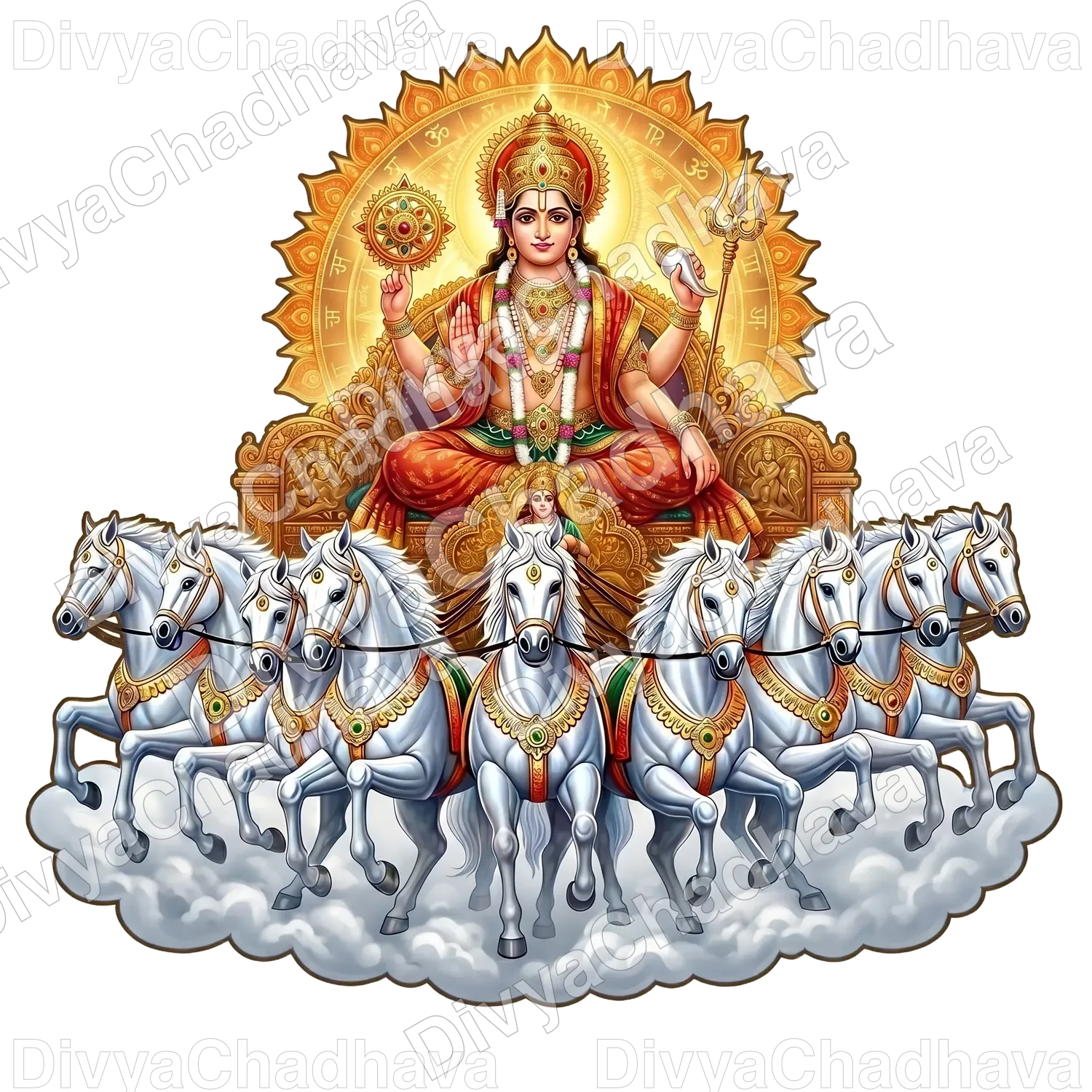
Taught by Sage Agastya to Lord Rama before his battle with Ravana, Aditya Hridayam is a powerful stotra to Surya Dev for strength, victory and inner radiance.
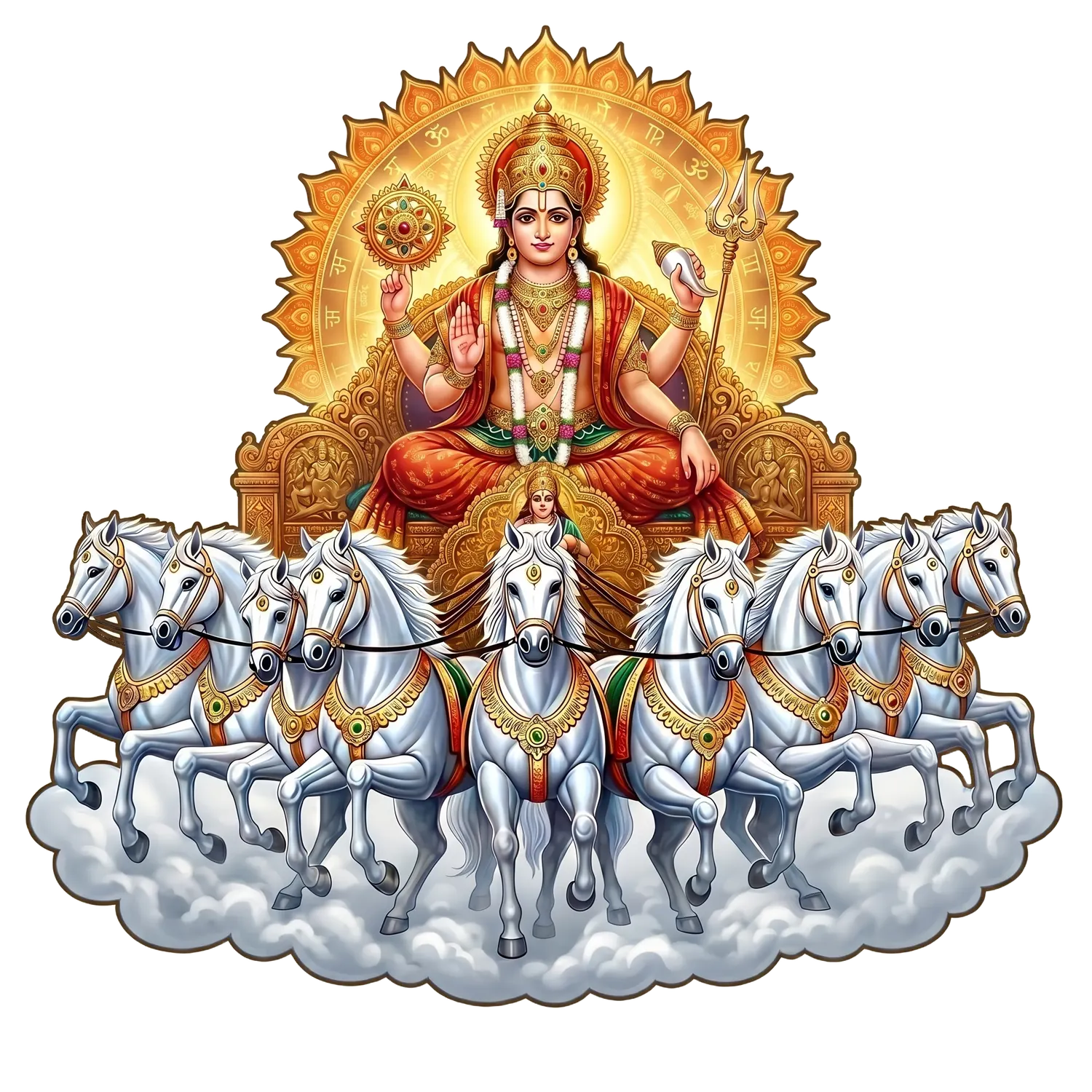
Aditya Hridayam, "the heart of the Sun," is a stotra from the Yuddha Kanda of Valmiki Ramayana. As Lord Rama stood weary on the battlefield, facing the seemingly invincible Ravana, Sage Agastya appeared before him and taught him this hymn to Surya Dev, assuring him that its recitation would grant the strength, focus and radiance needed to conquer his enemy. Rama recited it with a purified heart, gained fresh vigour, and went on to defeat Ravana. Since then, Aditya Hridayam has been chanted by devotees seeking courage, victory over obstacles, good health and inner brilliance.
The Context: Agastya's Teaching to Rama
The stotra opens with the sage approaching the battle-worn Rama:
ततो युद्धपरिश्रान्तं समरे चिन्तया स्थितम्। रावणं चाग्रतो दृष्ट्वा युद्धाय समुपस्थितम्॥
दैवतैश्च समागम्य द्रष्टुमभ्यागतो रणम्। उपागम्याब्रवीद्राममगस्त्यो भगवानृषिः॥
राम राम महाबाहो शृणु गुह्यं सनातनम्। येन सर्वानरीन् वत्स समरे विजयिष्यसि॥
Meaning: Then, seeing Rama standing wearied by the battle, contemplating, with Ravana approaching for combat, and the gods having gathered to witness the war, the venerable sage Agastya came to Rama and said: "O Rama, Rama, mighty-armed one, listen to this eternal secret by which, my son, you shall conquer all your enemies in battle."
Complete Aditya Hridayam Stotra (Devanagari)
आदित्यहृदयं पुण्यं सर्वशत्रुविनाशनम्। जयावहं जपेन्नित्यमक्षय्यं परमं शिवम्॥ १॥
सर्वमङ्गलमाङ्गल्यं सर्वपापप्रणाशनम्। चिन्ताशोकप्रशमनमायुर्वर्धनमुत्तमम्॥ २॥
रश्मिमन्तं समुद्यन्तं देवासुरनमस्कृतम्। पूजयस्व विवस्वन्तं भास्करं भुवनेश्वरम्॥ ३॥
सर्वदेवात्मको ह्येष तेजस्वी रश्मिभावनः। एष देवासुरगणाँल्लोकान् पाति गभस्तिभिः॥ ४॥
एष ब्रह्मा च विष्णुश्च शिवः स्कन्दः प्रजापतिः। महेन्द्रो धनदः कालो यमः सोमो ह्यपां पतिः॥ ५॥
पितरो वसवः साध्या ह्यश्विनौ मरुतो मनुः। वायुर्वह्निः प्रजाप्राण ऋतुकर्ता प्रभाकरः॥ ६॥
आदित्यः सविता सूर्यः खगः पूषा गभस्तिमान्। सुवर्णसदृशो भानुर्हिरण्यरेता दिवाकरः॥ ७॥
हरिदश्वः सहस्रार्चिः सप्तसप्तिर्मरीचिमान्। तिमिरोन्मथनः शम्भुस्त्वष्टा मार्तण्ड अंशुमान्॥ ८॥
हिरण्यगर्भः शिशिरस्तपनोऽहस्करो रविः। अग्निगर्भोऽदितेः पुत्रः शङ्खः शिशिरनाशनः॥ ९॥
व्योमनाथस्तमोभेदी ऋग्यजुःसामपारगः। घनवृष्टिरपां मित्रो विन्ध्यवीथीप्लवङ्गमः॥ १०॥
आतपी मण्डली मृत्युः पिङ्गलः सर्वतापनः। कविर्विश्वो महातेजाः रक्तः सर्वभवोद्भवः॥ ११॥
नक्षत्रग्रहताराणामधिपो विश्वभावनः। तेजसामपि तेजस्वी द्वादशात्मन्नमोऽस्तु ते॥ १२॥
नमः पूर्वाय गिरये पश्चिमायाद्रये नमः। ज्योतिर्गणानां पतये दिनाधिपतये नमः॥ १३॥
जयाय जयभद्राय हर्यश्वाय नमो नमः। नमो नमः सहस्रांशो आदित्याय नमो नमः॥ १४॥
नम उग्राय वीराय सारंगाय नमो नमः। नमः पद्मप्रबोधाय मार्तण्डाय नमो नमः॥ १५॥
ब्रह्मेशानाच्युतेशाय सूर्यायादित्यवर्चसे। भास्वते सर्वभक्षाय रौद्राय वपुषे नमः॥ १६॥
तमोघ्नाय हिमघ्नाय शत्रुघ्नायामितात्मने। कृतघ्नघ्नाय देवाय ज्योतिषां पतये नमः॥ १७॥
तप्तचामीकराभाय वह्नये विश्वकर्मणे। नमस्तमोऽभिनिघ्नाय रुचये लोकसाक्षिणे॥ १८॥
Meaning of Key Verses
The opening verses (1-2) describe Aditya Hridayam as sacred, destroying all enemies, bestowing victory, eternal, and the supreme auspiciousness that destroys all sin, dispels worry and grief, and grants long life. Verses three and four describe Surya as radiant, worshipped by both gods and demons, the lord of the worlds, who sustains all beings with his rays and is the very soul of all deities.
Verses five through twelve are a remarkable litany identifying Surya with virtually every major deity and cosmic principle — Brahma, Vishnu, Shiva, Skanda, Indra, Kubera, Kaal, Yama, Soma, the Vasus, the Ashwini Kumaras, Vayu, Agni — affirming that the Sun is the single source and sustainer from which all divine forces manifest, "the light of all lights."
Verse nineteen states that it is Surya alone who creates, nourishes, gives rain and burns away impurity through his rays; verse twenty says he remains awake even when all beings sleep, and is himself both the fire-offering and its fruit. Verse twenty-two, central to the stotra's purpose, promises that one who remembers Surya in this way amid calamities, hardship, forests or fear does not perish. Verse twenty-three instructs that reciting this hymn with focus three times will bring victory in battle, and the following verse has Agastya directly assuring Rama that in that very moment he would slay Ravana. The final verses describe Rama, freed from sorrow, gazing at the sun, purifying himself, taking up his bow with renewed vigour and joyfully advancing to defeat Ravana, while Surya himself watched with delight from amidst the assembly of gods.
How to Chant Aditya Hridayam
1. It is best recited at sunrise, facing the rising sun, ideally on a Sunday. 2. Offer arghya (water) to Surya Dev in a copper vessel, and if possible have a red flower or roli in the water. 3. Recite the stotra with a calm, focused mind; the text itself recommends chanting it three times (trigunitam) for the fullest benefit before undertaking a challenging task. 4. Many devotees combine it with the Surya mantra (Om Suryaya Namah / Om Hraam Hreem Hraum Sah Suryaya Namah) and Surya Namaskar.
Benefits of Aditya Hridayam
Regular recitation is believed to grant physical strength, stamina and vitality, courage and clarity of mind before a challenging task, victory over obstacles and adversaries, relief from chronic worry and despondency, and general health and longevity, since Surya is regarded as the presiding deity of health (Arogya) in Sanatan Dharma.
Frequently Asked Questions
Who taught Aditya Hridayam to Rama and when? Sage Agastya taught it to Rama on the battlefield of Lanka, just before his final duel with Ravana, as recorded in the Yuddha Kanda of Valmiki Ramayana.
Can Aditya Hridayam be recited daily? Yes, many devotees recite it every morning at sunrise as part of their daily sadhana, not only before a specific challenge.
Is it only for facing enemies or battles? While its original context is Rama's battle with Ravana, devotees recite it broadly for strength, confidence, health and success in any difficult undertaking, since it is fundamentally a hymn to the life-giving, sustaining power of the Sun.
What is the ideal number of times to chant it? The stotra itself mentions chanting it three times (trigunitam japtva) for the stated benefit of victory, though a single heartfelt recitation each morning is also considered beneficial for regular practice.
Quick guide
Before you begin
Mantra
Ram mantra
Shri Ram Jai Ram Jai Jai Ram
Chant slowly with devotion for courage, truth, protection, and mental peace.
Bhav
Benefits devotees pray for
FAQ
Common questions
Who taught Aditya Hridayam to Rama?
Sage Agastya taught it on the battlefield of Lanka, just before Rama's final duel with Ravana.
Can it be recited daily?
Yes, many devotees recite it every sunrise as part of their daily sadhana.
Is it only for battles or facing enemies?
It is chanted broadly for strength, confidence, health and success, since it praises the Sun's life-giving power.
How many times should it be chanted?
The stotra recommends three recitations for its stated benefit, though a single daily recitation is also beneficial.
Book Surya Puja & Aditya Hridayam Path
Invoke Surya Dev's strength, radiance and protection with a dedicated puja and stotra path performed with full vidhi.