
 120 वर्षीय ग्रह चक्र
Vimshottari Dasha, the most widely used planetary-period system in Vedic astrology, maps out a 120-year cycle showing which planet governs each phase of your life — here is how it works and how to use it wisely.
Vimshottari Dasha is the most widely used dasha (planetary period) system in Vedic astrology, used by virtually every practising jyotishi to time events in a person's life. "Vimshottari" literally means "one hundred and twenty" in Sanskrit, referring to the total 120-year cycle through which the nine grahas (planets) take turns ruling different phases of a person's life. The system is believed to have been given by the sage Parashara and is considered especially accurate for predicting the timing of marriage, career changes, health issues, financial gains and losses, and other major life events.
How the dasha sequence works
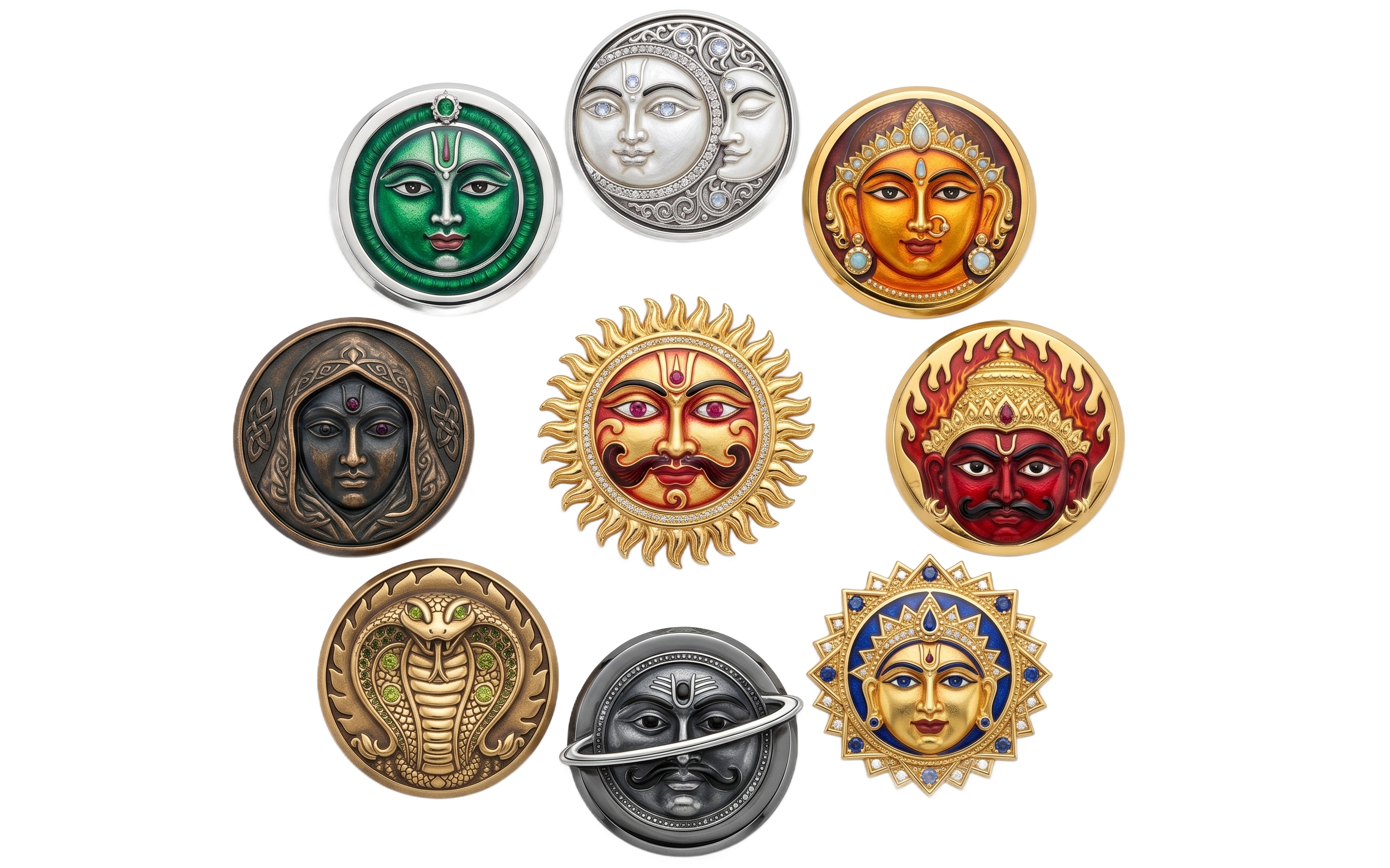
The 120-year Vimshottari cycle is divided among the nine grahas in a fixed order and with fixed durations: Ketu (7 years), Shukra/Venus (20 years), Surya/Sun (6 years), Chandra/Moon (10 years), Mangal/Mars (7 years), Rahu (18 years), Brihaspati/Jupiter (16 years), Shani/Saturn (19 years), and Budh/Mercury (17 years) — after which the cycle returns to Ketu and repeats. Each of these major periods is called a Mahadasha. Within every Mahadasha, all nine planets again take smaller sub-periods called Antardasha, and within each Antardasha there are even smaller Pratyantardasha periods, allowing astrologers to zoom in on very precise windows of time.
Which Mahadasha a person is born into, and at what point within it, is calculated from the exact position of the Moon in the birth chart at the moment of birth, specifically from the nakshatra (lunar mansion) the Moon occupies. Each of the twenty-seven nakshatras is assigned to one of the nine planets in a repeating cycle, and the degree the Moon has already travelled through that nakshatra at birth determines how much of that planet's Mahadasha has already elapsed before birth, and how much remains.
What each Mahadasha generally signifies
Ketu Mahadasha often brings detachment, spiritual searching, sudden unexpected changes and a pulling away from material ambitions. Shukra Mahadasha, being the longest at 20 years, generally brings comforts, relationships, marriage, artistic pursuits, wealth and pleasure, though excesses should be watched. Surya Mahadasha brings focus on authority, government, father-figures, career recognition and self-confidence, sometimes with some friction from ego or health of the eyes/heart. Chandra Mahadasha influences emotions, mother, home, mind and public popularity. Mangal Mahadasha brings energy, courage, property matters, siblings and sometimes conflict or accidents if afflicted. Rahu Mahadasha, though feared, can bring sudden material rise, foreign connections, unconventional success, but also confusion or restlessness if poorly placed. Brihaspati Mahadasha generally brings wisdom, teachers, children, wealth, spirituality and overall growth. Shani Mahadasha, the longest along with Venus, brings discipline, hard work, delays followed by durable results, and lessons in patience and responsibility. Budh Mahadasha influences intellect, communication, business, education and analytical skills.
Reading dasha with the birth chart
A dasha period is never read in isolation — its actual effect always depends on how that planet is placed in the individual's unique birth chart: which house it owns, which house it sits in, its strength (exaltation, debilitation, combustion), and the aspects and conjunctions it receives from other planets. A well-placed Jupiter Mahadasha for one person may bring career growth, while a weak, afflicted Jupiter for another may bring health worries related to the liver or excess weight. This is why the same Mahadasha can feel completely different for two different people, and why professional chart reading matters far more than a generic dasha description.
Using dasha wisely
Dasha analysis is a tool for preparation, not fear. A difficult Mahadasha (commonly Rahu, Ketu or an afflicted Shani) is best met with patience, disciplined routine, honest effort and the appropriate dharmic remedies rather than anxiety. Devotees often observe the corresponding planetary vrat, chant the relevant beej mantra, wear recommended colours on the planet's day, and perform charity connected with that graha to soften harsh transits while still working diligently toward their goals.
Disclaimer: Dasha readings describe traditional Vedic timing principles used alongside the full birth chart. They are offered in a spirit of faith and self-understanding, are not deterministic predictions of doom or certain fortune, and are not a substitute for professional medical, legal, financial or psychological advice.
Quick guide
Before you begin
Mantra
Devi mantra
Om Dum Durgaye Namah
Chant 11, 21, or 108 times according to your time and capacity.
Bhav
Benefits devotees pray for
FAQ
Common questions
How is Vimshottari Dasha calculated at birth?
It is calculated from the exact nakshatra occupied by the Moon at the moment of birth. Each nakshatra is linked to a ruling planet, and the degree already travelled within that nakshatra determines how much of that planet's Mahadasha has elapsed and how much remains at birth.
Which Mahadasha lasts the longest?
Venus (Shukra) and Saturn (Shani) Mahadashas are the longest, each lasting 20 and 19 years respectively, while the Sun's Mahadasha is the shortest at 6 years.
Does a difficult Mahadasha mean something bad will definitely happen?
No. A Mahadasha only describes the general theme and energy of a life phase; its actual outcome depends heavily on that planet's placement, strength and aspects in the individual's full birth chart, and can be softened through sincere remedies and effort.
What is the difference between Mahadasha and Antardasha?
Mahadasha is the major multi-year period ruled by one planet. Within it, Antardasha is a shorter sub-period during which a second planet's influence blends with the main Mahadasha planet's theme, giving more precise timing for events.
Seek Personalised Astrological Guidance
Every birth chart is unique. Let our pandits guide you with a puja or remedy suited to your specific dasha and planetary placements.