 ॐ ह्रीं स्त्रीं हूं फट्
The Tara Yantra channels the protective, wisdom-granting energy of Maa Tara, the second of the Dus Mahavidyas, guiding devotees safely through darkness and confusion.
Maa Tara is the second of the ten Mahavidyas, the great cosmic wisdom-forms of Adi Shakti, worshipped predominantly in the tantric and Shakta traditions. Her name itself means "star" or "one who ferries across" — she is the guiding light that helps a devotee cross the ocean of worldly suffering (bhavasagar), just as a star guides a sailor through a dark sea, and just as a mother helps her child cross a difficult passage of life. The Tara Yantra is the sacred geometric instrument through which her energy is invoked, focused and worshipped, allowing devotees to access her protective, wisdom-granting and transformative grace.
Who is Maa Tara
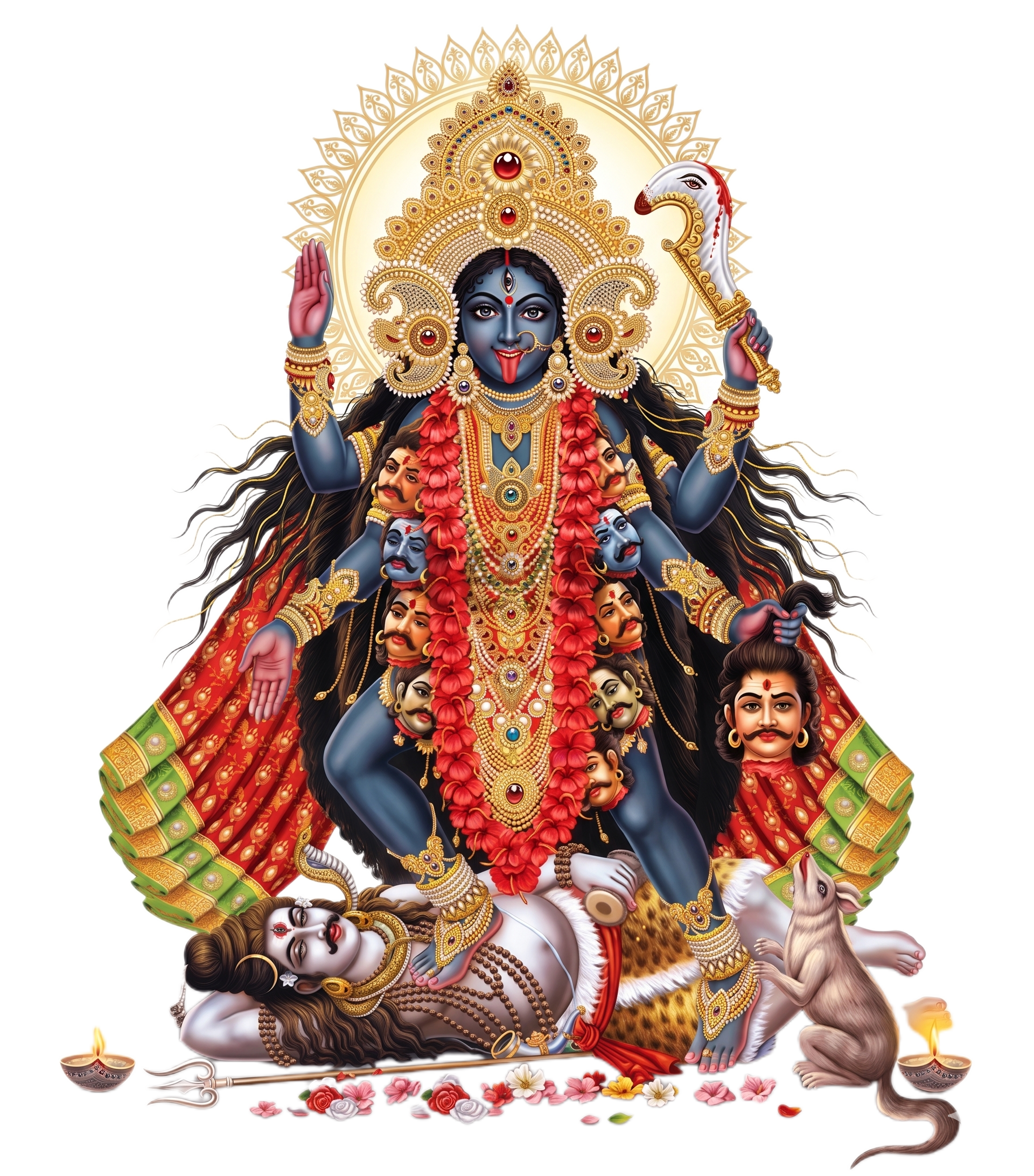
In the Dus Mahavidya tradition, Maa Tara is depicted with a fierce yet deeply compassionate form — often shown standing upon Bhagwan Shiva, garlanded, with a blue-tinged complexion symbolising the vastness of the sky and ocean, holding a sword, scissors, a blue lotus and a bowl. While her appearance may seem formidable, her essence is that of the ultimate protector and guide, particularly for those who feel lost, afraid, or trapped in confusion, ignorance or danger. She is closely associated with the Buddhist Tara as well, reflecting a shared archetype across traditions of the compassionate mother who saves.
Maa Tara is worshipped especially by seekers on the path of knowledge — students, scholars, writers, and those seeking clarity of speech and intellect (vaak siddhi). She is also invoked for protection during genuinely difficult or dangerous life passages, offering courage and swift deliverance.
Understanding the Tara Yantra
A yantra is a geometric diagram that represents the subtle form of a deity's energy, functioning as a focal point for meditation and worship, much like a physical embodiment of the mantra itself. The Tara Yantra typically consists of interlocking triangles (representing Shakti and Shiva in union), surrounded by a lotus of petals symbolising purity and unfoldment, and enclosed within a bhupura, the outer square boundary representing the earth plane and stability, with gateways on each side.
At the centre of the Tara Yantra sits the bindu, the point representing the concentrated, formless essence of Maa Tara herself, from which all her manifest powers emanate. Meditating upon or worshipping this yantra is believed to draw the devotee's consciousness inward, dissolving confusion, fear and mental darkness, and awakening clarity, courage and protection.
Benefits of Worshipping the Tara Yantra
Devotees worship the Tara Yantra for several sincere and dharmic purposes. It is believed to grant protection from danger, obstacles and negative influences, especially during periods of genuine crisis or uncertainty. It is considered auspicious for improving clarity of speech, memory and intellect, making it favoured by students and those in fields requiring sharp communication. It is also invoked for courage in the face of fear, for overcoming confusion in decision-making, and for gently dissolving deep-seated mental blocks and old patterns that keep a person stuck.
Because Maa Tara is associated with crossing over difficulties, her yantra is also worshipped by those going through a significant life transition, such as a new phase of career, education, health recovery or a major decision, seeking her guiding light to navigate safely to the other side.
How the Tara Yantra is Installed and Worshipped
The yantra, whether drawn on paper, engraved on a metal plate, or a three-dimensional form, should be placed in a clean, sanctified space, ideally facing north or east, at a height comfortable for daily worship — never on the floor. Before installation, it is customary to purify the yantra with Gangajal and invoke Maa Tara's presence into it through a simple prana pratishtha (a short prayer inviting the divine energy to reside within the form), which is best performed with guidance from a learned pandit for those unfamiliar with the process.
Daily worship involves lighting a diya, offering red or blue flowers, a little water, and reciting Maa Tara's mantra with a calm, sincere heart. Tuesdays and Fridays, as well as Navratri, are considered especially auspicious for this worship. It is important that the practice remain gentle, protective and devotional in nature, never aggressive or aimed at harming another — worship of the Mahavidyas is always approached with humility, purity of intent and under the umbrella of dharma.
The Tara Mantra
The most widely chanted beej mantra associated with Maa Tara is: "Om Hreem Streem Hoom Phat." A more elaborate mantra used by devotees is: "Om Hreem Streem Hoom Jam Jam Sah Jam Jam Sah Tam Tam Ram Ram Tarayai Namah." These mantras are traditionally chanted 108 times with a rudraksha or crystal mala, ideally at dawn or dusk, in a clean and quiet space, with a sincere heart and full faith.
A Gentle Reminder
Worship of Maa Tara and her yantra, like all the Mahavidyas, is meant to be approached with reverence, patience and purity. It is not a shortcut to worldly gain through force, nor should it ever be mixed with any harmful intention towards another person. When approached with a sincere, dharmic heart, seeking protection, clarity and courage, the Tara Yantra is believed to become a genuine source of light guiding the devotee safely through life's darkest passages, just as her name promises — the star that ferries the soul across.
Quick guide
Before you begin
Mantra
Kali mantra
Om Kreem Kalikayai Namah
Chant with humility while praying for courage, protection, and transformation.
Bhav
Benefits devotees pray for
FAQ
Common questions
Who should worship the Tara Yantra?
Students, writers, and anyone seeking clarity, courage or protection during a difficult life transition can worship the Tara Yantra with sincere, dharmic intent.
Where should the Tara Yantra be placed at home?
It should be placed in a clean, sanctified space, ideally facing north or east, at a comfortable height for daily worship, never on the floor.
What is the mantra for Maa Tara?
The core beej mantra is Om Hreem Streem Hoom Phat, traditionally chanted 108 times with a mala at dawn or dusk.
Is Tara Yantra worship safe for beginners?
Yes, when approached gently with humility and pure intent, it is safe; guidance from a learned pandit is recommended for the initial installation and prana pratishtha.
Invoke Maa Tara's Protective Grace
Let our pandits perform a sankalp-based Tara puja on your behalf for protection, clarity and courage.