

 सूर्यदेव स्तुति
The complete Surya Chalisa in Devanagari with meaning, benefits and the correct way to chant it for health, respect and success.
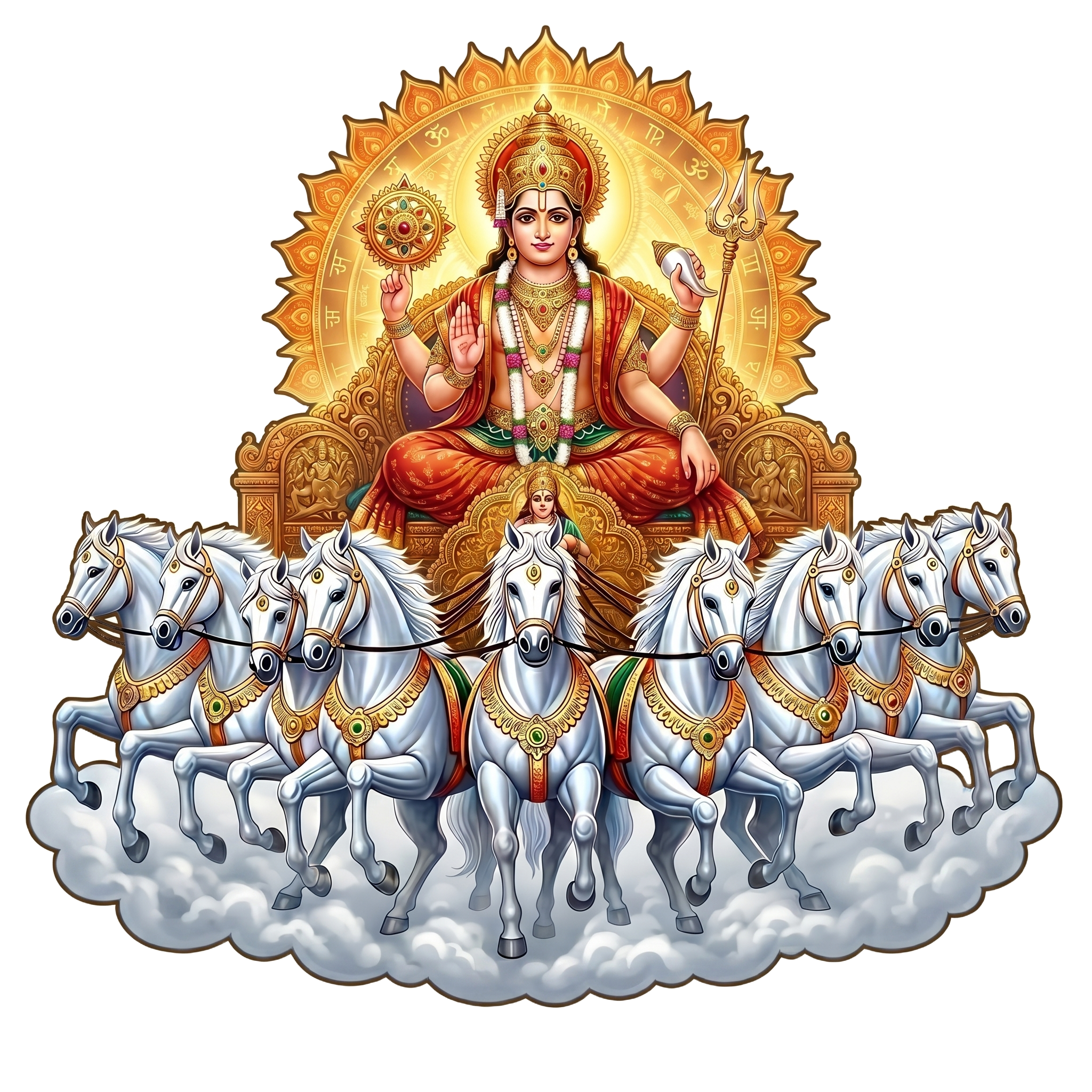
Surya Dev, the visible form of the Supreme, is the presiding deity of health, vitality, self-confidence, authority and worldly success. Among the Navagrahas he is the king (Raja Graha), and his light sustains every living being on earth. The Surya Chalisa is a devotional composition of forty verses that praises his radiant form, his seven-horse chariot, his charioteer Aruna, and his boundless compassion toward every soul who turns to him at sunrise.
Complete Surya Chalisa (Devanagari)
दोहा जय जय जय जगदीश प्रभु, जय हे भास्कर देव। कृपा करहु मो पर सदा, हरहु अमंगल खेव॥
नमो नमो सूर्य देव तुम, तेज पुंज भगवान। सप्ताश्व रथ पर सदा, करत विश्व कल्यान॥
चौपाई
जय जय जय रवि देव कहावो। तेज रूप जग सबहि दिखावो॥ सप्त अश्व रथ पर असवारा। तेज रूप में सकल पसारा॥ अरुण सारथी संग बिराजे। रथ पर सूर्य देव छवि छाजे॥ सातों रंग किरण छिटकावो। नित नूतन जग को दरसावो॥ प्रात काल जब तुम मुसकाओ। तम हरि सकल जगत उजियाओ॥ कमल पुष्प तुम देखत खिलहीं। पक्षीगण तुम पूजत मिलहीं॥ तुम बिन जग में कछु न सोहे। तुम बिन जीव प्राण नहिं मोहे॥ तुम्हरे तेज सकल जग जागे। तुम्हरे तेज तिमिर सब भागे॥ तुम्हरे कारण ऋतु सब आवैं। तुम्हरे कारण फसल सुहावैं॥ नदी ताल सब जल तुम सुखावो। पुनि बरखा बन जल बरसावो॥ सकल विश्व के प्राणदाता हो। सकल जगत के तुम त्राता हो॥ रोग शोक सब दूर भगावो। भक्तन को नित निरोग बनावो॥ महा तेज में तुम्हरो धामा। कोई न पावै तुम्हरो पामा॥ सात लोक में तुम्हरी माया। सूर्य नमन सब देव कराया॥ तुम बिनु सृष्टि रुके सब काजा। तुम बिनु जग में फैले अंधेरा॥ तुम्हरो रूप निहारत भाई। पातक जाहिं सकल कटि जाई॥ राम कृष्ण तुम आदि सराहे। ऋषि मुनि सब तव चरण चाहे॥ गायत्री मंत्र तुम्हरो सारा। ब्रह्म तेज में तुम्हरो पारा॥ संध्या वंदन तुम बिन नाहीं। अरघ दान बिन पुण्य न पाहीं॥ छठ महापर्व तुम्हरे नामा। जग करे सकल तुम्हरो प्रणामा॥ जो कोई तुमको नित सिर नावै। ताकी सकल विपत्ति मिट जावै॥ नेत्र ज्योति तुम ही दे पावो। रोगी को आरोग्य बनावो॥ राजरोग सब दूर भगाई। तेज बुद्धि बल तुरत बढ़ाई॥ तुम्हरे भजन बिना नर सोई। जन्म व्यर्थ जग में सब खोई॥ तुम्हरे भजन करे जो कोई। ताकी मनसा पूरन होई॥ धन धान्य सुत सम्पति पावै। मान बड़ाई जग में पावै॥ राजा रंक सभी तुम ध्यावैं। तुम बिन कोउ न सुख उपजावैं॥ जल में थल में नभ में सोहो। तुम बिन जग को कोउ न मोहो॥ संकट में जो तुमको ध्यावै। सूर्य देव ताकर संकट टारे॥ जपत नाम तव रोग नसाई। बल बुद्धि विद्या अधिकाई॥ जो यह पाठ करे मन लाई। ताकी हो सब विधि भलाई॥ सूर्य चालीसा जो नित गावै। सुख सम्पति सुयश सो पावै॥ सात वार में रवि वार महाना। ताहि दिवस पूजा शुभ जाना॥ प्रातः काल उठि अरघ चढ़ावो। ताम्र पात्र जल संग सुहावो॥ रक्त पुष्प रोली अक्षत लेई। सूर्य मन्त्र जप श्रद्धा देई॥ गायत्री अरु सूर्य नमस्कारा। नित्य करे सो पावन पारा॥ जो यह चालीसा पढ़े सुनावै। ताकी सकल विपत्ति नसावै॥ रोग शोक सन्ताप हरावै। तन मन धन सुख सम्पति पावै॥ सूर्य देव जग के उजियारे। कृपा करहु मो पर हे प्यारे॥ सदा सहाय करहु मम स्वामी। जय जय जय हे अन्तर्यामी॥
दोहा सूर्य देव जग के प्रकाशक, हरहु सकल संताप। नित्य पाठ जो कोई करे, मिटहिं सकल परिताप॥
Meaning
The opening dohas bow to Surya Dev as lord of the universe, seeking his grace and the removal of every inauspiciousness, praising him as a mass of pure light who travels the sky on his chariot drawn by seven horses.
The chaupais that follow describe how the sun's chariot is driven by his charioteer Aruna, how his seven-colored rays reach every corner of creation, and how his morning smile lifts darkness and gladdens lotus flowers and birds alike. Nothing in the world would have life, energy or meaning without him. The seasons turn, crops ripen, and water evaporates and returns as rain because of his cycle. He is called the giver of life-breath (pran-data) and the protector of the three worlds.
The middle verses turn to his healing power: he removes disease, grief and sorrow, restores eyesight, grants strength and intellect, and is the deity invoked in the Gayatri Mantra, in daily Sandhya Vandan, and in the great festival of Chhath Puja where devotees offer arghya (water offering) at sunrise and sunset. Whoever bows the head to him daily finds obstacles removed.
The closing verses explain the fruit of chanting: wealth, honor, good health, wisdom and success come to one who recites the Chalisa with devotion, especially on Sunday (Ravivar) at sunrise with a copper vessel of water, red flowers, roli and rice offered as arghya. The final doha prays that all suffering be removed for whoever reads this Chalisa regularly.
Why Chant the Surya Chalisa
Surya is the karaka (significator) of the soul (atma), health, self-respect, authority, father and vitality in Vedic astrology. Chanting the Surya Chalisa is recommended for those facing low confidence, poor health or eyesight, weak father-relationships, lack of respect at work, or an afflicted Sun in the birth chart. It is also chanted to strengthen leadership qualities, government-related work, and general vitality.
How and When to Chant
The best time is at sunrise (facing east), especially on Sunday. Take a bath, offer water (arghya) to the rising sun in a copper vessel, light a ghee lamp, offer red flowers and red sandalwood, and then recite the Chalisa with full attention. Many devotees do a mala (108 repetitions) of the Surya mantra (Om Suryaya Namah or the Gayatri Mantra) after the Chalisa on Sundays for forty-one days as a sankalp (vow).
Dos and Don'ts
Avoid chanting immediately after a meal or in an unclean state. Do not look directly at the sun with bare eyes; simply face its direction with eyes lowered or closed while chanting. Maintain a satvik, simple diet on the day of the vow if possible, and avoid salt in one meal as a mark of restraint, as is traditional on Sundays dedicated to Surya.
Benefits
Regular recitation is believed to improve health, vitality, eyesight and confidence; bring respect, authority and success in career and public life; strengthen the relationship with one's father and elders; and gradually pacify an afflicted Sun in one's horoscope when combined with sincere devotion and dharmic conduct.
Frequently Asked Questions
Which day is best for chanting the Surya Chalisa? Sunday (Ravivar) at sunrise is considered the most auspicious day and time, though it can be chanted daily.
How many times should it be chanted? Once with full attention daily is sufficient; those observing a special sankalp often do it for forty-one or one hundred and eight days continuously.
Can women chant the Surya Chalisa during their monthly cycle? Traditions vary by family; many simply recite it mentally without formal ritual arghya during that period, and resume full ritual once comfortable — the sentiment of devotion matters most.
Is the Surya Chalisa connected to Chhath Puja? Yes, Surya worship through arghya at sunrise and sunset is the heart of Chhath Puja, and the Chalisa is often recited during this festival as an expression of gratitude to the Sun god.
Quick guide
Before you begin
Mantra
Surya mantra
Om Ghrinih Suryaya Namah
Chant at sunrise or during Surya arghya for energy, clarity, and discipline.
Bhav
Benefits devotees pray for
FAQ
Common questions
Which day is best for chanting the Surya Chalisa?
Sunday (Ravivar) at sunrise is considered the most auspicious day and time, though it can be chanted daily.
How many times should it be chanted?
Once with full attention daily is sufficient; those observing a special sankalp often do it for forty-one or one hundred and eight days continuously.
Can women chant the Surya Chalisa during their monthly cycle?
Traditions vary by family; many simply recite it mentally without formal ritual arghya during that period, and resume full ritual once comfortable — devotion matters most.
Is the Surya Chalisa connected to Chhath Puja?
Yes, Surya worship through arghya at sunrise and sunset is the heart of Chhath Puja, and the Chalisa is often recited during this festival.
Seek Surya Dev's Blessings
Book a Surya puja or Navagraha shanti seva conducted with full vidhi for health, respect and success.