 सर्वमंगल मांगल्ये
The Swastik is one of Sanatan Dharma's oldest and most sacred symbols, representing auspiciousness, well-being, and the cyclical nature of the cosmos, drawn at the threshold of nearly every Hindu home and ritual.
The Swastik is among the oldest and most widely recognised sacred symbols in Sanatan Dharma, found on temple walls, home thresholds, wedding invitations, account books, and the opening pages of scriptures. The word Swastik comes from the Sanskrit su, meaning good or auspicious, and asti, meaning to be, together forming svasti — that which brings well-being. The suffix ka simply forms the noun, giving us Swastik: the symbol of that which is good, auspicious, and life-affirming.
Unlike a simple geometric decoration, the Swastik carries deep cosmological meaning. Its four arms are traditionally understood to represent the four directions, the four Vedas, the four yugas, the four ashramas (stages of life), or the four purusharthas — dharma, artha, kama and moksha, the four legitimate aims of human life. The bent arms, all turning in the same direction, symbolise the eternal cyclical movement of the universe — creation, sustenance, dissolution, and renewal — echoing the Hindu understanding of time as a wheel rather than a straight line.
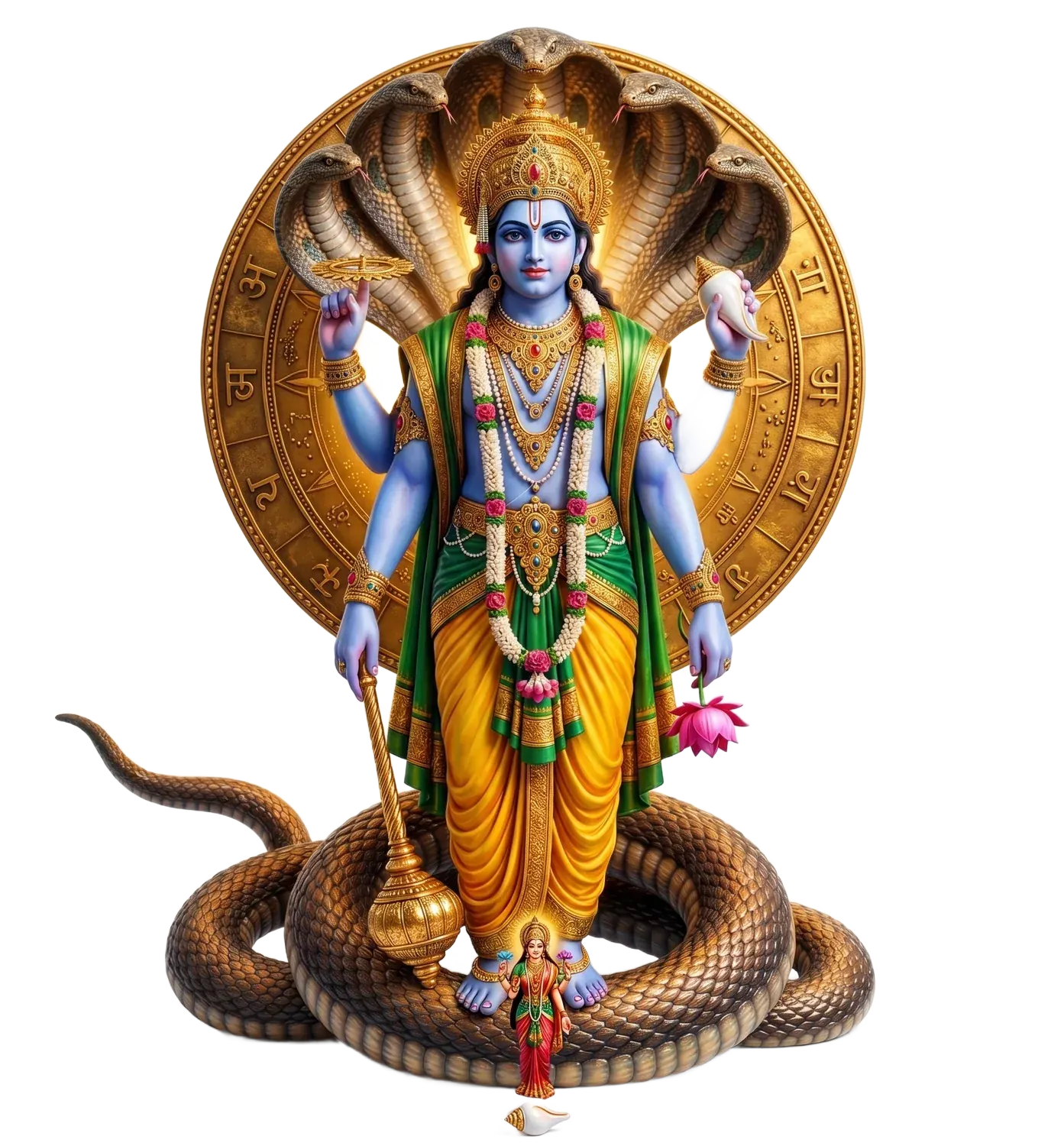
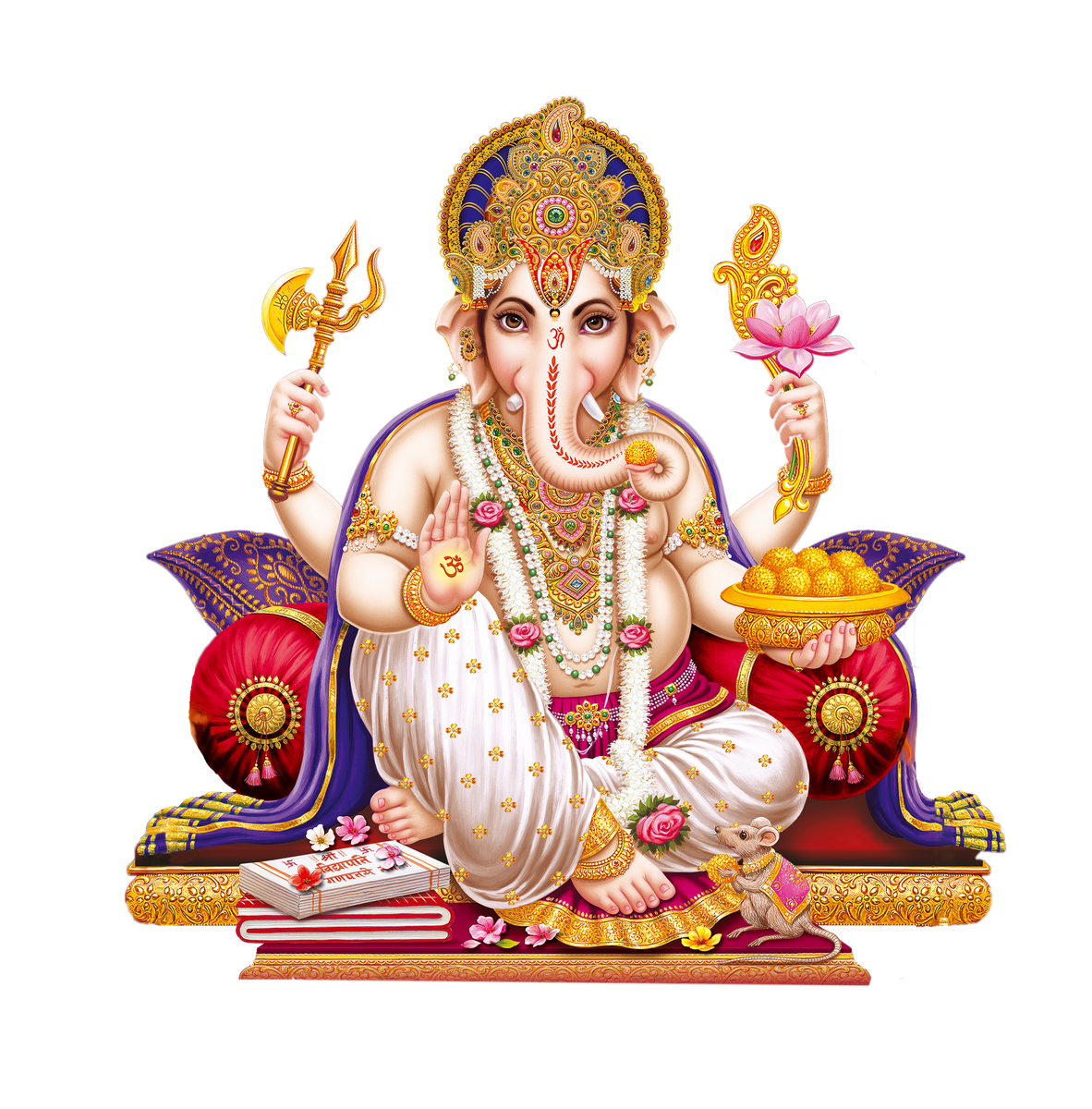
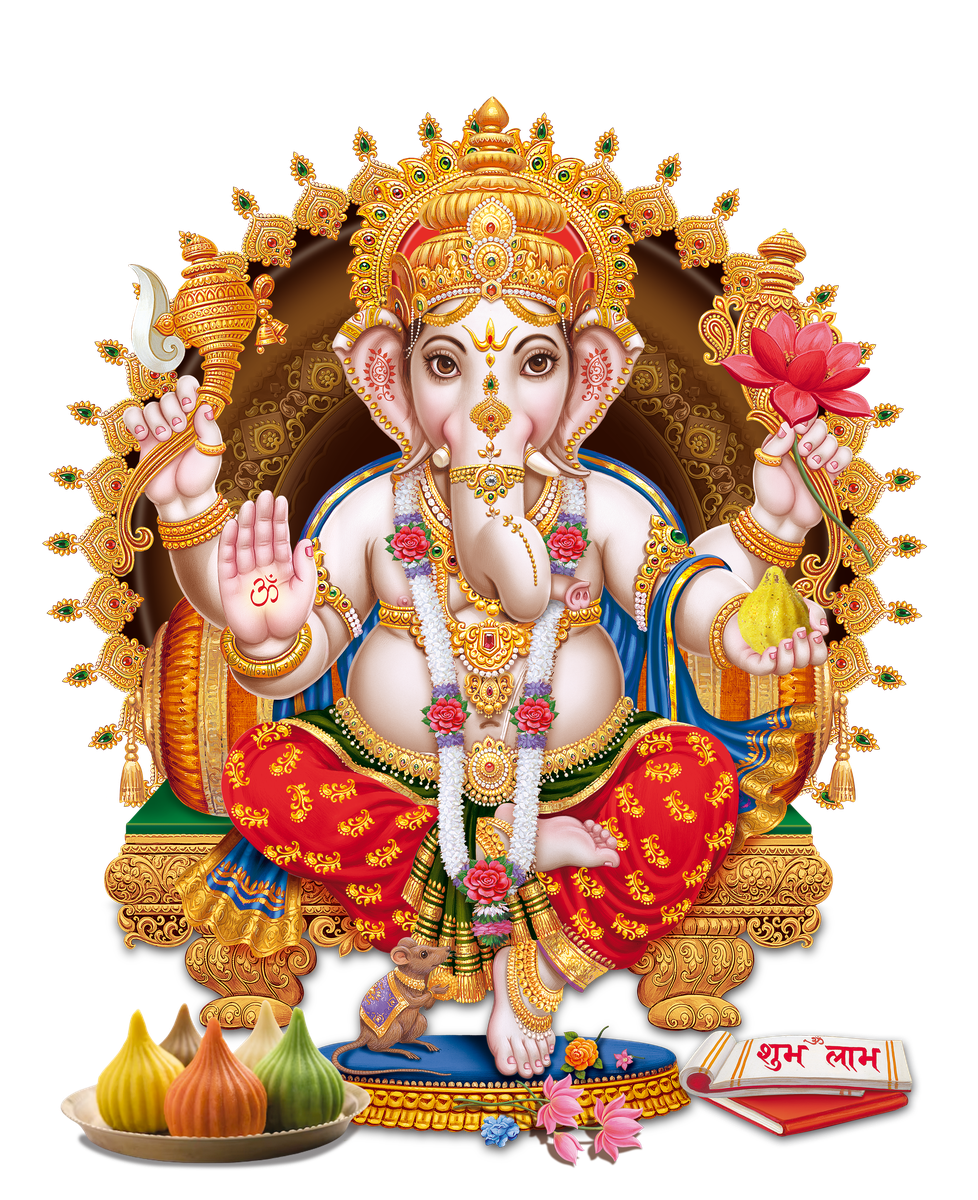
The Swastik is closely associated with several deities. It is regarded as one of the most auspicious symbols connected with Lord Ganesha, invoked at the very start of any undertaking to ensure it is free of obstacles, and it is also linked with Surya, the sun god, whose rays and cyclical movement across the sky the symbol is sometimes said to represent. In Vaishnav tradition it is associated with Lord Vishnu as a mark of cosmic order, and in Jain and Buddhist traditions too, closely related symbols carry similarly auspicious meanings, showing how deeply this sign is woven into the shared dharmic heritage of the subcontinent.
How the Swastik is drawn and used
The traditional Swastik is drawn with the arms bent clockwise, often accompanied by four dots, one in each quadrant, representing the four goals of life or the four directions of blessing. It is typically drawn in vermillion (kumkum), turmeric, or sacred rice-flour paste (rangoli), most commonly at the entrance of homes, on the kalash used in puja, on the first page of new account books during Diwali, and at the mandap during weddings and other sacred ceremonies.
Before starting any auspicious task, be it a wedding, a house-warming (griha pravesh), the opening of a new business, or the beginning of a puja, drawing a Swastik is considered a way of formally inviting divine blessings and positive energy, and of signalling the removal of obstacles before the work commences. It is customarily drawn before lighting a lamp or performing the main rituals, so that the space itself is first sanctified.
A note on the modern misuse of a sacred symbol
It must be clearly understood that the ancient, sacred Swastik of Sanatan Dharma — with its clockwise arms and life-affirming meaning of well-being and cosmic order — bears no relation to the mirrored, tilted symbol misappropriated in the twentieth century for entirely different and hateful purposes. The dharmic Swastik has been worshipped for thousands of years across India and much of Asia as a mark of purity, prosperity, and the eternal wheel of dharma, and it continues to be drawn with love and reverence in millions of Hindu homes every single day.
Conclusion
Far more than decoration, the Swastik is a living prayer drawn in a few simple strokes — an invocation of auspiciousness, a reminder of cosmic balance, and a mark of the eternal cycle that governs all creation. Drawing it with a sincere heart at the start of any endeavour continues to be one of the simplest and most powerful practices in Hindu devotional life.
Quick guide
Before you begin
Mantra
Ganesh mantra
Om Gam Ganapataye Namah
Chant before beginning the puja, aarti, study, business, or any new work.
Bhav
Benefits devotees pray for
FAQ
Common questions
What does the word Swastik literally mean?
Swastik comes from the Sanskrit su (good, auspicious) and asti (to be), together meaning svasti, that which brings well-being; the ka suffix simply forms the noun form, Swastik.
Why are there four dots around the Swastik?
The four dots often placed in the corners represent the four directions, the four Vedas, or the four purusharthas (dharma, artha, kama, moksha), completing the symbol's meaning of universal auspiciousness.
Is the Hindu Swastik the same as the symbol misused in the 20th century?
No. The sacred Hindu Swastik is drawn with arms turning clockwise and carries an ancient, life-affirming meaning of well-being; it bears no relation to the tilted, mirrored symbol later misappropriated for hateful purposes.
Where should a Swastik be drawn at home?
It is most commonly drawn at the main entrance threshold, on the kalash during puja, on new account books at Diwali, and at wedding mandaps, always before the main ritual begins.
Invite Auspiciousness Home
Begin your next important undertaking with a puja performed with full devotion and vidhi-vidhan.