 ॐ इत्येकाक्षरं ब्रह्म
Om is regarded in Sanatan Dharma as the primal sound of the universe, the vibration from which all creation arose, and the truest name of the formless Brahman.
Few symbols in the world carry as much spiritual weight in as small a form as Om (ॐ). A single syllable, drawn in a distinctive curved script, Om is chanted at the start and end of prayers, inscribed on temple walls, tattooed on skin, and hung on doorways across the Hindu world. But what does it actually mean, and why is it considered the most sacred sound in Sanatan Dharma?
What Is Om?
Om, also written as Aum, is described in the scriptures as Pranava, the primal sound, and as Shabda Brahman, the sound form of the formless Absolute. The Mandukya Upanishad, an entire Upanishad devoted to this single syllable, declares: Om ityetadaksharam idam sarvam, meaning this syllable Om is all this, the whole universe. It is considered the sound that existed before creation and the vibration from which the entire cosmos manifested.
The Three-and-a-Half Matras: A, U, M and Silence
Om is not one sound but a combination of three sounds, A, U, and M, followed by a fourth, silent state.
A (अ) represents the waking state (Jagrat) and the beginning of creation, associated with Brahma, the creator.
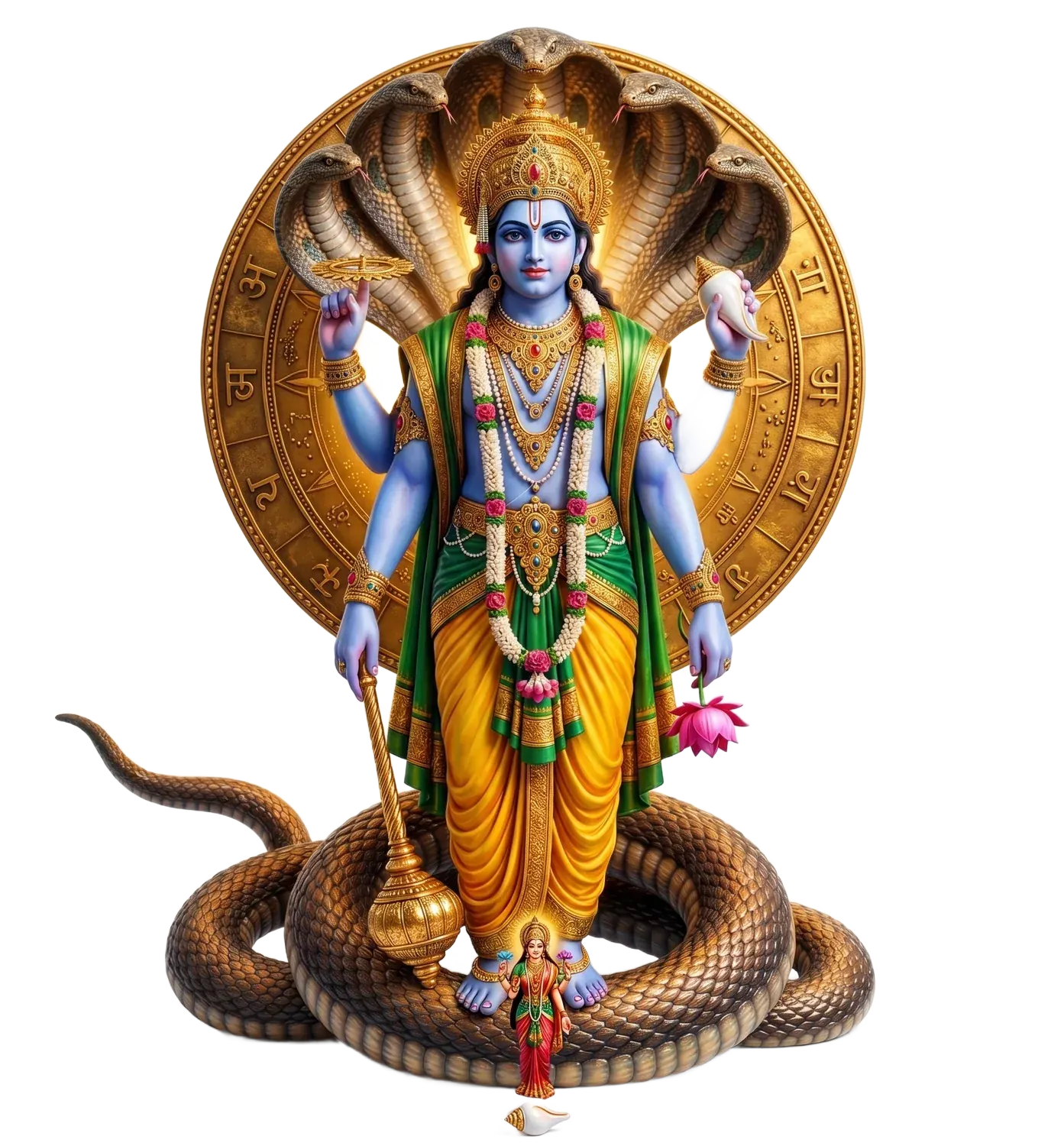
U (उ) represents the dream state (Swapna) and the sustaining of creation, associated with Vishnu, the preserver.
M (म) represents the state of deep sleep (Sushupti) and the dissolution of creation, associated with Shiva, the destroyer and transformer.
The silence that follows the audible M, called the fourth state or Turiya, represents pure consciousness itself, beyond waking, dreaming, and deep sleep, the substratum on which all three states rest. This silence is considered the most important part of Om, for it points to the Atman, the true Self, which is one with Brahman.
Om in the Vedas and Upanishads
Om appears at the very opening of the Vedas and is used to begin and conclude the recitation of mantras, hymns, and scriptural readings. The Upanishads repeatedly point to Om as the best support for meditation on Brahman. The Katha Upanishad states that this syllable is indeed Brahman, and whoever knows this syllable obtains whatever he desires. The Chandogya Upanishad opens with a meditation on Om as Udgitha, the sound sung at the beginning of Vedic chants, calling it the essence of all essences.
Om as the Root of All Mantras
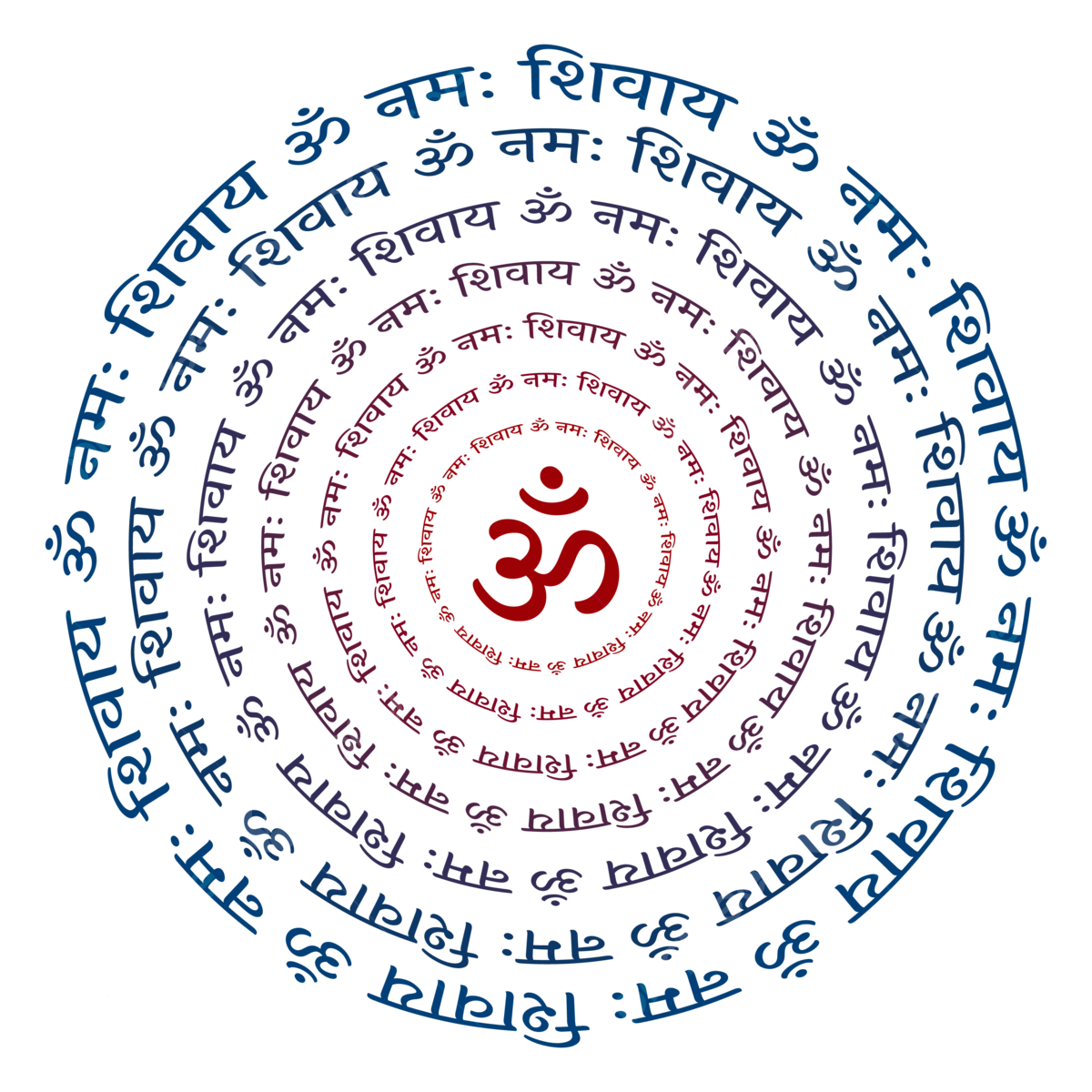
Almost every mantra in Hindu worship begins with Om, whether it is Om Namah Shivaya, Om Namo Bhagavate Vasudevaya, or the Gayatri Mantra. This is because Om is considered the seed sound (bija mantra) from which all other sacred sounds emerge, much as all colours arise from white light. Chanting Om before any mantra is believed to attune the mind and prepare the inner atmosphere for the deity being invoked.
The Physical and Symbolic Form of Om
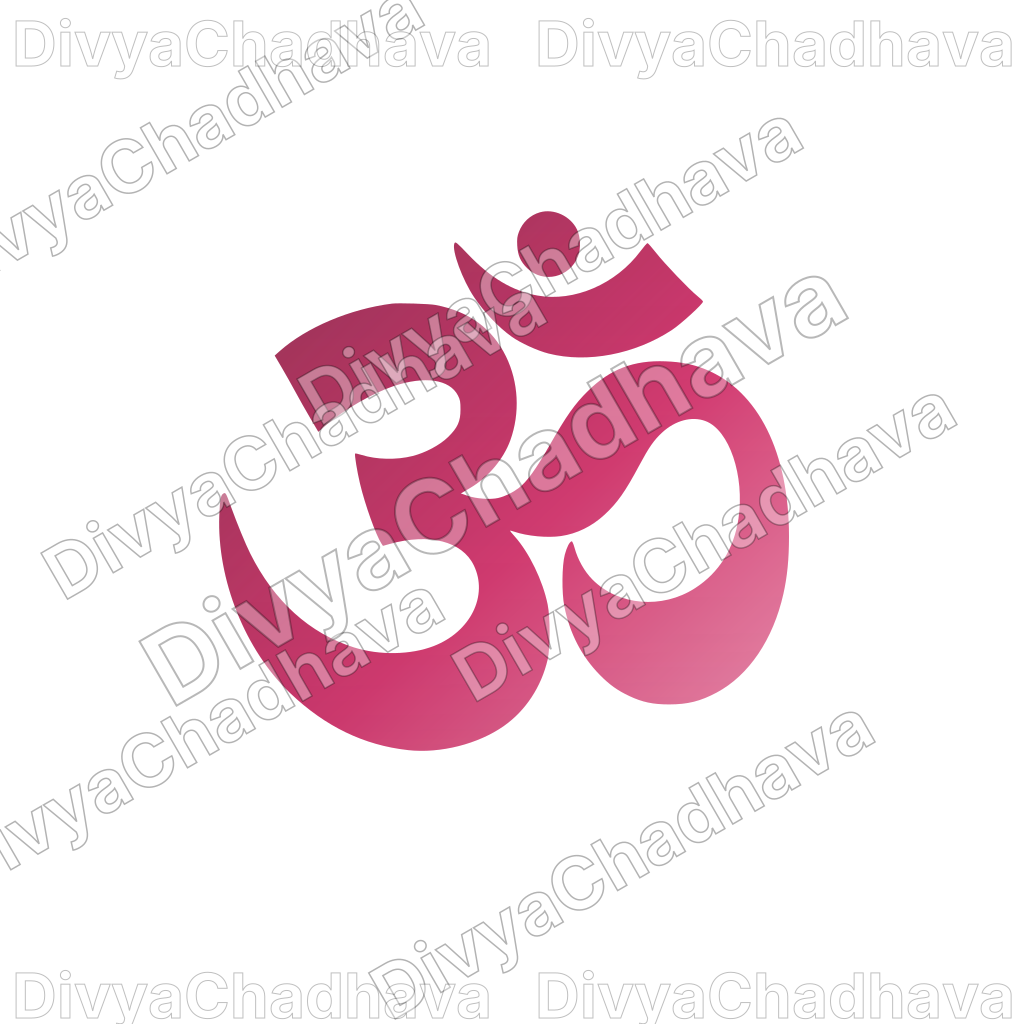
The written symbol of Om in Devanagari script is itself rich with meaning. Various interpretations describe its curves as representing the three states of consciousness, the crescent moon and bindu (dot) above representing Maya (illusion) and the transcendence beyond it into the fourth state. Many traditions see the entire symbol as a visual map of the journey of consciousness, from the material world through dream and deep sleep to final liberation.
Benefits of Chanting Om
Regular chanting of Om, particularly at dawn or dusk in a quiet space, is believed to bring several benefits rooted in centuries of yogic and spiritual practice: it calms and focuses the mind, reduces stress and anxiety, improves concentration for meditation, purifies the space and the chanter's inner atmosphere, and gradually connects the practitioner with a sense of deeper peace and unity with the universe. Chanting Om is also said to align the energy centres (chakras), especially when the vibration of the humming M is felt resonating in the crown of the head.
How to Chant Om
Om is best chanted sitting in a comfortable, upright posture, eyes closed, in a calm environment. Take a deep breath, and as you exhale, chant Om slowly, elongating the A sound, then the U sound, then closing into the humming M sound, and finally resting in the silence that follows before the next breath. Traditionally, Om is chanted in sets, such as 11, 21, or 108 times, often using a mala (rosary) to keep count. It can be chanted aloud, in a whisper, or silently in the mind (manasik jaap), each considered progressively more subtle and powerful.
Om in Daily Life
Beyond formal meditation, Om is used to begin auspicious activities, is inscribed at the top of letters, invitations, and account books in many households, and is placed at entrances as a symbol of protection and blessing. It is also the first sound many children in Hindu families are taught, often during the Namkaran (naming) or Vidyarambha (start of education) ceremonies, as it is believed to awaken wisdom and connect the child with the divine from the very start of formal learning.
Conclusion
Om is far more than a symbol or a sound; it is regarded as the very heartbeat of existence, the bridge between the manifest world and the unmanifest Absolute. To chant Om with sincerity is, in the understanding of the rishis, to touch the same vibration from which all creation sprang, and to remember, even briefly, one's own true nature as one with that eternal source.
Quick guide
Before you begin
Mantra
Shiva mantra
Om Namah Shivaya
Chant with a quiet mind, especially on Monday, Pradosh, or during Shiva puja.
Bhav
Benefits devotees pray for
FAQ
Common questions
What do the letters A, U, M in Om represent?
A represents the waking state and Brahma the creator, U represents the dream state and Vishnu the preserver, and M represents deep sleep and Shiva the transformer. The silence after M represents the fourth, transcendent state of pure consciousness.
Why is Om chanted before most Hindu mantras?
Om is considered the seed sound (bija mantra) from which all other sacred sounds arise. Chanting it first is believed to attune the mind and create the right inner atmosphere before invoking a specific deity or intention.
How many times should Om be chanted?
There is no fixed rule, but traditionally Om is chanted in sets of 11, 21, or 108 times, often counted using a mala. Even a few minutes of sincere chanting daily is considered beneficial.
Can anyone chant Om, regardless of religion or background?
Yes, Om is regarded as a universal sound representing the underlying vibration of existence, and its chanting for calm and meditation is open to anyone with sincere and respectful intent.
Begin Your Day with Sacred Sound
Explore guided pujas and mantra sadhanas that carry the vibration of Om into your home and heart.