



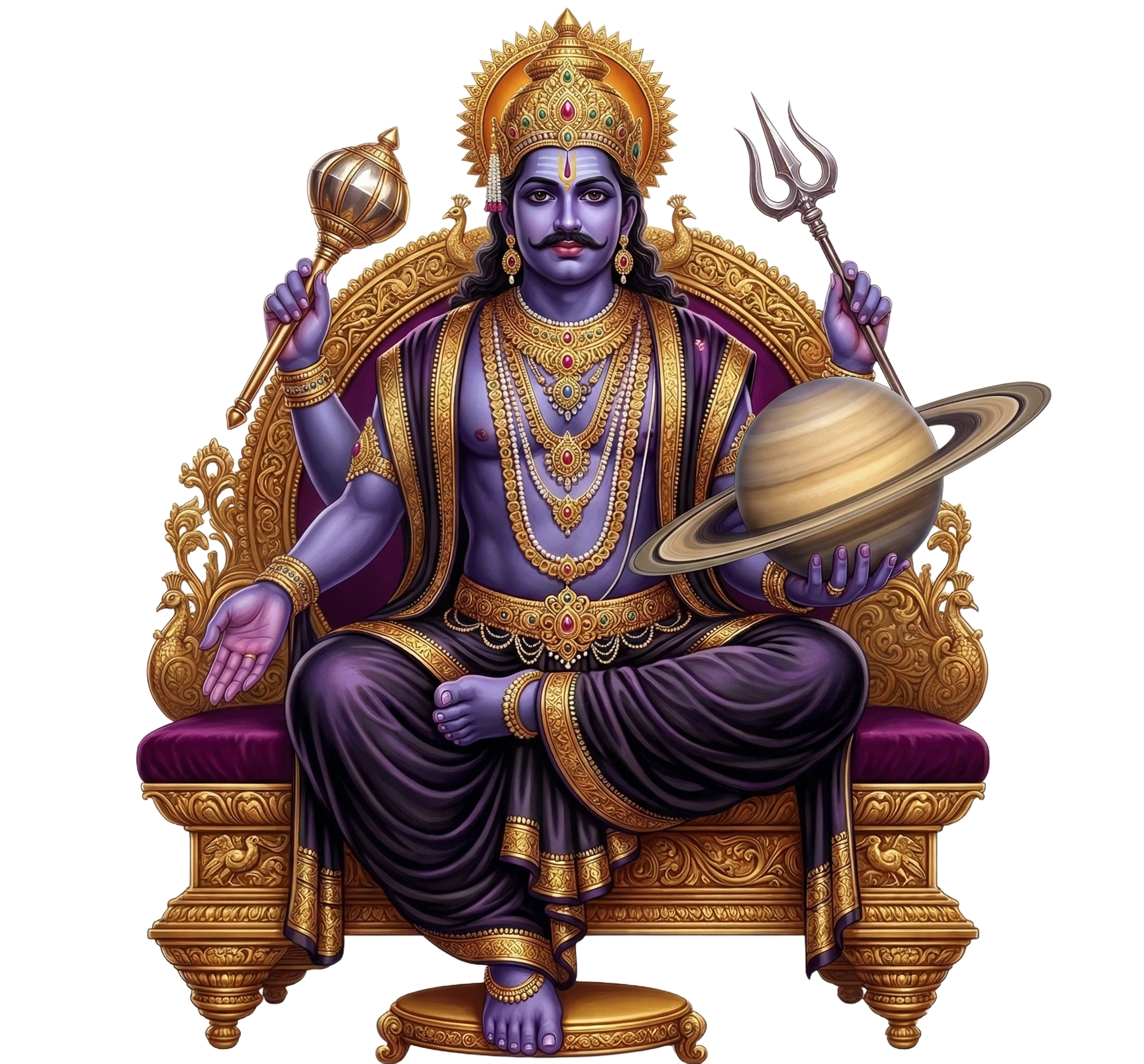
 छोटी पनोती
Shani Dhaiya, the shorter two-and-a-half year Saturn transit, tests patience and discipline in specific areas of life without the intensity of Sade Sati.
Shani, or Saturn, is often called the strictest but fairest teacher among the nine grahas of Vedic astrology. He does not punish without reason — he tests, disciplines and, in time, rewards patience, honesty and hard work. Shani Dhaiya, commonly known as "chhoti panoti" or small panoti, is one of the two major Saturn transit periods that every person experiences repeatedly through life, the other being the longer and more talked-about Sade Sati.
What Is Shani Dhaiya
Shani takes roughly two and a half years to transit through each zodiac sign, since his full cycle around the zodiac takes about 29.5 years. Shani Dhaiya refers to the period when transiting Saturn occupies the fourth house or the eighth house counted from a person's Moon sign (Chandra Rashi) in their birth chart. Because this transit lasts about two and a half years — half the duration of Sade Sati's seven and a half years — it earns the name "dhaiya," meaning "two and a half."
Unlike Sade Sati, which unfolds in three phases across the 12th, 1st (Moon sign itself) and 2nd houses from the Moon, Dhaiya has just one continuous phase, focused specifically on the 4th house (home, mother, emotional peace, property, vehicles) or the 8th house (sudden events, transformation, in-laws, hidden matters, health).
Effects of Shani Dhaiya
When Shani transits the 4th house from the Moon, its influence is often felt around:
Domestic peace and relationship with mother or home environment.
Property, vehicles and real estate matters — delays, disputes or unexpected expenses.
Emotional steadiness — a tendency toward overthinking, mild anxiety or restlessness.
Relocation or renovation-related upheaval.
When Shani transits the 8th house from the Moon, effects are often associated with:
Sudden, unexpected changes — in job, health, or family circumstances.
In-law relationships and matters connected to inheritance or shared finances.
A period requiring careful attention to health, particularly avoiding recklessness.
Deep inner transformation — many describe this period as one of significant personal growth once it passes, even if it feels heavy while ongoing.
As with all Saturn transits, the specific intensity depends on Saturn's natal placement, its relationship with other planets in the individual birth chart, and the dashas running concurrently. A generally strong, well-placed Saturn in the birth chart tends to make Dhaiya far gentler; a weak or afflicted Saturn tends to make it feel heavier.
How Shani Dhaiya Differs From Sade Sati
People often confuse the two, so it helps to be clear: Sade Sati lasts about seven and a half years across three signs relative to the Moon and is considered the more intense, life-reshaping Saturn period. Shani Dhaiya lasts about two and a half years, affects only the 4th or 8th house from the Moon, and is generally considered more localized and manageable — testing specific life areas (home/property or sudden change/health) rather than the whole of one's life circumstances at once.
The Deeper Meaning
Vedic tradition does not see Shani as a malefic force to be feared, but as karma made visible. Shani Dhaiya, like Sade Sati, is understood as a period when past efforts, patience and integrity are tested and rewarded, and where shortcuts, dishonesty or laziness tend to be gently but firmly corrected. Many devotees describe the period, in hindsight, as one that built resilience, discipline and maturity they carry for the rest of their lives.
Dharmic Remedies for Shani Dhaiya
Weekly worship of Lord Hanuman, especially on Saturdays, since Hanuman ji's devotion and strength are believed to soften Shani's harshness. Reciting the Hanuman Chalisa regularly is widely recommended.
Chanting the Shani mantra: Om Sham Shanicharaya Namah, ideally 108 times on Saturdays.
Lighting a mustard oil (til/sarson ka tel) lamp before Lord Shani or Lord Hanuman on Saturdays.
Offering til (sesame), urad dal, mustard oil, iron items or black cloth in charity to the needy on Saturdays.
Feeding crows and stray dogs, both associated with Shani in tradition.
Respecting labourers, the elderly, and those less fortunate — Shani is said to bless those who treat others, especially the underprivileged, with fairness and humility.
Practising patience and discipline consciously: keeping commitments, avoiding shortcuts, and maintaining honesty in work and relationships.
Wearing a blue sapphire (neelam) or other Shani-related gemstone is sometimes suggested in classical texts, but this should only be done after proper astrological consultation, as it does not suit every chart and can be counterproductive if wrongly prescribed.
A Gentle Note
Shani Dhaiya is a well-known concept in Vedic astrology meant to help people understand and navigate a period of testing with patience rather than fear. Its effects vary significantly from person to person based on the full birth chart, not just the Moon sign transit alone. This period, like all astrological influences, should be approached with steady effort and faith, not anxiety — and any serious health, legal or financial concern during this time deserves proper professional attention alongside spiritual practice.
Frequently Asked Questions
How is Shani Dhaiya calculated for me? It is based on your Moon sign (Rashi), not your Sun sign. When transiting Saturn is in the 4th or 8th sign from your Moon sign, you are in Shani Dhaiya.
Is Shani Dhaiya as difficult as Sade Sati? Generally it is considered milder and more localized, focused on specific life areas rather than one's overall life circumstances, and it lasts a shorter duration.
Can everyone experience Shani Dhaiya differently? Yes. The natal strength of Saturn, its house lordship, and other planetary influences in the individual's chart significantly shape how gently or heavily this period is felt.
What is the single most recommended remedy? Regular, sincere worship of Hanuman ji, especially the Hanuman Chalisa on Saturdays, is the remedy most commonly recommended across Shani-related periods.
Quick guide
Before you begin
Mantra
Shani mantra
Om Sham Shanaishcharaya Namah
Chant on Saturday with patience, honesty, and a commitment to right action.
Bhav
Benefits devotees pray for
FAQ
Common questions
How is Shani Dhaiya calculated for me?
It is based on your Moon sign. When transiting Saturn is in the 4th or 8th sign from your Moon sign, you are in Shani Dhaiya.
Is Shani Dhaiya as difficult as Sade Sati?
Generally it is considered milder, more localized, and shorter in duration than Sade Sati.
Can everyone experience Shani Dhaiya differently?
Yes, the natal strength of Saturn and other chart factors shape how it is felt.
What is the single most recommended remedy?
Regular, sincere worship of Hanuman ji, especially the Hanuman Chalisa on Saturdays.
Ease Shani's Effects with Puja
Book a Shani Shanti or Hanuman puja performed with complete vidhi by our pandits.