
 जय जय श्री राधे
The complete Radha Rani aarti in Devanagari with meaning, significance and the correct method of worship for the beloved of Braj.
Radha Rani, the eternal beloved of Krishna, is worshipped across Braj — in Barsana, Vrindavan, Radha Kund and Mathura — not merely as Krishna's consort but as the very embodiment of divine love, devotion and surrender. Devotees who follow the path of Radha bhakti hold that it is through her grace that one truly attains Krishna, which is why in Braj, greetings and blessings are exchanged not with "Jai Shri Krishna" but with "Radhe Radhe" or "Jai Shri Radhe."
The aarti sung to her every evening celebrates her as Vrishabhanu's beloved daughter, the queen of Braj, the moon-faced one whose beauty and grace light up Vrindavan, and the eternal companion of Shyam in the groves of the Yamuna. Singing this aarti with devotion is one of the most heartfelt ways devotees express their love for the divine feminine in the Krishna bhakti tradition.
Complete Aarti (Devanagari)
जय जय श्री राधे, जय जय वृषभानु दुलारी । श्याम प्रिया तुम, ब्रज की रानी, महिमा अपरम्पारी । जय जय श्री राधे ।
बरसाने की छवि निराली, कीरत नंदन प्यारी । सोने के महल सजे हैं तेरे, संग सखी सब भारी । जय जय श्री राधे ।
श्याम संग रास रचावत, यमुना तट की क्यारी । कुंज गलिन में रास रचावे, बाजे मुरली प्यारी । जय जय श्री राधे ।
मोर मुकुट पीतांबर सोहे, कान्हा जी की सवारी । साथ राधे के रास रचावे, प्रेम की रीत निरारी । जय जय श्री राधे ।
चंद्रमुखी तुम कमल नयनी, सुंदरता की क्यारी । भक्तन के दुःख दूर करत हो, हे वृषभानु दुलारी । जय जय श्री राधे ।
जो यह आरती राधे जी की, नित प्रति गावे प्यारी । सुख सम्पत्ति पावे नर सोई, भव सागर से तारी । जय जय श्री राधे, जय जय वृषभानु दुलारी ।
Meaning
The aarti begins with a joyous salutation, "Victory, victory to Sri Radhe, the beloved daughter of Vrishabhanu," praising her as Shyam's beloved and the queen of Braj, whose glory is boundless and beyond measure. It describes the singular beauty of Barsana, her birthplace, calling her the cherished daughter of Kirti (her mother), dwelling in golden palaces surrounded by her beloved sakhis (companions).
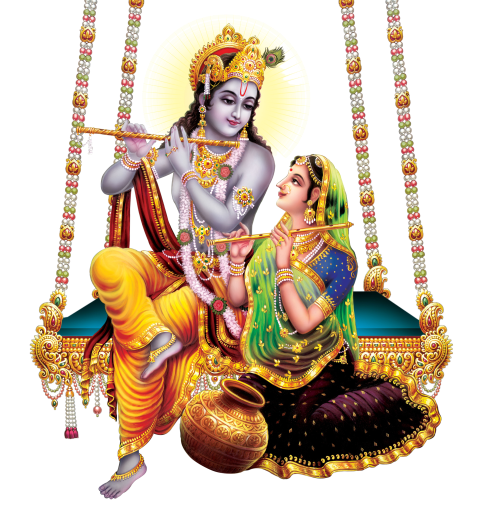
Further verses describe her enacting the divine rasa with Shyam on the banks of the Yamuna, dancing in the groves of Vrindavan to the sweet sound of his flute. Krishna appears beside her adorned in his peacock crown and yellow silk garment, and together they perform the rasa-leela, a love so pure it establishes its own unique tradition of devotion. She is praised as moon-faced, lotus-eyed, the very abode of beauty, who removes the sorrows of her devotees as the cherished daughter of Vrishabhanu.
The aarti closes with a promise: whoever sings this aarti of Radha ji daily with love attains happiness and prosperity, and is carried safely across the ocean of worldly existence (bhava sagar) — a reminder that devotion to Radha, the embodiment of surrendered love, is itself a path to liberation.
How to Perform Radha Rani Aarti
Best time: evening (sandhya kaal), especially performed alongside or right before the Krishna Govind aarti, since Radha and Krishna are worshipped together in most Vaishnav households; also observed with special devotion on Radhashtami.
What you need: a diya, a bell, and an image or murti of Radha (often shown together with Krishna), along with fresh flowers if available, since Radha Rani is deeply associated with flower gardens and groves.
Method: light the diya, ring the bell softly, and circle the lit diya clockwise before the deity while singing, beginning from the feet and moving upward, completing several rounds through the song.
After the aarti: offer the flame for family members to receive with folded hands, and if worshipping Radha-Krishna together, offer a small prasad and conclude with the greeting "Radhe Radhe" or "Jai Shri Radhe."
Why Devotees Cherish This Aarti
In the Braj bhakti tradition, Radha is not seen as separate from Krishna but as his very shakti, the feminine energy of divine love without which Krishna's own leela is said to be incomplete. Many great saints of the Bhakti movement, including Chaitanya Mahaprabhu, held Radha bhakti as the highest path, teaching that surrender to her grace naturally leads the devotee to Krishna himself. Singing her aarti each evening is thus not a secondary practice but, for countless devotees, the very heart of Krishna worship.
Frequently Asked Questions
Should Radha Rani aarti be sung along with the Krishna aarti? Yes, in most homes and temples the two are sung together or one right after the other, since Radha and Krishna are worshipped as an inseparable divine pair.
What is the significance of Radhashtami? Radhashtami, Radha Rani's appearance day (Bhadrapada Shukla Ashtami), is celebrated with special aarti, kirtan and fasting by devotees across Braj and beyond.
Why do devotees greet each other with "Radhe Radhe" instead of "Jai Shri Krishna"? In the Braj tradition, invoking Radha's name first is seen as the gentlest and surest way to reach Krishna, since her grace is believed to open the devotee's heart to divine love.
Can this aarti be sung by anyone, regardless of tradition? Yes, it is open to all sincere devotees; no special initiation is needed to sing this aarti with love and respect.
Quick guide
Before you begin
Mantra
Khatu Shyam mantra
Om Shri Shyam Devaya Namah
Chant with love and surrender, especially before Shyam Baba katha, aarti, or bhog.
Bhav
Benefits devotees pray for
FAQ
Common questions
Should this aarti be sung with the Krishna aarti?
Yes, in most homes both are sung together since Radha and Krishna are worshipped as an inseparable pair.
What is Radhashtami?
Radha Rani's appearance day (Bhadrapada Shukla Ashtami), celebrated with special aarti, kirtan and fasting.
Why do devotees say Radhe Radhe?
Invoking Radha first is seen as the gentlest, surest way to reach Krishna through her grace.
Can anyone sing this aarti?
Yes, it is open to all sincere devotees with no special initiation required.
Seek Radha Rani's Grace
Book a dedicated Radha-Krishna puja performed with full devotion, aarti and vidhi for love, peace and family harmony.