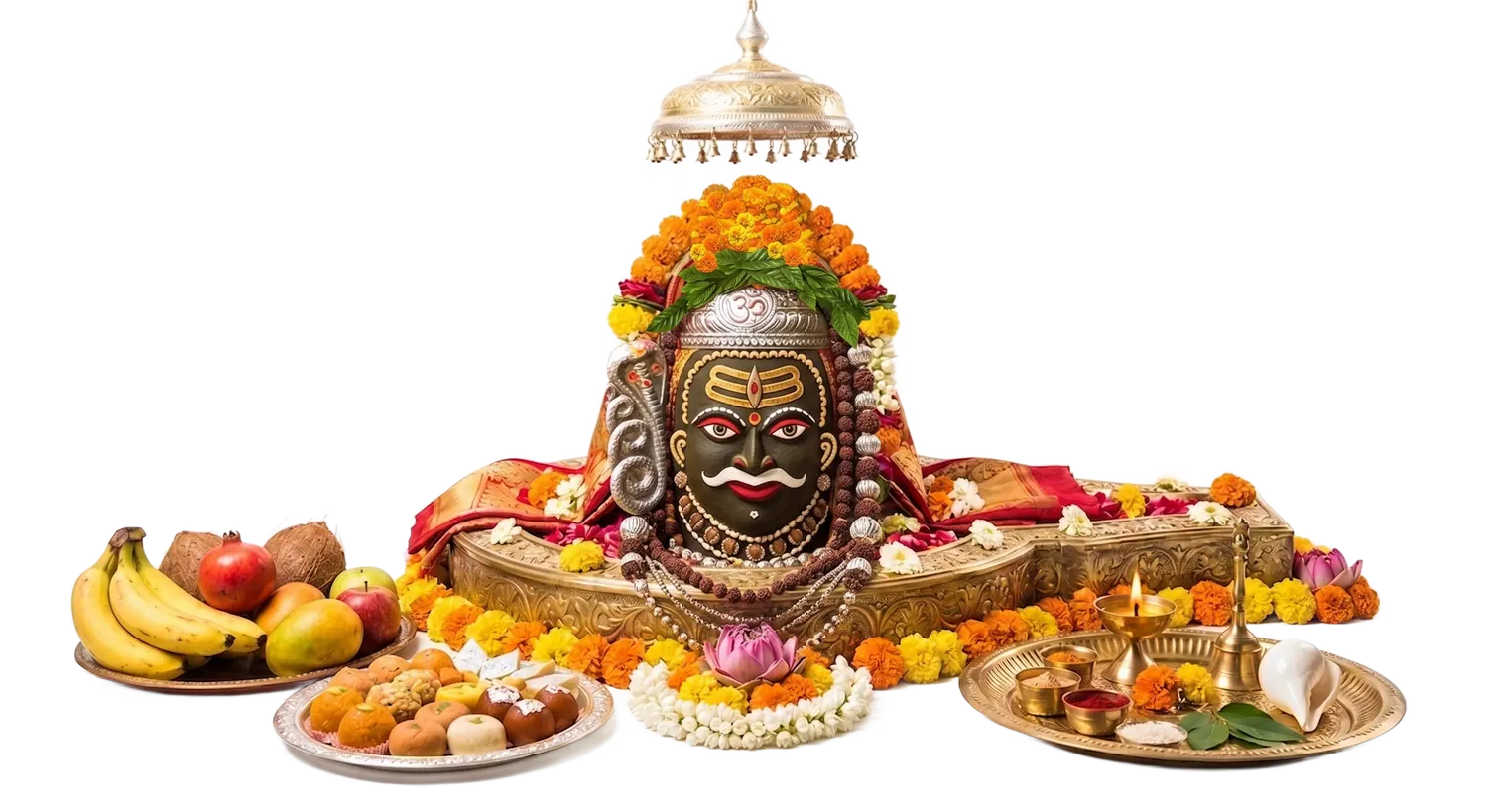

 ॐ नमः शिवाय
Panch Kedar is a sacred group of five Shiva temples in the Garhwal Himalayas, linked to the legend of the Pandavas seeking Shiva's forgiveness, where different parts of his form are said to be enshrined.
Panch Kedar, meaning "five Kedars," refers to a sacred cluster of five ancient Shiva temples nestled in the Garhwal region of the Himalayas in Uttarakhand. The legend behind these temples begins after the great war of the Mahabharata. The Pandavas, having killed their own kinsmen including the Kauravas in battle, were burdened with the sin of gotra-hatya and bhratru-hatya — the killing of one's own clan and brothers. Seeking absolution, they approached Lord Shiva, who, unwilling to grant them darshan easily, took the form of a bull and fled into the Himalayas, hiding among the herds at Guptakashi.
When Bhima recognised Shiva among the cattle, the Lord dived into the earth to escape, but Bhima caught hold of his hind portion before he could vanish completely. Shiva's body is then said to have manifested in five different places across the Garhwal Himalayas, and it is at these five spots that the Pandavas built temples to worship him, thereby attaining liberation from their sin. Together these five shrines form the Panch Kedar circuit, one of the most revered and physically demanding pilgrimages in Hindu tradition.
Kedarnath
The most famous of the five, Kedarnath, at an altitude of about 3,583 metres, is where Shiva's hump (the back portion of the bull) is worshipped. It is also one of the twelve Jyotirlingas, doubling its sanctity. The temple, built of massive grey stone slabs, has survived centuries of harsh Himalayan weather and even the devastating 2013 floods, standing as a symbol of divine protection.
Tungnath
At around 3,680 metres, Tungnath is the highest Shiva temple in the world and is where the arms of the bull form are said to be enshrined. It is also considered one of the Panch Kedar shrines closest to the sky, offering a breathtaking view of the Chaukhamba peaks, and is easily reached via a trek from Chopta.
Rudranath
Rudranath, reached through a demanding forest trek, is where the face of Shiva is worshipped, in a naturally formed rock temple. Here, Shiva is also worshipped in his fierce form as Rudra, and the temple is surrounded by alpine meadows and rhododendron forests.
Madhyamaheshwar
At Madhyamaheshwar, the navel and stomach (madhya, the middle portion) of the bull-form are enshrined. This temple lies amid the stunning backdrop of the Chaukhamba range and is reached via a trek from the village of Ransi.
Kalpeshwar
The final and most easily accessible of the five, Kalpeshwar, open throughout the year unlike the others which close for winter, is where the jata, the matted locks of Shiva, are worshipped in a natural cave shrine in the Urgam valley.
Completing the Panch Kedar yatra is considered one of the most spiritually purifying pilgrimages, believed to grant liberation from even the gravest sins, following the example of the Pandavas themselves.
Quick guide
Before you begin
Mantra
Shiva mantra
Om Namah Shivaya
Chant with a quiet mind, especially on Monday, Pradosh, or during Shiva puja.
Bhav
Benefits devotees pray for
FAQ
Common questions
What does Panch Kedar mean and why five temples?
Panch Kedar means five Kedars. Legend says Shiva's bull form dissolved into the earth at Guptakashi and manifested in five different body parts at five separate Himalayan spots, so five temples were built.
What is the correct order of the Panch Kedar yatra?
The traditional order is Kedarnath, Tungnath, Rudranath, Madhyamaheshwar, and finally Kalpeshwar, though many pilgrims visit based on accessibility and season.
Is Kedarnath part of both Char Dham and Panch Kedar?
Yes, Kedarnath is unique in being both one of the twelve Jyotirlingas and part of the Chota Char Dham, as well as the most important of the Panch Kedar.
Which Panch Kedar temple remains open all year?
Kalpeshwar is the only one of the five that remains open throughout the year; the other four close for winter due to heavy snow and the deities are moved to lower shrines.
Invoke Shiva's Grace
Have a Shiv puja performed with complete vidhi to seek Mahadev's blessings and protection.