
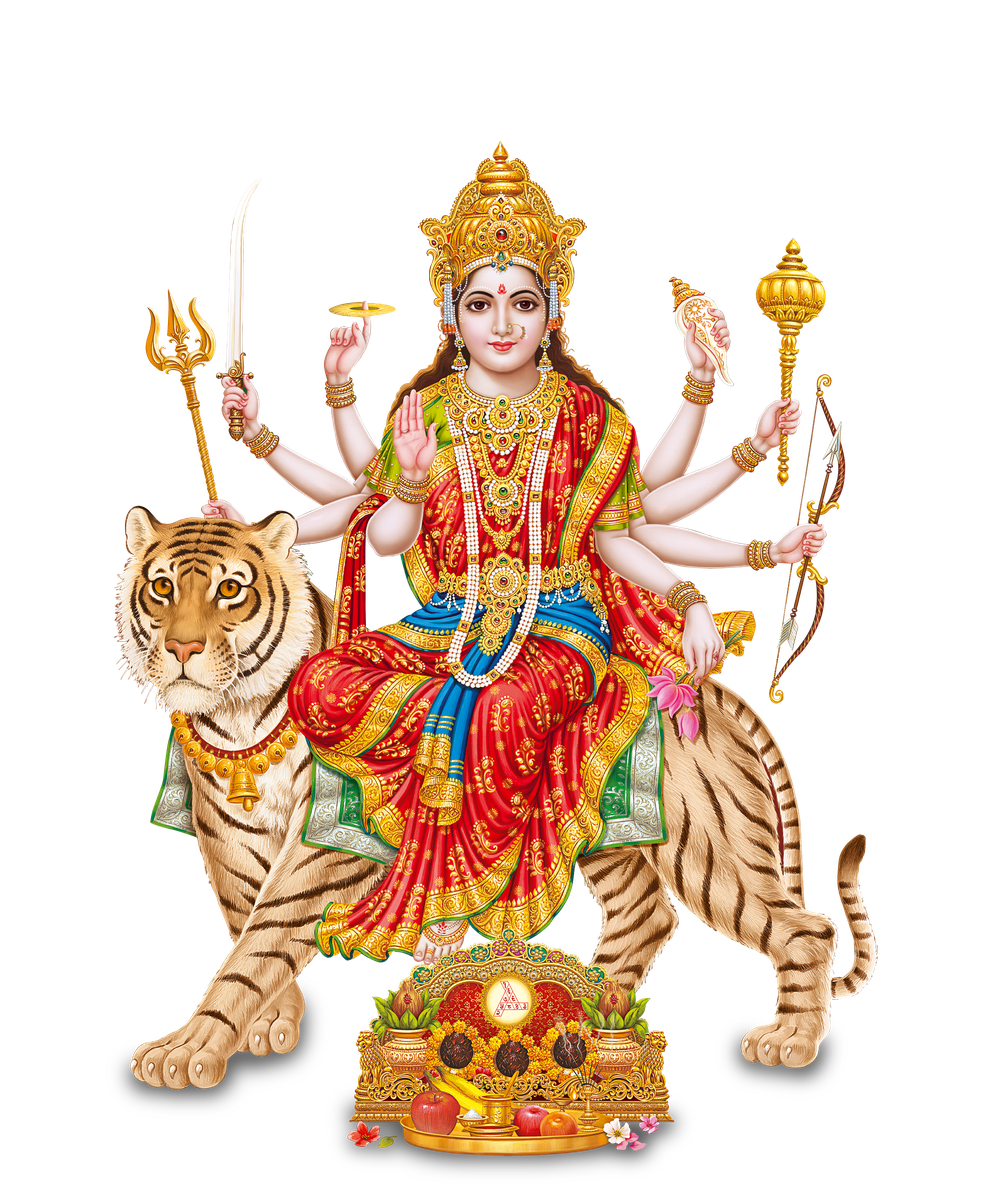
 या देवी सर्वभूतेषु शक्तिरूपेण संस्थिता
The complete Jai Ambe Gauri Durga aarti along with the nine forms of Maa Durga worshipped day by day through Navratri.
Navratri, the nine sacred nights dedicated to Maa Durga, is one of the most widely celebrated festivals across India. Each of the nine days is devoted to a distinct form of the Goddess — collectively called the Navadurga — culminating in Vijayadashami, the victory of good over evil. At the close of puja each evening, devotees gather to sing the same beloved aarti, Jai Ambe Gauri, regardless of which form of Devi is being honoured that day. This article gives the complete aarti along with the nine forms worshipped day by day.
The Nine Forms of Durga, Day by Day
Day 1, Shailaputri: Daughter of the Himalayas, riding the bull Nandi, holding a trishul and lotus. She represents the power of nature and new beginnings.
Day 2, Brahmacharini: The ascetic form, walking barefoot with a japa mala and kamandalu, symbolising penance, discipline, and devotion.
Day 3, Chandraghanta: Golden-complexioned with a crescent moon on her forehead and ten arms bearing weapons, representing courage and grace.
Day 4, Kushmanda: Believed to have created the universe with her divine smile, radiant like the sun, seated on a tiger, bestowing health and energy.
Day 5, Skandamata: Mother of Kartikeya (Skanda), seated on a lotus with her child on her lap, embodying maternal love and protection.
Day 6, Katyayani: Born to sage Katyayana, a fierce warrior form riding a lion, worshipped especially by those seeking timely and auspicious marriage.
Day 7, Kalaratri: The dark, fierce form who destroys ignorance and evil, fearsome in appearance but ever compassionate to her devotees, also called Shubhankari.
Day 8, Mahagauri: The radiant, fair form riding a white bull, representing purity, peace, and the removal of past sins, worshipped prominently on Ashtami.
Day 9, Siddhidatri: The bestower of all siddhis (spiritual powers), seated on a lotus, worshipped on Navami, said to have been worshipped by Lord Shiva himself before his union with Devi as Ardhanarishvara.
Complete Jai Ambe Gauri Aarti (Devanagari)
जय अम्बे गौरी, मैया जय श्यामा गौरी। तुमको निशिदिन ध्यावत, हरि ब्रह्मा शिवरी॥ जय अम्बे गौरी।
मांग सिंदूर विराजत, टीको मृगमद को। उज्ज्वल से दोउ नैना, चंद्रवदन नीको॥ जय अम्बे गौरी।
कनक समान कलेवर, रक्ताम्बर राजे। रक्तपुष्प गल माला, कंठन पर साजे॥ जय अम्बे गौरी।
केहरि वाहन राजत, खड्ग खप्पर धारी। सुर नर मुनि जन सेवत, तिनके दुख हारी॥ जय अम्बे गौरी।
कानन कुण्डल शोभित, नासाग्रे मोती। कोटिक चंद्र दिवाकर, राजत सम ज्योति॥ जय अम्बे गौरी।
शुम्भ निशुम्भ बिदारे, महिषासुर घाती। धूम्र विलोचन नैना, निशदिन मदमाती॥ जय अम्बे गौरी।
चंड मुण्ड संहारे, शोणित बीज हरे। मधु कैटभ दोउ मारे, सुर भय दूर करे॥ जय अम्बे गौरी।
ब्रह्माणी, रुद्राणी, तुम कमला रानी। आगम निगम बखानी, तुम शिव पटरानी॥ जय अम्बे गौरी।
चौंसठ योगिनी मंगल गावत, नृत्य करत भैरू। बाजत ताल मृदंगा, अरु बाजत डमरू॥ जय अम्बे गौरी।
तुम ही जग की माता, तुम ही हो भरता। भक्तन की दुख हरता, सुख संपत्ति करता॥ जय अम्बे गौरी।
भुजा चार अति शोभित, खड्ग खप्पर धारी। मनवांछित फल पावत, सेवत नर नारी॥ जय अम्बे गौरी।
कंचन थार विराजत, अगर कपूर बाती। श्री मालकेतु में राजत, कोटि रतन ज्योति॥ जय अम्बे गौरी।
श्री अम्बे जी की आरती, जो कोई नर गावे। कहत शिवानंद स्वामी, सुख संपत्ति पावे॥ जय अम्बे गौरी।
Meaning
The opening verses hail the Goddess as Shyama Gauri, meditated upon day and night even by Vishnu, Brahma, and Shiva. She is described adorned with vermillion in her parting, musk tilak, bright eyes, and a moon-like face — an image of both beauty and majesty.
The following verses describe her golden form draped in red, garlanded with red flowers, seated on her lion vahana, holding a sword and skull-bowl, ever protecting the gods, sages, and devotees who serve her. Her earrings and nose-pearl shine like ten million moons and suns combined.
The middle section recounts her great victories — destroying the demons Shumbha-Nishumbha, Mahishasura, Chanda-Munda, Raktabija, and Madhu-Kaitabha — removing fear from the gods each time. She is then hailed in her forms as Brahmani, Rudrani, and Kamala, praised in every scripture, and honoured as Shiva's own consort.
The final verses describe sixty-four Yoginis singing her praises while Bhairav dances, drums and damaru resounding around her. She is called the mother and sustainer of the entire world, the remover of devotees' sorrows and the giver of happiness and prosperity, four-armed and radiant with sword and bowl, fulfilling the wishes of all who serve her sincerely. The aarti closes with the promise that whoever sings it attains happiness and prosperity, as declared by Shivanand Swami.
How to Perform the Aarti Each Day of Navratri
Each evening of Navratri, after offering flowers, kumkum, and naivedya (bhog) to the form of Devi worshipped that day, light a diya of ghee or camphor and sing this same Jai Ambe Gauri aarti while moving the flame in gentle clockwise circles before the deity. The specific form of the day (Shailaputri, Brahmacharini, and so on) may be invoked by name at the start of the puja, but the aarti itself remains the same for all nine nights, since it praises the Goddess in her complete, all-encompassing form as Adi Shakti.
Benefits of Navratri Aarti and Worship
Daily worship and singing of this aarti during Navratri is believed to bring courage, protection from negativity, removal of obstacles, and fulfilment of sincere wishes. It strengthens devotion, brings peace and harmony to the household, and is especially auspicious for seeking the Goddess's blessings for health, marriage, education, and family wellbeing depending on which form is being honoured that day.
Frequently Asked Questions
Do I need to sing a different aarti for each day's form of Devi? No. Jai Ambe Gauri is sung on all nine nights; only the specific form invoked at the start of puja changes day by day.
What is the correct time to perform the aarti? It is usually performed in the evening after the day's puja and bhog offering, though it may also be sung in the morning during Kanya Pujan or on Ashtami and Navami.
Which form of Durga is worshipped on Navratri's most important days? Mahagauri is worshipped on Ashtami and Siddhidatri on Navami, both considered especially significant, often accompanied by Kanya Pujan.
Can this aarti be sung outside Navratri as well? Yes, it can be sung on any Tuesday, Friday, or during any Devi puja throughout the year.
Quick guide
Before you begin
Mantra
Devi mantra
Om Dum Durgaye Namah
Chant 11, 21, or 108 times according to your time and capacity.
Bhav
Benefits devotees pray for
FAQ
Common questions
Do I need a different aarti for each day's form of Devi?
No, Jai Ambe Gauri is sung all nine nights; only the invoked form changes.
What is the correct time to perform the aarti?
Usually the evening, after that day's puja and bhog, though it can also be sung during Kanya Pujan.
Which forms are worshipped on the most important days?
Mahagauri on Ashtami and Siddhidatri on Navami, both often marked by Kanya Pujan.
Can this aarti be sung outside Navratri?
Yes, on any Tuesday, Friday, or during any Devi puja through the year.
Celebrating Navratri with full devotion?
Let our pandits perform Nau Durga puja and sankalp for your family through all nine sacred nights.