
 ॐ नमो नारायणाय
Narayan Kavach, taught in the Srimad Bhagavatam, is a sacred protective armour that invokes Bhagwan Vishnu's forms and weapons to shield every part of the body and every direction from danger.
Narayan Kavach is one of the most powerful protective (raksha) compositions in the Sanatan tradition, drawn from the Srimad Bhagavatam (Skandha 6, Adhyaya 8). "Kavach" means armour, and Narayan Kavach is exactly that — a spiritual armour built entirely of Bhagwan Vishnu's names, forms and divine weapons, meant to surround and protect the devotee from every conceivable danger: physical harm, disease, accident, fear, negative energies, and obstacles on every side and in every direction.
According to the Bhagavatam, this kavach was originally revealed by the sage Vishvarupa (son of Tvashta) to Indra, the king of the devas, at a time when Indra and the devas were troubled and needed powerful protection against fear and adversity. Vishvarupa taught Indra this Narayan Kavach so that, fully protected by Bhagwan Vishnu's own weapons and forms invoked over his entire body, Indra could face his difficulties without fear. Since then, Narayan Kavach has been recited by devotees across generations before undertaking anything that involves risk, difficulty or fear — travel, illness, conflict, or simply the ordinary uncertainties of daily life.
The Core Mantra and Structure of Narayan Kavach
The kavach is built upon the sacred Ashtakshara mantra of Bhagwan Vishnu, chanted as its foundation and refrain:
ॐ नमो नारायणाय
Meaning: Salutations to Bhagwan Narayana, the all-pervading refuge of all beings.
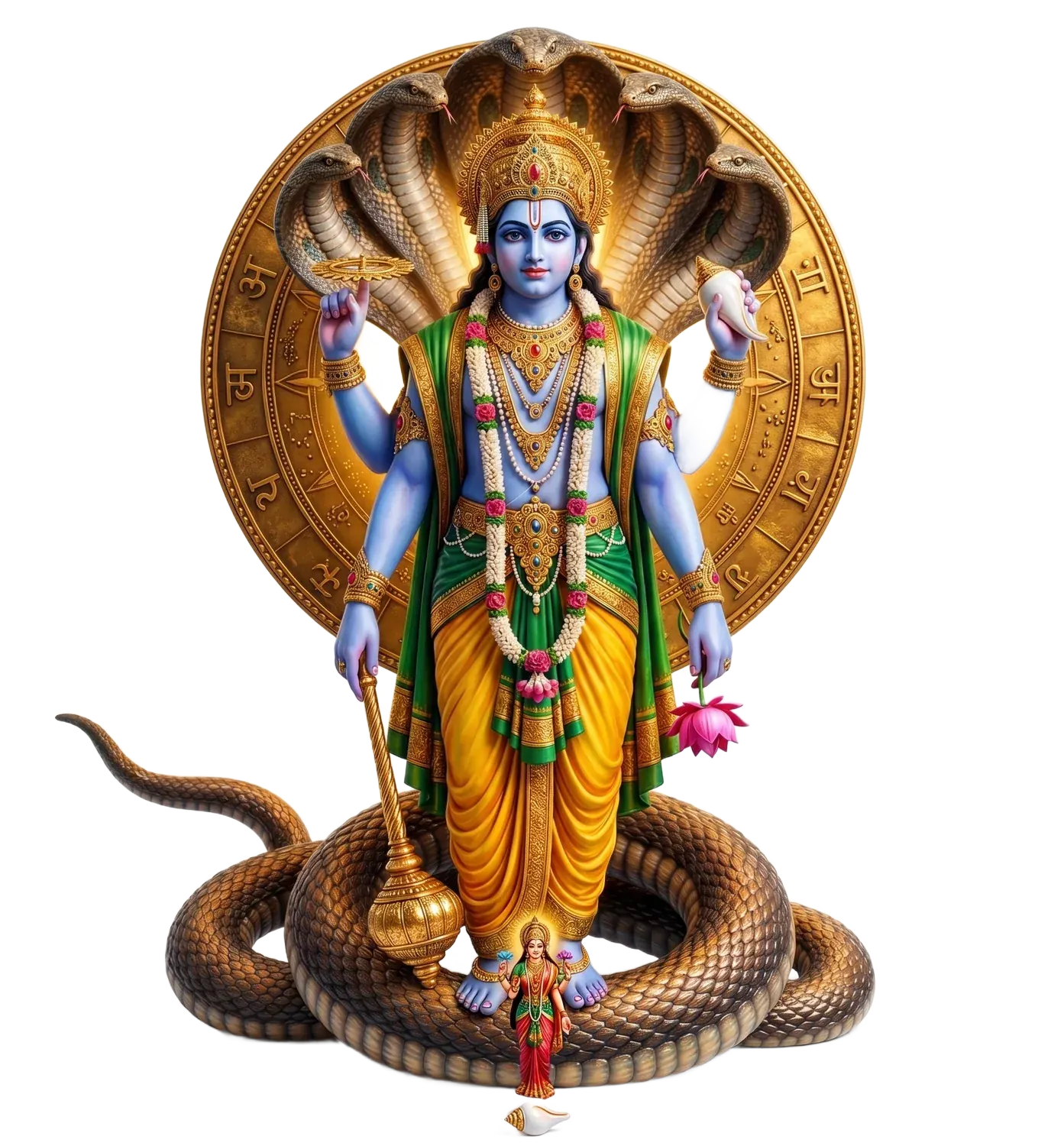
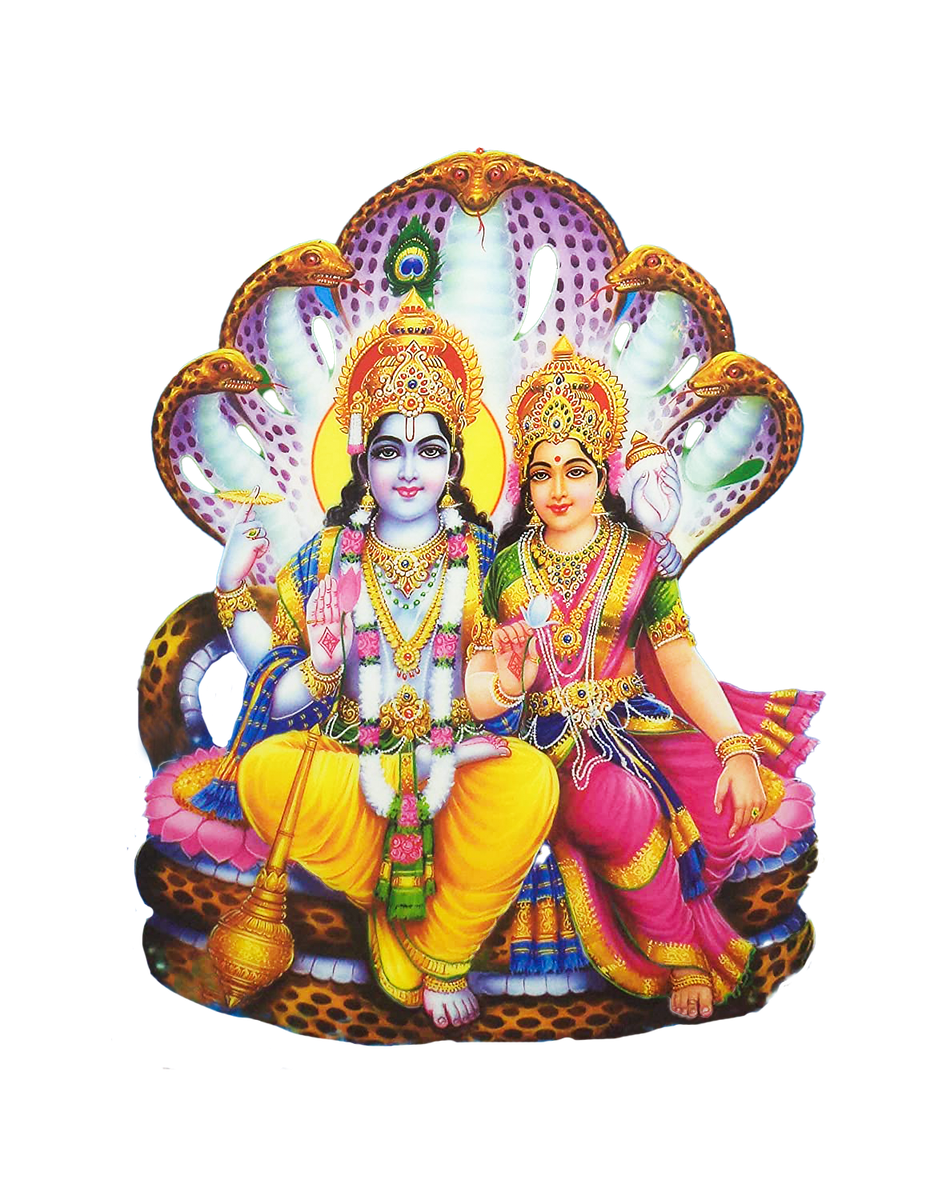
Structurally, the Narayan Kavach that Vishvarupa taught proceeds by systematically invoking a specific name, form or weapon of Bhagwan Vishnu to protect each part of the devotee's body and each direction around them — the head, the forehead, the eyes, the ears, the nose, the mouth, the neck, the heart, the arms, the back, the waist, the legs, and so on, as well as the east, west, north, south, above and below. Each part is entrusted to a particular manifestation of the Lord: his Sudarshan Chakra (discus) to cut through danger, the Panchajanya Shankha (conch) whose sound dispels evil, the Kaumodaki Gada (mace) to crush obstacles, the Sharanga bow and arrows to ward off enemies, and the Nandaka sword to sever fear itself — along with the protective presence of his various avatars such as Vamana, Narasimha, Varaha, Hayagriva and others, each guarding a specific direction or danger.
Because this kavach is composed of roughly forty interlinked Sanskrit verses following this precise body-part-by-body-part and direction-by-direction structure, and because correct pronunciation and sequence matter greatly in a protective kavach, devotees are strongly advised to chant the complete verses from an authentic printed copy of the Srimad Bhagavatam (Skandha 6, Adhyaya 8) or under the guidance of a qualified pandit or Vaishnav acharya, rather than from memory alone. What is presented here is the essential meaning, purpose and method of this kavach, along with its foundational mantra, so that every devotee can understand and practise it correctly and with full faith.
Meaning and Significance
The deep significance of Narayan Kavach lies in the idea that a true devotee need never feel unprotected, because Bhagwan Vishnu himself — through his weapons, his avatars and his very names — can be invited to surround and safeguard every part of one's being. It teaches that protection is not sought merely as an external shield but is built from within, through remembrance (smaran) of the Lord's countless forms, each one representing a particular quality: swiftness, strength, wisdom, compassion, and fearlessness.
Reciting Narayan Kavach with sincere faith is traditionally believed to protect the devotee from accidents and physical harm, disease and ill-health, the effects of black magic, evil eye and negative energies, fear before a difficult undertaking such as travel, surgery, examination or conflict, and unseen dangers on any side. It is especially recited by those undertaking a journey, entering a new and uncertain phase of life, or seeking relief from a lingering sense of fear or vulnerability.
How and When to Chant
Time: Early morning after bathing is ideal; it may also be chanted before starting a journey, an important task, a medical procedure, or at any time one feels the need for protection and courage.
Preparation: Sit before an image of Bhagwan Vishnu or Narayana, light a diya, offer tulsi leaves and yellow flowers if possible, and begin with a few rounds of "Om Namo Narayanaya" to settle the mind.
Method: Chant the complete kavach from an authentic printed source, ideally once daily or as needed before facing a challenging situation. Some devotees also simply repeat the core Ashtakshara mantra, "Om Namo Narayanaya," 108 times as a simplified daily practice when the full kavach cannot be recited, since this mantra itself carries the essence of the kavach's protection.
Mala: A Tulsi mala is traditionally preferred for chanting Vishnu/Narayana mantras.
Do's and Don'ts
Do chant with sincere faith, understanding that true protection flows from surrender to the Divine combined with right action. Do maintain cleanliness and a satvik lifestyle on days of recitation. Do continue all practical precautions — safe travel practices, medical advice, sensible caution — alongside this spiritual practice; the kavach supports and strengthens right effort, it does not replace it. Avoid treating the kavach as a guarantee against all consequences regardless of one's own choices; avoid reciting it out of fear alone rather than genuine devotion, as its spirit is one of confident faith, not anxiety.
Mahatmya (Glory)
The glory of Narayan Kavach lies in its context within the Srimad Bhagavatam itself — it was given to Indra, the king of the gods, at a moment when even the mightiest of beings needed higher protection beyond his own power. This shows that Narayan Kavach is not meant only for the ordinary or the weak, but is a universal reminder that ultimate safety and courage come from taking refuge in Bhagwan Vishnu, regardless of one's own strength or position. For this reason, it remains one of the most trusted protective compositions recited by devotees before facing any significant challenge or danger in life.
Frequently Asked Questions
This section addresses common questions about Narayan Kavach.
Quick guide
Before you begin
Mantra
Vishnu mantra
Om Namo Bhagavate Vasudevaya
Chant before katha or aarti while praying for protection, dharma, and peace.
Bhav
Benefits devotees pray for
FAQ
Common questions
What is Narayan Kavach and where does it come from?
Narayan Kavach is a protective armour of Sanskrit verses from Srimad Bhagavatam (Skandha 6, Adhyaya 8), originally taught by the sage Vishvarupa to Indra, invoking Bhagwan Vishnu's forms and weapons to protect every part of the body.
What is the core mantra of Narayan Kavach?
Its foundational mantra is the Ashtakshara mantra, 'Om Namo Narayanaya,' which forms the basis and refrain of the entire kavach and can be chanted daily for protection.
When should Narayan Kavach be recited?
It is ideally recited in the early morning after bathing, and especially before travel, an important task, a medical procedure, or any situation involving risk or fear.
Can Narayan Kavach replace safety precautions?
No. It is a spiritual support that strengthens courage and faith, meant to be practised alongside, not instead of, sensible practical precautions and professional advice.
Invoke Bhagwan Vishnu's Protection
Book an authentic Vishnu puja for protection and well-being, or explore more sacred stotras and paths on Divya Chadhava.